HealthcareBy City Prime Care Team
Why Is There Blood in Your Urine or Is It Turning Pink or Cola-Colored, and When Is It Urgent? Reading the Urine Color Clues, the Five Same-Day Steps and the Sample Evaluation Timeline
Pink, red or cola-colored urine can come from an infection, a stone or exercise, but it can also signal a serious problem and should never be ignored. Learn the color clues, five same-day steps and what an evaluation involves.
Medically reviewed by Dr. Helen Vasquez11 min read
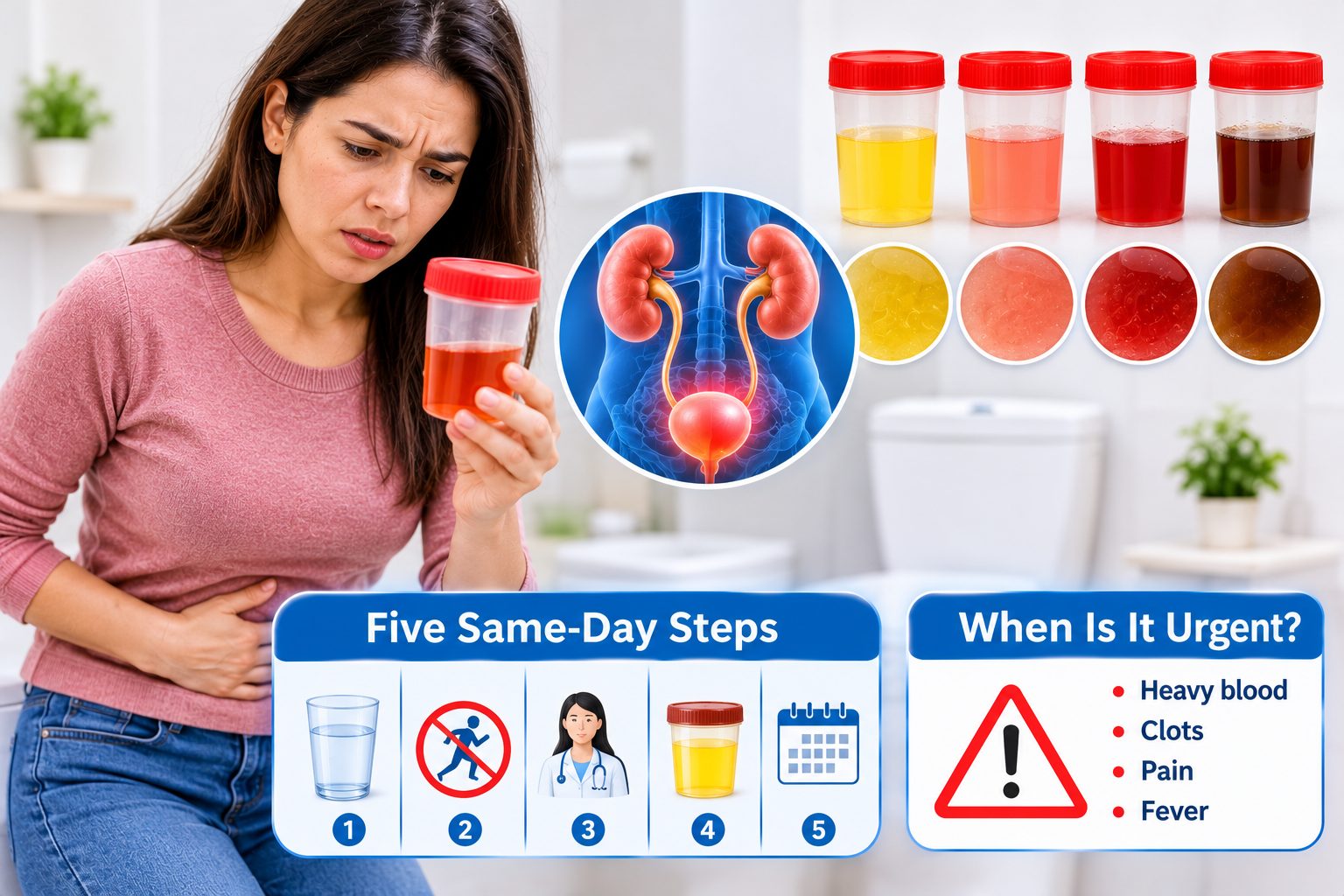
Table of contents
- 1. What Is Blood in the Urine?
- 2. Reading the Urine Color Clues
- 3. Common Causes of Blood in the Urine
- 4. Painful vs Painless Blood in the Urine
- 5. What a Clinician May Do
- 6. The Five Same-Day Steps
- 7. Graph: Illustrative Chance of Common Causes by Symptom Pattern
- 8. Sample Evaluation Timeline
- 9. Red Flags: When to Get Urgent Care
- 10. Where to Get Care: Elmhurst, Chinatown and Lower Manhattan
- 11. Related Reading From City Prime Care
- 12. Contact Us
- Conclusion
- Frequently Asked Questions
- See a Doctor in Elmhurst or Chinatown
You look into the toilet bowl and see pink, red, brown or cola-colored urine. It may come with burning, or with no pain at all. Blood in the urine, called hematuria, is a symptom that many people want to ignore, hoping it will disappear. Sometimes the cause is simple, such as a urinary tract infection, a kidney stone or hard exercise. But painless blood in the urine can also be the first sign of a serious kidney, prostate or bladder problem, so it should always be evaluated.
This guide explains urine color clues, common causes, five same-day steps, a sample evaluation timeline and the red flags that need urgent care. City Prime Care serves patients in Elmhurst, Queens, Chinatown and Lower Manhattan. This article is general education and not a substitute for personal medical advice.
Quick takeaways:
- Blood in the urine can be visible (gross hematuria) or found only on a urine test (microscopic hematuria); both deserve evaluation.
- Common causes include urinary tract infection, kidney stones, enlarged prostate, strenuous exercise, medicines and kidney conditions.
- Painless visible blood, especially in smokers and people over about 40, needs a prompt medical workup and should not be assumed to be an infection.
- Passing clots, being unable to urinate, severe flank pain, fever or dizziness needs urgent or emergency care.
1. What Is Blood in the Urine?
Hematuria means red blood cells are present in the urine. Large amounts turn the urine pink, red or brown, while small amounts may only show up on a urine dipstick or under a microscope. Blood can enter the urine anywhere along the urinary tract, from the kidneys and ureters to the bladder, prostate and urethra. The National Institutes of Health describes common causes and tests in its MedlinePlus guide to blood in the urine.
Not all red urine is blood. Beets, berries, rhubarb, some medicines and heavy dehydration can change urine color, and a clinician can tell the difference with a simple urine test.
2. Reading the Urine Color Clues
| Urine color | What it may mean | What to do |
|---|---|---|
| Pale yellow to straw | Usually well hydrated | No action needed |
| Dark yellow or amber | Dehydration; see dehydration warning signs | Drink fluids and recheck |
| Pink or light red | Blood, or foods such as beets | Check whether it persists; arrange a urine test |
| Bright red with clots | Significant bleeding from the urinary tract | Seek same-day or urgent care |
| Brown or cola-colored | Old blood, muscle breakdown, liver problems or kidney inflammation | Seek prompt evaluation, especially after hard exercise or with swelling |
| Orange | Some medicines, dehydration or liver and bile problems | Review medicines; see a clinician if it persists or the skin looks yellow |
| Cloudy or foamy | Infection or protein in the urine | Urine test advised |
3. Common Causes of Blood in the Urine
Possible causes include:
- Urinary tract infection of the bladder, often with burning, frequency and urgency; see fever and back pain after urinary symptoms (kidney infection).
- Kidney or ureter stones, which can cause severe cramping pain in the flank or groin.
- Enlarged prostate in men, or inflammation of the prostate.
- Strenuous exercise, such as long-distance running.
- Medicines and blood thinners, including aspirin, anticoagulants and some pain relievers; tell your clinician what you take.
- Kidney conditions, including inflammation of the filters (glomerulonephritis) and inherited kidney disease.
- Injury to the kidney or urinary tract, and sexually transmitted infections.
- Bladder, kidney or prostate cancer, which is more likely with painless visible blood, smoking history and age above about 40.
4. Painful vs Painless Blood in the Urine
| Feature | With pain or burning | Without pain |
|---|---|---|
| Common causes | Bladder infection, kidney stone, kidney infection | Kidney disease, enlarged prostate, medicines, tumors of the kidney or bladder |
| Typical clues | Burning, urgency, flank pain, fever | No other symptoms, or fatigue and swelling |
| Urgency | Same-day care if fever, severe pain or vomiting | Prompt evaluation; do not wait for it to repeat |
| Key tests | Urinalysis, urine culture, imaging for stones | Urinalysis, blood tests, imaging, sometimes cystoscopy |
5. What a Clinician May Do
A visit for blood in the urine often includes:
- A history of symptoms, smoking, medicines, family history, recent exercise, infections and occupational exposures.
- A physical exam, including blood pressure, abdomen and flank, and for men a prostate exam when appropriate.
- A urinalysis and a urine culture to check for blood, infection and protein.
- Blood tests for kidney function, blood count and clotting, depending on the history; see how to read your blood test results.
- Imaging such as an ultrasound or CT scan, and sometimes a cystoscopy by a urologist to look inside the bladder; see when an injury or cough calls for imaging.
- Referral to urology or kidney specialists when needed; see when your primary care doctor sends you to a specialist.
6. The Five Same-Day Steps
If you notice blood or a color change in your urine:
- Do not panic, but do not ignore it: note the color, whether there are clots, and whether you have pain, burning, fever or recent hard exercise.
- Drink water steadily to keep urine diluted, unless a clinician has told you to limit fluids.
- Do not take extra pain relievers or blood-thinning medicines without advice, and do not stop prescribed blood thinners on your own.
- Arrange a same-day or next-day visit for a urine test, and bring a list of your medicines.
- Seek urgent care immediately if you cannot urinate, pass clots, have severe pain, fever, vomiting or feel faint.
Do not assume it is a simple infection, even if you have had urinary tract infections before. A clinician should confirm the cause, especially if the blood has no pain, comes back or you smoke.
7. Graph: Illustrative Chance of Common Causes by Symptom Pattern
This is a teaching graph, not patient data. It shows how the likely causes differ between urine blood with burning and urgency and painless urine blood in an older smoker. Real risk depends on your age, history and tests.
| Possible cause | Blood with burning and urgency (illustrative) | Painless blood in an older smoker (illustrative) |
|---|---|---|
| Bladder infection | ██████████ | ██ |
| Kidney or ureter stone | ████ | ███ |
| Enlarged prostate | ██ | █████ |
| Kidney disease | █ | ███ |
| Bladder or kidney tumor | █ | ██████ |
8. Sample Evaluation Timeline
| When | Goal | Sample actions | Check |
|---|---|---|---|
| Day 0 | Confirm the blood | Visit, urine dipstick, urinalysis and culture, medicine review | Is it infection, stone or something else? |
| Days 1-3 | Treat the cause | Antibiotics for a confirmed infection, pain control for stones, fluids | Are symptoms improving? |
| Days 3-7 | Complete the workup | Blood tests, ultrasound or CT, specialist referral if needed | Are results back and reviewed? |
| Weeks 2-4 | Recheck | Repeat urine test after treatment, cystoscopy if advised | Is the urine clear of blood? |
| Ongoing | Prevent a repeat | Hydration, stop smoking, blood pressure and kidney follow-up | Any new symptoms? |
9. Red Flags: When to Get Urgent Care
Get urgent or same-day evaluation for:
- Passing blood clots or being unable to urinate.
- Severe pain in the flank, back or groin, especially with nausea or vomiting.
- Fever, chills, shaking or confusion with urinary symptoms, which can signal a kidney infection or sepsis.
- Dizziness, fainting, fast heartbeat or heavy bleeding, especially if you take blood thinners.
- Blood in the urine after an injury to the back, side or abdomen.
- Painless visible blood, which needs prompt evaluation even if it stops; also swelling, foamy urine or high blood pressure with urine blood.
10. Where to Get Care: Elmhurst, Chinatown and Lower Manhattan
Red or pink urine, burning or sudden flank pain is a common reason people search for urgent care Elmhurst NY, a walk in clinic Elmhurst NY, urgent care 11373, a same day doctor appointment Elmhurst or Same-Day Acute Care in Elmhurst Queens. For repeat urine tests, kidney checks and long-term follow-up, patients choose a primary care doctor Elmhurst NY, a family doctor Elmhurst Queens, Primary Care Doctors in Elmhurst NY or chronic disease management Elmhurst NY.
People comparing options often search for Best Primary Care Clinic in Elmhurst Queens, Best Primary Care Doctor in Elmhurst Queens, Primary Care Near Me Elmhurst Queens, Best Primary Care Clinics in Queens NY, Primary Care Clinics and Doctors in Queens NY and Top Primary Care Clinics in Queens NY. City Prime Care offers Men's and Women's Healthcare in Elmhurst NY, a physical exam clinic Elmhurst NY and preventive care Elmhurst NY, including urine tests, kidney checks and prostate and urinary health reviews.
Downtown, people look for primary care Lower Manhattan, primary care Chinatown NYC, a doctor near Catherine Street NYC, primary care 75 Catherine St, a walk-in clinic Chinatown NYC, a Primary Care Clinic in Chinatown Manhattan or a Healthcare Center in Chinatown Manhattan NY. Citywide searches include primary care doctor NYC, family doctor Manhattan NYC, annual physical exam NYC, same day primary care NYC, preventive care Lower Manhattan and primary care doctor near me. Residents searching for Primary Care Doctors Serving Todt Hill Staten Island are welcome to contact the clinic to ask about care options and travel.
| Area | Common searches | How care can help |
|---|---|---|
| Elmhurst (ZIP 11373) | Urgent care 11373, same day doctor appointment Elmhurst | Same-day urine test and treatment plan |
| Elmhurst, Queens | Family doctor Elmhurst Queens, primary care doctor Elmhurst NY | Follow-up tests, kidney and prostate checks |
| Queens | Best Primary Care Clinics in Queens NY, Top Primary Care Clinics in Queens NY | Easy-to-reach primary care for the family |
| Lower Manhattan | Primary care Lower Manhattan, preventive care Lower Manhattan | Convenient follow-up and referrals near work |
| Chinatown / Catherine Street | Primary care Chinatown NYC, doctor near Catherine Street NYC, primary care 75 Catherine St | Convenient downtown care |
| Citywide | Primary care doctor NYC, family doctor Manhattan NYC, same day primary care NYC | Same-day or scheduled evaluation |
You can also find the clinic on Google or learn more on the City Prime Care website.
11. Related Reading From City Prime Care
12. Contact Us
Have you noticed pink, red or dark urine? Visit our Contact Us page or see our Google listing. If you cannot urinate, pass clots, have severe pain, fever or feel faint, seek urgent or emergency care right away.
Conclusion
Blood in the urine has many causes, and many of them are treatable, but it is never a symptom to watch and wait on. A urine test, a few blood tests and sometimes imaging can quickly separate a simple infection from something that needs a specialist, and early evaluation gives the best outcomes.
Frequently Asked Questions
See a Doctor in Elmhurst or Chinatown
Have a question about your own health? Book a visit at our Elmhurst, Queens clinic or our Chinatown, Manhattan clinic, or explore our primary care services.
Related articles
Healthcare
Why Are Your Ankles and Feet Swollen by Evening, and When Is Leg Swelling Serious? Reading the Swelling Patterns, the Five Relief Steps and the Sample Two-Week Swelling Diary
Swollen ankles after a long day can be harmless, but swelling in one leg, sudden weight gain or breathlessness can signal a clot, heart, kidney or liver problem. Learn the patterns, five relief steps and a two-week diary.
Healthcare
Why Is a Red, Itchy Ring-Shaped Patch Spreading on Your Skin, and Is It Ringworm? Reading the Patch Types, the Five Treatment Steps and the Sample Four-Week Clearing Plan
A red, scaly, ring-shaped itchy patch is often ringworm, a common fungal skin infection that is not caused by a worm. Learn the patch types, look-alike rashes, five treatment steps and a four-week clearing plan.
Healthcare
Why Is Your Hair Thinning or Falling Out in Clumps, and Could a Health Problem Be Behind It? Reading the Hair Loss Patterns, the Five Checkup Steps and the Sample Six-Month Regrowth Timeline
Finding more hair in the shower or brush can be stressful. Learn the common hair loss patterns, which blood tests and health problems matter, five checkup steps and a realistic six-month regrowth timeline.