HealthcareBy City Prime Care Team
Why Do You Have Fever and Back Pain After Urinary Symptoms, and Could It Be a Kidney Infection? Reading the Warning Signs, the Five Same-Day Steps and the Sample Seven-Day Recovery Timeline
Fever, chills and flank pain with burning urination can mean a kidney infection, not just a bladder infection. Learn the warning symptoms, five same-day steps, a seven-day recovery timeline and when to go to the ER.
Medically reviewed by Dr. Helen Vasquez11 min read
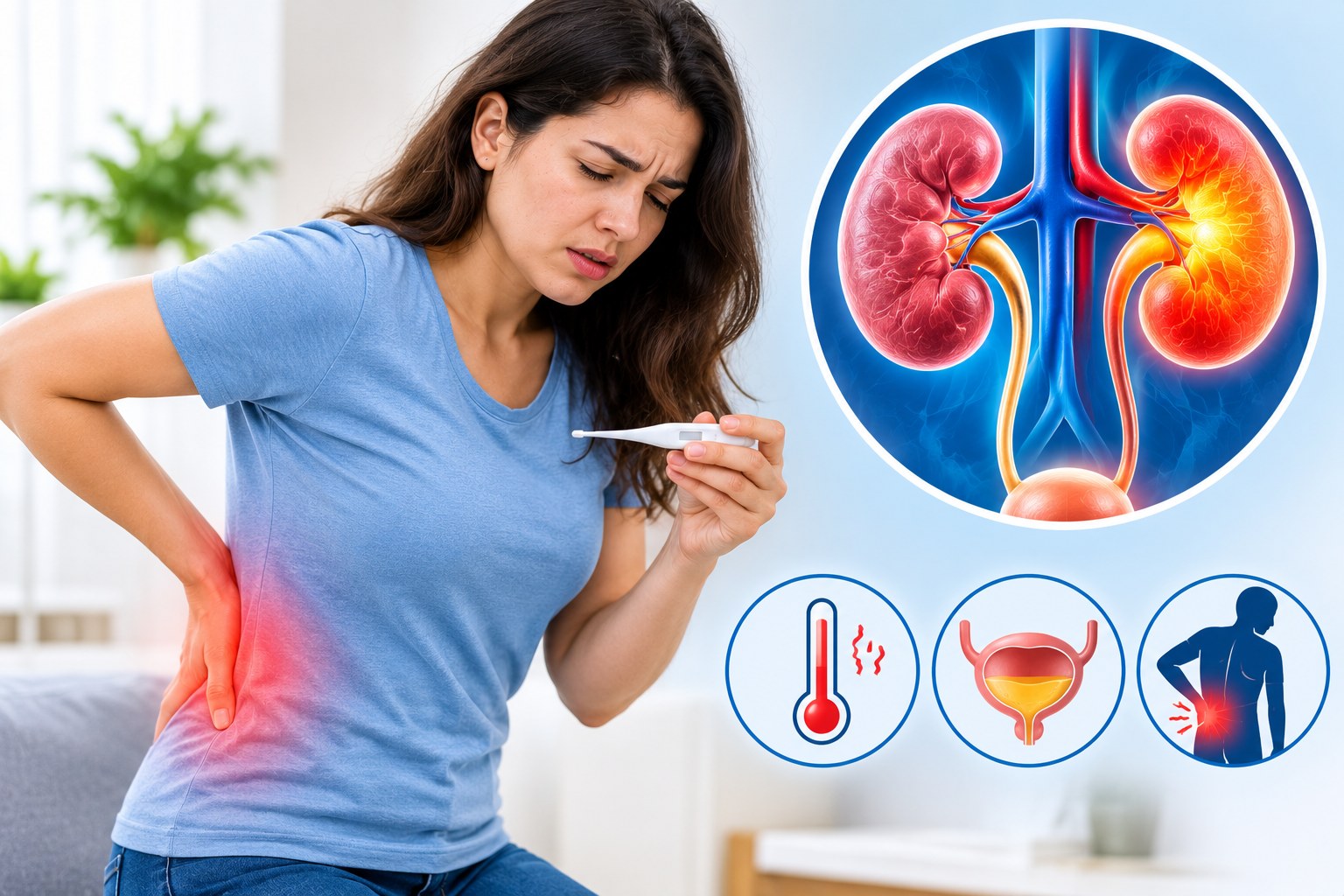
Table of contents
- 1. What Is a Kidney Infection?
- 2. Bladder Infection vs Kidney Infection
- 3. The Warning Symptoms
- 4. Who Is at Higher Risk
- 5. How a Kidney Infection Is Diagnosed
- 6. The Five Same-Day Action Steps
- 7. Graph: Illustrative Symptom Intensity Over Seven Days With Treatment
- 8. Sample Seven-Day Recovery Timeline
- 9. Red Flags: Go to the Emergency Room
- 10. Where to Get Care: Elmhurst, Chinatown and Lower Manhattan
- 11. Contact Us
- Conclusion
- Frequently Asked Questions
- See a Doctor in Elmhurst or Chinatown
A burning feeling when you urinate is often an ordinary bladder infection. But when it is joined by fever, shaking chills, nausea and a deep ache in your side or lower back, the infection may have traveled up to the kidneys. A kidney infection, called pyelonephritis, can become serious quickly, especially in pregnancy, diabetes, older age or when urine flow is blocked, so it is a condition where same-day medical evaluation matters.
This guide explains how to tell a bladder infection from a kidney infection, who is at higher risk, how it is diagnosed and treated, five same-day action steps, a sample seven-day recovery timeline and the red flags that mean you should go to an emergency room. City Prime Care serves patients in Elmhurst, Queens and Lower Manhattan. This article is general education and not a substitute for personal medical advice.
Quick takeaways:
- Fever, chills, flank or back pain, nausea or vomiting with urinary symptoms point toward a kidney infection and need same-day care.
- Kidney infections are treated with prescription antibiotics, and the full course should be finished even if you feel better early.
- Pregnancy, diabetes, kidney stones, an enlarged prostate, weakened immunity and older age raise the risk of complications.
- Vomiting that prevents you from keeping fluids or pills down, confusion, very high fever, fainting or severe pain call for emergency care.
1. What Is a Kidney Infection?
Most kidney infections start when bacteria, often from the bowel, enter the urethra, multiply in the bladder and travel up the ureters to one or both kidneys. The kidneys filter your blood and make urine, so an infection there can inflame kidney tissue and, if untreated, spread into the bloodstream. The National Institute of Diabetes and Digestive and Kidney Diseases describes this in its kidney infection overview, and the Mayo Clinic summarizes signs and risks on its kidney infection page.
Women develop urinary infections more often because the urethra is shorter, but men, children and older adults can be affected too, and in men a urinary infection deserves a closer look for an underlying cause.
2. Bladder Infection vs Kidney Infection
| Feature | Bladder infection (cystitis) | Kidney infection (pyelonephritis) |
|---|---|---|
| Burning or frequent urination | Common | Common, may be milder than the other symptoms |
| Fever and chills | Usually absent or low | Often present, may be high with shaking chills |
| Pain location | Low belly pressure above the pubic bone | Flank, side or mid-to-upper back, often on one side |
| Nausea or vomiting | Uncommon | Common |
| Overall feeling | Uncomfortable but able to function | Ill, weak and tired |
| Urgency of care | Same day to next day | Same day; emergency if severe |
Having bladder symptoms for a day or two and then noticing fever or back pain is a classic pattern. For a broader look at urinary infections, see our guide to which conditions urgent care in Elmhurst can treat.
3. The Warning Symptoms
A kidney infection may cause:
- Fever of 100.4 degrees Fahrenheit (38 degrees Celsius) or higher, often with chills or sweats.
- Pain in the side, flank or back that may spread toward the groin.
- Burning, frequent or urgent urination, or pain low in the belly.
- Cloudy, foul-smelling or bloody urine.
- Nausea, vomiting, loss of appetite and unusual tiredness.
- In older adults, new confusion or weakness may be the main sign, with few urinary symptoms.
4. Who Is at Higher Risk
| Risk group | Why risk is higher | What to do |
|---|---|---|
| Pregnant women | Hormonal and urinary tract changes | Seek care the same day for any urinary symptoms |
| People with diabetes | High sugar and reduced immune response; see our prediabetes and diabetes guide | Same-day evaluation and close sugar monitoring |
| Kidney stones or urinary blockage | Trapped urine allows bacteria to grow | Urgent care; blockage with infection can be an emergency |
| Men with an enlarged prostate | Incomplete bladder emptying; see weaker urine stream and prostate enlargement | Evaluation for underlying cause |
| Weakened immune system or catheter use | Higher chance of bacteria reaching the kidney | Prompt evaluation |
| Older adults | Symptoms can be vague, such as confusion | Check for infection if sudden change in thinking or energy |
If you have ongoing kidney or bladder health questions, our guide on how to tell if your kidneys are healthy explains common kidney tests.
5. How a Kidney Infection Is Diagnosed
A clinician typically uses:
- A history of symptoms, fever, pregnancy, past urinary infections and medicines.
- Physical examination, including tenderness over the kidney area on the back.
- A urine test for white cells, bacteria and blood, and often a urine culture to identify the germ and the antibiotics that work against it.
- Blood tests to check infection markers and kidney function in more serious cases; see how to read your blood test results without panic.
- Imaging such as ultrasound or CT when stones, blockage or complications are suspected, or when the infection does not improve.
6. The Five Same-Day Action Steps
If you suspect a kidney infection:
- Do not wait: get a same-day clinic evaluation for fever with urinary symptoms or flank pain, and go to an emergency room if you cannot keep fluids down, feel faint or confused, or have severe pain.
- Give a clean urine sample and tell the clinician about pregnancy, diabetes, kidney stones, catheters and recent antibiotics.
- Take the prescribed antibiotic exactly as directed and finish the whole course, even after fever and pain improve.
- Drink fluids as advised, rest, and use fever or pain medicine only as your clinician recommends, since some pain relievers can strain the kidneys.
- Plan a follow-up call or visit if you are not clearly better in two to three days, and repeat urine testing if advised.
Do not rely on cranberry products, home remedies or leftover antibiotics for a suspected kidney infection; they do not treat it and can delay needed care.
7. Graph: Illustrative Symptom Intensity Over Seven Days With Treatment
This is a teaching graph, not patient data. It shows how fever and flank pain often improve within a few days of starting the right antibiotic, while tiredness lingers a little longer.
| Day | Fever and chills (illustrative) | Flank pain (illustrative) | Tiredness (illustrative) |
|---|---|---|---|
| Day 1 | ██████████ | ████████ | █████████ |
| Day 2 | ███████ | ███████ | █████████ |
| Day 3 | ████ | █████ | ███████ |
| Day 4 | ██ | ███ | ██████ |
| Day 5 | █ | ██ | ████ |
| Day 7 | - | █ | ███ |
8. Sample Seven-Day Recovery Timeline
| Day | Goal | Sample actions | Check |
|---|---|---|---|
| Day 1 | Diagnose and start treatment | Same-day visit, urine test and culture, first antibiotic dose, fluids | Can you keep fluids and pills down? |
| Days 2-3 | Control fever and pain | Take antibiotic on schedule, rest, track temperature | Is fever coming down? If not, call the clinic |
| Days 4-5 | Regain energy | Gentle activity, regular meals, finish medicine | Is flank pain easing? |
| Days 6-7 | Confirm recovery | Complete or continue course as prescribed, review culture results | Any return of fever or burning? Seek care promptly |
| After treatment | Prevent repeat infections | Stay hydrated, urinate when needed, treat stones or diabetes, follow-up urine test if advised | Do infections keep returning? Ask about further evaluation |
Treatment length varies by antibiotic and severity, and some people need intravenous antibiotics in a hospital first. Your clinician will decide the right plan.
9. Red Flags: Go to the Emergency Room
Seek emergency care for:
- Persistent vomiting or inability to keep fluids or medicine down.
- High fever with shaking chills, rapid heartbeat, fast breathing or feeling faint.
- New confusion, extreme sleepiness or severe weakness.
- Severe flank pain, especially with a known kidney stone or little or no urine.
- Pregnancy with fever, flank pain or urinary symptoms.
- Symptoms that are worsening after 48 hours of antibiotics.
If you are unsure whether a problem is urgent care or an emergency, see our guide on when a problem calls for the emergency room instead of urgent care in Queens.
10. Where to Get Care: Elmhurst, Chinatown and Lower Manhattan
Fever with urinary symptoms is a common reason people search for urgent care Elmhurst NY, a walk in clinic Elmhurst NY, urgent care 11373, a same day doctor appointment Elmhurst or Same-Day Acute Care in Elmhurst Queens. For recurring infections, diabetes follow-up and long-term kidney protection, patients choose a primary care doctor Elmhurst NY, a family doctor Elmhurst Queens, Primary Care Doctors in Elmhurst NY or chronic disease management Elmhurst NY.
People comparing options often search for Best Primary Care Clinic in Elmhurst Queens, Best Primary Care Doctor in Elmhurst Queens, Primary Care Near Me Elmhurst Queens, Best Primary Care Clinics in Queens NY, Primary Care Clinics and Doctors in Queens NY and Top Primary Care Clinics in Queens NY. City Prime Care offers Men's and Women's Healthcare in Elmhurst NY, a physical exam clinic Elmhurst NY and preventive care Elmhurst NY, so urinary and kidney health can be reviewed with your whole health picture.
Downtown, people look for primary care Lower Manhattan, primary care Chinatown NYC, a doctor near Catherine Street NYC, primary care 75 Catherine St, a walk-in clinic Chinatown NYC, a Primary Care Clinic in Chinatown Manhattan or a Healthcare Center in Chinatown Manhattan NY. Citywide searches include primary care doctor NYC, family doctor Manhattan NYC, annual physical exam NYC, same day primary care NYC, preventive care Lower Manhattan and primary care doctor near me. Residents searching for Primary Care Doctors Serving Todt Hill Staten Island are welcome to contact the clinic to ask about care options and travel.
| Area | Common searches | How care can help |
|---|---|---|
| Elmhurst (ZIP 11373) | Urgent care 11373, same day doctor appointment Elmhurst | Same-day urine testing and treatment decisions |
| Elmhurst, Queens | Family doctor Elmhurst Queens, primary care doctor Elmhurst NY | Follow-up, repeat infections and diabetes care |
| Queens | Best Primary Care Clinics in Queens NY, Top Primary Care Clinics in Queens NY | Easy-to-reach primary care for the family |
| Lower Manhattan | Primary care Lower Manhattan, preventive care Lower Manhattan | Convenient visits and lab follow-up |
| Chinatown / Catherine Street | Primary care Chinatown NYC, doctor near Catherine Street NYC, primary care 75 Catherine St | Convenient downtown care |
| Citywide | Primary care doctor NYC, family doctor Manhattan NYC, same day primary care NYC | Same-day or scheduled evaluation |
You can also find the clinic on Google.
11. Contact Us
Have fever, back pain or burning urination? Visit our Contact Us page or see our Google listing. If you are vomiting, faint, confused, pregnant with fever or in severe pain, go to the nearest emergency room.
Conclusion
A kidney infection often begins like a simple bladder infection but adds fever, chills and flank pain. Prompt same-day evaluation, the right antibiotic taken to completion, fluids and follow-up usually lead to full recovery, while vomiting, confusion, pregnancy or severe pain call for emergency care.
Frequently Asked Questions
See a Doctor in Elmhurst or Chinatown
Have a question about your own health? Book a visit at our Elmhurst, Queens clinic or our Chinatown, Manhattan clinic, or explore our primary care services.
Related articles
Healthcare
Why Are Your Ankles and Feet Swollen by Evening, and When Is Leg Swelling Serious? Reading the Swelling Patterns, the Five Relief Steps and the Sample Two-Week Swelling Diary
Swollen ankles after a long day can be harmless, but swelling in one leg, sudden weight gain or breathlessness can signal a clot, heart, kidney or liver problem. Learn the patterns, five relief steps and a two-week diary.
Healthcare
Why Is a Red, Itchy Ring-Shaped Patch Spreading on Your Skin, and Is It Ringworm? Reading the Patch Types, the Five Treatment Steps and the Sample Four-Week Clearing Plan
A red, scaly, ring-shaped itchy patch is often ringworm, a common fungal skin infection that is not caused by a worm. Learn the patch types, look-alike rashes, five treatment steps and a four-week clearing plan.
Healthcare
Why Is Your Hair Thinning or Falling Out in Clumps, and Could a Health Problem Be Behind It? Reading the Hair Loss Patterns, the Five Checkup Steps and the Sample Six-Month Regrowth Timeline
Finding more hair in the shower or brush can be stressful. Learn the common hair loss patterns, which blood tests and health problems matter, five checkup steps and a realistic six-month regrowth timeline.