HealthcareBy City Prime Care Team
Why Has Your Voice Turned Hoarse or Disappeared, and When Is It More Than Laryngitis? Reading the Voice Clues, the Five Voice-Rest Steps and the Sample Recovery Timeline
A hoarse or lost voice is usually short-lived laryngitis, but hoarseness that lingers can signal something else. Learn the voice clues, causes, red flags, treatment options, five voice-rest steps and a sample recovery timeline with a simple graph.
Medically reviewed by Dr. Helen Vasquez10 min read
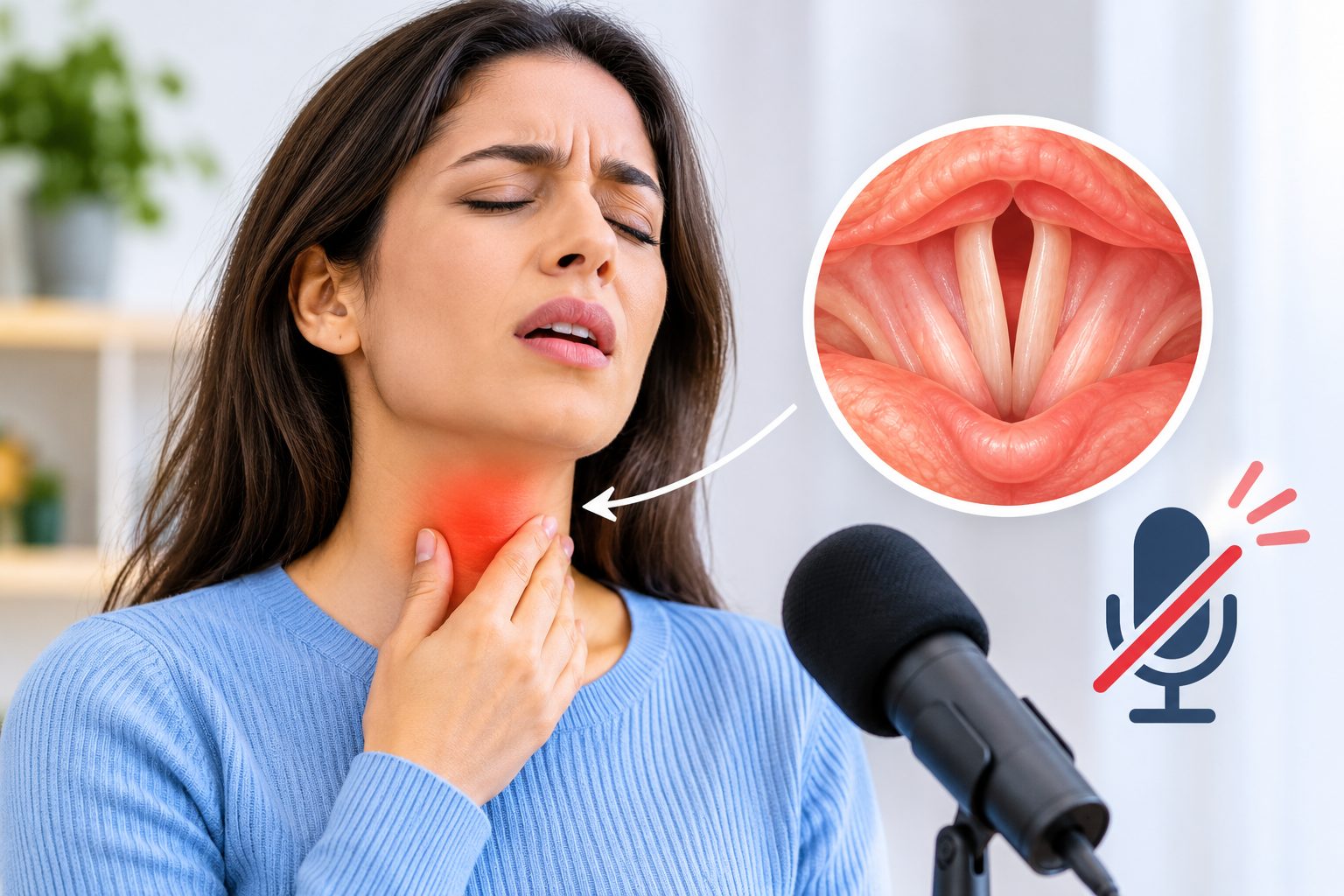
Table of contents
- 1. Reading the Voice Clues
- 2. Laryngitis or Something Else?
- 3. Common Causes and Triggers
- 4. Who Is at Higher Risk?
- 5. Five Red Flags That Need a Clinician
- 6. How Hoarseness Is Evaluated
- 7. Treatment Options
- 8. Sample Recovery Timeline
- 9. Caring for Your Voice Day to Day
- 10. Five Voice-Rest Steps
- 11. Primary, Urgent and Preventive Care in Elmhurst and Lower Manhattan
- 12. Contact Us and Find Us Online
- Conclusion
- Frequently Asked Questions
- See a Doctor in Elmhurst or Chinatown
A raspy, breathy, weak or strained voice, or a voice that has disappeared altogether, is called hoarseness. Most of the time it comes from acute laryngitis, which is swelling of the voice box (larynx) and vocal cords, often after a cold, a bout of shouting at a game or a night of singing. Swollen vocal cords cannot vibrate smoothly, so the sound changes. Acute laryngitis from a virus usually clears within one to two weeks.
Hoarseness is not always a simple cold, however. Acid reflux, allergies, smoking, vocal cord nodules or polyps, thyroid problems, nerve injury and, less often, cancer can also change the voice. A voice change that lingers deserves a proper look. This guide explains the voice clues, common causes, who is at higher risk, five red flags that need a clinician, treatment options, a sample recovery timeline with a simple graph, five voice-rest steps and FAQs. It is general education only. Trouble breathing, noisy breathing, drooling, or being unable to swallow needs emergency care. Call 911 for severe symptoms.
| At a Glance | Key Point |
|---|---|
| What it is | A change in voice quality, often from swollen or irritated vocal cords |
| Most common cause | Viral laryngitis after a cold or voice overuse |
| Usual course | Often better in 1 to 2 weeks with voice rest and fluids |
| Antibiotics | Not helpful for viral laryngitis, which is the most common type |
| See a clinician | Hoarseness lasting more than 2 to 4 weeks, or sooner with red flags, smoking or no clear cause |
1. Reading the Voice Clues
How your voice sounds, and what comes with it, can point toward the cause. For trusted background, see MedlinePlus on hoarseness and laryngitis, and the National Institute on Deafness and Other Communication Disorders on voice disorders.
| Voice Clue | What It May Suggest |
|---|---|
| Sudden raspy or lost voice with a cold | Viral laryngitis |
| Voice worse by evening after heavy use | Vocal strain or overuse |
| Morning hoarseness with throat clearing and a sour taste | Acid reflux reaching the voice box |
| Gradual, constant hoarseness in a smoker | Chronic irritation; needs evaluation |
| Breathy, weak voice that came on suddenly | Possible vocal cord weakness or paralysis |
| Hoarseness with a lump in the neck or trouble swallowing | Needs prompt medical evaluation |
2. Laryngitis or Something Else?
| Condition | Typical Pattern | Clues |
|---|---|---|
| Acute viral laryngitis | Days to 2 weeks | Cold symptoms, cough, mild sore throat |
| Voice overuse or strain | After shouting, singing or long talking | Voice recovers with rest |
| Reflux-related hoarseness | Weeks to months, worse in the morning | Throat clearing, a lump-in-the-throat feeling, heartburn |
| Vocal cord nodules or polyps | Gradual, persistent | Common in singers, teachers and heavy voice users |
| Allergy or post-nasal drip | Seasonal or ongoing | Itchy eyes, congestion, throat clearing |
| Vocal cord paralysis or growth | Persistent or progressive | Breathy voice, choking on liquids or a neck lump; needs prompt evaluation |
A sore throat that is severe or comes with fatigue may be something else; see when a sore throat is strep and when it is not and mononucleosis. Reflux symptoms are covered in what causes acid reflux and when heartburn is more than heartburn and chest discomfort: heartburn, muscle strain, anxiety or something serious.
3. Common Causes and Triggers
Hoarseness is often linked to:
- Viral infections such as the common cold, flu or COVID-19, and less often bacterial infections.
- Overusing the voice by shouting, cheering, singing, or talking loudly over noise for hours.
- Acid reflux (laryngopharyngeal reflux) that irritates the voice box.
- Smoking, vaping and exposure to smoke, dust or chemical fumes.
- Allergies, post-nasal drip and persistent coughing.
- Dry air, dehydration and heavy alcohol use.
- Vocal cord nodules, polyps or cysts; a thyroid problem; nerve injury after surgery or a breathing tube; or, rarely, a tumor.
4. Who Is at Higher Risk?
| Risk Factor | Why It Matters |
|---|---|
| Teachers, singers, coaches and call-center workers | Heavy daily voice use strains the vocal cords |
| People who smoke or vape | Chronic irritation and a higher risk of persistent hoarseness and throat cancer |
| People with reflux | Stomach acid can reach and inflame the voice box |
| Frequent heavy drinkers | Alcohol irritates and dries the throat lining |
| People who recently had neck surgery or a breathing tube | Nerve or cord injury can change the voice |
| Older adults | Voice changes and a higher risk of serious causes are more common |
5. Five Red Flags That Need a Clinician
Get medical care promptly, or call 911 for severe symptoms, if you notice:
- Trouble breathing, noisy or high-pitched breathing, drooling, or being unable to swallow your saliva.
- Hoarseness that lasts longer than 2 to 4 weeks, or any hoarseness in a person who smokes.
- Coughing up blood, a lump in the neck, or pain when swallowing that does not go away.
- A sudden loss of voice after a neck injury, surgery or a breathing tube, or a breathy voice with choking on liquids.
- Hoarseness with fever, severe throat pain, swollen glands or unexplained weight loss.
If you are unsure where to go, read when a problem calls for the emergency room instead of urgent care in Queens. Swollen glands that stick around are discussed in why the glands in your neck or armpit are swollen.
6. How Hoarseness Is Evaluated
A clinician will ask when the voice changed, how much you use your voice, whether you smoke, and about reflux, allergies, cough, recent illness and surgery. They will look at the throat, feel the neck and listen to your voice and breathing. If hoarseness lasts beyond about four weeks, or sooner with red flags, you may be referred to an ear, nose and throat (ENT) specialist who can look at the vocal cords with a small flexible camera (laryngoscopy). Blood tests, imaging or reflux treatment may follow, depending on what is found. See when your primary care doctor sends you to a specialist for referral timing.
7. Treatment Options
| Option | How It Helps | Notes |
|---|---|---|
| Voice rest | Lets swollen cords heal | Talk less and softly; avoid shouting and long calls |
| Fluids and humidified air | Keeps the throat lining moist | Warm drinks and a clean humidifier or steamy shower can soothe |
| Avoiding smoke and irritants | Prevents ongoing irritation | Quitting smoking and vaping is the single best step |
| Treating reflux | Reduces acid reaching the voice box | Food timing, trigger changes and medicines when advised |
| Managing allergies and cough | Reduces throat irritation | Treat the underlying trigger |
| Voice therapy | Retrains healthy voice use | Often led by a speech-language pathologist for nodules or strain |
| Antibiotics or steroids | Only for specific cases | Not for viral laryngitis; a clinician decides after an exam |
| Surgery or other procedures | For growths or cord problems | Considered after specialist evaluation |
8. Sample Recovery Timeline
This teaching example shows how a typical case of viral laryngitis might improve. Timing varies, and hoarseness that has not improved by two to four weeks should be checked. The squares show relative voice roughness, where more squares mean a more hoarse voice.
| When | What Usually Happens | Hoarseness Level |
|---|---|---|
| Day 1 | Scratchy throat and a hoarse voice after a cold | ■■■■ |
| Days 2 to 3 | Voice at its worst, possibly a whisper; rest the voice and drink fluids | ■■■■■■■■ |
| Days 4 to 5 | Voice starts to return with rest and humidity | ■■■■■■ |
| Days 6 to 8 | Voice is clearer, with some tiredness after talking | ■■■■ |
| Days 9 to 14 | Voice returns to normal for most people | ■ |
| After 2 to 4 weeks | Get any lingering hoarseness checked | Call a clinician |
9. Caring for Your Voice Day to Day
| Choose | Limit or Avoid |
|---|---|
| Water and warm, non-caffeinated drinks through the day | Alcohol, very hot drinks and heavy caffeine |
| Soft, comfortable speaking volume and short phone calls | Shouting, straining to be heard and long loud conversations |
| Clean humidified indoor air and steamy showers | Dry, dusty air and smoky rooms |
| Sipping water or swallowing instead of harsh throat clearing | Frequent hard throat clearing and constant whispering |
| Smaller, earlier dinners if you have reflux | Late heavy meals, spicy foods and lying down right after eating |
10. Five Voice-Rest Steps
These steps support healing of a hoarse voice:
- Rest your voice as much as you can for several days, and speak softly rather than whispering strongly or shouting.
- Drink plenty of fluids, use a clean humidifier and avoid dry, smoky or dusty air.
- Skip smoking, vaping and alcohol until the voice is back to normal.
- Treat triggers such as reflux, allergies and cough, and limit harsh throat clearing.
- See a clinician if the voice has not returned within 2 to 4 weeks or if any red flag appears.
11. Primary, Urgent and Preventive Care in Elmhurst and Lower Manhattan
When your voice will not come back, many Queens residents search for urgent care Elmhurst NY, a walk in clinic Elmhurst NY or a same day doctor appointment Elmhurst. City Prime Care helps patients who need urgent care 11373, a primary care doctor Elmhurst NY, a family doctor Elmhurst Queens or a primary care doctor near me to examine the throat, check for infection or reflux and refer to an ENT when needed. A physical exam clinic Elmhurst NY visit, preventive care Elmhurst NY and chronic disease management Elmhurst NY help review smoking, reflux, allergy and thyroid issues linked to voice changes.
Downtown, people looking for primary care Lower Manhattan, a primary care doctor NYC or primary care Chinatown NYC can see our team near 75 Catherine St. Whether you search for a doctor near Catherine Street NYC, primary care 75 Catherine St, a walk-in clinic Chinatown NYC or a family doctor Manhattan NYC, we can examine you and arrange tests or referrals. Add an annual physical exam NYC, same day primary care NYC or preventive care Lower Manhattan to review your overall health. See which conditions urgent care in Elmhurst can treat and what happens at your first urgent care visit in Elmhurst.
12. Contact Us and Find Us Online
If your voice will not recover or keeps changing, our team can look for the cause and guide next steps. For non-emergency questions, Contact Us, book a visit, or find City Prime Care on Google: City Prime Care on Google. For trouble breathing, noisy breathing, drooling or being unable to swallow, call 911 or go to the emergency room.
Conclusion
Most hoarse voices are viral laryngitis or voice strain and recover in one to two weeks with voice rest, fluids and avoiding irritants. Hoarseness that lingers beyond two to four weeks, appears in a smoker or comes with red-flag symptoms deserves a medical check. This article is for general education and does not replace medical advice.
Frequently Asked Questions
See a Doctor in Elmhurst or Chinatown
Have a question about your own health? Book a visit at our Elmhurst, Queens clinic or our Chinatown, Manhattan clinic, or explore our primary care services.
Related articles
Healthcare
Why Are Your Ankles and Feet Swollen by Evening, and When Is Leg Swelling Serious? Reading the Swelling Patterns, the Five Relief Steps and the Sample Two-Week Swelling Diary
Swollen ankles after a long day can be harmless, but swelling in one leg, sudden weight gain or breathlessness can signal a clot, heart, kidney or liver problem. Learn the patterns, five relief steps and a two-week diary.
Healthcare
Why Is a Red, Itchy Ring-Shaped Patch Spreading on Your Skin, and Is It Ringworm? Reading the Patch Types, the Five Treatment Steps and the Sample Four-Week Clearing Plan
A red, scaly, ring-shaped itchy patch is often ringworm, a common fungal skin infection that is not caused by a worm. Learn the patch types, look-alike rashes, five treatment steps and a four-week clearing plan.
Healthcare
Why Is Your Hair Thinning or Falling Out in Clumps, and Could a Health Problem Be Behind It? Reading the Hair Loss Patterns, the Five Checkup Steps and the Sample Six-Month Regrowth Timeline
Finding more hair in the shower or brush can be stressful. Learn the common hair loss patterns, which blood tests and health problems matter, five checkup steps and a realistic six-month regrowth timeline.