HealthcareBy City Prime Care Team
Why Are the Glands in Your Neck or Armpit Swollen, and When Should a Lump Be Checked? Reading the Node Locations, the Five Red Flags and the Sample Follow-Up Schedule
Swollen lymph nodes are usually the body fighting a common infection, but some lumps need a closer look. Learn the node locations, causes, red flags, how nodes are evaluated, and a sample follow-up schedule with a simple graph.
Medically reviewed by Dr. Helen Vasquez10 min read
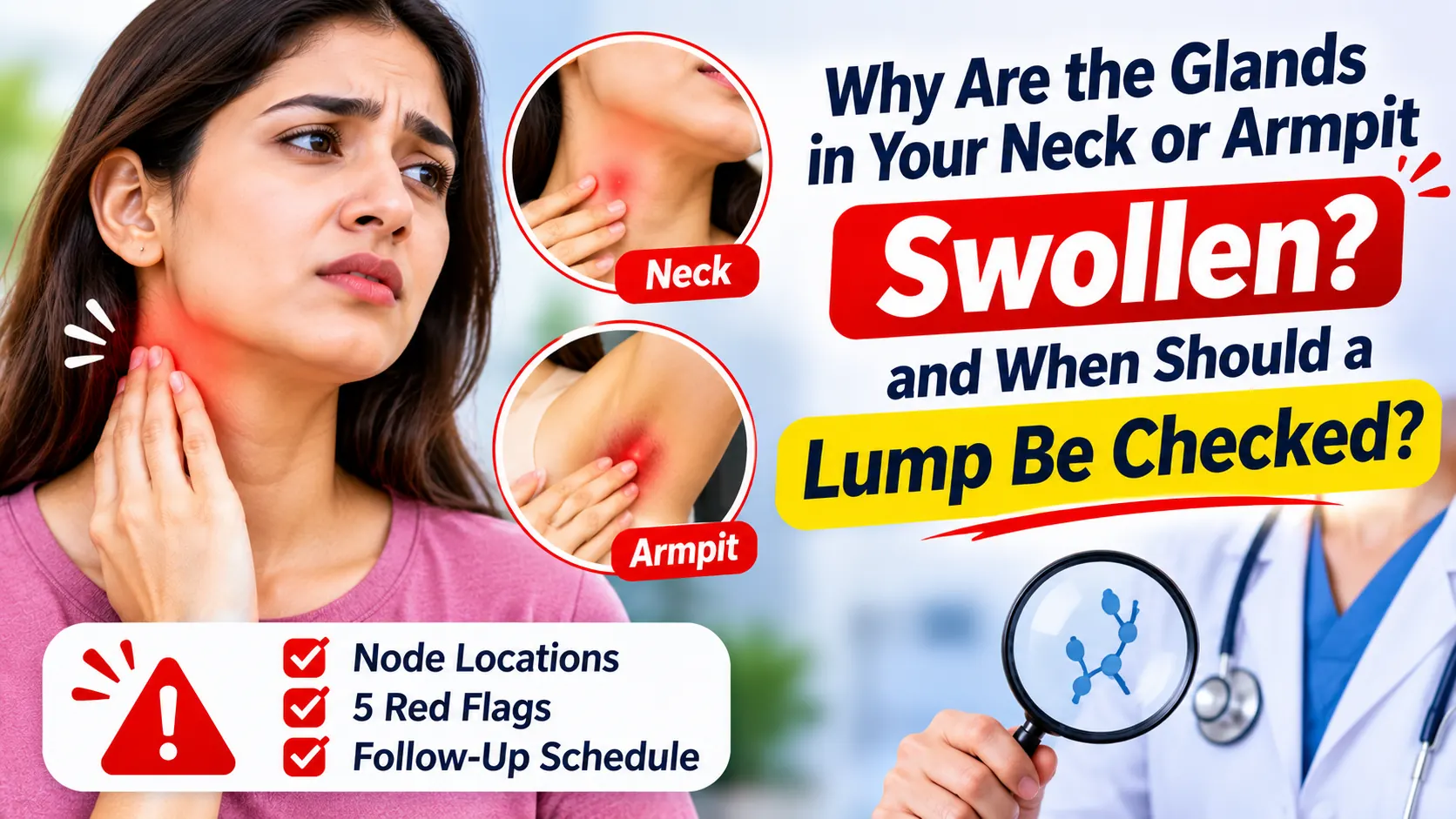
Table of contents
- 1. Where Swollen Nodes Appear and What They Suggest
- 2. Reactive Node or Worrying Node?
- 3. Common Causes
- 4. Who Is at Higher Risk of a Serious Cause?
- 5. Five Red Flags That Need a Clinician
- 6. How Swollen Nodes Are Evaluated
- 7. Treatment Options
- 8. Sample Follow-Up Schedule
- 9. What to Do and What to Avoid
- 10. Five Self-Care Steps
- 11. Primary, Urgent and Preventive Care in Elmhurst and Lower Manhattan
- 12. Contact Us and Find Us Online
- Conclusion
- Frequently Asked Questions
- See a Doctor in Elmhurst or Chinatown
Lymph nodes, often called glands, are small bean-shaped filters that sit along the lymphatic system in the neck, under the jaw, in the armpits and groin, and elsewhere in the body. They trap germs and help the immune system respond. When you fight a cold, a sore throat or a skin infection, nearby nodes commonly swell and feel tender. These reactive nodes are usually soft, movable and smaller than about one centimeter to two centimeters, and they shrink back as the infection clears.
Some swollen nodes, however, deserve a closer look. Nodes that are hard, fixed, painless, growing or persistent, or that come with fever, night sweats or weight loss, can point to a more serious cause. This guide explains the node locations, common causes, who is at higher risk, five red flags that need a clinician, how nodes are evaluated, treatment, a sample follow-up schedule with a simple graph, five self-care steps and FAQs. It is general education only. Trouble breathing or swallowing, a rapidly swelling neck, or high fever with severe illness needs emergency care. Call 911 for severe symptoms.
| At a Glance | Key Point |
|---|---|
| What they are | Small immune filters in the neck, armpits, groin and other areas |
| Most common cause | Infection such as a cold, strep throat, dental infection or skin infection |
| Usual course | Reactive nodes often shrink within 2 to 4 weeks as illness resolves |
| Concerning features | Hard, fixed, painless or growing nodes, or nodes with fever, night sweats or weight loss |
| See a clinician | Nodes lasting over 2 to 4 weeks, larger than about 1 to 2 cm, or with any red flag |
1. Where Swollen Nodes Appear and What They Suggest
The location of a swollen node often points toward the area being drained. For trusted background, see MedlinePlus on swollen lymph nodes and lymphatic diseases, and the National Cancer Institute on lymphoma.
| Location | Area It Drains | Common Reasons |
|---|---|---|
| Under the jaw and sides of the neck | Throat, mouth, teeth and face | Colds, strep throat, tonsil or dental infection |
| Back of the neck or behind the ears | Scalp, ears and neck | Scalp infections, lice, viral illness and rubella |
| Above the collarbone (supraclavicular) | Chest and abdomen | Needs prompt evaluation because it is more often serious |
| Armpit | Arm, breast and chest wall | Hand or arm infections, recent vaccine in the arm, breast conditions |
| Groin | Legs, feet and genitals | Foot or leg infections, ingrown nails, sexually transmitted infections |
| Several areas at once | Whole body | Viral illness such as mononucleosis, autoimmune disease or other systemic causes |
2. Reactive Node or Worrying Node?
| Feature | More Likely Reactive (Infection) | More Concerning |
|---|---|---|
| Feel | Soft or rubbery, movable | Hard, rubbery-firm or stuck to the tissue below |
| Pain | Often tender | Often painless |
| Size | Usually under 1 to 2 cm | Larger than about 2 cm or steadily growing |
| Duration | Shrinks over 2 to 4 weeks | Persists beyond 4 weeks |
| Other symptoms | Cold, sore throat, skin infection or tooth pain | Fever, drenching night sweats, weight loss or ongoing fatigue |
| Number of areas | One region near the infection | Several regions at once |
Swollen glands with extreme tiredness and a sore throat can point to mononucleosis, and a red, warm, spreading skin patch may be cellulitis. Throat symptoms are covered in when a sore throat is strep and when it is not.
3. Common Causes
Lymph nodes swell for many reasons, including:
- Viral infections such as the common cold, flu, mononucleosis and COVID-19.
- Bacterial infections such as strep throat, tooth abscess, ear infection or infected skin wounds.
- Less common infections such as cat scratch disease, tuberculosis and some sexually transmitted infections.
- Immune and autoimmune conditions such as lupus or rheumatoid arthritis.
- Certain medicines and recent vaccines, which can cause temporary swelling near the injection site.
- Cancers such as lymphoma or leukemia, or spread of cancer from a nearby area; these are less common than infection but are the reason persistent nodes are checked.
4. Who Is at Higher Risk of a Serious Cause?
| Risk Factor | Why It Matters |
|---|---|
| Age over 40 | Serious causes become more likely as age rises |
| Smoking or heavy alcohol use | Higher risk of head and neck cancers |
| Unexplained weight loss, fever or night sweats | Can signal a systemic illness |
| Weakened immune system | Infections and some cancers are more likely |
| Personal or family history of cancer | Raises concern for spread or lymphoma |
| Recent travel, animal exposure or new sexual partners | May raise the chance of specific infections |
5. Five Red Flags That Need a Clinician
Get medical care promptly, or call 911 for severe symptoms, if you notice:
- A node that is hard, fixed, painless or growing, or larger than about 2 cm.
- Swollen nodes that last longer than 2 to 4 weeks or keep coming back.
- Fever, drenching night sweats, unexplained weight loss or constant fatigue with swollen nodes.
- A swollen node above the collarbone, or swelling in several areas of the body at once.
- Trouble breathing or swallowing, a rapidly swelling neck or face, or a red, hot, very painful node with high fever.
If you are unsure where to go, read when a problem calls for the emergency room instead of urgent care in Queens. Hoarseness that lingers is covered in why your voice turns hoarse or disappears.
6. How Swollen Nodes Are Evaluated
A clinician will ask when the node appeared, whether it is tender, and about fever, night sweats, weight loss, sore throat, dental problems, skin infections, travel, pets, medicines and smoking. They will feel the nodes in the neck, armpits and groin, check the throat, mouth, skin and abdomen, and note size, texture and mobility. Depending on the findings, tests may include blood tests such as a complete blood count, a throat swab or infection tests, an ultrasound of the node and, when needed, a CT scan or a biopsy. A short period of watchful waiting is common when a node looks reactive. See when your primary care doctor sends you to a specialist for referral timing.
7. Treatment Options
| Cause | Typical Approach | Notes |
|---|---|---|
| Viral illness | Rest, fluids and symptom relief | Nodes shrink as the illness resolves |
| Bacterial infection | Antibiotics when appropriate | Treat the source, such as strep throat or a skin infection |
| Dental infection | Dentist evaluation and treatment | Nodes settle after the source is treated |
| Medicine or vaccine reaction | Watchful waiting and review of medicines | Often temporary |
| Autoimmune cause | Treat the underlying disease | Guided by a clinician or specialist |
| Suspected serious cause | Imaging, biopsy and specialist referral | Early evaluation matters |
8. Sample Follow-Up Schedule
This teaching example shows how follow-up for a swollen node with a cold might look. Timing varies, and a node that does not shrink needs a closer look. The squares show relative node size, where more squares mean a larger, more swollen node.
| When | What Usually Happens | Node Size |
|---|---|---|
| Day 1 to 3 | Throat soreness and a tender neck node appear with a cold | ■■■■■■ |
| Days 4 to 7 | Illness peaks; the node stays tender and soft | ■■■■■■■ |
| Week 2 | Cold improves and the node begins to shrink | ■■■■ |
| Weeks 3 to 4 | Node is smaller and less tender | ■■ |
| Week 4 to 6 | Node should be back to normal or barely felt | ■ |
| Beyond 4 weeks, or any red flag | Return for an exam and testing | Call a clinician |
9. What to Do and What to Avoid
| Do | Avoid |
|---|---|
| Rest, drink fluids and treat the underlying infection | Squeezing, massaging or poking the node |
| Use a warm compress for tender nodes | Ignoring a node that is hard, painless or growing |
| Note the size and date of any lump to track changes | Taking leftover antibiotics without an exam |
| See a dentist for tooth or gum pain | Delaying a check for unexplained weight loss or night sweats |
| Keep skin wounds clean and covered | Smoking, which raises the risk of throat and neck problems |
10. Five Self-Care Steps
For a tender, soft node with a clear cold or minor infection, these steps may help:
- Rest and drink plenty of fluids while your body fights the infection.
- Use a warm compress and an over-the-counter pain reliever as directed for tenderness.
- Treat the source: care for a sore throat, tooth problem or skin wound.
- Write down the size and location of the node and recheck it in one to two weeks.
- See a clinician if the node is hard, painless or growing, lasts more than 2 to 4 weeks, or comes with any red flag.
11. Primary, Urgent and Preventive Care in Elmhurst and Lower Manhattan
When a swollen gland or lump worries you, many Queens residents search for urgent care Elmhurst NY, a walk in clinic Elmhurst NY or a same day doctor appointment Elmhurst. City Prime Care helps patients who need urgent care 11373, a primary care doctor Elmhurst NY, a family doctor Elmhurst Queens or a primary care doctor near me to examine the node, find the source of infection and arrange tests or referrals when needed. A physical exam clinic Elmhurst NY visit, preventive care Elmhurst NY and chronic disease management Elmhurst NY help review immune health and conditions that can cause swollen nodes.
Downtown, people looking for primary care Lower Manhattan, a primary care doctor NYC or primary care Chinatown NYC can see our team near 75 Catherine St. Whether you search for a doctor near Catherine Street NYC, primary care 75 Catherine St, a walk-in clinic Chinatown NYC or a family doctor Manhattan NYC, we can examine you and arrange blood tests, imaging or referrals. Add an annual physical exam NYC, same day primary care NYC or preventive care Lower Manhattan to review your overall health. See which conditions urgent care in Elmhurst can treat and what happens at your first urgent care visit in Elmhurst.
12. Contact Us and Find Us Online
If a swollen gland or lump is not going away, our team can examine it and guide next steps. For non-emergency questions, Contact Us, book a visit, or find City Prime Care on Google: City Prime Care on Google. For trouble breathing or swallowing, a rapidly swelling neck or face, or high fever with severe illness, call 911 or go to the emergency room.
Conclusion
Most swollen lymph nodes are a normal response to a common infection and shrink within a few weeks. Nodes that are hard, painless, growing, long-lasting or paired with fever, night sweats or weight loss deserve a prompt medical check. This article is for general education and does not replace medical advice.
Frequently Asked Questions
See a Doctor in Elmhurst or Chinatown
Have a question about your own health? Book a visit at our Elmhurst, Queens clinic or our Chinatown, Manhattan clinic, or explore our primary care services.
Related articles
Healthcare
Why Are Your Ankles and Feet Swollen by Evening, and When Is Leg Swelling Serious? Reading the Swelling Patterns, the Five Relief Steps and the Sample Two-Week Swelling Diary
Swollen ankles after a long day can be harmless, but swelling in one leg, sudden weight gain or breathlessness can signal a clot, heart, kidney or liver problem. Learn the patterns, five relief steps and a two-week diary.
Healthcare
Why Is a Red, Itchy Ring-Shaped Patch Spreading on Your Skin, and Is It Ringworm? Reading the Patch Types, the Five Treatment Steps and the Sample Four-Week Clearing Plan
A red, scaly, ring-shaped itchy patch is often ringworm, a common fungal skin infection that is not caused by a worm. Learn the patch types, look-alike rashes, five treatment steps and a four-week clearing plan.
Healthcare
Why Is Your Hair Thinning or Falling Out in Clumps, and Could a Health Problem Be Behind It? Reading the Hair Loss Patterns, the Five Checkup Steps and the Sample Six-Month Regrowth Timeline
Finding more hair in the shower or brush can be stressful. Learn the common hair loss patterns, which blood tests and health problems matter, five checkup steps and a realistic six-month regrowth timeline.