
HealthcareBy City Prime Care Team
Sleep and Your Health: How Many Hours You Really Need and 10 Habits for Better Sleep
Poor sleep affects mood, weight, blood pressure and immunity. See how many hours each age group needs, 10 practical sleep habits, and when to talk to a doctor.
Medically reviewed by City Prime Care Administrator9 min read
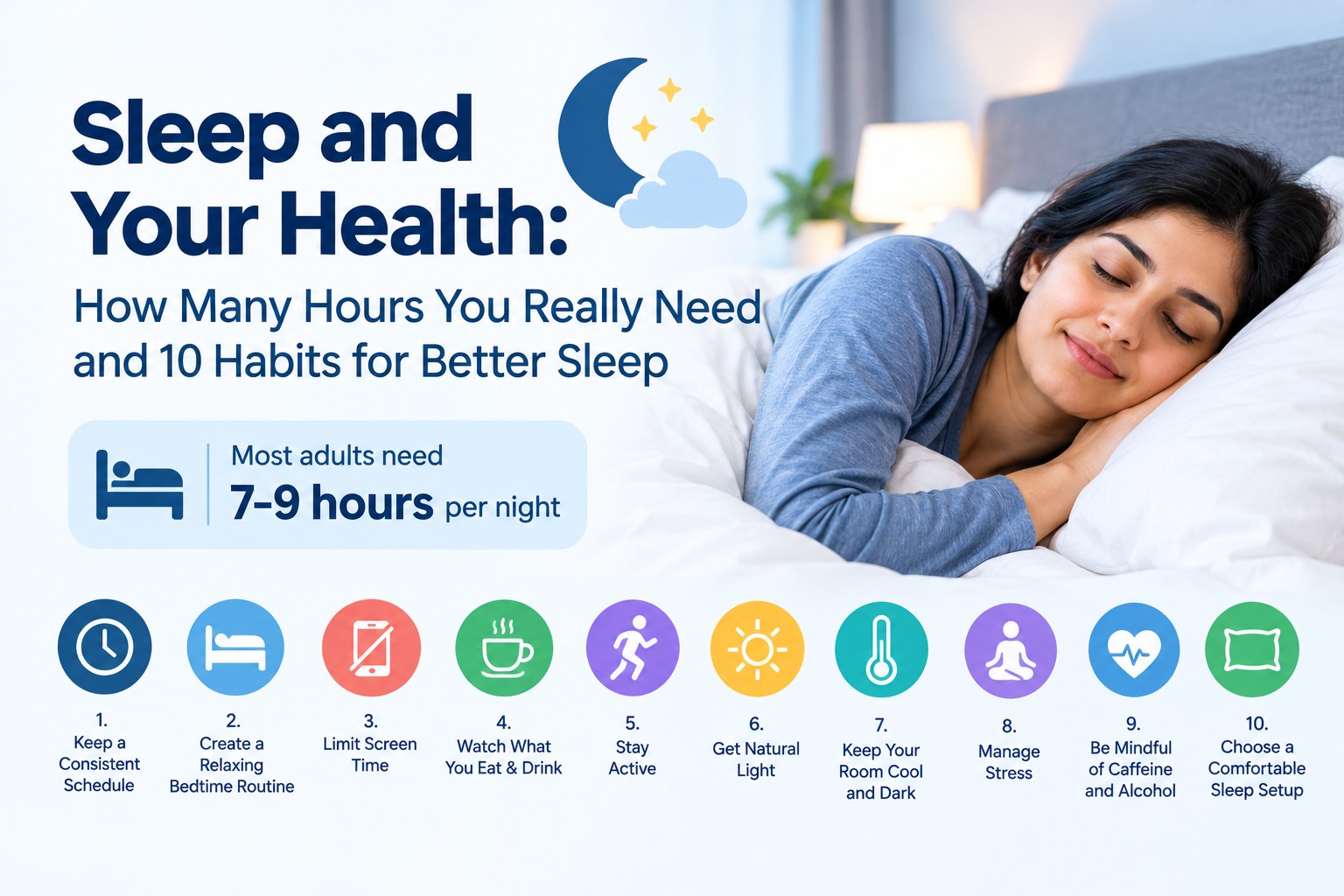
Table of contents
- 1. How Many Hours of Sleep Do You Need?
- 2. Sleep Hours at a Glance (Simple Graph)
- 3. What Poor Sleep Can Do to Your Health
- 4. 10 Habits for Better Sleep
- 5. Warning Signs: When Poor Sleep May Be a Medical Problem
- 6. Common Sleep Myths
- 7. Make Sleep Part of Your Checkup
- Conclusion
- Frequently Asked Questions
- See a Doctor in Elmhurst or Chinatown
Sleep is not a luxury. It is when your brain sorts memories, your body repairs tissue, hormones reset and your immune system recharges. Yet many adults regularly get less sleep than they need, and the effects add up quietly over time.
This guide covers how many hours different age groups generally need, what poor sleep can do to your health, ten practical habits that help, and warning signs that deserve a medical check. It is general information and not a substitute for personal medical advice.
1. How Many Hours of Sleep Do You Need?
Needs vary from person to person, but the CDC and sleep medicine experts publish general ranges by age. See the CDC sleep page for official guidance.
| Age group | Recommended sleep per 24 hours |
|---|---|
| School-age children (6 to 12) | 9 to 12 hours |
| Teenagers (13 to 18) | 8 to 10 hours |
| Adults (18 to 60) | 7 or more hours |
| Adults (61 to 64) | 7 to 9 hours |
| Adults (65 and older) | 7 to 8 hours |
2. Sleep Hours at a Glance (Simple Graph)
Each block below equals one hour of the lower end of the recommended range.
| Group | Minimum hours | Graph |
|---|---|---|
| School-age children | 9 | █████████ |
| Teenagers | 8 | ████████ |
| Adults 18 to 60 | 7 | ███████ |
| Adults 65 and older | 7 | ███████ |
3. What Poor Sleep Can Do to Your Health
| Area of health | Possible effect of long-term poor sleep |
|---|---|
| Heart and blood pressure | Higher risk of hypertension; see our high blood pressure guide |
| Blood sugar and weight | Harder blood sugar control and weight gain; see type 2 diabetes |
| Mood and mental health | Irritability, low mood and anxiety |
| Immunity | More frequent colds and slower recovery |
| Focus and safety | Trouble concentrating and higher risk of accidents such as drowsy driving |
4. 10 Habits for Better Sleep
Try these habits for a few weeks and notice what helps:
- Keep a consistent schedule: go to bed and wake up at about the same time, even on weekends.
- Make the bedroom cool, dark and quiet.
- Reserve your bed for sleep and intimacy, not work.
- Turn off screens 30 to 60 minutes before bed.
- Limit caffeine in the afternoon and evening.
- Avoid heavy meals and alcohol close to bedtime; alcohol can fragment sleep.
- Get daylight exposure in the morning and be physically active during the day.
- Keep naps short, around 20 to 30 minutes, and early in the afternoon.
- Create a calming routine such as reading, gentle stretching or a warm shower.
- If you cannot sleep after about 20 minutes, get up, do something quiet in dim light, then return to bed when sleepy.
5. Warning Signs: When Poor Sleep May Be a Medical Problem
Talk to a clinician if you notice:
- Loud snoring with pauses in breathing or gasping at night, which may suggest sleep apnea
- Trouble falling or staying asleep at least 3 nights a week for 3 months or more
- Extreme daytime sleepiness, even after a full night in bed
- Morning headaches, or waking with a dry mouth or sore throat
- An uncontrollable urge to move your legs at night
- Sleep problems along with depression, anxiety or pain
For more on sleep disorders, see the MedlinePlus sleep disorders page.
6. Common Sleep Myths
| Myth | Reality |
|---|---|
| You can fully catch up on weekends | Extra weekend sleep helps a bit but does not erase a weekly sleep debt |
| Alcohol helps you sleep better | It may make you drowsy but usually lowers sleep quality |
| Everyone needs 8 hours | Needs vary; many adults do well with 7 to 9 hours |
| Snoring is always harmless | Loud, frequent snoring can be a sign of sleep apnea |
7. Make Sleep Part of Your Checkup
Sleep deserves a spot in your regular health review. When you visit for your yearly exam, mention how well you sleep, how rested you feel and any snoring. Our Annual Physical Checkup Guide lists other topics worth raising, and some common blood tests such as thyroid checks may be considered if you are constantly tired.
Conclusion
Better sleep rarely comes from one big change. It builds from small, steady habits. If you have tried good sleep habits and still feel exhausted, it is worth getting checked, since treatable conditions are often behind poor sleep.
Contact Us
Struggling with sleep or constant tiredness? Our Queens, NY team can help you look for causes and next steps. Contact City Prime Care here. This article is for general information and does not replace advice from your own healthcare provider.
Frequently Asked Questions
See a Doctor in Elmhurst or Chinatown
Have a question about your own health? Book a visit at our Elmhurst, Queens clinic or our Chinatown, Manhattan clinic, or explore our primary care services.
Related articles
Healthcare
Chest Discomfort Decoded: Heartburn, Muscle Strain, Anxiety or Something Serious?
Chest pain can come from the heart, the stomach, the muscles or even stress. Learn the usual patterns, the warning signs of a heart attack, and why unexplained chest pain should never be ignored.
Healthcare
How Do Kidney Stones Cause Sudden Severe Pain? Reading the Warning Signs, the Five Prevention Steps and the Sample Stone-Size Outlook
Kidney stones can cause sudden, intense flank pain and blood in the urine. Learn the warning signs, how size affects passing a stone, five prevention steps, and when pain with fever or vomiting needs urgent care.
Healthcare
Is This Just a Headache? How to Tell Tension Headaches, Migraines and Warning-Sign Headaches Apart
Not every headache is the same. Compare tension headaches, migraines and cluster headaches, learn common triggers, home-care steps, and the warning signs that mean a headache needs urgent attention.





