HealthcareBy City Prime Care Team
Why Is There a Painful Red Lump on Your Eyelid, and Is It a Stye or a Chalazion? Reading the Lump Types, the Five Warm-Compress Steps and the Sample Ten-Day Healing Timeline
A tender red bump on the eyelid is often a stye, while a firm painless lump may be a chalazion. Learn the differences, five warm-compress steps, red flags and a healing timeline.
Medically reviewed by Dr. Karl E. Latortue10 min read
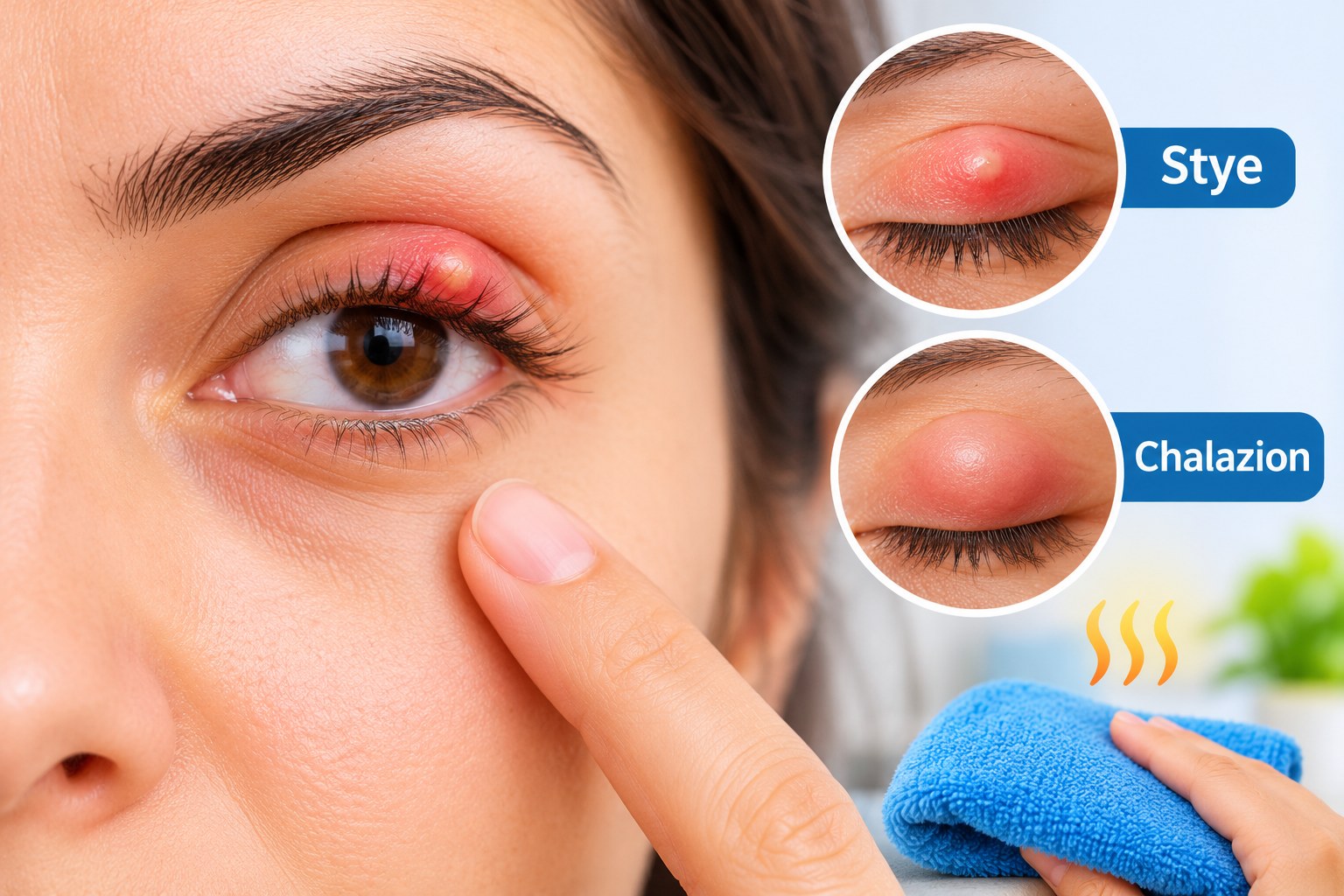
Table of contents
- 1. What Are a Stye and a Chalazion?
- 2. Reading the Lump Types
- 3. Stye vs Other Eye Problems
- 4. Causes and Who Is at Higher Risk
- 5. What a Clinician May Do
- 6. The Five Warm-Compress Steps
- 7. Graph: Illustrative Swelling and Pain Over Time
- 8. Sample Ten-Day Healing Timeline
- 9. Red Flags: When to Seek Prompt Care
- 10. Where to Get Care: Elmhurst, Chinatown and Lower Manhattan
- 11. Contact Us
- Conclusion
- Frequently Asked Questions
- See a Doctor in Elmhurst or Chinatown
A sore, red bump at the edge of your eyelid that makes blinking uncomfortable is very likely a stye. A slower, firmer lump that is not very painful may be a chalazion. Both are common, both usually settle on their own, and both are far more often a nuisance than a danger. Still, eyelid swelling can occasionally spread into the skin around the eye or point to something else, so it helps to know what is normal and what is not.
This guide explains how to tell a stye from a chalazion, what causes them, five warm-compress steps, a sample ten-day healing timeline and the red flags that need prompt care. City Prime Care serves patients in Elmhurst, Queens and Lower Manhattan. This article is general education and not a substitute for personal medical advice.
Quick takeaways:
- A stye is a small, painful infection of an eyelash follicle or oil gland, usually coming to a head in a few days.
- A chalazion is a blocked oil gland that forms a firm, usually painless lump and may last weeks.
- Warm compresses several times a day are the main treatment for both; do not squeeze or pop either one.
- Spreading redness, fever, vision changes or swelling of the whole eyelid and cheek need prompt medical care.
1. What Are a Stye and a Chalazion?
Your eyelids contain many tiny oil glands and hair follicles. When bacteria, usually staph from the skin, infect one of them, a stye forms. When an oil gland simply becomes blocked and its contents leak into surrounding tissue, a chalazion forms. The Mayo Clinic stye overview and the American Academy of Ophthalmology guide to styes are trusted patient resources.
Styes tend to appear suddenly with pain, redness and sometimes a small yellow head. Chalazia develop more gradually and may begin as a tender spot before turning into a firm, painless bump.
2. Reading the Lump Types
| Feature | Stye (hordeolum) | Chalazion |
|---|---|---|
| Cause | Bacterial infection of a follicle or gland | Blocked oil gland, not an infection at first |
| Pain | Tender, sore, often worse to touch | Mild or painless |
| Location | Edge of the lid, near lashes (external) or inside the lid (internal) | Usually further back in the lid, away from the lash line |
| Speed | Develops over a day or two | Develops over weeks |
| Typical course | Often drains or fades in 1 to 2 weeks | May last several weeks to months |
3. Stye vs Other Eye Problems
| Condition | Typical clue | Needs more urgent care? |
|---|---|---|
| Stye | Painful, localized lid bump | Not usually |
| Chalazion | Firm, painless lid lump | Not usually |
| Pink eye | Red, watery or sticky eye, no lump | Sometimes |
| Dry eye | Gritty, tired eyes, often worse by evening | No, but treatable; see our dry eye guide |
| Eyelid cellulitis | Whole lid and cheek swollen, red and hot, fever | Yes, urgent |
4. Causes and Who Is at Higher Risk
You are more likely to get eyelid lumps if you:
- Touch or rub your eyes with unwashed hands, or sleep in eye makeup.
- Share towels or makeup, or use old mascara and eyeliner.
- Have blepharitis, a long-term inflammation of the lid margins, or rosacea or oily skin.
- Wear contact lenses without careful hygiene.
- Have diabetes, which raises the risk of skin and eyelid infections; see our type 2 diabetes guide.
- Have had styes or chalazia before, since they tend to recur.
5. What a Clinician May Do
A typical visit includes:
- A look at the lid and lashes, and a check of your vision and the eye surface.
- Advice on warm compresses and lid hygiene, which are enough for most cases.
- Antibiotic ointment or drops when there is surface infection, and antibiotics by mouth if infection is spreading.
- Referral to an eye specialist for a lump that does not improve in several weeks, keeps coming back or affects vision; see when your primary care doctor sends you to a specialist.
- A check for underlying issues such as blood sugar problems if lumps recur often.
6. The Five Warm-Compress Steps
Follow these steps for the first one to two weeks:
- Wash your hands well, then soak a clean cloth in warm (not hot) water and wring it out.
- Hold the cloth gently against the closed eyelid for 10 to 15 minutes, re-warming it as it cools.
- Repeat three to four times a day to help the blockage soften and drain on its own.
- Gently clean the lash line with a mild, tear-free cleanser or lid wipe once a day.
- Do not squeeze, pop or scratch the lump, and avoid eye makeup and contact lenses until it heals.
Daily lid hygiene is also a good habit for people with tired, gritty eyes. A yearly checkup can review related conditions; see our annual physical guide.
7. Graph: Illustrative Swelling and Pain Over Time
This is a teaching graph, not patient data. It shows how pain and swelling often peak in the first few days of a stye and then fade with regular warm compresses.
| Day | Pain (illustrative) | Swelling (illustrative) |
|---|---|---|
| Day 1 | ██████ | ████ |
| Day 3 | ██████████ | ████████ |
| Day 5 | ███████ | ██████████ |
| Day 7 | ████ | ██████ |
| Day 10 | ██ | ███ |
8. Sample Ten-Day Healing Timeline
| Days | Goal | Sample actions | Check |
|---|---|---|---|
| Days 1-2 | Start early care | Warm compress 3 to 4 times daily, stop eye makeup | Is it getting more painful quickly? |
| Days 3-5 | Help it come to a head | Continue compresses, gentle lid cleaning, wash hands often | Is a small yellow point forming or draining? |
| Days 6-8 | Let it drain and settle | Do not squeeze, keep compresses going | Is swelling shrinking? |
| Days 9-10 | Confirm healing | Restart makeup only after healing, replace old mascara | Any lump left? A firm leftover lump may be a chalazion; see a clinician if it persists |
9. Red Flags: When to Seek Prompt Care
Seek care quickly, or go to the emergency room, for:
- Redness and swelling that spread across the eyelid onto the cheek or around the eye.
- Fever, severe pain, or a lid that is hot and hard to open.
- Vision changes, double vision, pain when moving the eye, or a bulging eye.
- A lump that bleeds, grows quickly or lasts longer than four to six weeks.
- A stye in a baby or young child, or in someone with a weak immune system.
10. Where to Get Care: Elmhurst, Chinatown and Lower Manhattan
When an eyelid lump is painful or growing, many people search for urgent care Elmhurst NY, a walk in clinic Elmhurst NY, urgent care 11373, or a same day doctor appointment Elmhurst. For lumps that keep returning, diabetes checks and lid-care advice, patients choose a primary care doctor Elmhurst NY, a family doctor Elmhurst Queens, or chronic disease management Elmhurst NY. In Manhattan, people look for primary care Lower Manhattan, primary care Chinatown NYC, a doctor near Catherine Street NYC, primary care 75 Catherine St, or a walk-in clinic Chinatown NYC.
| Area | Common searches | How care can help |
|---|---|---|
| Elmhurst (ZIP 11373) | Urgent care 11373, same day doctor appointment Elmhurst | Quick exam and treatment of painful lumps |
| Elmhurst, Queens | Family doctor Elmhurst Queens, primary care doctor Elmhurst NY | Recurring styes, diabetes and skin checks |
| Lower Manhattan | Primary care Lower Manhattan, preventive care Lower Manhattan | Ongoing prevention and referral planning |
| Chinatown / Catherine Street | Primary care Chinatown NYC, doctor near Catherine Street NYC, primary care 75 Catherine St | Convenient downtown care |
| Citywide | Primary care doctor NYC, family doctor Manhattan NYC, same day primary care NYC | Same-day or scheduled evaluation |
A primary care doctor near me search, a physical exam clinic Elmhurst NY visit, preventive care Elmhurst NY, or an annual physical exam NYC can also help you review risk factors for recurring infections. You can find the clinic on Google.
11. Contact Us
Has an eyelid lump not improved or keeps coming back? Visit our Contact Us page or see our Google listing. For sudden vision loss or severe swelling around the eye, call 911 or go to the emergency room.
Conclusion
Most styes and chalazia clear with warm compresses, patience and good lid hygiene. Avoid squeezing them, protect your eyes from makeup and rubbing, and get checked if swelling spreads, vision changes or a lump lingers for more than a few weeks.
Frequently Asked Questions
See a Doctor in Elmhurst or Chinatown
Have a question about your own health? Book a visit at our Elmhurst, Queens clinic or our Chinatown, Manhattan clinic, or explore our primary care services.
Related articles
Healthcare
Why Are Your Ankles and Feet Swollen by Evening, and When Is Leg Swelling Serious? Reading the Swelling Patterns, the Five Relief Steps and the Sample Two-Week Swelling Diary
Swollen ankles after a long day can be harmless, but swelling in one leg, sudden weight gain or breathlessness can signal a clot, heart, kidney or liver problem. Learn the patterns, five relief steps and a two-week diary.
Healthcare
Why Is a Red, Itchy Ring-Shaped Patch Spreading on Your Skin, and Is It Ringworm? Reading the Patch Types, the Five Treatment Steps and the Sample Four-Week Clearing Plan
A red, scaly, ring-shaped itchy patch is often ringworm, a common fungal skin infection that is not caused by a worm. Learn the patch types, look-alike rashes, five treatment steps and a four-week clearing plan.
Healthcare
Why Is Your Hair Thinning or Falling Out in Clumps, and Could a Health Problem Be Behind It? Reading the Hair Loss Patterns, the Five Checkup Steps and the Sample Six-Month Regrowth Timeline
Finding more hair in the shower or brush can be stressful. Learn the common hair loss patterns, which blood tests and health problems matter, five checkup steps and a realistic six-month regrowth timeline.