HealthcareBy City Prime Care Team
Why Does Your Tooth Throb With Swelling in Your Gum or Jaw, and Could It Be a Dental Abscess? Reading the Pain Clues, the Five Safe Relief Steps and the Sample Treatment Timeline
A throbbing tooth with gum or facial swelling may mean a dental abscess. Learn the pain clues, five safe relief steps, red flags that need emergency care and a sample treatment timeline.
Medically reviewed by Dr. Karl E. Latortue11 min read
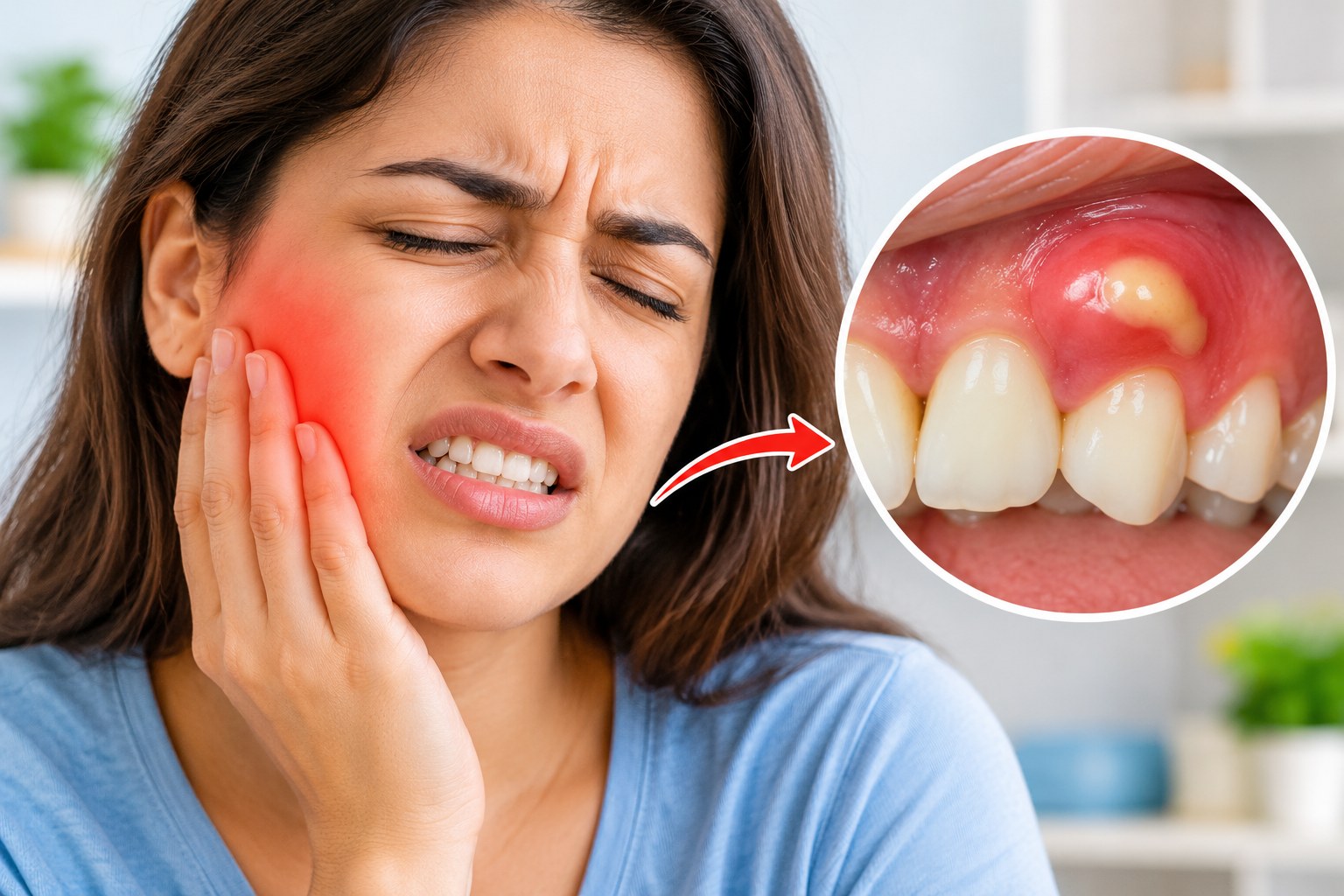
Table of contents
- 1. What Is a Dental Abscess?
- 2. Reading the Pain Clues
- 3. Toothache vs Other Causes of Face and Jaw Pain
- 4. Causes and Who Is at Higher Risk
- 5. What a Clinician May Do
- 6. The Five Safe Relief Steps
- 7. Graph: Illustrative Infection Spread Without Treatment
- 8. Sample Treatment Timeline
- 9. Red Flags: When to Seek Emergency Care
- 10. Where to Get Care: Elmhurst, Chinatown and Lower Manhattan
- 11. Contact Us
- Conclusion
- Frequently Asked Questions
- See a Doctor in Elmhurst or Chinatown
A toothache that starts as an occasional twinge can turn into constant, throbbing pain that keeps you awake, makes biting unbearable and leaves your gum or cheek swollen. When that happens, the cause may be a dental abscess: a pocket of pus formed by a bacterial infection at the root of a tooth or in the gum beside it. An abscess will not heal on its own, and without treatment the infection can spread into the jaw, face and neck.
This guide explains the pain clues that point to an abscess, how it differs from simpler dental pain, five safe relief steps while you arrange care, a sample treatment timeline and the red flags that need emergency care. City Prime Care serves patients in Elmhurst, Queens and Lower Manhattan. Definitive tooth treatment is done by a dentist, so this article is general education and not a substitute for personal medical or dental advice.
Quick takeaways:
- Throbbing pain, gum swelling, a bad taste and sensitivity to hot, cold or biting suggest a tooth infection that needs a dentist soon.
- Pain relief and rinsing can ease symptoms, but only dental treatment, such as draining the abscess or treating the root, removes the source.
- Swelling of the face or neck, trouble swallowing or breathing, or fever with facial swelling is an emergency.
- People with diabetes or weak immune systems should seek care earlier, because infections spread more easily.
1. What Is a Dental Abscess?
A dental abscess develops when bacteria get into the center of a tooth through deep decay, a crack or a chip, or into the gum through a deep pocket. The body walls off the infection as pus, which builds pressure and causes severe pain. The Mayo Clinic tooth abscess page and the American Dental Association's MouthHealthy site are reliable patient references.
Sometimes the pain suddenly improves and a salty or foul-tasting fluid drains into your mouth. That relief can be misleading: the infection is still there and still needs treatment.
2. Reading the Pain Clues
| Clue | What it may suggest | Urgency |
|---|---|---|
| Sharp pain with cold or sweets that fades in seconds | Cavity or exposed root | Book a dentist visit |
| Pain when biting down | Cracked tooth or infection at the root | See a dentist soon |
| Constant throbbing, may wake you at night | Deep infection or abscess | See a dentist within a day or two |
| Pimple-like bump on the gum, bad taste | Abscess draining | Needs dental care promptly |
| Swollen cheek or jaw, fever | Spreading infection | Urgent, same day |
3. Toothache vs Other Causes of Face and Jaw Pain
| Condition | Typical clue | Who to see |
|---|---|---|
| Tooth infection or abscess | Localized throbbing, gum swelling, pain on biting | Dentist, urgent care for swelling or fever |
| Sinus infection | Pain in upper teeth on both sides, congestion, worse bending forward | Primary care; see sinus infection or bad cold |
| Jaw joint (TMJ) problem | Ache near the ear, clicking, pain chewing or yawning | Dentist or primary care |
| Heart-related jaw pain | Jaw or arm pain with chest pressure, sweating, shortness of breath | Emergency; see chest discomfort decoded |
4. Causes and Who Is at Higher Risk
Abscesses are more likely if you have:
- Untreated cavities, broken or chipped teeth, or past root canal work that is failing.
- Gum disease, which creates deep pockets where bacteria collect.
- Frequent sugary snacks and drinks and infrequent brushing, flossing or dental visits.
- Diabetes, which can slow healing and raise infection risk; see our type 2 diabetes guide and prediabetes guide.
- Dry mouth from medicines or medical conditions, smoking or a weak immune system.
Strong teeth and bones also depend on nutrition; our guides on vitamin D in New York and protecting your bones as you age are helpful follow-ups.
5. What a Clinician May Do
At a medical urgent care or primary care visit you can expect:
- A look at your mouth, face and neck, plus vital signs to check for fever and spreading infection.
- Advice on safe pain control and, when appropriate, a prescription for antibiotics to control spreading infection while you arrange dental care.
- A check for conditions that raise risk, such as blood sugar problems.
- A referral or advice on reaching an emergency dentist, since draining the abscess or treating the tooth is the real fix; see when your primary care doctor sends you to a specialist.
- Emergency referral if there is swelling affecting breathing or swallowing.
6. The Five Safe Relief Steps
While you wait for a dental appointment:
- Rinse gently with warm salt water (half a teaspoon of salt in a cup of warm water) several times a day and spit it out.
- Use an over-the-counter pain reliever exactly as the label directs, if it is safe for you; check with a clinician or pharmacist if you have kidney, stomach or liver conditions or take blood thinners.
- Hold a cold compress against the outside of the cheek for 15 minutes at a time to ease swelling and pain.
- Avoid very hot, cold or hard foods, chew on the other side and keep brushing gently around the area.
- Call a dentist the same day, and do not try to cut, pop or drain the swelling yourself or place aspirin on the gum.
A yearly checkup is a good time to review risk factors that affect healing; see our annual physical guide.
7. Graph: Illustrative Infection Spread Without Treatment
This is a teaching graph, not patient data. It shows how pain and risk of spread may rise if a tooth infection is left untreated, and how treatment lowers both.
| Time | Without treatment (illustrative) | With treatment (illustrative) |
|---|---|---|
| Day 1 | ████ | ████ |
| Day 3 | ███████ | ██ |
| Day 5 | ██████████ | █ |
| Day 7 | ██████████ | █ |
8. Sample Treatment Timeline
| When | Goal | Sample actions | Check |
|---|---|---|---|
| Day 1 | Ease pain and assess risk | Rinses, cold compress, pain relief, call a dentist, medical visit if fever or swelling | Any facial swelling or trouble swallowing? |
| Days 1-3 | Treat the source | Dental drainage, root canal or extraction as advised; antibiotics if prescribed | Is pain easing after treatment? |
| Days 4-7 | Finish healing | Complete antibiotics exactly as directed, soft foods, gentle cleaning | Any new swelling or fever? |
| Weeks 2-4 | Prevent a repeat | Follow-up visit, treat other cavities and gum disease, regular cleanings | Are all dental problems addressed? |
9. Red Flags: When to Seek Emergency Care
Go to the emergency room or call 911 for:
- Swelling of the face, jaw or neck that is spreading, especially under the tongue or toward the eye.
- Trouble swallowing, trouble breathing or difficulty opening your mouth.
- Fever with chills, a rapid heartbeat or feeling very unwell.
- Severe, rapidly worsening pain, confusion or drowsiness.
- Facial swelling in a child, a pregnant person, or someone with diabetes or a weakened immune system.
10. Where to Get Care: Elmhurst, Chinatown and Lower Manhattan
Because a swollen, painful tooth often cannot wait, many people search for urgent care Elmhurst NY, a walk in clinic Elmhurst NY, urgent care 11373, or a same day doctor appointment Elmhurst to check for fever, spreading infection and pain control. For diabetes checks, medicine review and referrals, patients choose a primary care doctor Elmhurst NY, a family doctor Elmhurst Queens, or chronic disease management Elmhurst NY. Downtown, people look for primary care Lower Manhattan, primary care Chinatown NYC, a doctor near Catherine Street NYC, primary care 75 Catherine St, or a walk-in clinic Chinatown NYC.
| Area | Common searches | How care can help |
|---|---|---|
| Elmhurst (ZIP 11373) | Urgent care 11373, same day doctor appointment Elmhurst | Same-day exam, pain control and referral |
| Elmhurst, Queens | Family doctor Elmhurst Queens, primary care doctor Elmhurst NY | Diabetes and infection risk follow-up |
| Lower Manhattan | Primary care Lower Manhattan, preventive care Lower Manhattan | Preventive planning and referrals |
| Chinatown / Catherine Street | Primary care Chinatown NYC, doctor near Catherine Street NYC, primary care 75 Catherine St | Convenient downtown evaluation |
| Citywide | Primary care doctor NYC, family doctor Manhattan NYC, same day primary care NYC | Same-day or scheduled care |
A primary care doctor near me search, a physical exam clinic Elmhurst NY visit, preventive care Elmhurst NY, or an annual physical exam NYC can help you review whole-body health that affects your teeth. You can also find the clinic on Google.
11. Contact Us
Swollen gum, throbbing tooth or fever with facial swelling? Visit our Contact Us page or see our Google listing. For swelling that affects breathing or swallowing, call 911.
Conclusion
A dental abscess is an infection that needs dental treatment, not just pain relief. Use warm salt rinses and safe pain control to bridge the gap, get a dentist's help quickly, and treat any facial swelling, fever or trouble swallowing as an emergency.
Frequently Asked Questions
See a Doctor in Elmhurst or Chinatown
Have a question about your own health? Book a visit at our Elmhurst, Queens clinic or our Chinatown, Manhattan clinic, or explore our primary care services.
Related articles
Healthcare
Why Are Your Ankles and Feet Swollen by Evening, and When Is Leg Swelling Serious? Reading the Swelling Patterns, the Five Relief Steps and the Sample Two-Week Swelling Diary
Swollen ankles after a long day can be harmless, but swelling in one leg, sudden weight gain or breathlessness can signal a clot, heart, kidney or liver problem. Learn the patterns, five relief steps and a two-week diary.
Healthcare
Why Is a Red, Itchy Ring-Shaped Patch Spreading on Your Skin, and Is It Ringworm? Reading the Patch Types, the Five Treatment Steps and the Sample Four-Week Clearing Plan
A red, scaly, ring-shaped itchy patch is often ringworm, a common fungal skin infection that is not caused by a worm. Learn the patch types, look-alike rashes, five treatment steps and a four-week clearing plan.
Healthcare
Why Is Your Hair Thinning or Falling Out in Clumps, and Could a Health Problem Be Behind It? Reading the Hair Loss Patterns, the Five Checkup Steps and the Sample Six-Month Regrowth Timeline
Finding more hair in the shower or brush can be stressful. Learn the common hair loss patterns, which blood tests and health problems matter, five checkup steps and a realistic six-month regrowth timeline.