HealthcareBy City Prime Care Team
Why Does Your Heart Pound and Your Chest Tighten With Sudden Fear, and Is It a Panic Attack? Reading the Symptom Overlap, the Five Grounding Steps and the Sample Eight-Week Treatment Plan
A racing heart, tight chest and sudden fear can be a panic attack, but the same symptoms can come from heart, lung or thyroid problems. Learn how to tell the difference, five grounding steps and an eight-week treatment plan.
Medically reviewed by Dr. Helen Vasquez11 min read
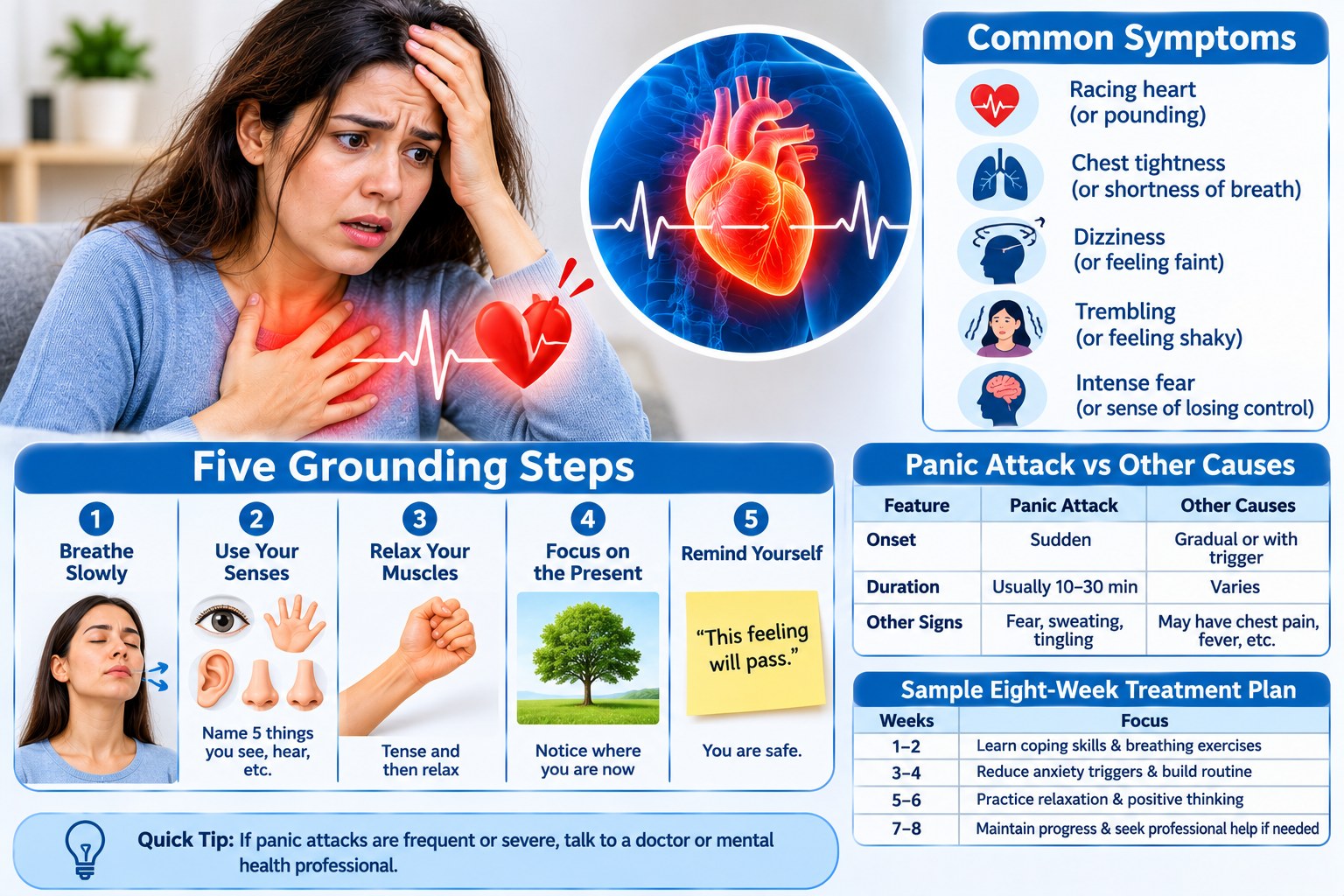
Table of contents
- 1. What Is a Panic Attack?
- 2. Reading the Symptom Overlap
- 3. Common Panic Attack Symptoms
- 4. Causes and Triggers
- 5. What a Clinician May Do
- 6. The Five Grounding Steps
- 7. Graph: Illustrative Intensity of a Panic Attack Over Time
- 8. Sample Eight-Week Treatment Plan
- 9. Red Flags: Call 911 or Seek Emergency Care
- 10. Where to Get Care: Elmhurst, Chinatown and Lower Manhattan
- 11. Contact Us
- Conclusion
- Frequently Asked Questions
- See a Doctor in Elmhurst or Chinatown
Your heart suddenly pounds, your chest tightens, you struggle to catch your breath, your hands tingle and a wave of dread tells you something terrible is about to happen. For many people this is a panic attack, a surge of intense fear that peaks within minutes. But because the same symptoms can also come from a heart problem, a lung problem, an overactive thyroid or a medicine side effect, the very first episode, or any episode with chest pain that feels different, should be taken seriously and medically checked.
This guide explains how panic attacks feel, how they differ from heart attack warning signs, what tests are commonly done, five grounding steps for the moment, a sample eight-week treatment plan and the red flags that mean you should call 911. City Prime Care serves patients in Elmhurst, Queens and Lower Manhattan. This article is general education and not a substitute for personal medical advice.
Quick takeaways:
- A panic attack is a sudden surge of fear with physical symptoms that usually peaks within about ten minutes and then fades, even though it can feel life-threatening.
- Chest pain, pressure, shortness of breath or fainting should never be dismissed as anxiety until a clinician has checked your heart, especially the first time or if you have risk factors.
- Panic attacks are common and treatable with talk therapy (especially cognitive behavioral therapy), medicines when needed, breathing skills and lifestyle changes.
- If you have chest pain that spreads to the arm or jaw, a cold sweat, fainting or symptoms that do not ease, call 911.
1. What Is a Panic Attack?
A panic attack is an abrupt episode of intense fear or discomfort with several physical and mental symptoms. It reflects the body's alarm system firing when there is no real danger. Having one attack does not mean you have a disorder; panic disorder is diagnosed when attacks are repeated and unexpected, and you worry about them or change your life to avoid them. The Mayo Clinic summarizes this on its panic attacks symptoms and causes page, and the National Institute of Mental Health offers an overview of anxiety disorders.
Many people have one or two panic attacks in a lifetime, often during stress. Attacks are more frequent in young and middle-aged adults and run in some families.
2. Reading the Symptom Overlap
| Symptom | Panic attack | Heart attack or heart problem | Other possibilities |
|---|---|---|---|
| Chest sensation | Sharp, tight or stabbing, often brief | Pressure, squeezing or heaviness that may spread to arm, jaw or back | Heartburn, muscle strain or costochondritis; see front-of-chest pain and costochondritis |
| Onset and timing | Peaks within about 10 minutes, then fades | Often builds, may be triggered by exertion, can come and go | Asthma or lung problems may worsen with exertion |
| Breathing | Fast, shallow breathing; feeling of not getting enough air | Shortness of breath that may come with chest pressure | Asthma, pneumonia or clot in the lung |
| Other symptoms | Tingling, shaking, sweating, dizziness, fear of dying | Cold sweat, nausea, lightheadedness, unusual fatigue | Overactive thyroid, low sugar, caffeine or medicine effects |
| Clue | Strong fear, sense of unreality | May have risk factors such as age, smoking, blood pressure, diabetes | Needs history and tests to sort out |
No chart can replace an exam. For the full list of heart warning signs, read the American Heart Association's guide to heart attack warning signs and our article on heart warning signs men in Queens should not ignore.
3. Common Panic Attack Symptoms
During a panic attack you may feel:
- A pounding or racing heart.
- Chest tightness or discomfort.
- Shortness of breath or a feeling of choking.
- Sweating, trembling or shaking.
- Tingling or numbness in the hands, feet or face.
- Dizziness, lightheadedness or feeling faint; see why you feel dizzy or like the room is spinning.
- Nausea or stomach upset.
- Chills or hot flushes.
- A sense of unreality, detachment or fear of losing control or dying.
4. Causes and Triggers
Panic attacks may be linked to:
- A family history of anxiety or panic.
- Major life stress, a loss or a big change, or long periods of poor sleep.
- Heavy caffeine, energy drinks, nicotine, alcohol withdrawal or recreational drugs.
- Medical conditions such as an overactive thyroid, heart rhythm problems, asthma or low blood sugar; see when heart palpitations are harmless.
- Medicines such as certain asthma, thyroid, decongestant or stimulant drugs.
- Other anxiety, depression or trauma-related conditions.
Because many causes overlap, a clinician will look at both body and mind. Our guide on when stress, low mood or anxiety need a doctor's help explains common screening steps.
5. What a Clinician May Do
A typical evaluation includes:
- A detailed history of the attacks, triggers, caffeine, alcohol, drugs, medicines and family history.
- Vital signs, a heart and lung exam and often an electrocardiogram (ECG) to check heart rhythm.
- Blood tests such as thyroid function, blood count and blood sugar when appropriate; see how to read your blood test results without panic.
- Further heart testing, such as stress testing or an ambulatory monitor, if there are risk factors or abnormal findings.
- A mental health screening for anxiety, depression and substance use.
- A treatment plan that may include therapy, medicine, lifestyle changes and referral to a mental health professional.
6. The Five Grounding Steps
If you have had a panic attack evaluated and your clinician has said the symptoms are consistent with panic:
- Name it: remind yourself that this is a panic attack, that it peaks and passes, and that it is uncomfortable but not dangerous.
- Slow your breathing: breathe in through your nose for about four seconds, hold briefly, and breathe out slowly for about six seconds, repeating for several minutes.
- Ground your senses: name five things you can see, four you can touch, three you can hear, two you can smell and one you can taste.
- Stay put and let the wave pass: avoid running away or checking your pulse again and again, and relax tense muscles gradually from your shoulders downward.
- Follow up: after the attack, note triggers, sleep, caffeine and stress, and book a visit if attacks are repeating or limiting your life.
If chest pain, pressure, shortness of breath or fainting is new, different or does not ease, do not try to ride it out; call 911. Good routines such as regular sleep, movement, less caffeine and limiting alcohol help prevent attacks, and a yearly checkup is a good time to review them; see our annual physical guide.
7. Graph: Illustrative Intensity of a Panic Attack Over Time
This is a teaching graph, not patient data. It shows how a typical panic attack builds quickly, peaks within about ten minutes and then fades, even without treatment.
| Minutes | Fear and body symptoms (illustrative) |
|---|---|
| Minute 0 | █ |
| Minute 2 | ██████ |
| Minute 5 | ██████████ |
| Minute 10 | ████████ |
| Minute 20 | ████ |
| Minute 30 | ██ |
| Minute 60 | █ |
8. Sample Eight-Week Treatment Plan
| Weeks | Goal | Sample actions | Check |
|---|---|---|---|
| Weeks 1-2 | Rule out medical causes and start skills | Medical visit with ECG and labs as advised, breathing practice twice daily, cut back caffeine | Any red flags or abnormal results? |
| Weeks 3-4 | Learn to respond to attacks | Start therapy such as cognitive behavioral therapy, keep an attack diary, regular sleep and exercise | Are attacks shorter or less intense? |
| Weeks 5-6 | Face avoided situations | Gradual practice in feared places with therapist guidance; discuss medicine if needed | Are you avoiding fewer places? |
| Weeks 7-8 | Review and maintain | Check-in visit, adjust plan, build a relapse plan with warning signs and coping steps | If still frequent, ask about further options or a specialist |
If you ever have thoughts of harming yourself, call or text 988, the Suicide and Crisis Lifeline, or go to the nearest emergency room.
9. Red Flags: Call 911 or Seek Emergency Care
Seek emergency care for:
- Chest pain or pressure that lasts more than a few minutes, spreads to the arm, jaw or back, or comes with a cold sweat or nausea.
- Shortness of breath that does not ease, or blue lips or face.
- Fainting, confusion or sudden weakness or trouble speaking.
- A rapid heartbeat with severe lightheadedness or chest pain.
- A first-ever attack with risk factors such as heart disease, smoking, diabetes or high blood pressure.
- Thoughts of harming yourself or others.
If you are unsure where to go, see our guide on when a problem calls for the emergency room instead of urgent care in Queens.
10. Where to Get Care: Elmhurst, Chinatown and Lower Manhattan
A racing heart or chest tightness that is new, frightening or hard to explain leads many people to search for urgent care Elmhurst NY, a walk in clinic Elmhurst NY, urgent care 11373, a same day doctor appointment Elmhurst or Same-Day Acute Care in Elmhurst Queens. For ongoing anxiety care, blood pressure and heart risk checks, and referrals to mental health services, patients choose a primary care doctor Elmhurst NY, a family doctor Elmhurst Queens, Primary Care Doctors in Elmhurst NY or chronic disease management Elmhurst NY.
People comparing options often search for Best Primary Care Clinic in Elmhurst Queens, Best Primary Care Doctor in Elmhurst Queens, Primary Care Near Me Elmhurst Queens, Best Primary Care Clinics in Queens NY, Primary Care Clinics and Doctors in Queens NY and Top Primary Care Clinics in Queens NY. City Prime Care offers Men's and Women's Healthcare in Elmhurst NY, a physical exam clinic Elmhurst NY and preventive care Elmhurst NY, so mind and body can be reviewed together.
Downtown, people look for primary care Lower Manhattan, primary care Chinatown NYC, a doctor near Catherine Street NYC, primary care 75 Catherine St, a walk-in clinic Chinatown NYC, a Primary Care Clinic in Chinatown Manhattan or a Healthcare Center in Chinatown Manhattan NY. Citywide searches include primary care doctor NYC, family doctor Manhattan NYC, annual physical exam NYC, same day primary care NYC, preventive care Lower Manhattan and primary care doctor near me. Residents searching for Primary Care Doctors Serving Todt Hill Staten Island are welcome to contact the clinic to ask about care options and travel.
| Area | Common searches | How care can help |
|---|---|---|
| Elmhurst (ZIP 11373) | Urgent care 11373, same day doctor appointment Elmhurst | Same-day exam, ECG and next-step advice |
| Elmhurst, Queens | Family doctor Elmhurst Queens, primary care doctor Elmhurst NY | Ongoing anxiety care, labs and referrals |
| Queens | Best Primary Care Clinics in Queens NY, Top Primary Care Clinics in Queens NY | Easy-to-reach primary care for the family |
| Lower Manhattan | Primary care Lower Manhattan, preventive care Lower Manhattan | Convenient follow-up and screening |
| Chinatown / Catherine Street | Primary care Chinatown NYC, doctor near Catherine Street NYC, primary care 75 Catherine St | Convenient downtown care |
| Citywide | Primary care doctor NYC, family doctor Manhattan NYC, same day primary care NYC | Same-day or scheduled evaluation |
You can also find the clinic on Google.
11. Contact Us
Are sudden episodes of fear, racing heart or chest tightness affecting your life? Visit our Contact Us page or see our Google listing. If you have chest pain that may be a heart attack, call 911.
Conclusion
Panic attacks are frightening but common, treatable and not dangerous in themselves. Because heart, lung and thyroid problems can feel the same, a first or unusual episode deserves a medical check, and with the right evaluation, grounding skills, therapy and sometimes medicine, most people regain confidence and control.
Frequently Asked Questions
See a Doctor in Elmhurst or Chinatown
Have a question about your own health? Book a visit at our Elmhurst, Queens clinic or our Chinatown, Manhattan clinic, or explore our primary care services.
Related articles
Healthcare
Why Are Your Ankles and Feet Swollen by Evening, and When Is Leg Swelling Serious? Reading the Swelling Patterns, the Five Relief Steps and the Sample Two-Week Swelling Diary
Swollen ankles after a long day can be harmless, but swelling in one leg, sudden weight gain or breathlessness can signal a clot, heart, kidney or liver problem. Learn the patterns, five relief steps and a two-week diary.
Healthcare
Why Is a Red, Itchy Ring-Shaped Patch Spreading on Your Skin, and Is It Ringworm? Reading the Patch Types, the Five Treatment Steps and the Sample Four-Week Clearing Plan
A red, scaly, ring-shaped itchy patch is often ringworm, a common fungal skin infection that is not caused by a worm. Learn the patch types, look-alike rashes, five treatment steps and a four-week clearing plan.
Healthcare
Why Is Your Hair Thinning or Falling Out in Clumps, and Could a Health Problem Be Behind It? Reading the Hair Loss Patterns, the Five Checkup Steps and the Sample Six-Month Regrowth Timeline
Finding more hair in the shower or brush can be stressful. Learn the common hair loss patterns, which blood tests and health problems matter, five checkup steps and a realistic six-month regrowth timeline.