HealthcareBy City Prime Care Team
Why Does the Front of Your Chest Hurt When You Press on It or Take a Deep Breath, and Could It Be Costochondritis? Reading the Pain Clues, the Five Safe Relief Steps and the Sample Recovery Timeline
Chest wall pain that changes with pressure or breathing may be costochondritis, but chest pain should never be guessed at. Learn the clues, relief steps and red flags.
Medically reviewed by Dr. Helen Vasquez9 min read
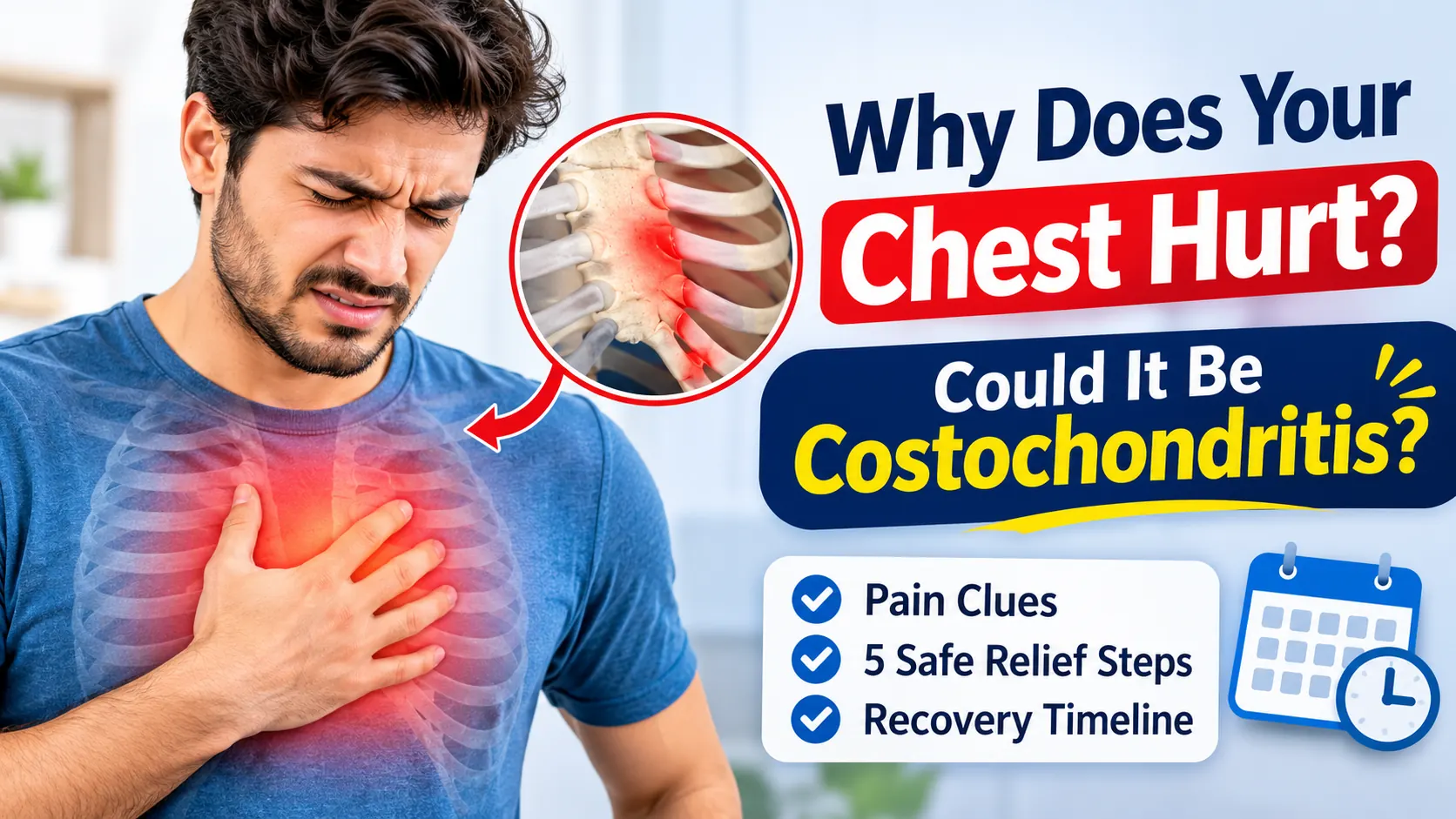
Table of contents
- 1. What Is Costochondritis?
- 2. Reading the Pain Clues
- 3. What a Clinician May Do
- 4. The Five Safe Relief Steps
- 5. Graph: Illustrative Pain Level Over Recovery
- 6. Sample Recovery Timeline
- 7. Red Flags: When to Call 911 or Go to the ER
- 8. Where to Get Care: Elmhurst, Chinatown and Lower Manhattan
- 9. Contact Us
- Conclusion
- Frequently Asked Questions
- See a Doctor in Elmhurst or Chinatown
Sharp or aching pain at the front of the chest is frightening, and it should never be brushed aside. In many cases, though, the pain comes from the chest wall rather than the heart, and one of the most common causes is costochondritis, inflammation of the cartilage that joins your ribs to your breastbone. The hallmark is pain that changes when you press on the spot, twist, or take a deep breath.
This guide explains how to read the pain clues, how chest wall pain differs from heart-related pain, five safe relief steps, and a sample recovery timeline. Because chest pain can be an emergency, the red flags section matters most. City Prime Care serves patients in Elmhurst, Queens and Lower Manhattan. This article is general education and not a substitute for medical evaluation.
Quick takeaways:
- Pain that reproduces when you press on the rib-breastbone junction often points to the chest wall.
- Costochondritis usually improves over weeks and is treated with rest, heat and short-term anti-inflammatory medicine if safe for you.
- Chest pressure with sweating, nausea, arm or jaw pain, or shortness of breath is an emergency: call 911.
- A clinician should confirm the cause; a diagnosis of costochondritis is made after serious causes are considered.
1. What Is Costochondritis?
Costochondritis is inflammation of the costal cartilage, the flexible tissue connecting the ribs to the sternum. It often affects the upper ribs on one side, though several spots can hurt. The cause is frequently unclear; it may follow a heavy cough, a respiratory infection, repeated strain from lifting or exercise, or minor chest injury. The Mayo Clinic overview of costochondritis is a helpful reference.
A related condition, Tietze syndrome, causes similar pain with visible swelling of one rib joint. Both are usually harmless and self-limited, but only an in-person exam can sort them from other causes.
2. Reading the Pain Clues
| Clue | Chest wall pain (such as costochondritis) | Pain that needs urgent evaluation |
|---|---|---|
| Pressing on the spot | Reproduces or worsens the pain | Pressing usually does not change it |
| Movement or deep breath | Pain sharpens with twisting or inhaling | May not change, or comes with breathlessness |
| Character | Sharp, aching, or pressure at the rib edge | Heavy pressure, squeezing, tightness |
| Spread | Stays near the breastbone or ribs | Spreads to arm, jaw, back or shoulder |
| With exertion | Pain may follow activity but is tender afterward | Pain starts or worsens with exertion and eases with rest |
| Other symptoms | Usually none | Sweating, nausea, dizziness, fainting |
These patterns are a guide only. Heart and lung problems can sometimes mimic chest wall pain, so a first-time episode should be examined. See also our guide on chest pain versus heartburn and heart palpitations.
3. What a Clinician May Do
A typical evaluation may include:
- A review of your symptoms, recent infections, cough, injuries and heart risk factors.
- A chest exam, including pressing on the rib joints to see whether the pain is reproduced.
- An electrocardiogram (ECG) to check heart rhythm and rule out heart-related causes.
- A chest X-ray or other tests when the story or exam suggests lung or other problems.
- A treatment plan, plus clear instructions on when to return or go to the emergency room.
4. The Five Safe Relief Steps
Once serious causes have been ruled out by a clinician, these steps are commonly recommended:
- Rest from the movements that trigger pain, such as heavy lifting, push-ups or vigorous upper-body workouts, for a few days to weeks.
- Apply a warm compress or heating pad for 15 to 20 minutes, a few times a day.
- Ask your clinician whether a short course of an over-the-counter anti-inflammatory medicine is safe for you, especially if you have kidney, stomach or blood pressure problems.
- Practice slow, gentle breathing and light posture stretches; avoid shallow breathing, which can worsen stiffness.
- Return to activity gradually, and book a follow-up if pain is not clearly better in a few weeks.
5. Graph: Illustrative Pain Level Over Recovery
This text graph is a teaching example of how pain often eases. Individual recovery varies.
| Week | Typical pain level (illustrative) | Intensity |
|---|---|---|
| Week 1 | ██████████ | High |
| Week 2 | ███████ | Moderate-high |
| Week 4 | █████ | Moderate |
| Week 6 | ███ | Mild |
| Week 8-12 | █ | Minimal or gone |
6. Sample Recovery Timeline
| Phase | Timing | What to do | Check-in |
|---|---|---|---|
| Evaluation | Day 1 | See a clinician; ECG if advised | Confirm other causes are excluded |
| Calm-down | Days 2-7 | Rest, heat, doctor-approved pain relief | Note pain level morning and night |
| Rebuild | Weeks 2-4 | Gentle stretching, light walking | Return to daily tasks |
| Return | Weeks 4-8 | Gradual return to lifting and exercise | Call if pain returns or worsens |
7. Red Flags: When to Call 911 or Go to the ER
Do not wait if chest pain comes with:
- Pressure, squeezing or heaviness, or pain spreading to the arm, jaw, neck or back.
- Shortness of breath, sweating, nausea, lightheadedness or fainting.
- Sudden sharp pain with a rapid heartbeat, or pain after a long trip or surgery.
- Fever with a red, warm, swollen chest area, or coughing blood.
- Known heart disease, or several risk factors such as diabetes, high blood pressure or smoking with new chest pain.
Our guide on recognizing a stroke in time is also worth reading as part of your emergency plan.
8. Where to Get Care: Elmhurst, Chinatown and Lower Manhattan
Many patients searching for urgent care Elmhurst NY, a walk in clinic Elmhurst NY, or urgent care 11373 need a quick exam and ECG for non-emergency chest wall pain, while others want a primary care doctor Elmhurst NY or a family doctor Elmhurst Queens for follow-up. A same day doctor appointment Elmhurst can help you get answers faster. Downtown, patients look for primary care Lower Manhattan, primary care Chinatown NYC, a doctor near Catherine Street NYC, primary care 75 Catherine St, or a walk-in clinic Chinatown NYC.
| Area | Common searches | How care can help |
|---|---|---|
| Elmhurst (ZIP 11373) | Urgent care 11373, same day doctor appointment Elmhurst | Prompt exam for non-emergency chest wall pain |
| Elmhurst, Queens | Family doctor Elmhurst Queens, walk in clinic Elmhurst NY | Follow-up and chronic disease management Elmhurst NY |
| Lower Manhattan | Primary care Lower Manhattan, preventive care Lower Manhattan | Heart-risk review and prevention |
| Chinatown / Catherine Street | Primary care Chinatown NYC, walk-in clinic Chinatown NYC, primary care 75 Catherine St | Convenient downtown access |
| Citywide | Primary care doctor NYC, family doctor Manhattan NYC, same day primary care NYC | Evaluation and referral when needed |
A primary care doctor near me, a physical exam clinic Elmhurst NY visit, preventive care Elmhurst NY, or an annual physical exam NYC is also the right place to review blood pressure, cholesterol and other heart risks so chest pain is easier to interpret. Find us on Google.
9. Contact Us
Questions about chest pain follow-up or booking a visit? Visit our Contact Us page or check our Google listing. For chest pain emergencies, call 911.
Conclusion
Costochondritis is a common and usually harmless cause of chest wall pain, but the safest approach is to have new chest pain evaluated. With confirmation from a clinician, rest, heat and patience usually bring steady improvement.
Frequently Asked Questions
See a Doctor in Elmhurst or Chinatown
Have a question about your own health? Book a visit at our Elmhurst, Queens clinic or our Chinatown, Manhattan clinic, or explore our primary care services.
Related articles
Healthcare
Why Do Your Legs Crawl or Ache When You Lie Down at Night, and Could It Be Restless Legs Syndrome? Reading the Symptom Clues, the Five Sleep Steps and the Sample Two-Week Sleep Plan
Crawling, aching legs at bedtime can signal restless legs syndrome. Learn the symptom clues, five sleep steps, a two-week plan and when to see a doctor in Elmhurst or Lower Manhattan.
Healthcare
Why Are Your Ankles and Feet Swollen by Evening, and When Is Leg Swelling Serious? Reading the Swelling Patterns, the Five Relief Steps and the Sample Two-Week Swelling Diary
Swollen ankles after a long day can be harmless, but swelling in one leg, sudden weight gain or breathlessness can signal a clot, heart, kidney or liver problem. Learn the patterns, five relief steps and a two-week diary.
Healthcare
Why Is a Red, Itchy Ring-Shaped Patch Spreading on Your Skin, and Is It Ringworm? Reading the Patch Types, the Five Treatment Steps and the Sample Four-Week Clearing Plan
A red, scaly, ring-shaped itchy patch is often ringworm, a common fungal skin infection that is not caused by a worm. Learn the patch types, look-alike rashes, five treatment steps and a four-week clearing plan.