HealthcareBy City Prime Care Team
Why Do Your Legs Crawl or Ache When You Lie Down at Night, and Could It Be Restless Legs Syndrome? Reading the Symptom Clues, the Five Sleep Steps and the Sample Two-Week Sleep Plan
Crawling, aching legs at bedtime can signal restless legs syndrome. Learn the symptom clues, five sleep steps, a two-week plan and when to see a doctor in Elmhurst or Lower Manhattan.
Medically reviewed by Dr. Karl E. Latortue9 min read
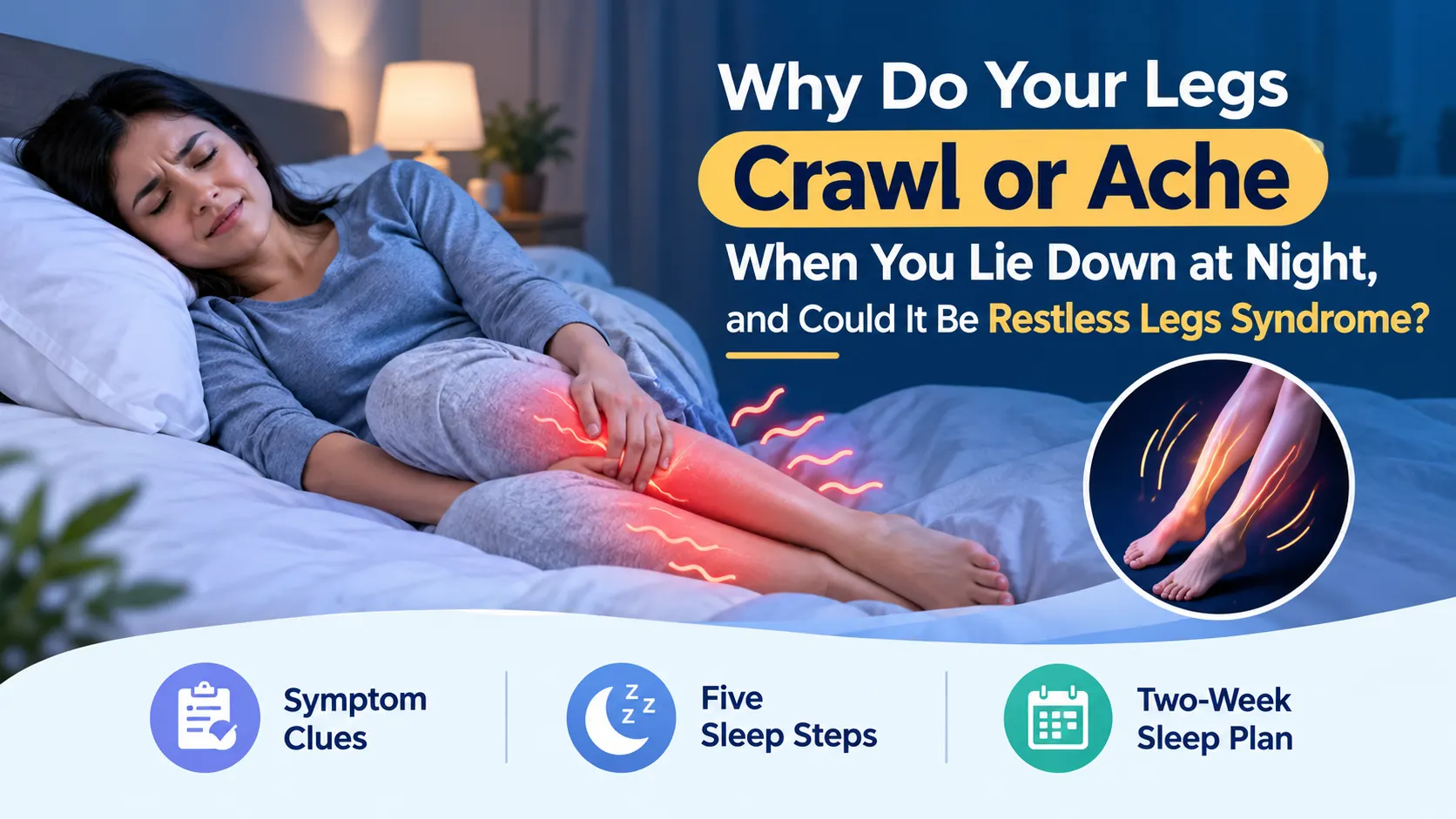
Table of contents
- 1. What Is Restless Legs Syndrome?
- 2. Reading the Symptom Clues
- 3. Common Triggers and Contributors
- 4. The Five Sleep Steps
- 5. Graph: When RLS Symptoms Tend to Feel Strongest
- 6. Sample Two-Week Sleep Plan
- 7. When to See a Doctor
- 8. Where to Get Care: Elmhurst, Chinatown and Lower Manhattan
- 9. Contact Us
- Conclusion
- Frequently Asked Questions
- See a Doctor in Elmhurst or Chinatown
You finally lie down after a long day, and your legs begin to crawl, pull or ache in a way that is hard to describe. Moving them helps for a moment, then the urge returns. If this happens most evenings, you may be dealing with restless legs syndrome (RLS), a common nervous-system condition that disrupts sleep, mood and daytime energy more than most people expect.
This guide explains how to read the symptom clues, walks through five practical sleep steps, and gives a sample two-week plan you can start tonight. It also covers when a simple blood test such as a ferritin level is worth asking about, and which leg symptoms need urgent attention. Care is available at City Prime Care for patients across Elmhurst, Queens and Lower Manhattan. This article is general education and does not replace personal medical advice.
Quick takeaways:
- RLS is an urge to move the legs, worse at rest and in the evening, and eased by moving.
- Low iron stores, certain medicines, pregnancy, kidney disease and heavy caffeine or alcohol use are common contributors.
- A clinical visit and a basic blood panel, often including ferritin, are the usual first steps.
- Sudden one-sided calf pain with swelling is different and needs urgent care.
1. What Is Restless Legs Syndrome?
Restless legs syndrome is a condition in which the legs feel uncomfortable sensations, often described as crawling, tingling, pulling or aching, paired with a strong urge to move them. Symptoms start or worsen during rest, are usually stronger in the evening or night, and ease temporarily with walking or stretching. You can read an overview from the Mayo Clinic page on restless legs syndrome and the NIH NINDS patient page.
Estimates suggest that roughly 5 to 10 percent of adults experience RLS symptoms at some point, and it is more common in women and with age. Many people wait years before mentioning it because they assume it is just a restless night. Because it can interrupt sleep for months, it is worth discussing with a primary care doctor.
2. Reading the Symptom Clues
Use this table to compare what you feel with the typical RLS pattern. One clue alone does not make a diagnosis; the combination matters.
| Clue | What it often feels like | What it may suggest |
|---|---|---|
| Urge to move | Strong need to shift or walk the legs | Core feature of RLS |
| Worse at rest | Sitting in a theater, flying, lying in bed | Typical RLS pattern |
| Evening or night peak | Symptoms build after sunset | Typical RLS pattern |
| Relief with movement | Walking or stretching eases it for a while | Typical RLS pattern |
| Both legs, sometimes arms | Crawling, tingling or deep ache | Typical RLS pattern |
| One calf, swollen, warm, red | Constant pain, not relieved by moving | Possible blood clot; seek urgent care |
| Burning feet all day | Constant tingling regardless of rest | May suggest nerve problems rather than RLS |
If the pain is in one leg and comes with swelling or redness, read our guide on the signs of a blood clot in the leg and seek care the same day.
3. Common Triggers and Contributors
Doctors commonly look at these factors when RLS appears or suddenly worsens:
- Low iron stores (a low ferritin level), even when the blood count looks normal.
- Pregnancy, especially in the third trimester.
- Chronic kidney disease or dialysis; see our guide on how to tell if your kidneys are healthy.
- Certain medicines, including some sedating antihistamines, some antidepressants and anti-nausea drugs.
- Caffeine, alcohol and nicotine, particularly late in the day.
- Poor or interrupted sleep, including untreated sleep apnea.
- Family history; RLS often runs in families.
4. The Five Sleep Steps
These steps are low-risk habits that many patients find helpful while they arrange a medical review:
- Keep a fixed sleep and wake time every day, including weekends, so your body clock stays steady.
- Stop caffeine by early afternoon and avoid alcohol and nicotine within four hours of bed.
- Try a warm bath, gentle calf and hamstring stretching, or a ten-minute walk 30 to 60 minutes before bed.
- Use a cool, dark room, and try a heating pad or a firm massage on the legs if symptoms start in bed.
- Ask your clinician to review all medicines and supplements and to check ferritin before you start any iron on your own.
5. Graph: When RLS Symptoms Tend to Feel Strongest
The chart below is an illustrative text graph showing how symptom intensity often rises through the day. It is a teaching example, not patient data.
| Time of day | Typical symptom intensity (illustrative) | Level |
|---|---|---|
| Morning (6-10 am) | ██ | Low |
| Midday (10 am-2 pm) | ███ | Low-moderate |
| Afternoon (2-6 pm) | █████ | Moderate |
| Evening (6-10 pm) | █████████ | High |
| Night (10 pm-2 am) | ██████████ | Highest |
6. Sample Two-Week Sleep Plan
Use this sample as a starting template and bring your notes to your appointment.
| Days | Focus | Daily action | Note in your diary |
|---|---|---|---|
| 1-3 | Baseline | Record bedtime, symptom start time and severity (0-10) | Caffeine and alcohol intake |
| 4-7 | Habits | Cut afternoon caffeine, add evening stretching and a warm bath | Change in severity |
| 8-10 | Review | List all medicines and supplements | Any new medicine before symptoms began |
| 11-14 | Medical visit | Book a visit; ask about ferritin, kidney and thyroid tests | Questions for the doctor |
7. When to See a Doctor
Book a visit if:
- Symptoms occur more than twice a week or keep you from falling asleep.
- Over-the-counter remedies and habit changes do not help after two weeks.
- You are pregnant, have kidney disease, or recently started a new medicine.
- You feel daytime exhaustion, low mood or trouble concentrating.
Seek urgent care for sudden swelling, warmth or redness in one leg, new weakness, or chest pain or shortness of breath. For a broader look at when a specialist is useful, see when your primary care doctor sends you to a specialist.
8. Where to Get Care: Elmhurst, Chinatown and Lower Manhattan
City Prime Care helps neighbors who search for urgent care Elmhurst NY, a primary care doctor Elmhurst NY, or a walk in clinic Elmhurst NY, as well as people looking for a family doctor Elmhurst Queens, a same day doctor appointment Elmhurst, or urgent care 11373. Patients who prefer downtown can look for primary care Lower Manhattan, primary care Chinatown NYC, a doctor near Catherine Street NYC, or primary care 75 Catherine St, or a walk-in clinic Chinatown NYC.
| Area | What you may be searching for | How a visit can help with restless legs |
|---|---|---|
| Elmhurst (ZIP 11373) | Urgent care 11373, same day doctor appointment Elmhurst | Symptom review, medicine check, ordering ferritin and basic labs |
| Elmhurst, Queens | Family doctor Elmhurst Queens, primary care doctor Elmhurst NY | Ongoing sleep and chronic disease management Elmhurst NY |
| Lower Manhattan | Primary care Lower Manhattan, preventive care Lower Manhattan | Follow-up care and preventive screening |
| Chinatown / Catherine Street | Primary care Chinatown NYC, doctor near Catherine Street NYC, primary care 75 Catherine St | Convenient visits for downtown residents and workers |
| Citywide | Primary care doctor NYC, family doctor Manhattan NYC, same day primary care NYC | Same-day or scheduled evaluation |
If you are searching for a primary care doctor near me, a physical exam clinic Elmhurst NY, preventive care Elmhurst NY, an annual physical exam NYC, or chronic disease management Elmhurst NY, a routine checkup is a good time to bring up sleep and leg symptoms. You can also find the clinic on Google here.
9. Contact Us
Ready to talk about your sleep and leg symptoms? Reach the team through our Contact Us page, and see our Google listing for directions and updates.
Conclusion
Restless legs syndrome is common, treatable and often overlooked. Tracking your symptoms, trimming evening triggers and asking for a ferritin check can make a real difference to your sleep. Pair these steps with regular preventive visits so small problems are caught early.
Frequently Asked Questions
See a Doctor in Elmhurst or Chinatown
Have a question about your own health? Book a visit at our Elmhurst, Queens clinic or our Chinatown, Manhattan clinic, or explore our primary care services.
Related articles
Healthcare
Why Does the Front of Your Chest Hurt When You Press on It or Take a Deep Breath, and Could It Be Costochondritis? Reading the Pain Clues, the Five Safe Relief Steps and the Sample Recovery Timeline
Chest wall pain that changes with pressure or breathing may be costochondritis, but chest pain should never be guessed at. Learn the clues, relief steps and red flags.
Healthcare
Why Are Your Ankles and Feet Swollen by Evening, and When Is Leg Swelling Serious? Reading the Swelling Patterns, the Five Relief Steps and the Sample Two-Week Swelling Diary
Swollen ankles after a long day can be harmless, but swelling in one leg, sudden weight gain or breathlessness can signal a clot, heart, kidney or liver problem. Learn the patterns, five relief steps and a two-week diary.
Healthcare
Why Is a Red, Itchy Ring-Shaped Patch Spreading on Your Skin, and Is It Ringworm? Reading the Patch Types, the Five Treatment Steps and the Sample Four-Week Clearing Plan
A red, scaly, ring-shaped itchy patch is often ringworm, a common fungal skin infection that is not caused by a worm. Learn the patch types, look-alike rashes, five treatment steps and a four-week clearing plan.