
HealthcareBy City Prime Care Team
What Does a Men's Health Clinic in Elmhurst Actually Treat? Reading the Service Areas, the Visit Types and the Sample Checkup Plan
Men's health care covers more than most men expect: checkups, heart and metabolic risk, testosterone, prostate health and confidential sexual health. See what the Elmhurst clinic covers, what a visit looks like and a sample checkup plan.
Medically reviewed by City Prime Care Administrator9 min read
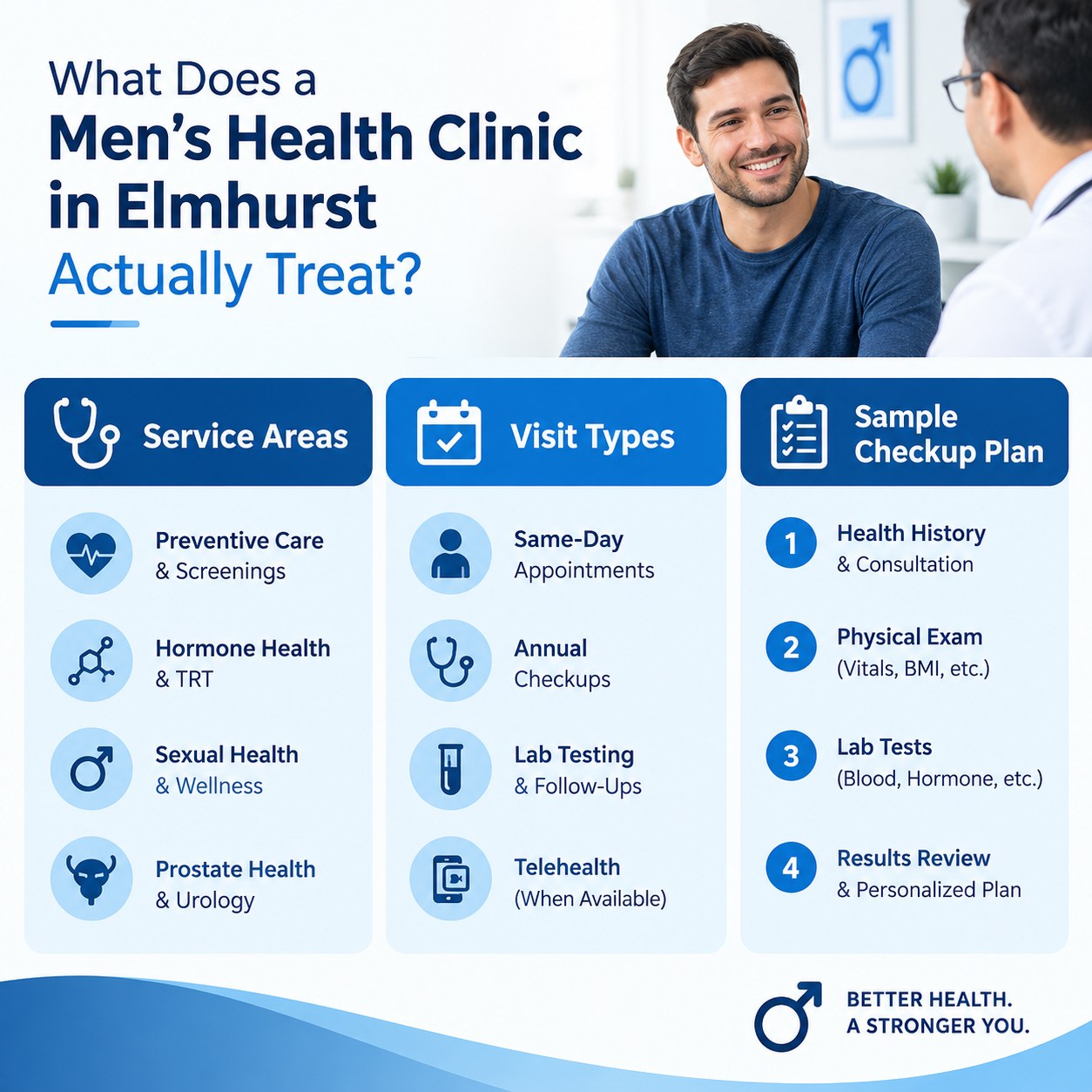
Table of contents
- 1. What Men's Health Care Includes
- 2. The Service Areas
- 3. What a Checkup Covers
- 4. Where Men's Health Care Is Most Often Needed
- 5. Testosterone and Prostate Care, Step by Step
- 6. Heart, Metabolic and Sexual Health
- 7. A Sample Checkup Plan for One Year
- 8. Privacy, Languages, Booking and Red Flags
- Conclusion
- Frequently Asked Questions
- See a Doctor in Elmhurst or Chinatown
Ask a group of men when they last saw a doctor for something other than an injury or an infection, and many will have to think. Yet some of the most important health risks for men, such as high blood pressure, high cholesterol, rising blood sugar, and prostate and colon cancer, are quiet for years. A men's health clinic exists to find them while they are still easy to manage.
This guide explains what a men's health clinic in Elmhurst treats and checks, using the men's health page on the City Prime Care website for its Elmhurst clinic at 41-02 75th St. It covers the service areas, the kinds of visits, how privacy works, and a sample checkup plan across a year. Details can change, so confirm them on the clinic's men's health page or by calling. This is general education, not personal medical advice.
In this article:
- 1. What men's health care includes
- 2. The service areas (table)
- 3. What a checkup covers
- 4. Where men's health care is most often needed (graph)
- 5. Testosterone and prostate care, step by step
- 6. Heart, metabolic and sexual health
- 7. A sample checkup plan for one year
- 8. Privacy, languages, booking and red flags
1. What Men's Health Care Includes
The clinic describes men's health as yearly physicals, testosterone and prostate checks, heart and metabolic screening, and private conversations about sexual health, all with the same primary care team that knows your history. It says the aim of a regular checkup is to catch quiet problems first, such as rising blood pressure, creeping blood sugar, or cholesterol that has drifted up over a few years, none of which usually cause early symptoms.
For plain-language background, see the MedlinePlus men's health page and our annual physical checkup guide.
2. The Service Areas
| Service area | What the clinic says it covers | How it is done |
|---|---|---|
| 1. Men's checkups | Physical exam with blood pressure, weight, and heart and lung checks; blood work such as cholesterol, A1C, and kidney and liver function when indicated; age-based screening; review of vaccines, sleep, stress, alcohol, smoking, and mood | In the clinic; colorectal screening from 45 by referral |
| 2. Testosterone and hormone testing | Conversation, morning blood draw, and review of related causes such as sleep, weight, medicines, thyroid, and mood | Blood drawn in the clinic and sent to an outside laboratory |
| 3. Prostate health and PSA screening | Evaluation of urinary symptoms and a shared decision about PSA testing | PSA drawn with other routine labs; urology referral if needed |
| 4. Heart and metabolic health | Blood pressure, lipid panel, blood sugar, and 10-year cardiovascular risk estimate | In the clinic; cardiology referral when needed |
| 5. Confidential sexual health | Private discussion of erections, libido, ejaculation, and STIs; STI testing and treatment | In the clinic; urology referral when needed |
Related services include preventive care, chronic disease management, and diagnostic testing.
3. What a Checkup Covers
| Part of the visit | What happens | Why it matters |
|---|---|---|
| Physical exam | Blood pressure, weight, heart and lung checks | Finds changes you cannot feel |
| Blood work | Cholesterol, A1C, kidney and liver function when indicated | Shows heart, diabetes, and organ risk; see common blood tests |
| Age-based screening | Colorectal screening from 45 by referral; others by age and risk | Catches cancers early; see men's screenings by age |
| Lifestyle review | Vaccines, sleep, stress, alcohol, smoking, mood | Shapes your plan; see adult vaccines |
| Plain-language results | Your provider explains each result and sets next steps | You leave knowing what to do |
Men who want a broader baseline often pair this visit with the clinic's comprehensive health assessment.
4. Where Men's Health Care Is Most Often Needed
The graph below is an illustrative guide to how often men commonly raise each area at a primary care visit, not clinic data. It shows why heart and metabolic checks and lifestyle topics tend to dominate, while confidential issues are common but less often spoken about.
| Area | How often raised (graph) | Note |
|---|---|---|
| Blood pressure, cholesterol, blood sugar | ██████████ Very common | Often silent until checked |
| Sleep, stress, energy | ████████░░ Very common | See low energy in men |
| Weight and activity | ███████░░░ Common | See lifestyle counseling |
| Urinary symptoms and prostate questions | ██████░░░░ Common after 50 | Often manageable |
| Sexual health | █████░░░░░ Common but under-reported | Handled privately |
| Hormone concerns | ████░░░░░░ Moderate | Many causes besides testosterone |
5. Testosterone and Prostate Care, Step by Step
The clinic describes testosterone evaluation like this:
- Talk through symptoms such as low interest in sex, fewer morning erections, erectile difficulty, ongoing fatigue, loss of muscle strength, extra body fat, or low mood.
- Review the whole picture first: sleep, weight, medicines, thyroid function, mood, and other health conditions, because low testosterone is only one possible cause.
- Draw a morning blood sample, when levels are highest, which is sent to an outside laboratory.
- Repeat a low result on a separate day to confirm it, and check related hormones and a blood count if needed.
- Decide on treatment individually, based on symptoms, confirmed labs, age, fertility plans, and other risks, with referral to endocrinology or urology when hormone therapy is being considered or the cause is unclear.
For prostate care, the clinic says guidelines recommend that men aged 55 to 69 make an individual decision about PSA screening after discussing benefits and harms. Men at higher risk, including Black men and those with a father or brother diagnosed with prostate cancer, may want that talk to start around age 40 to 45. A raised PSA does not mean cancer. For background, see the MedlinePlus prostate cancer screening page.
6. Heart, Metabolic and Sexual Health
| Topic | What the clinic says | Related reading |
|---|---|---|
| Heart and metabolic risk | Heart disease is a leading cause of death for men; risks such as high blood pressure, high cholesterol, type 2 diabetes, waist weight, and smoking cluster together; the visit checks blood pressure, lipids, and blood sugar when indicated and estimates 10-year risk | High blood pressure; cholesterol |
| Sleep apnea | Snoring and daytime sleepiness are asked about because untreated sleep apnea is linked to high blood pressure | Sleep and your health |
| Erectile dysfunction | Worth evaluating because it can signal heart disease, diabetes, or other blood vessel problems; care may include treating underlying conditions, reviewing medicines, prescription medication when safe, STI testing, and urology referral | Private visit |
| Ongoing conditions | Hypertension, diabetes, and high cholesterol move into regular follow-up | Chronic disease management |
The clinic notes that what you share stays in your medical record and is protected under federal privacy law.
7. A Sample Checkup Plan for One Year
The plan below is an illustrative example for an average-risk adult man in his forties, not a prescription. Your provider adjusts it to your age, family history, and results.
| Period | Planned activity (graph) | Example focus |
|---|---|---|
| Month 1 | ████████ Busiest | Men's physical, blood work, blood pressure, vaccine review |
| Month 2 | ████ Light | Results explained, plan for any borderline values |
| Months 3-6 | ███ Light | Habit changes: sleep, activity, weight; home blood pressure readings if advised |
| Months 7-9 | █████ Moderate | Recheck borderline labs, colorectal screening if age 45 or older |
| Months 10-12 | █████ Moderate | Flu shot, plan for next year |
8. Privacy, Languages, Booking and Red Flags
The Elmhurst clinic lists Monday to Friday hours of 9:00 AM to 6:00 PM, care in English and Spanish, and acceptance of most major plans including Medicaid and Medicare. The clinic says you can book a general health visit online without stating the reason, if you prefer. Book through the appointment page and choose Men's Health.
| Warning sign | Action |
|---|---|
| Chest pain, pressure, or shortness of breath | Call 911; see our guide on chest discomfort |
| Sudden weakness, facial drooping, or trouble speaking | Call 911 |
| Sudden severe testicular pain or swelling | Go to the ER |
| Unable to urinate, or blood in urine | Be seen urgently |
| Persistent low mood or thoughts of self-harm | Call or text 988; see the 988 Lifeline |
Conclusion
A men's health visit is not about finding something wrong. It is about knowing your numbers, catching quiet problems early, and having a private place to ask the questions you would otherwise skip.
Contact Us: To ask about a men's physical, testosterone or prostate questions, or confidential sexual health, reach City Prime Care through our Contact Us page. This article is for general information and does not replace personal medical advice. In an emergency, call 911.
Frequently Asked Questions
See a Doctor in Elmhurst or Chinatown
Have a question about your own health? Book a visit at our Elmhurst, Queens clinic or our Chinatown, Manhattan clinic, or explore our primary care services.
Related articles
Healthcare
Why Do So Many Men Put Off Seeing a Doctor? Reading the Common Excuses, the Five Reframes and the Sample First-Visit Plan
Many men skip checkups until something hurts. See the common reasons men avoid doctors, five practical ways to reframe them, what a first visit looks like and how to make it easier, private and short.
Healthcare
What Heart Warning Signs Should Men in Queens Never Ignore? Reading the Symptom Clues, the Risk Factors and the Sample Heart-Risk Checklist
Heart disease often builds quietly for years. Learn the warning signs of a heart attack, silent risk factors, how risk is estimated, and a sample heart-risk checklist for men in Queens.
Healthcare
How Do You Book a Visit at City Prime Care? Reading the Booking Options, the Four Steps and the Sample Visit Timeline
Booking a primary care visit is easier when you know the steps. See how to choose a clinic, service, provider and time, how same-day slots work, what to have ready, and a sample timeline from request to follow-up.





