HealthcareBy City Prime Care Team
Are Your Bulging, Aching Leg Veins Just Cosmetic, or a Sign of Venous Disease? Reading the Vein Stages, the Five Self-Care Steps and the Sample Daily Leg Plan
Twisted, bulging or aching leg veins may be more than a cosmetic issue. Learn the vein stages, risk factors, compression and treatment options, five self-care steps and a sample daily leg plan with a simple graph.
Medically reviewed by Dr. Helen Vasquez10 min read
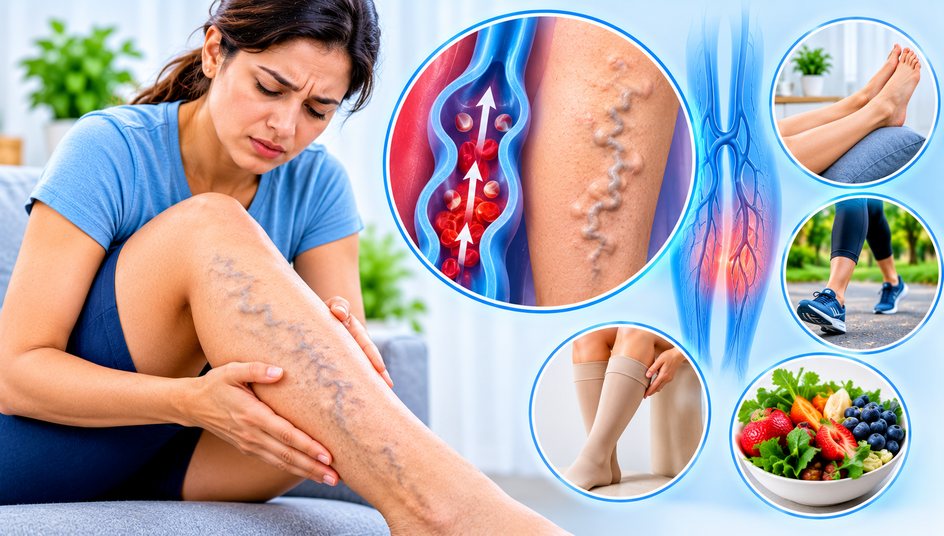
Table of contents
- 1. How Leg Veins Work and What Goes Wrong
- 2. The Stages of Venous Disease
- 3. Symptoms to Notice
- 4. Who Is at Higher Risk?
- 5. Varicose Vein or Blood Clot?
- 6. Five Warning Signs That Need Prompt Care
- 7. How Venous Disease Is Diagnosed
- 8. Treatment Options
- 9. Sample Daily Leg Plan
- 10. Five Self-Care Steps
- 11. Primary, Urgent and Preventive Care in Elmhurst and Lower Manhattan
- 12. Contact Us and Find Us Online
- Conclusion
- Frequently Asked Questions
- See a Doctor in Elmhurst or Chinatown
Varicose veins are enlarged, twisted veins that bulge under the skin, most often in the legs and feet. Veins carry blood back to the heart, and tiny one-way valves keep it flowing upward against gravity. When those valves weaken or fail, blood pools in the vein, which stretches and bulges. The related condition, chronic venous insufficiency, describes long-term poor blood return from the legs and can cause swelling, skin changes and sores.
For many people varicose veins are mostly a cosmetic concern, but for others they cause aching, heaviness, cramping and skin problems that deserve medical care. This guide explains how the veins work, the stages of venous disease, symptoms and risk factors, the difference between a harmless vein and a dangerous clot, the five warning signs that need prompt care, treatment options, a sample daily leg plan and prevention tips. It is general education only. A sudden painful, swollen leg with shortness of breath or chest pain needs emergency care. Call 911.
| At a Glance | Key Point |
|---|---|
| What it is | Enlarged, twisted veins caused by weak or damaged valves |
| Common signs | Visible bulging veins, aching, heaviness, swelling, night cramps and itching |
| Risk factors | Age, family history, pregnancy, excess weight and long periods of standing or sitting |
| Treatment | Movement, elevation, compression, and procedures such as sclerotherapy or ablation |
| Emergency signs | Sudden painful swelling of one leg, chest pain, shortness of breath or a bleeding vein |
1. How Leg Veins Work and What Goes Wrong
Leg muscles squeeze the veins when you walk, pushing blood upward, while valves stop it from flowing back down. If valves leak, blood collects in the lower leg, raising pressure in the veins. Over time the walls stretch, producing visible, rope-like veins. Smaller red or blue web-like veins are called spider veins and are usually harmless. For trusted background, see the NHLBI guide to varicose veins and MedlinePlus on varicose veins.
2. The Stages of Venous Disease
| Stage | What You May Notice | What to Do |
|---|---|---|
| Spider veins | Thin red, blue or purple web-like lines | Usually cosmetic; treat only if you wish |
| Varicose veins | Bulging, rope-like veins; aching or heaviness | Self-care and an evaluation if symptoms bother you |
| Swelling | Ankle and calf swelling that builds up during the day | Ask about venous testing and compression |
| Skin changes | Brown discoloration, dry itchy skin or hardened skin near the ankle | See a clinician; early treatment protects skin |
| Healed or active ulcer | An open sore near the ankle that heals slowly | Needs medical care promptly |
3. Symptoms to Notice
Common signs include:
- Dark purple or blue veins that look twisted or bulging.
- An aching, heavy or tired feeling in the legs, worse at the end of the day.
- Swollen ankles or calves that improve after elevating the legs.
- Burning, throbbing, muscle cramps or restless legs, especially at night.
- Dry, itchy skin or brown staining around the ankles.
Symptoms are often worse after long periods of standing or sitting, in hot weather and during pregnancy.
4. Who Is at Higher Risk?
| Risk Factor | Why It Matters |
|---|---|
| Family history | Weak valves and vein walls can be inherited |
| Age | Valves wear down over time |
| Female sex and pregnancy | Hormones relax vein walls, and the growing uterus adds pressure |
| Overweight or obesity | Extra pressure on leg veins; see losing weight safely with your doctor's support |
| Long periods of standing or sitting | Blood pools when leg muscles are not working, common for nurses, drivers, cooks and office workers |
| Previous leg clot or injury | Damaged valves can cause lasting reflux |
5. Varicose Vein or Blood Clot?
| Clue | Varicose Veins | Possible Deep Vein Clot (DVT) |
|---|---|---|
| Onset | Gradual, over months or years | Often sudden, over hours to days |
| Swelling | Both legs or the lower leg; improves with elevation | Usually one leg, with warmth, redness or a tight, painful calf |
| Pain | Aching and heaviness | Persistent, deep or cramping pain that does not ease |
| Action | Routine evaluation | Emergency evaluation |
A clot can travel to the lungs. Read the signs of a blood clot in the leg and when it is an emergency.
6. Five Warning Signs That Need Prompt Care
Get prompt care, or call 911 for severe symptoms, if you notice:
- Sudden swelling, pain, warmth or redness in one leg, especially after travel, surgery or long bed rest.
- Shortness of breath, chest pain, a fast heartbeat or coughing blood. Call 911.
- A varicose vein that bleeds. Lie down, raise the leg and apply firm pressure, and seek care.
- A hard, red, very tender cord in a vein, or a spreading red, warm patch on the leg.
- A sore or open skin ulcer near the ankle, or skin that is turning dark, hard or weeping.
If you are unsure where to go, read when a problem calls for the emergency room instead of urgent care in Queens.
7. How Venous Disease Is Diagnosed
Your clinician will look at your legs while you stand, feel for swelling and warmth and ask about family history, pregnancies, work and symptoms. The main test is a duplex ultrasound, a painless scan that shows the veins, checks valve function and rules out a clot. It is usually done in a vascular lab. You may be referred to a vein specialist; see when your primary care doctor sends you to a specialist.
8. Treatment Options
| Option | How It Helps | Notes |
|---|---|---|
| Walking and exercise | Calf muscles pump blood upward | Daily movement is the base of treatment |
| Leg elevation | Lets pooled blood drain | Raise legs above heart level for 15 minutes, several times a day |
| Compression stockings | Squeeze the legs to improve blood return | Fit and strength matter; ask which pressure is right, since some people with poor circulation should not use them |
| Sclerotherapy | Injection that closes small to medium veins | Office procedure; may need more than one session |
| Endovenous thermal ablation | Laser or radiofrequency heat closes a diseased vein | Minimally invasive; common for larger veins |
| Vein stripping or phlebectomy | Surgical removal of veins | Used less often today |
Insurance coverage often depends on symptoms and failed conservative care, so keep notes about pain, swelling and how long you have tried compression.
9. Sample Daily Leg Plan
This teaching example shows a daily routine that supports leg circulation. Your clinician's advice comes first. The squares show example minutes of activity or elevation, with each square equal to about 5 minutes.
| Time of Day | Action | Example Minutes |
|---|---|---|
| Morning | Put on compression stockings before getting out of bed or soon after rising, then take a short walk | ■■■■ |
| Midday | Stand up and walk every hour at work; do calf raises and ankle circles | ■■■■■■ |
| Afternoon | A brisk walk or other exercise | ■■■■■■ |
| Evening | Elevate legs above heart level and remove stockings before bed unless advised | ■■■ |
If swelling or pain is getting worse despite this plan, book an evaluation.
10. Five Self-Care Steps
These habits ease symptoms and slow progression:
- Move often: walk daily and avoid sitting or standing still for long periods.
- Elevate your legs several times a day, especially after long hours on your feet.
- Wear properly fitted compression stockings if your clinician recommends them.
- Keep a healthy weight, eat enough fiber and limit salt to reduce swelling.
- Protect your skin: moisturize, avoid scratching and treat any cut or sore on the lower leg promptly.
11. Primary, Urgent and Preventive Care in Elmhurst and Lower Manhattan
Leg swelling or pain should not be ignored, and many Queens residents look for urgent care Elmhurst NY, a walk in clinic Elmhurst NY or a same day doctor appointment Elmhurst when a leg suddenly changes. City Prime Care helps patients who need urgent care 11373, a primary care doctor Elmhurst NY, a family doctor Elmhurst Queens or a primary care doctor near me. For long-term vein health, we also offer a physical exam clinic Elmhurst NY visit, preventive care Elmhurst NY and chronic disease management Elmhurst NY, including care for diabetes, weight and blood pressure that affect circulation.
Downtown, people looking for primary care Lower Manhattan, a primary care doctor NYC or primary care Chinatown NYC can see our team near 75 Catherine St. Whether you search for a doctor near Catherine Street NYC, primary care 75 Catherine St, a walk-in clinic Chinatown NYC or a family doctor Manhattan NYC, we can examine your legs, review risk factors and arrange vein testing or referral. Add an annual physical exam NYC, same day primary care NYC or preventive care Lower Manhattan to review your overall circulation and heart health. See what happens at your first urgent care visit in Elmhurst and which conditions urgent care in Elmhurst can treat.
12. Contact Us and Find Us Online
If you have bulging veins, aching or swollen legs, or skin changes near your ankles, our team can examine you and guide next steps, including testing and referral. For non-emergency questions, Contact Us, book a visit, or find City Prime Care on Google: City Prime Care on Google. For a sudden painful swollen leg, chest pain, shortness of breath or a bleeding vein that will not stop, call 911 or go to the emergency room.
Conclusion
Varicose veins are common and often manageable with movement, elevation and compression, and effective procedures are available when symptoms or skin changes persist. The key is to tell a slowly developing vein problem from a sudden swollen leg that could be a blood clot, which needs urgent care. This article is for general education and does not replace medical advice.
Frequently Asked Questions
See a Doctor in Elmhurst or Chinatown
Have a question about your own health? Book a visit at our Elmhurst, Queens clinic or our Chinatown, Manhattan clinic, or explore our primary care services.
Related articles
Healthcare
Why Are Your Ankles and Feet Swollen by Evening, and When Is Leg Swelling Serious? Reading the Swelling Patterns, the Five Relief Steps and the Sample Two-Week Swelling Diary
Swollen ankles after a long day can be harmless, but swelling in one leg, sudden weight gain or breathlessness can signal a clot, heart, kidney or liver problem. Learn the patterns, five relief steps and a two-week diary.
Healthcare
Why Is a Red, Itchy Ring-Shaped Patch Spreading on Your Skin, and Is It Ringworm? Reading the Patch Types, the Five Treatment Steps and the Sample Four-Week Clearing Plan
A red, scaly, ring-shaped itchy patch is often ringworm, a common fungal skin infection that is not caused by a worm. Learn the patch types, look-alike rashes, five treatment steps and a four-week clearing plan.
Healthcare
Why Is Your Hair Thinning or Falling Out in Clumps, and Could a Health Problem Be Behind It? Reading the Hair Loss Patterns, the Five Checkup Steps and the Sample Six-Month Regrowth Timeline
Finding more hair in the shower or brush can be stressful. Learn the common hair loss patterns, which blood tests and health problems matter, five checkup steps and a realistic six-month regrowth timeline.