HealthcareBy City Prime Care Team
What Are Those Painful Sores Inside Your Mouth, and When Should They Be Checked? Reading the Sore Types, the Five Relief Steps and the Sample Healing Timeline
Most mouth sores are harmless canker sores that heal in one to two weeks, but some need a closer look. Learn the sore types, causes, red flags, treatment, five relief steps and a sample healing timeline with a simple graph.
Medically reviewed by Dr. Karl E. Latortue10 min read
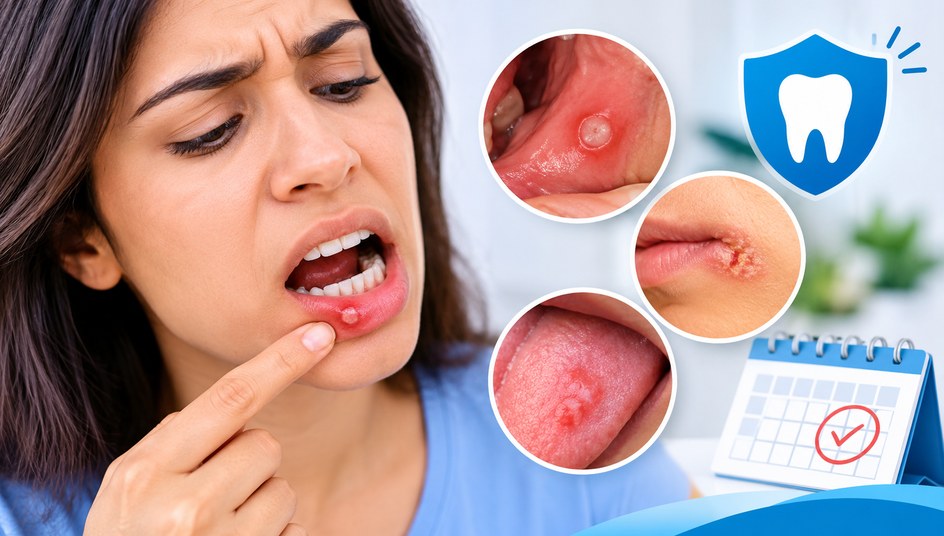
Table of contents
- 1. Types of Mouth Sores
- 2. Canker Sore or Cold Sore?
- 3. Common Triggers and Causes
- 4. Who Is at Higher Risk?
- 5. Five Red Flags That Need a Clinician
- 6. How Mouth Sores Are Evaluated
- 7. Treatment Options
- 8. Sample Healing Timeline
- 9. Eating and Drinking With a Mouth Sore
- 10. Five Relief Steps
- 11. Primary, Urgent and Preventive Care in Elmhurst and Lower Manhattan
- 12. Contact Us and Find Us Online
- Conclusion
- Frequently Asked Questions
- See a Doctor in Elmhurst or Chinatown
A sore on the inside of the cheek, lip, tongue or gums can make eating, drinking and even talking uncomfortable. The most common type is the canker sore, also called an aphthous ulcer: a small, round, painful sore with a white or yellow center and a red border. Canker sores are not contagious, affect roughly one in five people at some point and usually heal on their own in one to two weeks.
Not every mouth sore is a canker sore, though. Cold sores from the herpes simplex virus, oral thrush, injuries, vitamin deficiencies, infections and, rarely, oral cancer can look similar. Knowing the difference helps you treat a sore at home and know when to get it checked. This guide explains the common types of mouth sores, causes, who is at higher risk, how canker sores differ from cold sores, five red flags that need a clinician, treatment options, a sample healing timeline with a simple graph, five relief steps and FAQs. It is general education only. Trouble breathing or swallowing, a swollen face or neck, or high fever with severe mouth pain needs emergency care. Call 911 for severe symptoms.
| At a Glance | Key Point |
|---|---|
| Most common type | Canker sore (aphthous ulcer) inside the mouth; not contagious |
| Usual healing time | About 7 to 14 days for small sores |
| Common triggers | Minor injury, acidic foods, stress, hormone changes, low vitamins and some toothpaste ingredients |
| Home care | Salt-water or baking-soda rinses, avoiding irritating foods and numbing gels |
| See a clinician | A sore lasting over 2 weeks, very large or frequent sores, fever, or trouble eating or drinking |
1. Types of Mouth Sores
Mouth sores have many causes, and where and how they appear offers clues. For trusted background, see MedlinePlus on canker sores and mouth disorders, and the CDC's information on oral health.
| Type | Where and How It Looks | Contagious? | Typical Course |
|---|---|---|---|
| Minor canker sore | Small round sore, under 1 cm, inside cheeks, lips, tongue or gums | No | Heals in 1 to 2 weeks without scarring |
| Major canker sore | Larger, deeper and very painful | No | Can take several weeks and may scar |
| Herpetiform sores | Clusters of many tiny sores | No | Heal in 1 to 2 weeks |
| Cold sore | Blisters on or around the lips that crust over | Yes, herpes simplex virus | Heals in 7 to 10 days; can recur |
| Oral thrush | Creamy white patches that may wipe off and leave redness | Not usually between healthy adults | Needs antifungal treatment |
| Injury or burn | Sore after biting, braces, dentures or hot food | No | Heals as the trauma settles |
2. Canker Sore or Cold Sore?
| Clue | Canker Sore | Cold Sore |
|---|---|---|
| Location | Inside the mouth on soft tissue | On or around the lips and sometimes under the nose |
| Appearance | Round or oval ulcer with a white or yellow center | Fluid-filled blisters that crust |
| Cause | Not fully understood; immune and trigger factors | Herpes simplex virus |
| Contagious | No | Yes, especially when blisters are present |
| Warning feeling | Burning or tingling just before it appears | Tingling, itching or burning before blisters |
3. Common Triggers and Causes
Mouth sores are often linked to:
- Minor injury from biting the cheek, brushing too hard, braces or dental work.
- Acidic or spicy foods such as citrus, tomatoes, pineapple and some sauces.
- Stress, poor sleep and hormone changes, a link also discussed in when stress, low mood or anxiety need a doctor's help.
- Low iron, vitamin B12, folate or zinc, which a blood test can check.
- Toothpaste and mouthwash with sodium lauryl sulfate in some sensitive people.
- Food sensitivities, celiac disease, inflammatory bowel disease or other immune conditions.
- Viral or fungal infections, some medicines and, rarely, oral cancer.
4. Who Is at Higher Risk?
| Risk Factor | Why It Matters |
|---|---|
| Teens and young adults | Canker sores are most common between ages 10 and 40 |
| Family history | Frequent canker sores often run in families |
| Nutrient deficiencies | Low iron, B12 or folate raise recurrence; see why Vitamin D and other checks are low so often in New York |
| People with weakened immunity or chronic illness | More frequent and slower-healing sores |
| Tobacco and heavy alcohol users | Higher risk of long-lasting sores and oral cancer |
| People with braces or dentures | Rubbing and irritation inside the mouth |
5. Five Red Flags That Need a Clinician
Get medical care promptly, or call 911 for severe symptoms, if you notice:
- A sore, white or red patch, or lump that has not healed after two weeks, especially with tobacco or alcohol use.
- Sores that are very large, spreading, unusually painful or that keep coming back several times a year.
- Fever, swollen glands, a rash or joint pain along with mouth sores.
- Pain so severe that you cannot eat, drink or swallow, or signs of dehydration such as dizziness and dark urine.
- Trouble breathing or swallowing, a swollen face or tongue, or numbness of the mouth or lip.
If you are unsure where to go, read when a problem calls for the emergency room instead of urgent care in Queens. A sore throat with fatigue can also point to mononucleosis.
6. How Mouth Sores Are Evaluated
Your clinician will ask when the sore began, how many you have had, what triggers you notice and about medicines, tobacco and other symptoms such as stomach problems or eye changes. After examining the mouth, a clinician may order blood tests for iron, B12, folate or immune conditions, swab a suspected infection or refer you to a dentist, oral surgeon or specialist. A sore that persists beyond two weeks may need a biopsy. See when your primary care doctor sends you to a specialist for referral timing.
7. Treatment Options
| Option | How It Helps | Notes |
|---|---|---|
| Salt-water or baking-soda rinse | Cleans the area and soothes pain | Half a teaspoon of salt in a cup of warm water, several times a day |
| Over-the-counter numbing gels | Short-term pain relief before meals | Follow label limits and avoid in young children without advice |
| Protective pastes or patches | Cover the sore so it hurts less | Apply to a dry sore |
| Antimicrobial mouth rinse | Lowers bacteria on the sore | Use as directed |
| Prescription steroid gel or rinse | Reduces inflammation in severe sores | Needs a clinician's prescription |
| Vitamin or iron correction | Prevents repeat sores if a deficiency is found | Based on blood tests |
| Antiviral or antifungal medicine | Treats cold sores or thrush | Only after the cause is confirmed |
8. Sample Healing Timeline
This teaching example shows how a typical minor canker sore might heal. Timing varies, and a sore that has not healed by two weeks should be checked. The squares show relative pain, where more squares mean more discomfort.
| When | What Usually Happens | Pain Level |
|---|---|---|
| Day 1 | Tingling or burning, then a small red spot | ■■ |
| Days 2 to 3 | Ulcer forms with a white or yellow center | ■■■■■■■ |
| Days 4 to 6 | Pain starts to ease with rinses and a soft diet | ■■■■■ |
| Days 7 to 10 | Sore shrinks and the edges look less red | ■■■ |
| Days 10 to 14 | Sore closes and tissue returns to normal | ■ |
| After 2 weeks | Get any sore that remains checked | Call a clinician |
9. Eating and Drinking With a Mouth Sore
| Choose | Limit or Avoid |
|---|---|
| Cool, soft foods such as yogurt, oatmeal, mashed potatoes and smoothies | Citrus, tomatoes, vinegar and pineapple |
| Plain rice, eggs, bananas and soups that have cooled | Spicy, salty or crunchy foods such as chips and nuts |
| Plenty of water, using a straw if helpful | Alcohol, very hot drinks and carbonated drinks |
10. Five Relief Steps
These steps ease pain and support healing:
- Rinse gently with warm salt water or a baking-soda rinse after meals and at bedtime.
- Avoid acidic, spicy, salty and rough foods until the sore heals.
- Brush with a soft toothbrush and consider an SLS-free toothpaste if sores recur.
- Use a numbing gel or protective paste as directed before eating, and drink plenty of fluids.
- Track triggers in a short diary and ask about testing for iron, B12 or folate if sores keep returning.
11. Primary, Urgent and Preventive Care in Elmhurst and Lower Manhattan
When a mouth sore is painful or will not heal, many Queens residents search for urgent care Elmhurst NY, a walk in clinic Elmhurst NY or a same day doctor appointment Elmhurst. City Prime Care helps patients who need urgent care 11373, a primary care doctor Elmhurst NY, a family doctor Elmhurst Queens or a primary care doctor near me to examine the mouth, check for infection or deficiency and refer to a dentist when needed. A physical exam clinic Elmhurst NY visit, preventive care Elmhurst NY and chronic disease management Elmhurst NY help review nutrition, stress, immune and gut conditions linked to recurrent sores.
Downtown, people looking for primary care Lower Manhattan, a primary care doctor NYC or primary care Chinatown NYC can see our team near 75 Catherine St. Whether you search for a doctor near Catherine Street NYC, primary care 75 Catherine St, a walk-in clinic Chinatown NYC or a family doctor Manhattan NYC, we can examine you and arrange blood tests or referrals. Add an annual physical exam NYC, same day primary care NYC or preventive care Lower Manhattan to review vitamins and overall health. See which conditions urgent care in Elmhurst can treat and what happens at your first urgent care visit in Elmhurst.
12. Contact Us and Find Us Online
If a mouth sore will not heal or keeps coming back, our team can look for the cause and guide next steps. For non-emergency questions, Contact Us, book a visit, or find City Prime Care on Google: City Prime Care on Google. For trouble breathing or swallowing, a swollen face or high fever with severe mouth pain, call 911 or go to the emergency room.
Conclusion
Most mouth sores are canker sores that heal in one to two weeks with gentle rinses and a soft, mild diet. Sores that last longer than two weeks, keep recurring or come with fever or trouble swallowing deserve a medical check. This article is for general education and does not replace medical advice.
Frequently Asked Questions
See a Doctor in Elmhurst or Chinatown
Have a question about your own health? Book a visit at our Elmhurst, Queens clinic or our Chinatown, Manhattan clinic, or explore our primary care services.
Related articles
Healthcare
Why Are Your Ankles and Feet Swollen by Evening, and When Is Leg Swelling Serious? Reading the Swelling Patterns, the Five Relief Steps and the Sample Two-Week Swelling Diary
Swollen ankles after a long day can be harmless, but swelling in one leg, sudden weight gain or breathlessness can signal a clot, heart, kidney or liver problem. Learn the patterns, five relief steps and a two-week diary.
Healthcare
Why Is a Red, Itchy Ring-Shaped Patch Spreading on Your Skin, and Is It Ringworm? Reading the Patch Types, the Five Treatment Steps and the Sample Four-Week Clearing Plan
A red, scaly, ring-shaped itchy patch is often ringworm, a common fungal skin infection that is not caused by a worm. Learn the patch types, look-alike rashes, five treatment steps and a four-week clearing plan.
Healthcare
Why Is Your Hair Thinning or Falling Out in Clumps, and Could a Health Problem Be Behind It? Reading the Hair Loss Patterns, the Five Checkup Steps and the Sample Six-Month Regrowth Timeline
Finding more hair in the shower or brush can be stressful. Learn the common hair loss patterns, which blood tests and health problems matter, five checkup steps and a realistic six-month regrowth timeline.