HealthcareBy City Prime Care Team
Why Is the Edge of Your Toenail Red, Swollen and Painful, and Is It Ingrown? Reading the Infection Stages, the Five Home-Care Steps and the Sample Healing Timeline
An ingrown toenail digs into the skin beside the nail and can turn red, swollen and infected. Learn the stages, causes, red flags, treatment options, five home-care steps and a sample healing timeline with a simple graph.
Medically reviewed by Dr. Karl E. Latortue10 min read
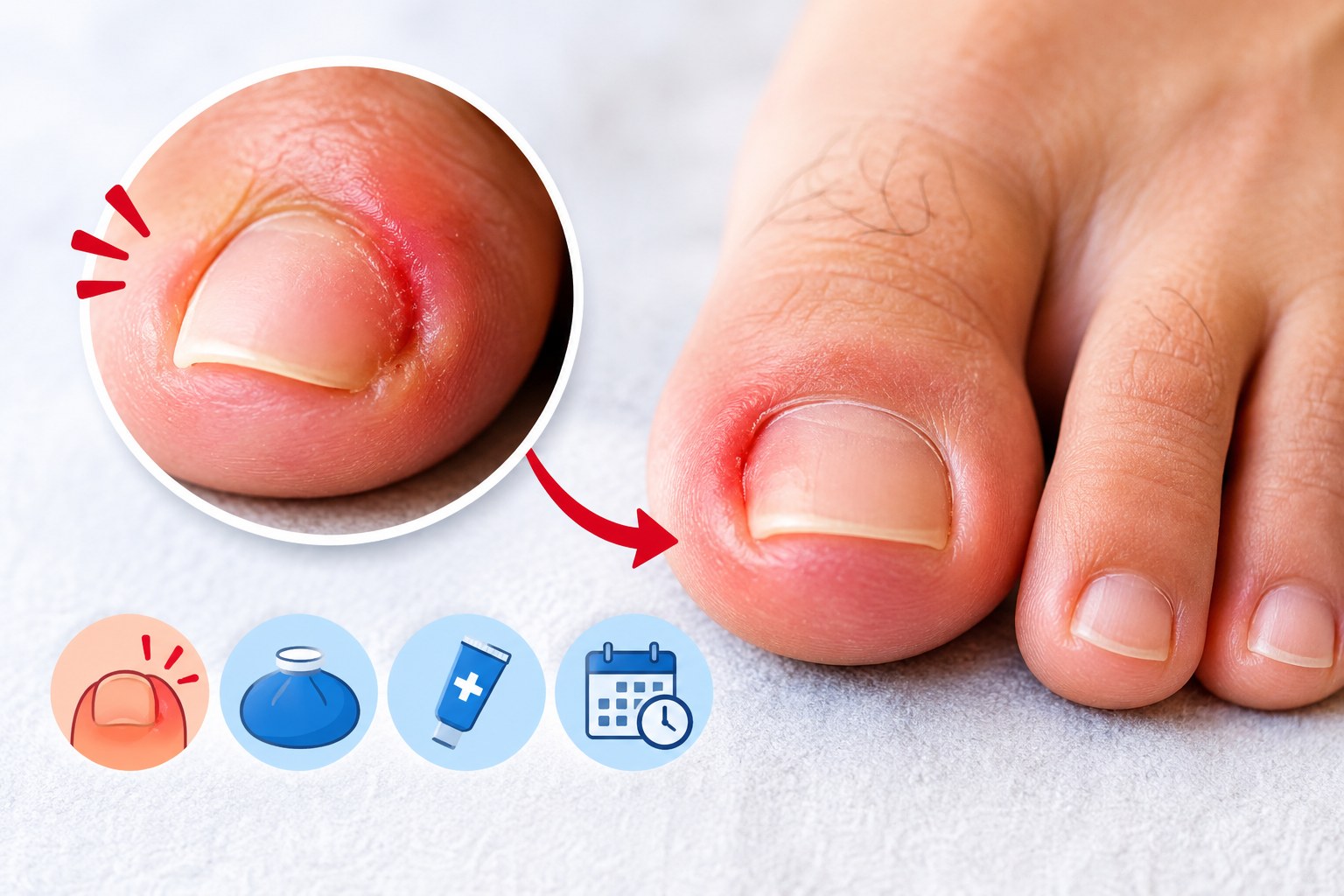
Table of contents
- 1. The Stages of an Ingrown Toenail
- 2. Ingrown Toenail or Something Else?
- 3. Common Causes and Triggers
- 4. Who Is at Higher Risk?
- 5. Five Red Flags That Need a Clinician
- 6. How an Ingrown Toenail Is Evaluated
- 7. Treatment Options
- 8. Sample Healing Timeline
- 9. Nail and Foot Care Habits
- 10. Five Home-Care Steps
- 11. Primary, Urgent and Preventive Care in Elmhurst and Lower Manhattan
- 12. Contact Us and Find Us Online
- Conclusion
- Frequently Asked Questions
- See a Doctor in Elmhurst or Chinatown
An ingrown toenail happens when the edge or corner of a toenail grows into the soft skin beside it. The big toe is affected most often. At first you may notice mild tenderness, redness and slight swelling along the nail edge, especially in tight shoes. Left alone, the nail can pierce the skin, letting bacteria in. The toe can then become very painful, swollen, warm and drain pus.
Many early ingrown nails improve with simple home care and better nail trimming, but infection, diabetes, poor circulation and repeated problems change the picture. This guide explains the stages of an ingrown toenail, how it differs from look-alikes such as fungal nail infection or gout, causes, who is at higher risk, five red flags that need a clinician, treatment options, a sample healing timeline with a simple graph, five home-care steps and FAQs. It is general education only. A spreading red streak up the foot, fever, or a cold, pale or blue toe needs urgent care. Call 911 for severe symptoms.
| At a Glance | Key Point |
|---|---|
| What it is | A nail edge that grows into or presses on the skin beside it |
| Common first signs | Tenderness, redness and mild swelling at the nail edge |
| Home care | Warm soaks, gentle nail edge care and roomy shoes for mild cases |
| Infection signs | Increasing pain, warmth, pus or spreading redness |
| See a clinician | Infection, diabetes or poor circulation, severe pain or a nail that keeps returning |
1. The Stages of an Ingrown Toenail
Ingrown toenails tend to progress in stages, and acting early often avoids a procedure. For trusted background, see MedlinePlus on ingrown toenails and nail diseases, and the CDC on diabetes and your feet.
| Stage | What You See and Feel | What to Do |
|---|---|---|
| Stage 1: irritation | Mild redness, slight swelling and tenderness along the nail edge | Warm soaks, roomy shoes and careful nail care |
| Stage 2: infection | More pain, warmth, swelling, pus or drainage | See a clinician; antibiotics or minor treatment may be needed |
| Stage 3: chronic | Overgrown red tissue, ongoing drainage and a thickened nail edge | Medical treatment is usually needed |
| Spreading infection | Red streaks, fever, severe pain or swelling of the foot | Seek urgent care |
2. Ingrown Toenail or Something Else?
| Condition | Typical Pattern | Clues |
|---|---|---|
| Ingrown toenail | Pain and swelling at the nail edge | Nail edge visibly pressing into skin; worse in tight shoes |
| Fungal nail infection | Thick, yellow or crumbly nail | Usually painless; the nail itself looks abnormal |
| Gout in the big toe | Sudden, severe pain in the big toe joint | Intense joint swelling and redness, often at night; see what causes a sudden gout attack |
| Toe injury or bruise under the nail | Pain after dropping something or stubbing | Dark blood under the nail; history of a blow |
| Paronychia (nail fold infection) | Red, swollen, tender skin around the nail | Often follows nail biting or picking; may form pus |
| Diabetic foot problem | Sore, numb or slow-healing toe | Any wound in a person with diabetes needs prompt care |
Numb, tingling or burning feet are covered in why your feet tingle or burn and peripheral neuropathy. A spreading, warm red patch on the skin is discussed in cellulitis.
3. Common Causes and Triggers
Ingrown toenails are often linked to:
- Trimming nails too short or rounding the corners instead of cutting straight across.
- Tight, narrow or pointed shoes and socks that squeeze the toes.
- Toe injury, such as stubbing or dropping something heavy on the toe.
- Naturally curved or fan-shaped nails, which can run in families.
- Picking or tearing at the nail edge instead of trimming it.
- Sweaty feet, repeated pressure from running or sports, and poor foot hygiene.
4. Who Is at Higher Risk?
| Risk Factor | Why It Matters |
|---|---|
| Teens and young adults | Fast-growing nails, sports and tight footwear |
| People who run or play sports | Repeated pressure and small injuries to the toes |
| Family history | Nail shape and curvature can be inherited |
| Diabetes | Reduced feeling and slow healing raise the risk of serious infection |
| Poor circulation or nerve damage | Small wounds may go unnoticed and heal slowly |
| Older adults | Thicker nails and difficulty trimming them safely |
5. Five Red Flags That Need a Clinician
Get medical care promptly, or call 911 for severe symptoms, if you notice:
- Pus, drainage, a bad smell, or pain and swelling that are getting worse after a few days of home care.
- Red streaks moving up the foot or leg, fever, chills or a swollen, warm foot.
- Any ingrown nail or toe wound in a person with diabetes, nerve damage or poor circulation.
- A toe that looks pale, blue or cold, or that has lost feeling.
- A nail that keeps growing in again, or overgrown red tissue along the nail edge.
If you are unsure where to go, read when a problem calls for the emergency room instead of urgent care in Queens. For general wound care, see first aid at home for cuts and burns.
6. How an Ingrown Toenail Is Evaluated
A clinician will ask when the pain began, how you trim your nails, what shoes you wear and whether you have diabetes, nerve problems or circulation concerns. They will inspect the toe for redness, swelling, pus and overgrown tissue and check pulses and feeling in the foot. Most cases are diagnosed by exam alone. A swab may be taken if infection is suspected, and an X-ray is rarely needed unless injury or bone infection is a concern. See when your primary care doctor sends you to a specialist for referral to a podiatrist.
7. Treatment Options
| Option | How It Helps | Notes |
|---|---|---|
| Warm water soaks | Softens skin and eases pain | About 15 to 20 minutes, several times a day, then dry well |
| Gentle nail edge care | Lets the nail grow out above the skin | Use clean hands; do not dig at the nail or cut deeply |
| Roomy shoes or open footwear | Reduces pressure on the toe | Avoid tight, pointed shoes until healed |
| Over-the-counter pain relievers | Short-term pain control | Use as directed; ask a clinician if you have other health conditions |
| Antibiotics | Treat bacterial infection | Prescribed after an exam when infection is present |
| Partial nail removal | Removes the ingrown edge in a quick in-office procedure | Done under local anesthetic by a trained clinician |
| Nail matrix treatment | Helps prevent regrowth of the problem edge | Used for repeat ingrown nails |
8. Sample Healing Timeline
This teaching example shows how a mild ingrown toenail might improve with home care. Timing varies, and signs of infection should be checked. The squares show relative toe pain, where more squares mean more discomfort.
| When | What Usually Happens | Pain Level |
|---|---|---|
| Day 1 | Tender, red nail edge in tight shoes | ■■■■■ |
| Days 2 to 3 | Warm soaks, roomy shoes and careful edge care begin | ■■■■■■ |
| Days 4 to 5 | Swelling and redness start to ease | ■■■■ |
| Days 6 to 10 | Nail edge grows out above the skin | ■■ |
| Weeks 2 to 4 | Comfort returns and the nail grows past the skin edge | ■ |
| Any time with pus, fever or spreading redness | Seek care promptly | Call a clinician |
9. Nail and Foot Care Habits
| Do | Avoid |
|---|---|
| Trim toenails straight across and not too short | Rounding the corners or cutting the nail deeply |
| Wear shoes with enough toe room and moisture-wicking socks | Tight, pointed shoes and squeezing the toes |
| Keep feet clean and dry and check them often | Leaving damp feet in closed shoes for hours |
| See a clinician for any toe wound if you have diabetes | Cutting out an ingrown nail yourself at home |
| Protect toes from impact in sports and work | Picking or tearing the nail edge |
10. Five Home-Care Steps
For a mild ingrown toenail without infection, these steps may help:
- Soak the foot in warm water for 15 to 20 minutes, several times a day, and dry it well afterward.
- Wear roomy shoes, sandals or open footwear until the toe settles.
- Keep the area clean and avoid picking, cutting or digging at the nail edge.
- Trim future nails straight across and leave them long enough to clear the skin edge.
- Get care promptly if you have diabetes, poor circulation, pus, fever or pain that is getting worse.
11. Primary, Urgent and Preventive Care in Elmhurst and Lower Manhattan
When a toe is red, swollen and painful, many Queens residents search for urgent care Elmhurst NY, a walk in clinic Elmhurst NY or a same day doctor appointment Elmhurst. City Prime Care helps patients who need urgent care 11373, a primary care doctor Elmhurst NY, a family doctor Elmhurst Queens or a primary care doctor near me to examine the toe, check for infection and treat or refer when needed. A physical exam clinic Elmhurst NY visit, preventive care Elmhurst NY and chronic disease management Elmhurst NY help review diabetes, circulation and foot health to prevent repeat problems.
Downtown, people looking for primary care Lower Manhattan, a primary care doctor NYC or primary care Chinatown NYC can see our team near 75 Catherine St. Whether you search for a doctor near Catherine Street NYC, primary care 75 Catherine St, a walk-in clinic Chinatown NYC or a family doctor Manhattan NYC, we can examine you and arrange treatment or a podiatry referral. Add an annual physical exam NYC, same day primary care NYC or preventive care Lower Manhattan to review your overall health. See which conditions urgent care in Elmhurst can treat and what happens at your first urgent care visit in Elmhurst.
12. Contact Us and Find Us Online
If a toenail is infected or keeps growing in, our team can examine it and guide next steps. For non-emergency questions, Contact Us, book a visit, or find City Prime Care on Google: City Prime Care on Google. For a spreading red streak, fever, or a cold, pale or blue toe, seek urgent care or call 911.
Conclusion
Most mild ingrown toenails settle with warm soaks, roomy shoes and better nail trimming. Infection, diabetes, poor circulation or a nail that keeps returning needs a medical check, and a quick in-office procedure often solves the problem for good. This article is for general education and does not replace medical advice.
Frequently Asked Questions
See a Doctor in Elmhurst or Chinatown
Have a question about your own health? Book a visit at our Elmhurst, Queens clinic or our Chinatown, Manhattan clinic, or explore our primary care services.
Related articles
Healthcare
Why Are Your Ankles and Feet Swollen by Evening, and When Is Leg Swelling Serious? Reading the Swelling Patterns, the Five Relief Steps and the Sample Two-Week Swelling Diary
Swollen ankles after a long day can be harmless, but swelling in one leg, sudden weight gain or breathlessness can signal a clot, heart, kidney or liver problem. Learn the patterns, five relief steps and a two-week diary.
Healthcare
Why Is a Red, Itchy Ring-Shaped Patch Spreading on Your Skin, and Is It Ringworm? Reading the Patch Types, the Five Treatment Steps and the Sample Four-Week Clearing Plan
A red, scaly, ring-shaped itchy patch is often ringworm, a common fungal skin infection that is not caused by a worm. Learn the patch types, look-alike rashes, five treatment steps and a four-week clearing plan.
Healthcare
Why Is Your Hair Thinning or Falling Out in Clumps, and Could a Health Problem Be Behind It? Reading the Hair Loss Patterns, the Five Checkup Steps and the Sample Six-Month Regrowth Timeline
Finding more hair in the shower or brush can be stressful. Learn the common hair loss patterns, which blood tests and health problems matter, five checkup steps and a realistic six-month regrowth timeline.