
HealthcareBy City Prime Care Team
High Blood Pressure (Hypertension) Explained: Numbers, Symptoms, and Daily Management
High blood pressure often has no symptoms, yet it raises the risk of heart attack and stroke. Learn the blood pressure categories, how to measure at home, and which lifestyle changes help most.
Medically reviewed by City Prime Care Administrator9 min read
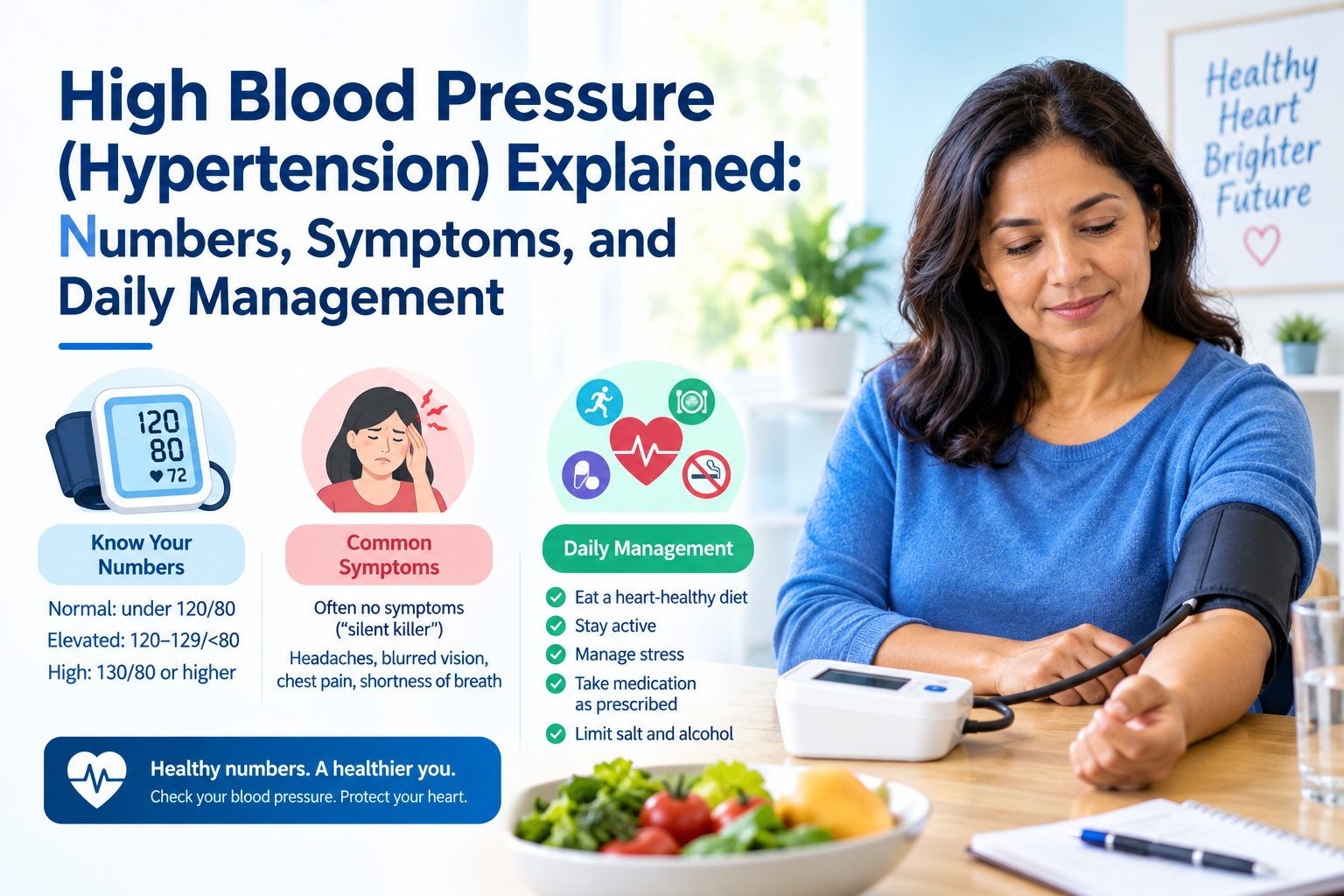
Table of contents
- 1. What Is High Blood Pressure?
- 2. Blood Pressure Categories
- 3. Why It Is Called the Silent Condition
- 4. Common Risk Factors
- 5. Six Steps to Measure Blood Pressure Correctly at Home
- 6. Which Lifestyle Changes Help the Most?
- 7. Medicines for High Blood Pressure
- 8. When to Get Urgent Help
- 9. Related Reading and Trusted Sources
- 10. Contact Us
- Conclusion
- Frequently Asked Questions
- See a Doctor in Elmhurst or Chinatown
High blood pressure, also called hypertension, is one of the most common health conditions in adults, and many people live with it for years without knowing. It rarely causes obvious symptoms, but over time it quietly damages the heart, blood vessels, brain, kidneys, and eyes.
The good news is that blood pressure is easy to measure and, in most cases, can be managed with healthy habits and, when needed, medicine. This guide covers what the numbers mean, what raises your risk, how to check your pressure at home, and which lifestyle changes make the biggest difference. Regular checks are also a core part of an annual physical checkup.
1. What Is High Blood Pressure?
Blood pressure is the force of blood pushing against the walls of your arteries as your heart pumps. It is written as two numbers, such as 120/80 mm Hg.
The two numbers mean:
- Systolic pressure (top number): the pressure when your heart beats and pushes blood out.
- Diastolic pressure (bottom number): the pressure when your heart rests between beats.
When the force stays too high for too long, your heart has to work harder and your arteries can become stiff or damaged. According to the CDC, nearly half of adults in the United States have hypertension, and many do not have it under control.
2. Blood Pressure Categories
The table below follows the widely used American Heart Association and American College of Cardiology categories for adults. A diagnosis is based on average readings over more than one visit, not a single number.
| Category | Systolic (top) | Diastolic (bottom) | |
|---|---|---|---|
| Normal | Less than 120 | and | Less than 80 |
| Elevated | 120 to 129 | and | Less than 80 |
| Hypertension Stage 1 | 130 to 139 | or | 80 to 89 |
| Hypertension Stage 2 | 140 or higher | or | 90 or higher |
| Hypertensive crisis (seek care immediately) | Higher than 180 | and/or | Higher than 120 |
3. Why It Is Called the Silent Condition
Most people with high blood pressure feel perfectly fine. Headaches, nosebleeds, or shortness of breath can appear at very high levels, but they are not reliable warning signs. The only way to know your numbers is to measure them.
Uncontrolled high blood pressure raises the risk of:
- Heart attack and heart failure
- Stroke
- Chronic kidney disease
- Vision problems and eye damage
- Peripheral artery disease
- Problems with memory and thinking over time
4. Common Risk Factors
You may be more likely to develop high blood pressure if you:
- Have a family history of hypertension
- Are older, since risk rises with age
- Are overweight or have obesity
- Eat a diet high in salt and low in fruits and vegetables
- Are physically inactive
- Drink alcohol heavily or use tobacco
- Live with chronic stress or poor sleep, including sleep apnea
- Have diabetes, kidney disease, or high cholesterol
Diabetes and high blood pressure often occur together. Learn more in our guide to type 2 diabetes early signs and daily management.
5. Six Steps to Measure Blood Pressure Correctly at Home
Home readings are valuable because they show your usual pressure outside the clinic. Follow these steps for accurate results:
- Use a validated upper-arm cuff that fits properly. Ask your doctor or pharmacist to check the size.
- Avoid caffeine, exercise, and smoking for at least 30 minutes before measuring, and use the bathroom first.
- Sit quietly for five minutes with your back supported, feet flat on the floor, and legs uncrossed.
- Rest your arm on a table so the cuff is at heart level, with the cuff on bare skin.
- Take two readings one minute apart, once in the morning and once in the evening, for about a week.
- Write down every reading, with the date and time, and bring the log to your appointment.
6. Which Lifestyle Changes Help the Most?
Research summarized in national guidelines shows that several habits can lower systolic blood pressure noticeably. The graph below shows approximate average reductions. Individual results vary, and each block represents about 1 mm Hg.
| Lifestyle Change | Impact Graph | Approximate Drop in Systolic Pressure |
|---|---|---|
| DASH eating pattern (rich in vegetables, fruit, whole grains, low-fat dairy) | ███████████ | About 11 mm Hg |
| Regular aerobic exercise (walking, cycling, swimming) | ███████ | About 5 to 8 mm Hg |
| Reducing sodium intake | ██████ | About 5 to 6 mm Hg |
| Eating more potassium-rich foods (if your doctor agrees) | █████ | About 4 to 5 mm Hg |
| Limiting alcohol | ████ | About 4 mm Hg |
Other helpful goals:
- Aim for at least 150 minutes of moderate physical activity each week.
- Keep sodium under 2,300 mg a day, with an ideal target of about 1,500 mg for most adults.
- Lose excess weight, since even small losses can lower pressure.
- Quit smoking and manage stress with sleep, relaxation, and enjoyable activity.
For a full meal-planning guide, see the NHLBI DASH eating plan. Our lifestyle counseling team can also help you build habits that last.
7. Medicines for High Blood Pressure
If lifestyle changes alone are not enough, or if your readings are in Stage 2 or you have other conditions, your doctor may recommend medicine. Many people need more than one type. Never start or stop medicine on your own.
| Medicine Type | How It Generally Works |
|---|---|
| Diuretics (water pills) | Help the body remove extra salt and water |
| ACE inhibitors | Relax blood vessels by blocking a hormone that narrows them |
| ARBs (angiotensin receptor blockers) | Relax blood vessels in a similar way, often used if ACE inhibitors cause cough |
| Calcium channel blockers | Relax and widen blood vessels and ease the heart's workload |
Long-term follow-up matters. Our chronic disease management service supports patients with ongoing conditions such as hypertension, and your regular primary care provider can adjust your plan over time.
8. When to Get Urgent Help
A reading above 180/120 mm Hg needs prompt attention. Wait five minutes and check again. If it is still that high and you have chest pain, shortness of breath, back pain, numbness or weakness, vision changes, or difficulty speaking, call 911 right away. If you have no symptoms but your reading remains that high, contact your doctor immediately.
9. Related Reading and Trusted Sources
More from City Prime Care: Common Blood Tests Explained (including cholesterol), Understanding Your Diagnostic Testing Results, and Flu vs Cold vs COVID-19.
Trusted external sources: CDC High Blood Pressure, American Heart Association: High Blood Pressure, and NHLBI DASH Eating Plan.
10. Contact Us
If you have not had your blood pressure checked recently, or your home readings concern you, City Prime Care can help at our Elmhurst, Queens clinic. Visit our contact page at https://www.cityprimecare.com/contact to get in touch.
Conclusion
Knowing your numbers is the first step to protecting your heart and brain. Regular checks, a balanced diet, daily movement, and honest conversations with your doctor can keep high blood pressure under control for years to come.
This article is for general education and does not replace personal medical advice. Please talk to a qualified healthcare professional about your own blood pressure goals.
Frequently Asked Questions
See a Doctor in Elmhurst or Chinatown
Have a question about your own health? Book a visit at our Elmhurst, Queens clinic or our Chinatown, Manhattan clinic, or explore our primary care services.
Related articles
Healthcare
Chest Discomfort Decoded: Heartburn, Muscle Strain, Anxiety or Something Serious?
Chest pain can come from the heart, the stomach, the muscles or even stress. Learn the usual patterns, the warning signs of a heart attack, and why unexplained chest pain should never be ignored.
Healthcare
Is This Just a Headache? How to Tell Tension Headaches, Migraines and Warning-Sign Headaches Apart
Not every headache is the same. Compare tension headaches, migraines and cluster headaches, learn common triggers, home-care steps, and the warning signs that mean a headache needs urgent attention.
Healthcare
Know Your Numbers: A Plain-English Guide to LDL, HDL and Triglycerides
High cholesterol rarely causes symptoms. Learn what LDL, HDL, and triglyceride numbers mean, who is at risk, 9 practical ways to lower cholesterol, and when to see a doctor.





