
HealthcareBy City Prime Care Team
How Does an Underactive or Overactive Thyroid Affect Your Body? Reading the Symptom Clues, the Five Testing Steps and the Sample TSH Ranges
The thyroid influences energy, weight, mood and heart rate. Compare hypothyroidism and hyperthyroidism, read the symptom clues, see how TSH testing works, and learn when thyroid symptoms need prompt care.
Medically reviewed by City Prime Care Administrator9 min read
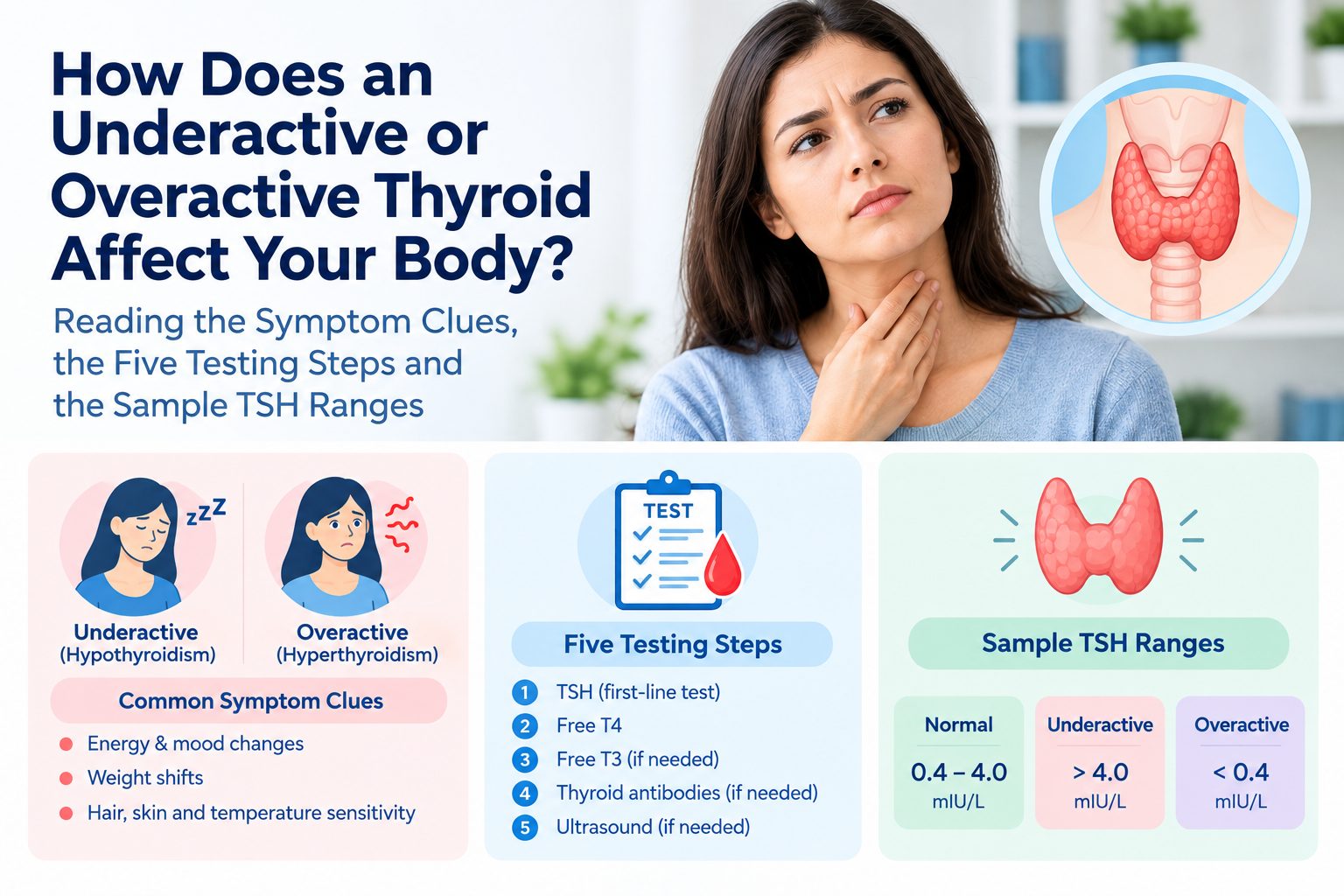
Table of contents
- 1. What the Thyroid Does
- 2. Underactive vs Overactive Thyroid
- 3. Reading the Symptom Clues
- 4. The Five Testing Steps
- 5. Sample TSH Ranges
- 6. Treatment Options
- 7. Red Flags: When to Seek Urgent Care
- 8. Living Well With a Thyroid Condition
- Conclusion
- Frequently Asked Questions
- See a Doctor in Elmhurst or Chinatown
The thyroid is a small butterfly-shaped gland at the base of your neck, yet it influences nearly every system in the body, including energy, body temperature, weight, heart rate, digestion, and mood. When it makes too little hormone, the body slows down. When it makes too much, the body speeds up.
Thyroid problems are common, especially in women and with age, and the symptoms can be easy to mistake for stress, aging, or poor sleep. This guide compares an underactive and overactive thyroid, reads the symptom clues, explains the five testing steps and TSH ranges, and lists the signs that need prompt attention. It pairs well with our article on common blood tests.
In this article:
- 1. What the thyroid does
- 2. Underactive vs overactive thyroid (table)
- 3. Reading the symptom clues (graph)
- 4. The five testing steps
- 5. Sample TSH ranges (table)
- 6. Treatment options
- 7. Red flags: when to seek urgent care
- 8. Living well with a thyroid condition
1. What the Thyroid Does
The thyroid makes hormones, mainly thyroxine (T4) and triiodothyronine (T3), that set the pace of your metabolism. The pituitary gland in the brain controls the thyroid by releasing thyroid-stimulating hormone (TSH). When thyroid hormone is low, the pituitary raises TSH to push the gland harder. When thyroid hormone is high, TSH falls.
For general reading, see the MedlinePlus thyroid diseases page and the American Thyroid Association.
2. Underactive vs Overactive Thyroid
| Feature | Underactive (hypothyroidism) | Overactive (hyperthyroidism) |
|---|---|---|
| 1. Hormone levels | Too little thyroid hormone | Too much thyroid hormone |
| 2. Metabolism | Slows down | Speeds up |
| 3. Common causes | Autoimmune thyroiditis (Hashimoto's), thyroid surgery or radiation, some medicines | Graves' disease, thyroid nodules, thyroid inflammation |
| 4. Typical TSH | High | Low |
| 5. Who is more often affected | Women, older adults, those with family history | Women, younger and middle-aged adults |
| 6. Treatment | Daily thyroid hormone replacement | Medicines, radioactive iodine, or surgery depending on cause |
3. Reading the Symptom Clues
Symptoms depend on whether the thyroid is slow or fast. The graph below is an illustrative guide to how commonly each symptom is reported, not measured data.
| Underactive thyroid symptom | How commonly reported (graph) | Overactive thyroid symptom | How commonly reported (graph) |
|---|---|---|---|
| Fatigue and sluggishness | ██████████ | Nervousness, anxiety, irritability | █████████░ |
| Feeling cold | ████████░░ | Racing or irregular heartbeat | ████████░░ |
| Weight gain | ███████░░░ | Weight loss despite eating well | ███████░░░ |
| Dry skin and hair, hair thinning | ███████░░░ | Heat intolerance, sweating | ██████░░░░ |
| Constipation | ██████░░░░ | Frequent bowel movements | █████░░░░░ |
| Low mood, memory fog | █████░░░░░ | Tremor, trouble sleeping | █████░░░░░ |
| Heavy or irregular periods | ████░░░░░░ | Lighter or irregular periods | ███░░░░░░░ |
Because tiredness and mood changes are common, thyroid disease is easy to miss. Poor sleep can also cause similar symptoms; see our guide on sleep and your health. A racing heartbeat can overlap with other conditions, including chest pain and heart concerns related to blood pressure.
4. The Five Testing Steps
A typical thyroid evaluation includes:
- Discuss symptoms, medicines, family history, pregnancy, recent illness, and iodine or supplement use such as biotin, which can affect test results.
- Perform a physical exam, checking the neck for enlargement or nodules, heart rate, reflexes, skin, and eyes.
- Order a TSH test, usually the first screening test for thyroid function.
- Add free T4 and sometimes T3 or thyroid antibodies to confirm the diagnosis and find the cause.
- Use imaging, such as ultrasound, or other tests if there is a nodule, enlargement, or an unclear cause, and plan treatment and follow-up.
See our diagnostic testing page and our guide on understanding your diagnostic testing results for help with reports.
5. Sample TSH Ranges
TSH reference ranges vary by laboratory, age, and pregnancy. The table below gives general examples only. Always use the range on your own report and discuss it with your clinician.
| TSH result (general example, mIU/L) | Position on scale (graph) | What it may suggest |
|---|---|---|
| Below about 0.4 | █░░░░░░░░░ Low | Possible overactive thyroid; needs follow-up tests |
| About 0.4 to 4.0 | █████░░░░░ Typical range | Usually normal thyroid function |
| About 4.0 to 10 | ███████░░░ Mildly raised | Possible mild or early underactive thyroid; repeat testing is common |
| Above about 10 | ██████████ High | Likely underactive thyroid; treatment usually discussed |
A single abnormal result is often repeated in several weeks, because illness, medicines, and supplements can temporarily change values.
6. Treatment Options
| Condition | Common treatment | Follow-up |
|---|---|---|
| Underactive thyroid | Daily levothyroxine (synthetic thyroid hormone) | TSH recheck about 6 to 8 weeks after any dose change, then periodically |
| Overactive thyroid (e.g., Graves' disease) | Anti-thyroid medicines, beta-blockers for symptoms, radioactive iodine, or surgery | Regular blood tests and specialist care |
| Thyroid nodules | Observation, ultrasound, biopsy if needed | Depends on findings |
| Pregnancy with thyroid disease | Closely monitored treatment | Frequent testing |
Levothyroxine is usually taken on an empty stomach, and iron or calcium supplements can interfere, so ask your clinician about timing. Learn about chronic disease management and referral services at City Prime Care.
7. Red Flags: When to Seek Urgent Care
| Warning sign | Possible concern | Action |
|---|---|---|
| Very fast heart rate, fever, agitation, confusion, vomiting | Thyroid storm (rare emergency) | Call 911 |
| Extreme sleepiness, confusion, very low body temperature, slow breathing | Severe hypothyroidism (myxedema coma) | Call 911 |
| Chest pain or fainting | Heart involvement | Call 911 |
| Rapidly growing neck lump, trouble swallowing or breathing, hoarse voice | Needs prompt evaluation | Be seen quickly |
| Bulging eyes, double vision, eye pain | Thyroid eye disease | Seek prompt evaluation |
| Symptoms during pregnancy | Affects mother and baby | Contact your clinician |
If you are not sure how urgent your symptoms are, read our guide on when to visit urgent care instead of waiting for your doctor.
8. Living Well With a Thyroid Condition
Practical habits that support thyroid health:
- Take medicine consistently and at the same time each day
- Keep follow-up appointments and blood tests
- Eat a balanced diet; get enough iodine through normal food, and avoid high-dose supplements unless advised
- Tell your clinician about biotin and other supplements before testing
- Stay active and prioritize sleep
- Manage related risks such as cholesterol, which can rise with an underactive thyroid
- Keep regular checkups; see our annual physical guide
Conclusion
Thyroid conditions are common, easy to test for, and very treatable. If you have lingering fatigue, unexplained weight change, mood shifts, or a racing heart, a simple blood test can bring answers and a plan.
Contact Us: If you suspect a thyroid problem or have questions about your thyroid results, reach City Prime Care through our Contact Us page. This article is for general education and does not replace personal medical advice. For chest pain, fainting, or severe confusion, call 911.
Frequently Asked Questions
See a Doctor in Elmhurst or Chinatown
Have a question about your own health? Book a visit at our Elmhurst, Queens clinic or our Chinatown, Manhattan clinic, or explore our primary care services.
Related articles
Healthcare
Why Do You Feel Tired All the Time? Reading the Anemia Signs, the Five Testing Steps and the Sample Iron-Level Recovery
Constant tiredness, pale skin and shortness of breath can point to anemia. Learn the common causes, the blood tests used, a sample iron recovery pattern, five testing steps and when symptoms need urgent attention.
Healthcare
When Are Heart Palpitations Harmless, and When Do They Need a Doctor? Reading the Rhythm Clues, the Five Evaluation Steps and the Sample Symptom Diary
A fluttering, pounding or skipping heartbeat is frightening but often harmless. Learn common triggers, how doctors evaluate palpitations with an EKG and monitors, the signs that need urgent care, and a sample symptom diary.
Healthcare
Could Hormones or Your Thyroid Explain How You Feel? Reading the Symptom Overlaps, the Five Testing Steps and the Sample Symptom Timeline
Fatigue, weight changes, mood shifts and irregular periods can come from hormones, the thyroid, anemia or stress. See the symptom overlaps, five testing steps, example TSH ranges and when to call a doctor.





