
HealthcareBy City Prime Care Team
How Does the Elmhurst Clinic Support Older Adults' Health? Reading the Care Areas, the Visit Types and the Sample Senior Checkup Plan
Senior primary care focuses on staying independent, keeping medicines safe, preventing falls and planning ahead. See the care areas at the Elmhurst clinic, the visit types, and a sample senior checkup plan.
Medically reviewed by City Prime Care Administrator9 min read
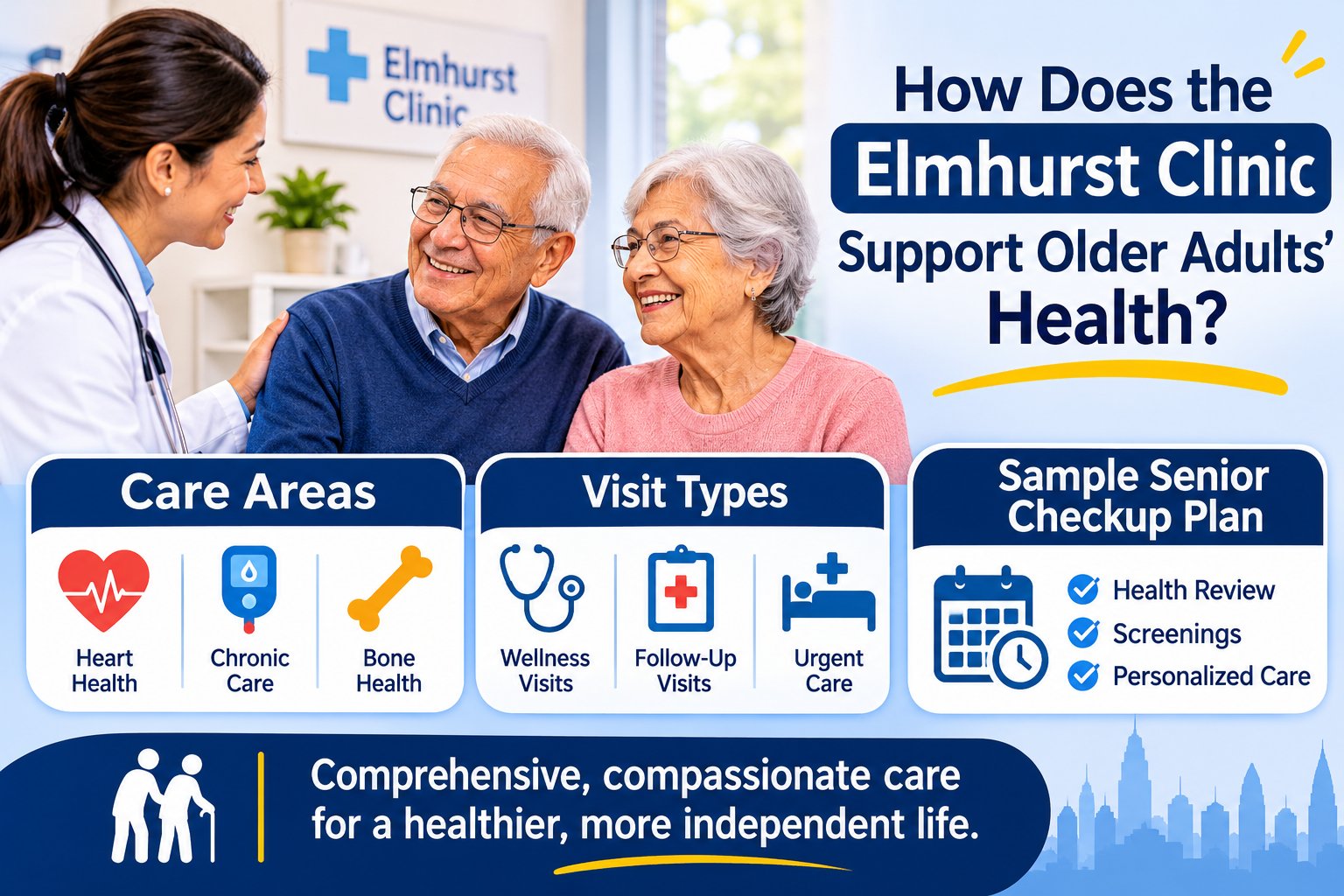
Table of contents
- 1. What Senior Primary Care Means
- 2. The Care Areas
- 3. Where Families Most Often Need Help
- 4. A Closer Look at Medication Reviews, Memory and Falls
- 5. Medicare Wellness Visits
- 6. Support for Families and Caregivers
- 7. A Sample Senior Checkup Plan
- 8. When Not to Wait, and How to Book
- Conclusion
- Frequently Asked Questions
- See a Doctor in Elmhurst or Chinatown
Good care for older adults is less about adding more tests and more about asking the right questions: Can you still do what matters to you? Are your medicines helping or hurting? Are you steady on your feet? Is anything quietly changing in your memory or mood? Who helps at home? These questions are the heart of senior primary care.
This guide explains how the City Prime Care clinic in Elmhurst supports older adults, based on the clinic's geriatric care page. It covers the care areas, the kinds of visits, how families are involved, and a sample senior checkup plan. The clinic is clear about one thing: it delivers senior primary care rather than specialty geriatric medicine, and it refers to a board-certified geriatrician or other specialists when needed. This is general education, not personal medical advice. You can find the clinic on Google: City Prime Care on Google. See the clinic's geriatric care page.
In this article:
- 1. What senior primary care means
- 2. The care areas (table)
- 3. Where families most often need help (graph)
- 4. A closer look at medication reviews, memory and falls
- 5. Medicare wellness visits
- 6. Support for families and caregivers
- 7. A sample senior checkup plan
- 8. When not to wait, and how to book
1. What Senior Primary Care Means
The clinic's page says its team focuses on what matters most after 65: staying independent, keeping medications safe, preventing falls, and planning ahead, with unhurried visits and Medicare wellness exams. Visits look at the whole person, not one complaint at a time, reviewing blood pressure, heart health, diabetes, kidney function, hearing, vision, mood, sleep, and daily function such as bathing, cooking, and getting to appointments.
For background on healthy aging, see the National Institute on Aging's health information and the American Geriatrics Society's Health in Aging site.
2. The Care Areas
| Care area | What the clinic says it covers | Learn more |
|---|---|---|
| 1. Whole-person primary care | Blood pressure, heart health, diabetes, kidney function, hearing, vision, mood, sleep, and daily function | Primary care |
| 2. Long-term conditions | Followed through chronic disease management so nothing slips between visits | Chronic disease management |
| 3. Medication management | Reviews, duplicates check, interaction awareness, and an updated written list | See section 4 |
| 4. Memory, balance, and fall prevention | Brief memory screening, fall-risk assessment, and referrals | See section 4 |
| 5. Medicare wellness visits | Welcome to Medicare visit and Annual Wellness Visit | Preventive care |
| 6. Family and caregiver support | Family can join visits, health care proxy documentation, and help with home care referrals | Referral services |
3. Where Families Most Often Need Help
The graph below is an illustrative guide to the concerns families commonly raise about older relatives, not clinic data. It shows why medicines, memory, and balance dominate visits.
| Concern | How often raised (graph) | Note |
|---|---|---|
| Too many medicines or confusion about them | ██████████ Very common | Review every bottle at least yearly |
| Memory changes | ████████░░ Very common | Some causes are treatable |
| Balance and falls | ███████░░░ Common | CDC reports about 1 in 4 adults 65 and older falls each year |
| Mood, sleep, and loneliness | ██████░░░░ Common | Depression can look like memory loss |
| Help at home and paperwork | █████░░░░░ Common | Home care referrals, equipment, proxies |
4. A Closer Look at Medication Reviews, Memory and Falls
| Topic | What the clinic describes |
|---|---|
| Medication review | Bring every bottle, including eye drops, inhalers, sleep aids, herbal products, and medicines from other doctors; your provider reviews why you take each, whether it is still needed, and whether the dose fits your kidney function |
| Drug interactions | Tools such as the American Geriatrics Society Beers Criteria flag drugs often inappropriate after 65; changes are explained and coordinated with the prescriber before anything is stopped |
| Memory screening | A brief cognitive check of a few minutes; if concern arises, reversible causes are checked first, such as thyroid problems, low B12, medicines, depression, hearing loss, and sleep problems, then referral to neurology or memory specialists |
| Fall risk assessment | Questions about past falls, watching you rise from a chair and walk, lying and standing blood pressure, and review of medicines, vision, and footwear; possible physical therapy, home safety checklist, or cane assessment |
See the CDC's STEADI falls resources and our guide on managing multiple medications safely as you age.
5. Medicare Wellness Visits
The clinic says the Welcome to Medicare preventive visit is available within the first 12 months of Part B coverage, and the Annual Wellness Visit can be scheduled once every 12 months after that. Neither is a head-to-toe physical; both are planning visits built around your personal risks. Wellness visits are generally covered without a copay when the provider accepts assignment, though new problems discussed may be billed separately.
A typical Annual Wellness Visit includes:
- A health risk questionnaire and review of your medical and family history
- Height, weight, blood pressure, and a check for cognitive changes
- A review of current medications and supplements
- A written screening schedule for the coming years
- An optional conversation about advance care planning and health care proxies
Read more in Medicare's yearly wellness visits page and our insurance coverage guide.
6. Support for Families and Caregivers
| Need | What the clinic says |
|---|---|
| Joining visits | With the patient's permission, a family member can join in person or by phone |
| Health care proxy | The clinic can document a proxy and note who may receive updates |
| Home care | Help with paperwork and orders: home health agency referrals, physical or occupational therapy at home, walkers or shower chairs, and letters for insurance or housing |
| Specialists | Referral services track specialist appointments and make sure reports return to the chart |
| Language | Elmhurst: English and Spanish; interpreters for other languages on request |
The New York City Department for the Aging also offers resources for older New Yorkers and caregivers.
7. A Sample Senior Checkup Plan
The plan below is an illustrative example of how a year of care might be organized for an older adult. It is not a prescription.
| Period | Planned activity (graph) | Example focus |
|---|---|---|
| Month 1 | ████████ Busiest | Annual Wellness Visit or comprehensive visit, medication review with every bottle, fall-risk and memory screening, lab work |
| Month 2 | ████ Light | Results explained; plan for any changes in medicines or referrals |
| Months 3-6 | █████ Moderate | Follow-up for blood pressure, diabetes, or other conditions; physical therapy if recommended |
| Months 7-9 | ███ Light | Check-in on balance, mood, and home safety |
| Months 10-12 | █████ Moderate | Flu, shingles, pneumococcal, and other vaccines; prepare for the next year |
See our adult vaccines guide and annual physical guide.
8. When Not to Wait, and How to Book
| Warning sign | Action |
|---|---|
| Chest pain, trouble breathing, or signs of a stroke | Call 911; see our guide on chest discomfort |
| A serious fall, head injury, or inability to get up | Call 911 |
| Sudden confusion or a rapid change in behavior | Seek urgent care |
| New or worsening memory problems, repeated falls, or medicine side effects | Book a prompt visit |
| Caregiver feeling overwhelmed | Ask the clinic about support and referrals |
The Elmhurst clinic lists Monday to Friday hours of 9:00 AM to 6:00 PM. Book through the appointment page and choose Geriatric Care, or see the Elmhurst clinic page.
Conclusion
Healthy aging is about staying independent and safe: the right medicines, steady footing, a clear mind, and a plan. A primary care team that knows the person, and includes the family, makes that easier.
Contact Us: To ask about senior primary care, medication reviews, fall prevention, or Medicare wellness visits, reach City Prime Care through our Contact Us page, or find the clinic on Google: City Prime Care on Google. This article is for general information and does not replace personal medical advice. For a serious fall, chest pain, or stroke symptoms, call 911.
Frequently Asked Questions
See a Doctor in Elmhurst or Chinatown
Have a question about your own health? Book a visit at our Elmhurst, Queens clinic or our Chinatown, Manhattan clinic, or explore our primary care services.
Related articles
Healthcare
How Can Seniors in Queens Lower Their Risk of Falling? Reading the Risk Factors, the Five Home Fixes and the Sample Weekly Balance Plan
About one in four adults 65 and older falls each year, but many falls are preventable. See the main risk factors, five home fixes, how a clinic checks fall risk, and a sample weekly balance plan for seniors in Queens.
Healthcare
Is It Normal Wear and Tear or Arthritis? Reading the Joint Pain Patterns, the Five Self-Care Steps and the Sample Joint-Protection Plan
Joint pain has many causes, from overuse to osteoarthritis, rheumatoid arthritis and gout. Learn how the patterns differ, what helps at home, when to see a doctor, when a hot swollen joint is urgent, and a sample joint-protection plan.
Healthcare
How Can You Tell If Your Kidneys Are Healthy? Reading the Kidney Tests, the Five Risk Checks and the Sample Kidney-Protection Plan
Chronic kidney disease is often silent until it is advanced. Learn the two key tests, who is at risk, how stages are defined, how to protect your kidneys, and a sample kidney-protection plan.





