
HealthcareBy City Prime Care Team
What Should Seniors and Families Know Before Choosing Elder Care? Reading the Selection Signals, the Five Questions and the Sample Family Checklist
Finding a doctor for an aging parent is stressful. Learn the difference between senior primary care and a geriatrician, the signals of good elder care, five questions to ask, and a sample family checklist.
Medically reviewed by City Prime Care Administrator9 min read
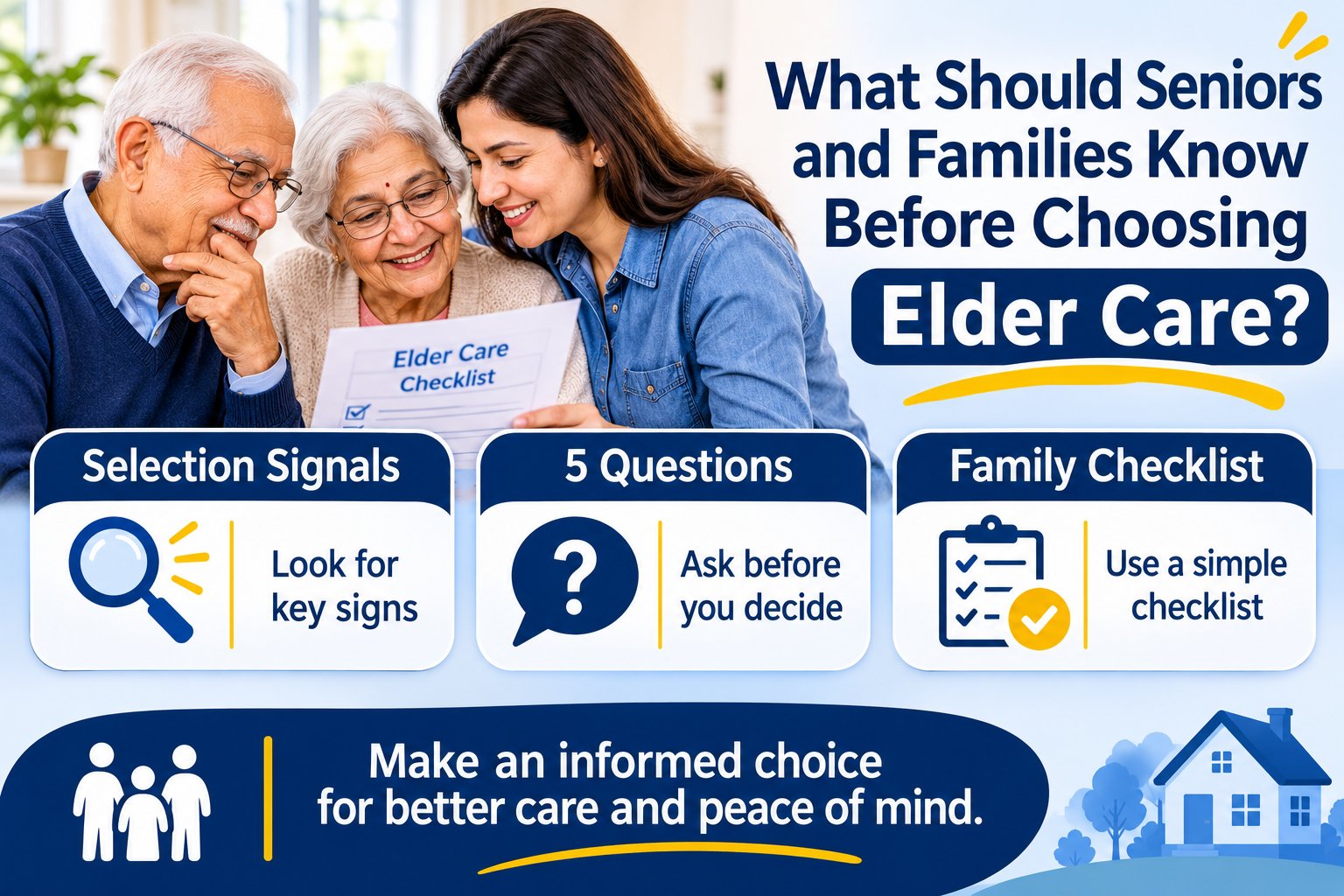
Table of contents
- 1. Primary Care or Geriatrician?
- 2. What Good Senior Care Includes
- 3. How Much Each Signal Matters
- 4. The Five Questions to Ask
- 5. What Families Can Do Before the Visit
- 6. Medicare, Insurance, and Cost
- 7. A Sample Family Checklist
- 8. Red Flags and Where to Turn
- Conclusion
- Frequently Asked Questions
- See a Doctor in Elmhurst or Chinatown
It often starts with a phone call: a parent has fallen, been discharged from hospital with a bag of new prescriptions, or seems more forgetful than usual. Suddenly an adult child is typing geriatric care near me into a search bar, trying to understand what kind of doctor to look for and what questions to ask, while also working, parenting, and worrying.
This guide is for seniors and the families who help them. It explains the difference between senior primary care and a geriatrician, the signals of good elder care, five questions to ask any practice, and a sample family checklist. It uses the geriatric care page of the City Prime Care website for examples of how one clinic describes its approach. This is general education, not personal medical advice. You can find the clinic on Google: City Prime Care on Google. See the clinic's geriatric care page.
In this article:
- 1. Primary care or geriatrician?
- 2. What good senior care includes (table)
- 3. How much each signal matters (graph)
- 4. The five questions to ask
- 5. What families can do before the visit
- 6. Medicare, insurance, and cost
- 7. A sample family checklist
- 8. Red flags and where to turn
1. Primary Care or Geriatrician?
A geriatrician is a physician with extra training in the care of older adults, especially those with several conditions, frailty, or memory problems. Senior primary care is delivered by a primary care team that follows older adults over time. The clinic says plainly that it offers senior primary care rather than specialty geriatric medicine, that this is the right starting point for most older adults, and that it refers to a board-certified geriatrician, cardiologist, or neurologist when a problem calls for one.
| Option | Often a good fit when | Things to know |
|---|---|---|
| 1. Senior primary care | Your parent is generally independent, needs regular checkups, medication reviews, and coordination | Referral to a geriatrician is available when needed |
| 2. Geriatrician | Complex conditions, frailty, multiple falls, significant memory loss, or many medicines | May have longer waits; ask whether primary care can coordinate |
| 3. Both | Complex needs with a stable primary care relationship | Share records between them |
For background, see the American Geriatrics Society's Health in Aging and the National Institute on Aging's health information.
2. What Good Senior Care Includes
| Signal | What to look for | How the clinic describes it |
|---|---|---|
| 1. Unhurried visits | Time to ask questions and have things explained | The clinic describes unhurried visits and Medicare wellness exams |
| 2. Medication review | Every bottle reviewed, duplicates checked, doses checked against kidney function | Bring every bottle; leave with an updated written list |
| 3. Fall prevention | Questions about falls, watching you stand and walk, standing blood pressure, vision and footwear | A fall-risk assessment is part of care |
| 4. Memory and mood | A brief memory check, and checking reversible causes first | Screening is repeated over time to notice change |
| 5. Medicare wellness visits | Welcome to Medicare and Annual Wellness Visits used well | A written screening schedule for future years |
| 6. Family involvement | Family can join visits; health care proxy documented | With the patient's permission |
| 7. Language | Staff or interpreters in your parent's language | Elmhurst: English and Spanish; Chinatown: English, Chinese, and Spanish |
| 8. Coordination | Referrals and reports tracked | Referral services follow up |
3. How Much Each Signal Matters
The graph below is an illustrative guide to how much weight many families sensibly give each signal. It is guidance, not survey data.
| Signal | Suggested weight (graph) | Why |
|---|---|---|
| Medication review of every bottle | ██████████ Very high | Medicines are a leading cause of preventable problems in older adults |
| Respect, time, and clear explanations | █████████░ Very high | Older adults and families need to understand the plan |
| Fall and memory screening | ████████░░ High | Early attention protects independence |
| Language and interpreter access | ████████░░ High | Misunderstandings are risky |
| Access and transit | ███████░░░ High | A clinic that is hard to reach gets skipped |
| Insurance accepted | ███████░░░ High | Avoids billing surprises |
4. The Five Questions to Ask
When you call or visit a practice, ask:
- Do you review every medicine at visits, and will we leave with an updated written list?
- How do you assess falls and memory, and what happens if there is a concern?
- Can I join visits, in person or by phone, and can a health care proxy be documented?
- How do referrals work, including to a geriatrician, neurologist, or home care agency, and who follows up?
- Do you accept my parent's insurance, including Medicare and Medicaid, and how do Medicare wellness visits work?
For provider roles and credentials, see our article on who you will see at the Elmhurst clinic.
5. What Families Can Do Before the Visit
Preparation helps the visit count:
- Gather every medicine, including eye drops, inhalers, sleep aids, herbal products, and supplements, in a bag
- Write down recent falls, near-falls, confusion, mood changes, or appetite and weight changes
- Bring records from other doctors and the latest hospital discharge papers
- List your parent's concerns and your own, and agree on priorities
- Bring insurance cards, photo ID, and any advance directive or proxy forms
- Ask the clinic about permission for you to speak with the team
6. Medicare, Insurance, and Cost
| Topic | What to know |
|---|---|
| Medicare visits | Welcome to Medicare within the first 12 months of Part B; Annual Wellness Visit every 12 months after; generally no copay when the provider accepts assignment |
| Plans accepted | The clinic says it accepts most major plans, including Medicaid and Medicare; confirm the exact plan, especially Medicare Advantage |
| New problems | Problems raised at a wellness visit may be billed separately |
| No insurance | Ask about self-pay and check eligibility on NY State of Health |
Learn more in our insurance coverage guide, or visit Medicare.gov. For local resources, see the Eldercare Locator.
7. A Sample Family Checklist
| Item | Done? | Notes |
|---|---|---|
| ☐ A primary care team chosen, with phone and appointment process | See choosing a clinic | |
| ☐ Full medication list with doses and reasons | Share with family and the pharmacy | |
| ☐ Fall and memory screening done | Repeat over time | |
| ☐ Vision and hearing checked | Both affect balance and memory | |
| ☐ Vaccines reviewed | See adult vaccines | |
| ☐ Health care proxy documented | And who may receive updates | |
| ☐ Home safety checked | Rugs, lighting, stairs, bathroom | |
| ☐ Caregiver support identified | Respite, community resources |
8. Red Flags and Where to Turn
| Warning sign | Action |
|---|---|
| Chest pain, trouble breathing, or signs of a stroke | Call 911 |
| A serious fall, head injury, or inability to get up | Call 911 |
| Sudden confusion or a sharp change in behavior | Seek urgent care |
| Repeated falls, new memory problems, or medicine side effects | Book a prompt visit |
| Signs of neglect or abuse | Contact local authorities or Adult Protective Services |
Book through the appointment page and choose Geriatric Care.
Conclusion
The right care for an older adult is consistent, respectful, and coordinated. Choose a team that reviews medicines, checks balance and memory, welcomes the family, and refers when it needs to.
Contact Us: To ask about senior primary care, referrals, or Medicare wellness visits, reach City Prime Care through our Contact Us page, or find the clinic on Google: City Prime Care on Google. This article is for general information and does not replace personal medical advice. In an emergency, call 911.
Frequently Asked Questions
See a Doctor in Elmhurst or Chinatown
Have a question about your own health? Book a visit at our Elmhurst, Queens clinic or our Chinatown, Manhattan clinic, or explore our primary care services.
Related articles
Healthcare
How Can Seniors in Queens Lower Their Risk of Falling? Reading the Risk Factors, the Five Home Fixes and the Sample Weekly Balance Plan
About one in four adults 65 and older falls each year, but many falls are preventable. See the main risk factors, five home fixes, how a clinic checks fall risk, and a sample weekly balance plan for seniors in Queens.
Healthcare
How Can Older Adults Take Many Medicines Safely? Reading the Medication Risks, the Five Review Steps and the Sample Medication List
Taking five or more medicines is common after 65, and so are the risks. Learn why risks rise with age, the five steps of a medication review, how to keep a medication list, and the warning signs to act on.
Healthcare
How Does the Elmhurst Clinic Support Older Adults' Health? Reading the Care Areas, the Visit Types and the Sample Senior Checkup Plan
Senior primary care focuses on staying independent, keeping medicines safe, preventing falls and planning ahead. See the care areas at the Elmhurst clinic, the visit types, and a sample senior checkup plan.





