HealthcareBy City Prime Care Team
Is That Rectal Itching, Pain or Bleeding Hemorrhoids, and When Should It Be Checked? Reading the Hemorrhoid Grades, the Five Relief Steps and the Sample Fiber Plan
Itching, pain or bright red blood after a bowel movement are often hemorrhoids, but bleeding should never be assumed harmless. Learn the hemorrhoid grades, treatments, five relief steps and a sample daily fiber plan with a simple graph.
Medically reviewed by Dr. Karl E. Latortue10 min read
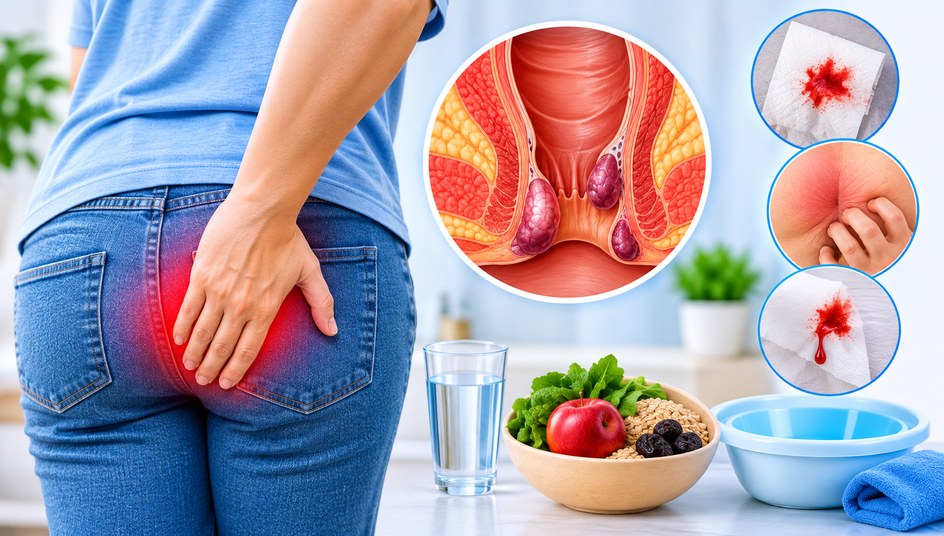
Table of contents
- 1. How Hemorrhoids Form
- 2. The Hemorrhoid Grades
- 3. Symptoms to Notice
- 4. Who Is at Higher Risk?
- 5. Hemorrhoids, Anal Fissure or Something More Serious?
- 6. Five Warning Signs That Need Prompt Care
- 7. How Hemorrhoids Are Diagnosed
- 8. Treatment Options
- 9. Sample Daily Fiber Plan
- 10. Five Relief Steps
- 11. Primary, Urgent and Preventive Care in Elmhurst and Lower Manhattan
- 12. Contact Us and Find Us Online
- Conclusion
- Frequently Asked Questions
- See a Doctor in Elmhurst or Chinatown
Hemorrhoids are swollen veins in and around the anus and lower rectum, similar to varicose veins. They are very common, affecting about half of adults by age 50, and they cause itching, discomfort, a lump near the anus or bright red blood on the toilet paper. Most cases improve with simple changes, but hemorrhoids are only one of several causes of rectal bleeding.
Because bleeding can also come from fissures, infections, polyps and colorectal cancer, new bleeding should be checked rather than assumed to be hemorrhoids. This guide explains the types and grades, symptoms, risk factors, how hemorrhoids differ from an anal fissure and from more serious causes, the five warning signs that need prompt care, how they are diagnosed, treatment, a sample daily fiber plan and five relief steps. It is general education only. Heavy bleeding with dizziness, black tarry stool or severe pain needs urgent care. Call 911 for fainting or chest pain.
| At a Glance | Key Point |
|---|---|
| What it is | Swollen veins in the rectum or around the anus, internal or external |
| Common signs | Bright red blood on paper, itching, a tender lump and discomfort when sitting |
| Common causes | Straining, constipation, diarrhea, pregnancy, long toilet time and low fiber intake |
| Treatment | Fiber, fluids, warm baths, short-term creams and, for some, office procedures |
| See a clinician | Any new bleeding, dark stool, pain that is severe or a change in bowel habits |
1. How Hemorrhoids Form
The lower rectum and anus have cushions of blood vessels that help control stool. Straining, long periods on the toilet, constipation, pregnancy and extra pressure in the belly can push blood into these veins until they stretch and swell. Internal hemorrhoids sit inside the rectum and usually cause painless bleeding. External hemorrhoids sit under the skin around the anus and can itch, hurt or form a firm lump. For trusted background, see the NIDDK guide to hemorrhoids and MedlinePlus on hemorrhoids.
2. The Hemorrhoid Grades
| Grade | What Happens | Typical Care |
|---|---|---|
| Grade I | Internal; may bleed but does not drop down | Fiber, fluids and habit changes |
| Grade II | Slips out with a bowel movement and goes back on its own | Home care; office procedure if symptoms continue |
| Grade III | Slips out and must be pushed back in | Office procedures such as rubber band ligation |
| Grade IV | Stays out and cannot be pushed back | Often needs surgery; see a clinician |
| External or thrombosed | A clot forms in an external hemorrhoid, causing a hard, painful lump | See a clinician within a few days for relief |
3. Symptoms to Notice
Common signs include:
- Bright red blood on toilet paper, in the toilet bowl or on the surface of stool.
- Itching, burning or irritation around the anus.
- A tender or firm lump near the anus.
- Discomfort or pain when sitting or during bowel movements.
- Mucus leakage or a feeling that the bowel is not fully empty.
Hemorrhoid bleeding is typically bright red, small in amount and not mixed into stool. Dark red or black stool needs a different evaluation.
4. Who Is at Higher Risk?
| Risk Factor | Why It Matters |
|---|---|
| Chronic constipation or straining | Raises pressure in the rectal veins; see irritable bowel and other stomach troubles |
| Chronic diarrhea | Repeated irritation and frequent wiping |
| Pregnancy and childbirth | The growing uterus and hormones press on and relax veins |
| Low-fiber diet and low fluids | Hard stool leads to straining |
| Long toilet time or sitting | Gravity and pressure let blood pool |
| Heavy lifting and excess weight | Raise pressure in the belly; see losing weight safely with your doctor's support |
5. Hemorrhoids, Anal Fissure or Something More Serious?
| Clue | Hemorrhoids | Anal Fissure | Possible Serious Cause |
|---|---|---|---|
| Pain | Mild, or severe if thrombosed | Sharp, tearing pain during and after a bowel movement | May be painless |
| Blood | Bright red on paper or in the bowl | Small streaks of bright red blood | Dark red, maroon or black stool, or blood mixed in stool |
| Other signs | Lump, itching | Spasm, visible crack | Weight loss, tiredness, bowel habit change |
| Action | Home care and routine check | Clinician visit if it persists | Prompt evaluation and screening |
Bleeding that is new, repeated or in anyone age 45 or older should be checked. Read about colorectal cancer screening, stool test or colonoscopy.
6. Five Warning Signs That Need Prompt Care
Get prompt care, or call 911 for severe symptoms, if you notice:
- Heavy bleeding that fills the toilet bowl, bleeding with dizziness, fainting or a racing heart. Call 911.
- Black, tarry or maroon stool, or blood mixed through the stool.
- Severe or worsening anal pain, a very hard painful lump, fever or swelling, which may signal a clot or abscess.
- A change in bowel habits, unexplained weight loss, tiredness or anemia along with bleeding.
- Bleeding that continues after a week of home care, or any new bleeding after age 45.
If you are unsure where to go, read when a problem calls for the emergency room instead of urgent care in Queens.
7. How Hemorrhoids Are Diagnosed
Your clinician will ask about your stool, diet, medicines and bleeding and will gently examine the area, sometimes with a short lighted tube called an anoscope. Because hemorrhoids can look similar to other conditions, a blood count may be checked for anemia, and a colonoscopy or other screening may be advised if you are over 45, have a family history of colorectal cancer, or have warning signs. A referral to a colorectal specialist is used for grade III or IV hemorrhoids or unclear bleeding; see when your primary care doctor sends you to a specialist. A hernia can also cause a groin or belly bulge, as covered in is that bulge a hernia.
8. Treatment Options
| Option | How It Helps | Notes |
|---|---|---|
| Fiber and fluids | Soften stool and reduce straining | Foundation of treatment; increase fiber gradually |
| Warm sitz baths | Ease pain, itching and spasm | 10 to 15 minutes, 2 to 3 times daily and after bowel movements |
| Over-the-counter creams, pads and suppositories | Short-term relief of itching and swelling | Use for about a week; longer steroid use can thin skin |
| Stool softeners or fiber supplements | Help when diet alone is not enough | Ask your clinician about the right option |
| Rubber band ligation or sclerotherapy | Office procedures that shrink internal hemorrhoids | Usually done without anesthesia; mild discomfort afterward |
| Hemorrhoidectomy | Surgical removal for large or persistent hemorrhoids | Reserved for severe cases; recovery takes longer |
9. Sample Daily Fiber Plan
This teaching example shows how to reach a daily fiber goal. Most adults need about 25 to 38 grams a day, with higher targets for men. Add fiber slowly and drink more water to avoid gas and bloating. Your clinician's or dietitian's advice comes first. The squares show example fiber, with each square equal to about 2 grams.
| Meal | Example | Example Fiber |
|---|---|---|
| Breakfast | Oatmeal with berries and chia seeds | ■■■■■ |
| Mid-morning snack | A pear with the skin | ■■■ |
| Lunch | Lentil soup with a whole-grain roll and salad | ■■■■■■ |
| Afternoon snack | A handful of almonds or carrot sticks | ■■■ |
| Dinner | Brown rice, beans and cooked vegetables | ■■■■■ |
| Fluids | About 6 to 8 cups of water through the day | Aim for pale yellow urine |
If you are not able to reach your goal through food, ask about a fiber supplement.
10. Five Relief Steps
These habits ease symptoms and prevent flare-ups:
- Eat more fiber from vegetables, fruit, beans and whole grains, and drink plenty of water.
- Do not strain or sit on the toilet longer than a few minutes, and avoid phones and reading there.
- Go when you feel the urge instead of holding it in.
- Soak in a warm bath, gently pat dry and avoid harsh wipes, scented soap or scratching.
- Stay active, keep a healthy weight and avoid heavy lifting that makes you strain.
11. Primary, Urgent and Preventive Care in Elmhurst and Lower Manhattan
Rectal pain or bleeding can be embarrassing, but help is available, and many Queens residents search for urgent care Elmhurst NY, a walk in clinic Elmhurst NY or a same day doctor appointment Elmhurst when symptoms flare. City Prime Care helps patients who need urgent care 11373, a primary care doctor Elmhurst NY, a family doctor Elmhurst Queens or a primary care doctor near me to examine the area, rule out serious causes and start treatment. A physical exam clinic Elmhurst NY visit, preventive care Elmhurst NY and chronic disease management Elmhurst NY support colorectal screening, diet and bowel health.
Downtown, people looking for primary care Lower Manhattan, a primary care doctor NYC or primary care Chinatown NYC can see our team near 75 Catherine St. Whether you search for a doctor near Catherine Street NYC, primary care 75 Catherine St, a walk-in clinic Chinatown NYC or a family doctor Manhattan NYC, we can listen privately, examine you and arrange blood tests or referrals. Add an annual physical exam NYC, same day primary care NYC or preventive care Lower Manhattan to schedule colorectal cancer screening on time. See what happens at your first urgent care visit in Elmhurst and which conditions urgent care in Elmhurst can treat.
12. Contact Us and Find Us Online
If you have rectal itching, pain or bleeding, our team can examine you in a private, respectful setting and guide next steps, including screening and referral. For non-emergency questions, Contact Us, book a visit, or find City Prime Care on Google: City Prime Care on Google. For heavy bleeding with dizziness, fainting or chest pain, call 911 or go to the emergency room.
Conclusion
Hemorrhoids are common and usually improve with fiber, fluids, healthy toilet habits and short-term relief measures. The key is not to assume that every episode of bleeding is a hemorrhoid, so new, heavy or persistent bleeding should be evaluated. This article is for general education and does not replace medical advice.
Frequently Asked Questions
See a Doctor in Elmhurst or Chinatown
Have a question about your own health? Book a visit at our Elmhurst, Queens clinic or our Chinatown, Manhattan clinic, or explore our primary care services.
Related articles
Healthcare
Why Are You Constipated for Days at a Time, and When Does It Need a Doctor? Reading the Stool Types, the Five Relief Steps and the Sample Daily Gut Routine
Hard, infrequent stools are common but not always harmless. Learn what causes constipation, how to read stool types, red flags that need a doctor, five relief steps and a sample daily gut routine with a simple graph.
Healthcare
Why Are Your Ankles and Feet Swollen by Evening, and When Is Leg Swelling Serious? Reading the Swelling Patterns, the Five Relief Steps and the Sample Two-Week Swelling Diary
Swollen ankles after a long day can be harmless, but swelling in one leg, sudden weight gain or breathlessness can signal a clot, heart, kidney or liver problem. Learn the patterns, five relief steps and a two-week diary.
Healthcare
Why Is a Red, Itchy Ring-Shaped Patch Spreading on Your Skin, and Is It Ringworm? Reading the Patch Types, the Five Treatment Steps and the Sample Four-Week Clearing Plan
A red, scaly, ring-shaped itchy patch is often ringworm, a common fungal skin infection that is not caused by a worm. Learn the patch types, look-alike rashes, five treatment steps and a four-week clearing plan.