
HealthcareBy City Prime Care Team
Hand, Foot and Mouth Disease in Children in Elmhurst, NY: How the Illness Spreads and What to Expect
Fever, mouth sores and a rash on the hands and feet are the signs of hand, foot and mouth disease in young children. Learn how it spreads, how to ease symptoms, five home-care steps, a sample ten-day timeline and when to get care.
Medically reviewed by Dr. Helen Vasquez11 min read
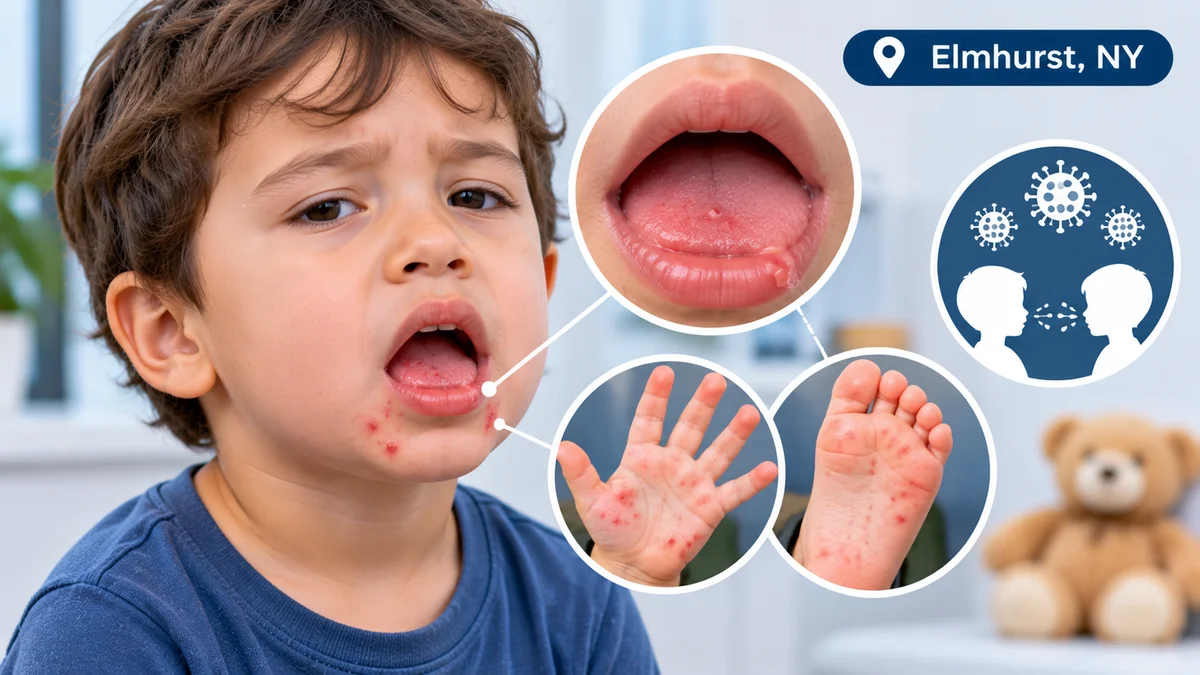
Table of contents
- 1. What Is Hand, Foot and Mouth Disease?
- 2. Symptoms and How They Progress
- 3. HFMD vs Look-Alike Illnesses
- 4. How It Spreads and Who Is at Higher Risk
- 5. How a Clinician Diagnoses HFMD
- 6. The Five Home-Care Steps
- 7. Treatment Options at a Glance
- 8. Graph: Illustrative Symptom Pattern Across Ten Days
- 9. Sample Ten-Day Care Timeline
- 10. Red Flags: When to Get Medical Care
- 11. Where to Get Care: Elmhurst, Chinatown and Lower Manhattan
- 12. Related Reading From City Prime Care
- 13. Contact Us
- Conclusion
- Frequently Asked Questions
- See a Doctor in Elmhurst or Chinatown
Your child comes home from daycare cranky with a low fever and a sore throat, refuses to eat, and a day or two later small red spots and blisters appear on the palms, soles and inside the mouth. This is the typical pattern of hand, foot and mouth disease (HFMD), a common viral illness of young children. It looks alarming but is usually mild and clears within about a week to ten days. The main goals are comfort, fluids and preventing spread.
This guide explains what HFMD is, how it spreads, how it differs from look-alike illnesses, five home-care steps, a sample ten-day timeline and the warning signs that need medical care. City Prime Care serves patients in Elmhurst, Queens, Chinatown and Lower Manhattan. This article is general education and not personal medical advice. The Centers for Disease Control and Prevention explains HFMD on its hand, foot and mouth disease page.
Quick takeaways:
- HFMD is most often caused by coxsackievirus and mainly affects children under 5, though older children and adults can get it.
- Typical signs are fever, sore mouth with painful sores, loss of appetite and a rash or blisters on the hands, feet and sometimes buttocks.
- There is no specific antiviral medicine; care focuses on fluids, pain relief and rest.
- Dehydration is the most common problem, so watch for fewer wet diapers or trips to the bathroom.
1. What Is Hand, Foot and Mouth Disease?
HFMD is a contagious viral infection caused by enteroviruses, most commonly coxsackievirus A16. It spreads easily in daycares, preschools and homes with young children. It is not related to foot-and-mouth disease in animals, which is a different illness.
The illness usually begins three to six days after exposure. Sores in the mouth can make drinking painful, while the skin rash is often not itchy.
2. Symptoms and How They Progress
| Stage | What you may notice | Typical timing |
|---|---|---|
| Incubation | No symptoms | 3-6 days after exposure |
| Early illness | Fever, tiredness, sore throat, poor appetite, irritability | Day 1-2 |
| Mouth sores | Small red spots that become painful ulcers on the tongue, gums and inside the cheeks | Day 2-3 |
| Skin rash | Flat red spots or small blisters on the palms, soles, sometimes buttocks and legs | Day 2-4 |
| Recovery | Fever gone, mouth sores heal, appetite returns | Day 5-10 |
| Later nail changes | Fingernails or toenails may loosen or peel weeks later | 2-8 weeks after illness |
Not every child has every symptom. Some have only a few mouth sores, while others have a more widespread rash.
3. HFMD vs Look-Alike Illnesses
| Condition | Typical clue | How it differs |
|---|---|---|
| Chickenpox | Itchy blisters that appear in waves all over the body | Itchier and more widespread; see chickenpox in adults and children |
| Canker sores | Painful mouth ulcers without fever or rash | Isolated sores; see painful mouth sores |
| Strep throat or tonsillitis | Severe sore throat, fever, no hand or foot rash | Needs a swab test; see tonsillitis |
| Impetigo | Honey-colored crusts around nose and mouth | Bacterial skin infection; see impetigo |
| Allergic hives | Raised itchy welts that move around | Come and go within hours; see hives |
| Scabies | Intense night itching, tiny burrows between fingers | Very itchy; see scabies |
4. How It Spreads and Who Is at Higher Risk
HFMD spreads through:
- Saliva, nose and throat secretions, such as coughs and sneezes.
- Fluid from blisters.
- Stool, which can carry the virus for weeks after the child feels better.
- Touching contaminated toys, doorknobs, tables and shared cups.
- Close contact in daycare, preschool or camp settings.
Higher-risk situations include:
- Age under 5, especially in group care.
- Crowded households and shared toys.
- Late summer and fall, though cases occur year round.
- Poor hand washing, especially after diaper changes.
- Pregnant adults or newborns exposed near delivery, who should speak with a clinician.
For general guidance on spotting illnesses that need a doctor, see how to tell a common childhood illness from one that needs a doctor.
5. How a Clinician Diagnoses HFMD
A visit usually includes:
- A history of fever, mouth pain, exposure at daycare or school, and how long the rash has been present.
- Examining the mouth, hands, feet and body for the typical sores and spots.
- Checking hydration: moist mouth, tears, urine output and alertness.
- Usually no lab test; a throat swab or other test may be done if strep or another illness is suspected.
- A plan for comfort care, school or daycare return and warning signs; if a child looks very ill, see when your primary care doctor sends you to a specialist for hospital referral.
Call ahead to a clinic so a child with a contagious rash can be seen with minimal exposure to others.
6. The Five Home-Care Steps
For typical mild HFMD:
- Push fluids: offer small, frequent sips of water, milk, diluted juice or an oral rehydration solution; cold liquids, popsicles and ice chips soothe mouth sores and help prevent dehydration; see dehydration warning signs.
- Choose soft, cool, bland foods: yogurt, applesauce, smoothies and mashed potatoes are easier to swallow, while acidic, salty or spicy foods sting mouth sores.
- Treat pain and fever safely: acetaminophen or ibuprofen can ease discomfort if appropriate for age and weight, following the label or your clinician's advice; never give aspirin to children.
- Protect the skin and rest: keep blisters clean and unpopped, trim nails to reduce scratching and let your child rest.
- Stop the spread: wash hands with soap after diaper changes and bathroom visits, clean toys and surfaces, and avoid sharing cups and utensils.
Mouthwashes with numbing ingredients are not recommended for young children unless a clinician advises it, because of swallowing risk.
7. Treatment Options at a Glance
| Option | Best for | Notes |
|---|---|---|
| Fluids, rest and soft foods | All cases | Main treatment |
| Acetaminophen or ibuprofen | Fever and mouth pain | Dose by weight and age; follow the label |
| Cold treats and popsicles | Painful mouth sores | Helps hydration and comfort |
| Antibiotics | Not for HFMD | Used only if a separate bacterial infection is found |
| Antiviral drugs | None specifically approved | Supportive care is the standard |
| Hospital care | Dehydration or rare complications | IV fluids and monitoring |
8. Graph: Illustrative Symptom Pattern Across Ten Days
This is a teaching graph, not patient data. It shows how fever tends to come first, mouth pain peaks in the first few days and the rash fades by the end of the first week or so. Real courses vary.
| Day | Overall symptom burden (illustrative) |
|---|---|
| Day 1 (fever, sore throat) | █████ |
| Day 2-3 (mouth sores peak) | ██████████ |
| Day 4 (rash visible) | ████████ |
| Day 6 | █████ |
| Day 8 | ███ |
| Day 10 | █ |
9. Sample Ten-Day Care Timeline
| When | Goal | Sample actions | Check |
|---|---|---|---|
| Day 1-2 | Comfort and fluids | Cool drinks, pain relief as advised, rest at home | Is your child drinking at least small amounts often? |
| Day 3-4 | Watch hydration | Soft foods, track wet diapers or bathroom trips | Any fewer than three wet diapers in 24 hours or no tears? |
| Day 5-6 | Recovery begins | Keep skin clean, trim nails, continue fluids | Is fever gone and eating improving? |
| Day 7-10 | Return to routine | Back to school or daycare when fever is gone and the child feels well, per local rules | Are sores healing and blisters drying? |
| Weeks 2-8 | Watch for later changes | Handwashing continues, nails may peel | Any new concerns at a follow-up? |
| Anytime | Prevent spread | Clean toys, avoid sharing cups, hand washing | Are siblings showing symptoms? |
10. Red Flags: When to Get Medical Care
Seek prompt care or go to the emergency room for:
- Signs of dehydration: no urination for 8 hours or more, very dry mouth, no tears when crying, sunken eyes or unusual sleepiness.
- Fever lasting longer than three days or a very high fever.
- Stiff neck, severe headache, confusion, seizure or extreme drowsiness.
- Trouble breathing, drooling or inability to swallow.
- A baby younger than 6 months with fever and a rash.
- A weakened immune system or other significant health conditions.
- Symptoms that worsen after a week, or a rash that looks infected with spreading redness and pus.
11. Where to Get Care: Elmhurst, Chinatown and Lower Manhattan
A child with fever, a rash and mouth sores is a common reason families search for urgent care Elmhurst NY, a walk in clinic Elmhurst NY, urgent care 11373, a same day doctor appointment Elmhurst or Same-Day Acute Care in Elmhurst Queens. For well-child visits, vaccine records and follow-up care, families choose a primary care doctor Elmhurst NY, a family doctor Elmhurst Queens, Primary Care Doctors in Elmhurst NY or chronic disease management Elmhurst NY for children with asthma or other ongoing conditions.
People comparing options often search for Best Primary Care Clinic in Elmhurst Queens, Best Primary Care Doctor in Elmhurst Queens, Primary Care Near Me Elmhurst Queens, Best Primary Care Clinics in Queens NY, Primary Care Clinics and Doctors in Queens NY and Top Primary Care Clinics in Queens NY. City Prime Care offers Men's and Women's Healthcare in Elmhurst NY, a physical exam clinic Elmhurst NY and preventive care Elmhurst NY, including evaluation of common childhood illnesses.
Downtown, people look for primary care Lower Manhattan, primary care Chinatown NYC, a doctor near Catherine Street NYC, primary care 75 Catherine St, a walk-in clinic Chinatown NYC, a Primary Care Clinic in Chinatown Manhattan or a Healthcare Center in Chinatown Manhattan NY. Citywide searches include primary care doctor NYC, primary care doctor near me, family doctor Manhattan NYC, annual physical exam NYC, same day primary care NYC and preventive care Lower Manhattan. Residents searching for Primary Care Doctors Serving Todt Hill Staten Island are welcome to contact the clinic to ask about care options and travel.
| Area | Common searches | How care can help |
|---|---|---|
| Elmhurst (ZIP 11373) | Urgent care 11373, same day doctor appointment Elmhurst | Prompt rash and hydration check |
| Elmhurst, Queens | Family doctor Elmhurst Queens, primary care doctor Elmhurst NY | Follow-up and daycare return advice |
| Queens | Best Primary Care Clinics in Queens NY, Top Primary Care Clinics in Queens NY | Easy-to-reach primary care for the family |
| Lower Manhattan | Primary care Lower Manhattan, preventive care Lower Manhattan | Convenient visits near work |
| Chinatown / Catherine Street | Primary care Chinatown NYC, doctor near Catherine Street NYC, primary care 75 Catherine St | Convenient downtown care |
| Citywide | Primary care doctor NYC, family doctor Manhattan NYC, same day primary care NYC | Same-day or scheduled evaluation |
You can also find the clinic on Google or learn more on the City Prime Care website.
12. Related Reading From City Prime Care
These guides on our site cover connected topics:
13. Contact Us
Is your child showing a fever, mouth sores and a rash on the hands and feet? Visit our Contact Us page or see our Google listing. If your child cannot drink, is very sleepy, has a stiff neck or has trouble breathing, call 911 or go to the nearest emergency room.
Conclusion
Hand, foot and mouth disease is usually a mild, self-limited illness that settles in about a week to ten days with fluids, pain relief and rest. The main risks are dehydration and spread to others, so careful hand washing and watching how much your child drinks matter most. Seek care promptly for warning signs.
Frequently Asked Questions
See a Doctor in Elmhurst or Chinatown
Have a question about your own health? Book a visit at our Elmhurst, Queens clinic or our Chinatown, Manhattan clinic, or explore our primary care services.
Related articles
Healthcare
What Are Those Painful Sores Inside Your Mouth, and When Should They Be Checked? Reading the Sore Types, the Five Relief Steps and the Sample Healing Timeline
Most mouth sores are harmless canker sores that heal in one to two weeks, but some need a closer look. Learn the sore types, causes, red flags, treatment, five relief steps and a sample healing timeline with a simple graph.
Healthcare
Herniated Disc in Elmhurst, NY: How Back and Leg Pain From a Slipped Disc Develops and What to Expect From Care
A herniated disc can cause back pain, leg pain, numbness and weakness. Learn how slipped discs develop, a numbered self-care plan, red flags and what to expect from primary care in Elmhurst, Queens.
Healthcare
Contact Dermatitis in Queens, NY: How Skin Reacts to Irritants and Allergens and What to Expect From Treatment
Red, itchy, blistering skin after touching soap, metal or plants may be contact dermatitis. Learn the two types, a numbered trigger-control plan, red flags and what to expect from care in Queens.