HealthcareBy City Prime Care Team
Why Do Your Eyes Feel Dry, Gritty and Tired by Evening, and Could It Be Dry Eye Disease? Reading the Symptom Clues, the Five Eye-Care Steps and the Sample Screen-Break Plan
Stinging, gritty or watery eyes after a day of screens may be dry eye disease. Learn the causes, symptom clues, red flags, treatments, five eye-care steps and a sample screen-break plan with a simple graph.
Medically reviewed by Dr. Helen Vasquez10 min read
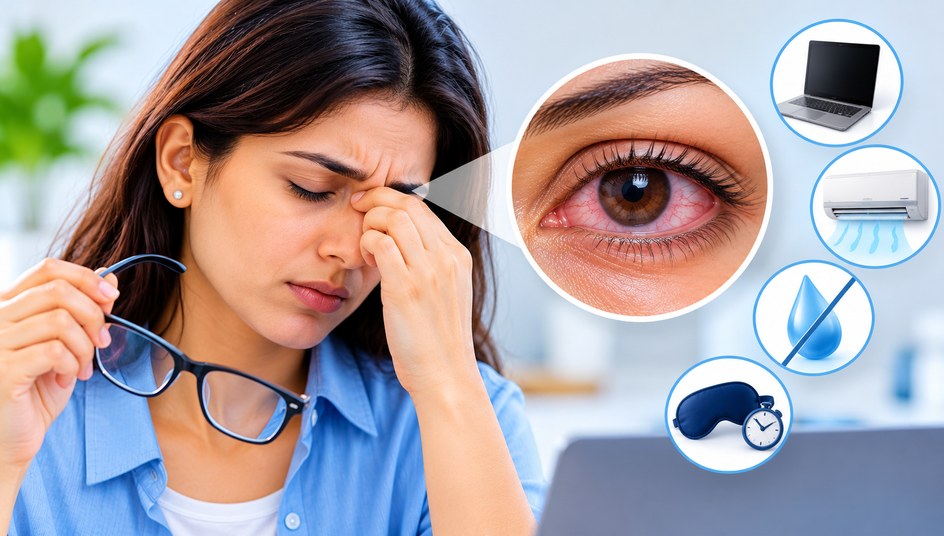
Table of contents
- 1. How Tears Keep Your Eyes Healthy
- 2. Symptoms to Notice
- 3. Common Causes
- 4. Who Is at Higher Risk?
- 5. Dry Eye, Allergy or Infection?
- 6. Five Red Flags That Need Prompt Care
- 7. How Dry Eye Is Evaluated
- 8. Treatment Options
- 9. Sample Screen-Break Plan
- 10. Five Eye-Care Steps
- 11. Primary, Urgent and Preventive Care in Elmhurst and Lower Manhattan
- 12. Contact Us and Find Us Online
- Conclusion
- Frequently Asked Questions
- See a Doctor in Elmhurst or Chinatown
Every blink spreads a thin film of tears across the front of your eyes. That film keeps the surface smooth, clear and comfortable. Dry eye disease develops when your eyes do not make enough tears, or when the tears evaporate too quickly or are poor in quality. The result is stinging, burning, a gritty or sandy feeling and eyes that feel tired, especially by evening. Dry eye is very common, affects millions of adults and becomes more likely with age, long hours on screens, contact lens wear, menopause and dry indoor winter air.
Surprisingly, dry eye can also make eyes water, because irritated eyes make extra reflex tears that do not last. Most cases are mild and respond to simple changes, but dry eye can also be linked to medicines, eyelid gland problems or autoimmune diseases, and severe cases can damage the eye surface. This guide explains how tears work, the symptom clues, common causes, who is at higher risk, how dry eye differs from allergy and infection, five red flags that need prompt care, treatment options, a sample screen-break plan with a simple graph, five eye-care steps and FAQs. It is general education only. Sudden vision loss, severe eye pain or a chemical splash needs emergency care. Call 911 for severe injury.
| At a Glance | Key Point |
|---|---|
| What it is | Eyes that do not have enough quality tears to stay comfortable and healthy |
| Common signs | Stinging, burning, grittiness, redness, blurred vision that clears with blinking and watery eyes |
| Common causes | Screen use, aging, dry air, contact lenses, medicines, eyelid gland problems and autoimmune disease |
| Treatment | Artificial tears, warm compresses, lid care, screen breaks and, if needed, prescription drops or procedures |
| See a clinician | Pain, light sensitivity, vision changes, symptoms over 2 weeks or contact lens discomfort |
1. How Tears Keep Your Eyes Healthy
The tear film has three layers: an oily outer layer made by glands in the eyelids that slows evaporation, a watery middle layer from the tear glands and a mucus inner layer that helps tears stick to the eye. If any layer is off, the surface dries and becomes inflamed. The most common problem is poor oil from blocked eyelid glands, called meibomian gland dysfunction. For trusted background, see the National Eye Institute page on dry eye and MedlinePlus on dry eye.
2. Symptoms to Notice
Common signs include:
- Stinging, burning or scratchy feeling in the eyes.
- A gritty or sandy sensation, as if something is in the eye.
- Redness and tired, heavy eyelids, especially later in the day.
- Blurred vision that clears after blinking.
- Light sensitivity and difficulty reading, driving at night or wearing contact lenses.
- Watery eyes, which can be a response to dryness and irritation.
3. Common Causes
Dry eye is often triggered by:
- Long screen time, because people blink far less often while focusing on a screen.
- Aging, since tear production tends to fall after age 50, especially in women after menopause.
- Dry, windy or heated air, air conditioning and fans blowing on the face.
- Contact lens wear and past eye surgery.
- Medicines such as antihistamines, decongestants, some antidepressants, blood pressure medicines and isotretinoin.
- Eyelid problems including blepharitis and blocked oil glands.
- Autoimmune and other conditions such as Sjogren's syndrome, rheumatoid arthritis, thyroid disease and diabetes.
4. Who Is at Higher Risk?
| Risk Factor | Why It Matters |
|---|---|
| Age over 50 | Tear production declines with age |
| Women, especially around menopause | Hormone changes affect tears and eyelid glands |
| Heavy screen users | Reduced blinking and longer exposed eye surface |
| Contact lens wearers | Lenses disrupt the tear film |
| People with allergies | Itchy eyes and allergy medicines can both dry the surface; see allergies or just a cold |
| People with autoimmune disease or low vitamin A or D | May reduce tear gland function; see why vitamin D is low so often in New York |
5. Dry Eye, Allergy or Infection?
| Clue | Dry Eye | Allergy | Infection |
|---|---|---|---|
| Main feeling | Gritty, burning, tired | Itching | Pain, a sticky or heavy discharge |
| Discharge | Clear and stringy or none | Clear and watery | Yellow, green or crusting |
| Vision | Blurs, then clears with blinking | Usually normal | May be hazy or painful |
| Both eyes | Usually both | Usually both | One or both |
| Action | Lubricants and habits | Allergy care | Prompt clinician visit |
Contact lens wearers with a red, painful eye should stop wearing lenses and be seen the same day, because a corneal infection can threaten vision.
6. Five Red Flags That Need Prompt Care
Get urgent care, or call 911 for severe symptoms, if you notice:
- Sudden vision loss, double vision, halos around lights or a curtain-like shadow.
- Severe eye pain, a very red eye, light sensitivity or nausea.
- A chemical splash, a blow to the eye or something stuck in the eye.
- Thick yellow or green discharge, fever or a swollen eyelid, or a painful red eye in a contact lens wearer.
- Dry eye that does not improve after two weeks of home care, or dry eyes along with a dry mouth, joint pain or tiredness.
If you are unsure where to go, read when a problem calls for the emergency room instead of urgent care in Queens.
7. How Dry Eye Is Evaluated
A clinician will ask about symptoms, screen use, contact lenses, medicines and other health conditions, and will examine the eyelids and eye surface. An eye specialist may measure tear volume and how fast tears break up, or stain the eye to look for surface damage. Blood tests may be used if an autoimmune condition is suspected. See when your primary care doctor sends you to a specialist for eye care referral.
8. Treatment Options
| Option | How It Helps | Notes |
|---|---|---|
| Artificial tears | Add moisture and ease symptoms | Choose preservative-free if used more than 4 times a day |
| Warm compresses and lid massage | Loosen oil in blocked eyelid glands | About 5 to 10 minutes daily |
| Lid hygiene with gentle cleansers | Reduce blepharitis and bacteria | Use products made for eyelids |
| Humidifier and environment changes | Slow tear evaporation | Avoid fans or vents aimed at the face |
| Prescription drops | Reduce surface inflammation and boost tears | Need a clinician's prescription and follow-up |
| Punctal plugs or in-office procedures | Keep tears on the eye longer or unblock glands | Done by an eye specialist for stubborn cases |
| Review of medicines and conditions | Treats root causes | Never stop prescribed medicine without advice |
9. Sample Screen-Break Plan
This teaching example shows how to lower eye strain across a work day. The 20-20-20 rule means every 20 minutes, look at something about 20 feet away for at least 20 seconds. Your clinician's or eye doctor's advice comes first. The squares show relative eye comfort support, where more squares mean more protection.
| Time | Action | Support Level |
|---|---|---|
| Morning | Warm compress for 5 to 10 minutes and lid wipe | ■■■■■ |
| Every 20 minutes | Look 20 feet away for 20 seconds and blink fully | ■■■■■■ |
| Mid-morning | Artificial tears if eyes feel dry; stand and stretch | ■■■■ |
| Lunch | Eat away from the screen and drink water | ■■■ |
| Afternoon | Lower screen brightness, raise the screen slightly below eye level | ■■■■ |
| Evening | Limit screens an hour before bed; use a bedroom humidifier | ■■■ |
10. Five Eye-Care Steps
These habits ease dry eye and protect the eye surface:
- Blink fully and often, follow the 20-20-20 rule and set the screen slightly below eye level.
- Use preservative-free artificial tears as needed and a warm compress on the lids once a day.
- Keep indoor air humid and avoid fans, heaters and car vents blowing directly on your eyes.
- Wear wraparound sunglasses outdoors, stay hydrated and talk with your clinician before using supplements.
- Take contact lens breaks, never sleep in lenses unless prescribed and have regular eye exams.
11. Primary, Urgent and Preventive Care in Elmhurst and Lower Manhattan
When eyes are red, painful or uncomfortable, many Queens residents search for urgent care Elmhurst NY, a walk in clinic Elmhurst NY or a same day doctor appointment Elmhurst. City Prime Care helps patients who need urgent care 11373, a primary care doctor Elmhurst NY, a family doctor Elmhurst Queens or a primary care doctor near me to look at eye symptoms, review medicines and refer to an eye specialist when needed. A physical exam clinic Elmhurst NY visit, preventive care Elmhurst NY and chronic disease management Elmhurst NY help manage diabetes, thyroid disease and autoimmune conditions that affect the eyes.
Downtown, people looking for primary care Lower Manhattan, a primary care doctor NYC or primary care Chinatown NYC can see our team near 75 Catherine St. Whether you search for a doctor near Catherine Street NYC, primary care 75 Catherine St, a walk-in clinic Chinatown NYC or a family doctor Manhattan NYC, we can examine you and arrange tests or referrals. Add an annual physical exam NYC, same day primary care NYC or preventive care Lower Manhattan to keep eye-related conditions in check. See which conditions urgent care in Elmhurst can treat and what happens at your first urgent care visit in Elmhurst.
12. Contact Us and Find Us Online
If your eyes stay dry, red or painful, our team can find the cause and guide next steps. For non-emergency questions, Contact Us, book a visit, or find City Prime Care on Google: City Prime Care on Google. For sudden vision loss, severe eye pain or a chemical splash, call 911 or go to the emergency room.
Conclusion
Dry eye is common and usually manageable with blinking breaks, lubricating drops, lid care and a more humid environment. Because it can also point to medicine effects or health conditions, painful, red or long-lasting symptoms deserve a check. This article is for general education and does not replace medical advice.
Frequently Asked Questions
See a Doctor in Elmhurst or Chinatown
Have a question about your own health? Book a visit at our Elmhurst, Queens clinic or our Chinatown, Manhattan clinic, or explore our primary care services.
Related articles
Healthcare
Why Are Your Ankles and Feet Swollen by Evening, and When Is Leg Swelling Serious? Reading the Swelling Patterns, the Five Relief Steps and the Sample Two-Week Swelling Diary
Swollen ankles after a long day can be harmless, but swelling in one leg, sudden weight gain or breathlessness can signal a clot, heart, kidney or liver problem. Learn the patterns, five relief steps and a two-week diary.
Healthcare
Why Is a Red, Itchy Ring-Shaped Patch Spreading on Your Skin, and Is It Ringworm? Reading the Patch Types, the Five Treatment Steps and the Sample Four-Week Clearing Plan
A red, scaly, ring-shaped itchy patch is often ringworm, a common fungal skin infection that is not caused by a worm. Learn the patch types, look-alike rashes, five treatment steps and a four-week clearing plan.
Healthcare
Why Is Your Hair Thinning or Falling Out in Clumps, and Could a Health Problem Be Behind It? Reading the Hair Loss Patterns, the Five Checkup Steps and the Sample Six-Month Regrowth Timeline
Finding more hair in the shower or brush can be stressful. Learn the common hair loss patterns, which blood tests and health problems matter, five checkup steps and a realistic six-month regrowth timeline.