HealthcareBy City Prime Care Team
Do You Need a Hepatitis B or C Test, Even If You Feel Fine? Reading the Three Hepatitis Types, the Five Screening Steps and the Sample Results Guide
Hepatitis A, B and C can damage the liver silently. Learn who should be screened, how the blood tests work, how hepatitis C is now curable, and a sample guide to reading your results.
Medically reviewed by Dr. Karl E. Latortue9 min read
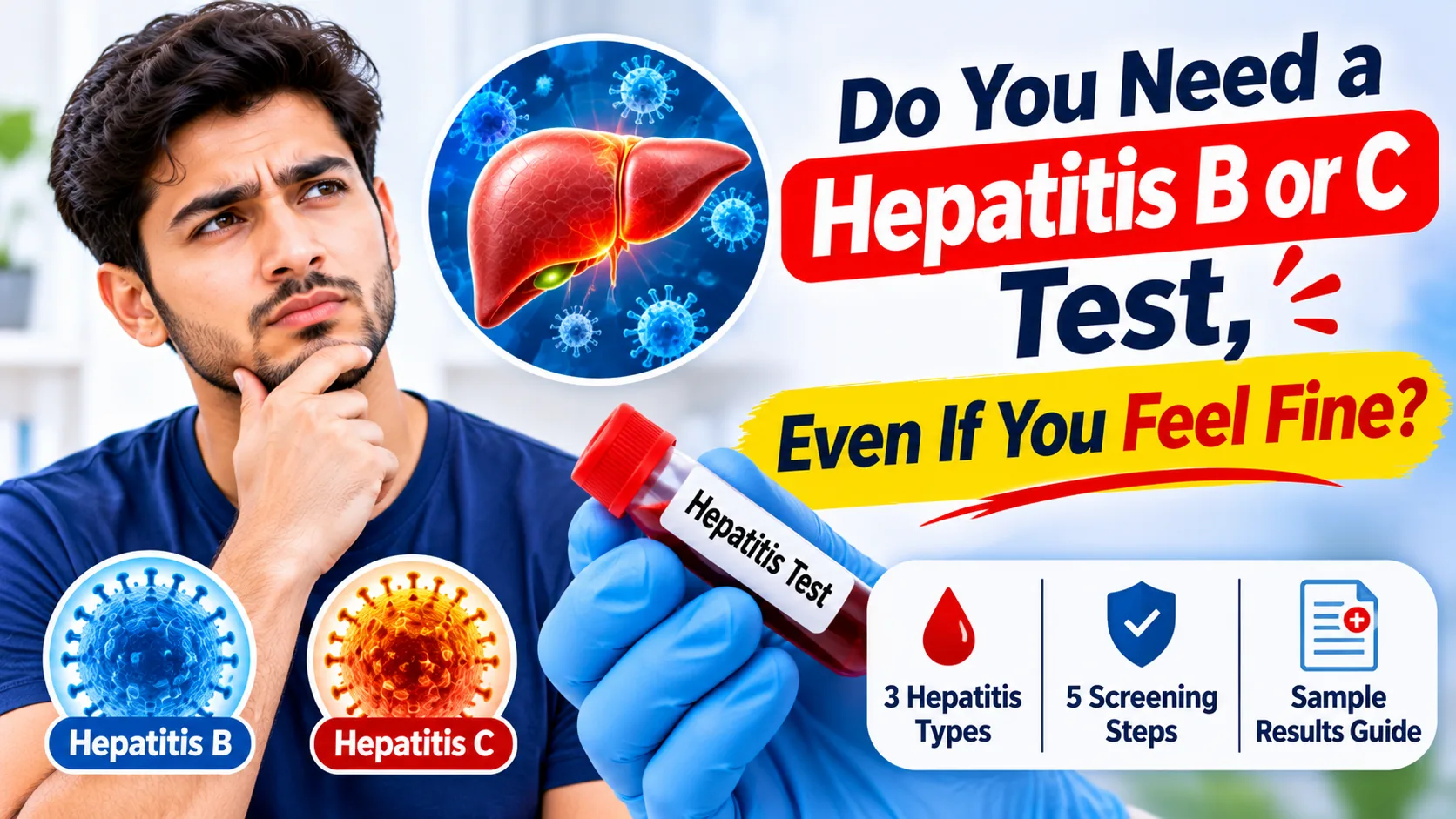
Table of contents
- 1. The Three Common Hepatitis Viruses Compared
- 2. Why Screening Matters Even Without Symptoms
- 3. Sample Graph: How Silent Liver Damage Can Progress
- 4. Five Screening Steps
- 5. Sample Results Guide: Reading a Hepatitis B Panel
- 6. Who Is at Higher Risk
- 7. Prevention: Vaccines and Everyday Steps
- 8. Contact Us and Find Us Online
- Conclusion
- Frequently Asked Questions
- See a Doctor in Elmhurst or Chinatown
The liver rarely complains until it is badly damaged, and viral hepatitis is one of the clearest examples. Hepatitis B and hepatitis C can live in the body for years with no symptoms while slowly scarring the liver. The good news: both can be found with simple blood tests, hepatitis B can be prevented with a vaccine, and hepatitis C can now usually be cured with a short course of pills.
This guide explains the three main hepatitis viruses, who should be screened, how the tests work, how to read a sample set of results and what to do next. It is general education and does not replace advice from your clinician.
| At a Glance | Key Point |
|---|---|
| Hepatitis A | Usually short-term; spread through contaminated food or water; prevented by vaccine |
| Hepatitis B | Can be short- or long-term; spread through blood and body fluids; prevented by vaccine |
| Hepatitis C | Often becomes chronic; spread mainly through blood; curable with antiviral medicine |
| CDC screening advice | All adults should be screened for hepatitis C at least once; hepatitis B screening at least once for adults too |
| Symptoms | Often none until liver damage; sometimes fatigue, dark urine, jaundice |
1. The Three Common Hepatitis Viruses Compared
| Feature | Hepatitis A | Hepatitis B | Hepatitis C |
|---|---|---|---|
| How it spreads | Contaminated food or water; close contact | Blood, sexual contact, from mother to baby at birth | Mostly blood, such as shared needles; less often other exposures |
| Becomes chronic? | No | Sometimes, especially if infected as an infant or child | Often (many people who are infected) |
| Vaccine available? | Yes | Yes | No |
| Treatment | Supportive care | Antiviral medicines can control chronic infection | Direct-acting antivirals, usually 8 to 12 weeks, cure most people |
| Silent for years? | Rarely | Yes | Yes |
The CDC has detailed pages on viral hepatitis and the National Institute of Diabetes and Digestive and Kidney Diseases explains viral hepatitis in plain language.
2. Why Screening Matters Even Without Symptoms
Many people who carry hepatitis B or C do not know it. Over time, long-term infection can lead to cirrhosis (scarring), liver failure or liver cancer. Finding the virus early lets you start treatment, protect your liver and avoid passing it on. Current CDC recommendations call for hepatitis C screening in all adults at least once, and in every pregnancy, and for hepatitis B screening at least once in adults using a three-part blood panel.
3. Sample Graph: How Silent Liver Damage Can Progress
This illustrative timeline shows why early testing is useful. Real progression varies widely between people, and many people never develop advanced disease.
| Stage | Typical Time Frame (Example) | Symptoms | Liver Impact (Example Graph) |
|---|---|---|---|
| Infection begins | Month 0 | Often none | ■ |
| Chronic infection | Years 1 to 10 | Often none or mild fatigue | ■■ |
| Fibrosis (early scarring) | Years 10 to 20 | Usually none | ■■■■ |
| Cirrhosis | Years 20 and beyond in some people | Fatigue, swelling, jaundice | ■■■■■■■ |
| Liver failure or cancer | Later, in a minority | Serious illness | ■■■■■■■■■■ |
Treatment at an early stage can stop or slow this path. Other liver conditions, such as fatty liver disease and heavy drinking (see how much alcohol is too much), can add to liver strain.
4. Five Screening Steps
What getting tested usually involves:
- Talk with your clinician about your risk history, vaccines, travel, medical procedures, family history and any past exposure. You do not need to explain every detail; tell them what you are comfortable sharing.
- Give a blood sample, which can be done in the same visit as other routine labs.
- Hepatitis C: the first test is an antibody test; if positive, a follow-up RNA test shows whether the virus is currently active.
- Hepatitis B: a three-part panel looks at surface antigen (HBsAg), surface antibody (anti-HBs) and core antibody (total anti-HBc) to tell whether you are infected, immune or unprotected.
- Review results and plan next steps with your clinician, including vaccination, further liver tests or referral to a liver specialist if needed.
Bundling tests with a checkup is efficient. See our guides on common blood tests explained and the annual physical checkup guide for what else may be checked.
5. Sample Results Guide: Reading a Hepatitis B Panel
The table below is a simplified teaching example. Only a clinician can interpret your actual results.
| HBsAg | Anti-HBs | Total Anti-HBc | General Meaning |
|---|---|---|---|
| Negative | Negative | Negative | Not infected and not immune; vaccination is usually recommended |
| Negative | Positive | Negative | Immune from vaccination |
| Negative | Positive | Positive | Immune from a past infection that cleared |
| Positive | Negative | Positive | Currently infected; needs follow-up with a clinician |
For hepatitis C, a negative antibody test generally means no infection. A positive antibody test needs an RNA test; if the RNA is positive, treatment is usually recommended, and most people are cured with a course of antiviral pills.
6. Who Is at Higher Risk
Some people are especially encouraged to be tested, though universal screening is advised:
- Adults who have never been tested.
- Anyone who has ever injected drugs, even once, or shared drug equipment.
- People with HIV, or sexual partners of people with hepatitis B or C.
- Anyone born in regions where hepatitis B is common, or whose parents were.
- People who had blood transfusions or organ transplants before screening became routine, or who received long-term dialysis.
- Pregnant people, with every pregnancy.
- Health care workers with possible blood exposure.
- People with unexplained abnormal liver tests.
Hepatitis testing can be part of broader confidential infection testing. Ask your clinician which screenings fit your age and history; our guide on which health screenings every woman needs shows how age-based screening plans work.
7. Prevention: Vaccines and Everyday Steps
Protect yourself and others:
- Get vaccinated: hepatitis A and hepatitis B vaccines are safe and effective. Ask about your status; see our adult vaccines guide.
- Do not share needles, razors, toothbrushes or other items that may carry blood.
- Use condoms and get regular testing if you have more than one partner.
- Choose licensed tattoo and piercing studios that use sterile equipment.
- Wash hands and practice food and water safety when traveling.
8. Contact Us and Find Us Online
If you have never been screened, or you are unsure about your vaccine status, our team can arrange simple blood testing and explain your results in plain language. Your visit is confidential. Contact Us to ask a question or plan your visit, or find City Prime Care on Google: City Prime Care on Google. Not sure which clinician to see first? Read when your primary care doctor sends you to a specialist.
Conclusion
Hepatitis B and C often show no signs until the liver is damaged, which is exactly why a simple blood test is worth it. Screening finds infections early, a vaccine prevents hepatitis A and B, and modern medicine can cure most hepatitis C. This article is for general education and does not replace advice from your healthcare professional.
Frequently Asked Questions
See a Doctor in Elmhurst or Chinatown
Have a question about your own health? Book a visit at our Elmhurst, Queens clinic or our Chinatown, Manhattan clinic, or explore our primary care services.
Related articles
Healthcare
Why Is Your Hair Thinning or Falling Out in Clumps, and Could a Health Problem Be Behind It? Reading the Hair Loss Patterns, the Five Checkup Steps and the Sample Six-Month Regrowth Timeline
Finding more hair in the shower or brush can be stressful. Learn the common hair loss patterns, which blood tests and health problems matter, five checkup steps and a realistic six-month regrowth timeline.
Healthcare
Why Are You Always Tired as a Man? Reading the Common Causes, the Five Checks and the Sample Fatigue Diary
Constant tiredness has many causes besides low testosterone: sleep, sleep apnea, thyroid, anemia, blood sugar, mood and medicines. See the common causes, five checks a doctor runs and a sample fatigue diary.
Healthcare
Why Are Your Ankles and Feet Swollen by Evening, and When Is Leg Swelling Serious? Reading the Swelling Patterns, the Five Relief Steps and the Sample Two-Week Swelling Diary
Swollen ankles after a long day can be harmless, but swelling in one leg, sudden weight gain or breathlessness can signal a clot, heart, kidney or liver problem. Learn the patterns, five relief steps and a two-week diary.