HealthcareBy City Prime Care Team
Why Do Your Ears Feel Blocked, Muffled or Full of Pressure Without Any Pain, and Is It Earwax Buildup? Reading the Wax Types, the Five Safe Home-Care Steps and the Sample Two-Week Clearing Plan
Muffled hearing and a plugged-up feeling in one or both ears are often caused by earwax buildup. Learn the wax types, what not to put in your ears, five safe home-care steps, a two-week clearing plan and when to see a doctor.
Medically reviewed by Dr. Karl E. Latortue10 min read
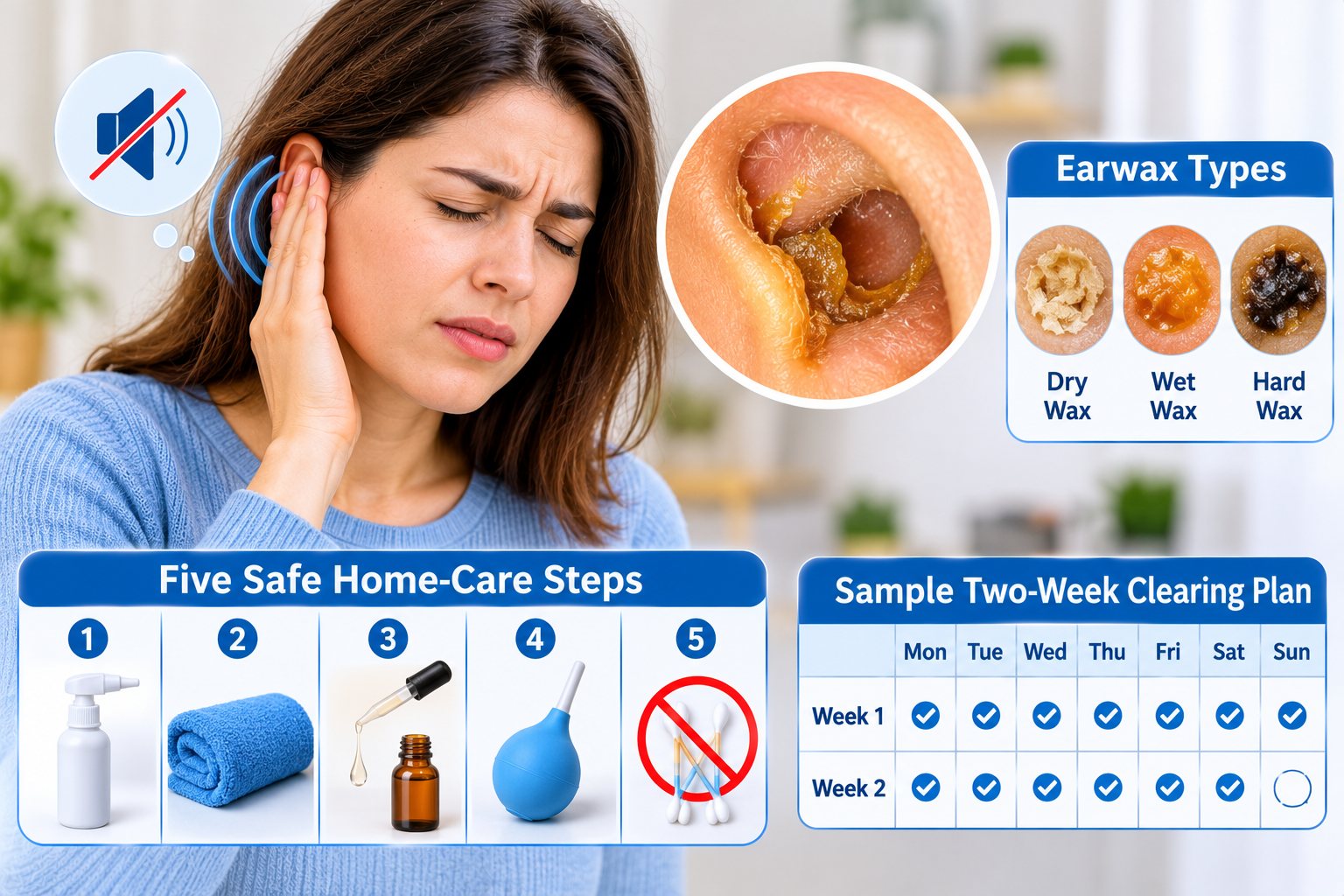
Table of contents
- 1. What Is Earwax and Why Does It Build Up?
- 2. Reading the Wax Types
- 3. Wax Blockage vs Look-Alikes
- 4. Symptoms of Earwax Blockage
- 5. What Not to Put in Your Ears
- 6. The Five Safe Home-Care Steps
- 7. Graph: Illustrative Blockage Score Over Two Weeks
- 8. What a Clinician May Do
- 9. Sample Two-Week Clearing Plan
- 10. Red Flags: When to See a Clinician
- 11. Where to Get Care: Elmhurst, Chinatown and Lower Manhattan
- 12. Contact Us
- Conclusion
- Frequently Asked Questions
- See a Doctor in Elmhurst or Chinatown
A plugged-up feeling in one ear, voices that sound muffled, a little ringing or a sense that water is stuck after a shower are very common reasons people ask about their ears. In many cases the cause is simply earwax, also called cerumen, that has built up or been pushed deeper by cotton swabs, earbuds or hearing aids. Earwax is normal and protective, but when it blocks the ear canal it can dull hearing, cause fullness and sometimes itching or mild discomfort.
This guide explains what earwax does, how to tell a wax blockage from an ear infection or other hearing problem, what not to put in your ears, five safe home-care steps, a sample two-week clearing plan and the red flags that need a clinician. City Prime Care serves patients in Elmhurst, Queens and Lower Manhattan. This article is general education and not a substitute for personal medical advice.
Quick takeaways:
- Earwax cleans and protects the ear canal and usually works its way out on its own; most people do not need to remove it.
- Cotton swabs, hairpins, keys and ear candles can push wax deeper, injure the canal or eardrum, and should be avoided.
- Softening drops used as directed help many mild blockages; irrigation or manual removal by a clinician is the safe option for stubborn wax.
- Ear pain, drainage, fever, dizziness, sudden hearing loss or a history of a perforated eardrum or ear tubes need a medical evaluation before any home treatment.
1. What Is Earwax and Why Does It Build Up?
Glands in the outer part of the ear canal make wax that traps dust, dirt and germs and keeps the canal skin from drying out. Chewing and jaw movement gradually carry old wax toward the opening, where it dries and falls away. Problems start when wax is overproduced, pushed deeper, or cannot move out, which is common in people who use earbuds, hearing aids or earplugs, have narrow or hairy ear canals, or are older. The Mayo Clinic explains this on its earwax blockage symptoms and causes page, and the UK National Health Service has a clear earwax build-up guide.
Ear canals are self-cleaning in most people. Wiping the outer ear with a washcloth is usually enough.
2. Reading the Wax Types
| Wax type | What it looks like | Who tends to have it | What it means |
|---|---|---|---|
| Wet wax | Yellow to brown, sticky or soft | Common in many adults and people of African or European ancestry | Normal; can trap more debris |
| Dry wax | Gray or tan, flaky and dry | Common in many people of East Asian ancestry and some older adults | Normal; may break off in flakes |
| Hardened plug | Dark, hard mass sitting against the eardrum | People using swabs, earbuds or hearing aids; older adults | May block hearing; best removed by a clinician |
| Fresh wax with moisture | Wet and light after swimming or showers | Anyone | Usually clears on its own once the ear dries |
Wax color alone does not show disease. Very dark or bloody wax, or wax with a strong odor and discharge, deserves a check.
3. Wax Blockage vs Look-Alikes
| Condition | Typical clue | How it differs from earwax |
|---|---|---|
| Ear infection (otitis media) | Ear pain, fever, recent cold, muffled hearing | Pain and fever are more prominent; see our guide to ear infections |
| Swimmer's ear (otitis externa) | Pain when touching or pulling the outer ear, itching, discharge | Canal skin is swollen and tender |
| Fluid behind the eardrum | Full, popping or underwater feeling after a cold or allergy | Pressure-related, wax is not blocking the canal |
| Sudden sensorineural hearing loss | Hearing drops over hours or days, sometimes with ringing | Medical urgency; do not assume it is wax |
| Tinnitus | Ringing or buzzing sound | Can come with wax but has many causes; see why your ears are ringing |
| Inner-ear balance problem | Spinning, dizziness, unsteadiness | Not typical for wax; see why you feel dizzy or like the room is spinning |
4. Symptoms of Earwax Blockage
Earwax that blocks the canal may cause:
- A feeling of fullness or plugging in the ear.
- Partial hearing loss that may worsen over time, often in one ear.
- Ringing or noises in the ear.
- Itching, odor or mild discomfort in the canal.
- A cough caused by irritation of nerves in the ear canal in some people.
- Hearing aids that whistle, feel uncomfortable or seem to stop working well.
Children and older adults may not complain clearly; a child who pulls at an ear or an older adult who seems withdrawn or confused may simply have a wax plug. For broader childhood symptoms, see how to tell a common childhood illness from one that needs a doctor.
5. What Not to Put in Your Ears
| Method | Why people try it | Why it is a problem |
|---|---|---|
| Cotton swabs | Seems like cleaning | Pushes wax deeper, can scratch the canal or injure the eardrum |
| Hairpins, keys, pen caps | Scooping out wax | Can puncture the eardrum or cause infection |
| Ear candles | Advertised as natural suction | Do not remove wax and can cause burns, wax deposits and eardrum injury |
| Strong peroxide or alcohol over many days | Dissolve wax | Can dry and irritate canal skin if overused |
| Forceful water jets or syringes at home | Flushing the ear | Can damage the eardrum, especially with tubes, holes or past ear surgery |
6. The Five Safe Home-Care Steps
For mild wax buildup in an adult with no ear pain, drainage, fever, dizziness, sudden hearing loss, ear tubes or known eardrum hole:
- Do nothing in the canal: wipe only the outer ear with a washcloth, and stop using cotton swabs and other objects.
- Soften the wax with over-the-counter ear drops, mineral oil, baby oil or olive oil, using a few drops in the affected ear as directed on the label, lying with the ear up for a few minutes.
- Repeat for several days as labeled, since softening can take time, and let the wax work its way out when you shower or tilt your head.
- If advised by a clinician or the product label, gently rinse with warm (body-temperature) water using a soft bulb syringe, tilting the head and never forcing the stream.
- Stop and book a visit if you have pain, discharge, dizziness, no improvement after about a week or two, or if you wear hearing aids and cannot clear the ear safely.
Hearing checks are part of healthy aging and a good topic at a yearly visit; see our annual physical guide.
7. Graph: Illustrative Blockage Score Over Two Weeks
This is a teaching graph, not patient data. It shows how a feeling of blockage may ease gradually with softening drops, while a swab-pushed plug may stay blocked.
| Day | Blockage with softening drops (illustrative) | Blockage after using a swab (illustrative) |
|---|---|---|
| Day 0 | ██████████ | ██████████ |
| Day 3 | ████████ | ██████████ |
| Day 5 | ██████ | ██████████ |
| Day 7 | ████ | █████████ |
| Day 10 | ██ | █████████ |
| Day 14 | █ | ████████ |
8. What a Clinician May Do
If drops do not work, a clinic visit may include:
- Looking into the canal with an otoscope to confirm that wax, not infection or injury, is the problem.
- Gentle irrigation with warm water when the eardrum is intact and the wax is soft.
- Manual removal with a small curved instrument (curette) or suction, which is often safer for hard plugs and for people with ear tubes or past ear surgery.
- A hearing check if hearing does not return to normal after the wax is cleared; see which common medical tests you might need.
- Referral to an ear, nose and throat specialist for repeated blockages, narrow canals, eardrum problems or unexplained hearing loss; see when your primary care doctor sends you to a specialist.
9. Sample Two-Week Clearing Plan
| Days | Goal | Sample actions | Check |
|---|---|---|---|
| Days 1-3 | Soften the wax | Use drops once or twice daily as labeled, ear up for a few minutes; keep ears dry; no swabs | Any pain, discharge or dizziness? If yes, stop and call |
| Days 4-7 | Let it loosen | Continue drops, shower and let water run out; tilt head to drain gently | Is the plugged feeling easing? |
| Days 8-10 | Clear remaining wax | Gentle bulb rinse only if no ear tubes or eardrum hole and the label or clinician advises | Is hearing improving? |
| Days 11-14 | Confirm and prevent | If still blocked, book a clinic cleaning; avoid swabs; clean hearing aids and earbuds regularly | Ask about preventive drops if blockages recur |
10. Red Flags: When to See a Clinician
Get a medical check promptly for:
- Ear pain, fever, swelling around the ear or discharge, especially if pus-like or bloody.
- Sudden or rapidly worsening hearing loss in one or both ears, with or without ringing, which should be evaluated within a day or two.
- Dizziness, spinning, vomiting or balance problems.
- A known hole in the eardrum, ear tubes or past ear surgery before using any drops or rinses.
- Diabetes, a weakened immune system or a child under about two with ear symptoms.
- Symptoms that do not improve after about one to two weeks of safe home care.
11. Where to Get Care: Elmhurst, Chinatown and Lower Manhattan
A suddenly painful or blocked ear, drainage or sudden hearing change is a common reason to search for urgent care Elmhurst NY, a walk in clinic Elmhurst NY, urgent care 11373, a same day doctor appointment Elmhurst or Same-Day Acute Care in Elmhurst Queens. For repeated wax problems, hearing checks, allergy-related ear pressure and long-term health follow-up, patients choose a primary care doctor Elmhurst NY, a family doctor Elmhurst Queens, Primary Care Doctors in Elmhurst NY or chronic disease management Elmhurst NY.
People comparing options often search for Best Primary Care Clinic in Elmhurst Queens, Best Primary Care Doctor in Elmhurst Queens, Primary Care Near Me Elmhurst Queens, Best Primary Care Clinics in Queens NY, Primary Care Clinics and Doctors in Queens NY and Top Primary Care Clinics in Queens NY. City Prime Care offers Men's and Women's Healthcare in Elmhurst NY, a physical exam clinic Elmhurst NY and preventive care Elmhurst NY, including hearing and ear checks for adults and children.
Downtown, people look for primary care Lower Manhattan, primary care Chinatown NYC, a doctor near Catherine Street NYC, primary care 75 Catherine St, a walk-in clinic Chinatown NYC, a Primary Care Clinic in Chinatown Manhattan or a Healthcare Center in Chinatown Manhattan NY. Citywide searches include primary care doctor NYC, family doctor Manhattan NYC, annual physical exam NYC, same day primary care NYC, preventive care Lower Manhattan and primary care doctor near me. Residents searching for Primary Care Doctors Serving Todt Hill Staten Island are welcome to contact the clinic to ask about care options and travel.
| Area | Common searches | How care can help |
|---|---|---|
| Elmhurst (ZIP 11373) | Urgent care 11373, same day doctor appointment Elmhurst | Same-day ear exam and safe wax removal |
| Elmhurst, Queens | Family doctor Elmhurst Queens, primary care doctor Elmhurst NY | Hearing and ear care for the whole family |
| Queens | Best Primary Care Clinics in Queens NY, Top Primary Care Clinics in Queens NY | Easy-to-reach primary care for the family |
| Lower Manhattan | Primary care Lower Manhattan, preventive care Lower Manhattan | Convenient follow-up and referral planning |
| Chinatown / Catherine Street | Primary care Chinatown NYC, doctor near Catherine Street NYC, primary care 75 Catherine St | Convenient downtown care |
| Citywide | Primary care doctor NYC, family doctor Manhattan NYC, same day primary care NYC | Same-day or scheduled evaluation |
You can also find the clinic on Google.
12. Contact Us
Are your ears still blocked, painful or muffled after safe home care? Visit our Contact Us page or see our Google listing. For sudden hearing loss, severe ear pain with fever or dizziness, seek care the same day.
Conclusion
Earwax is normal and usually harmless, and most blockages clear with patience, softening drops and avoiding swabs. Pain, discharge, dizziness, sudden hearing loss or a stubborn plug deserve a clinician's exam and safe removal rather than a search with household objects.
Frequently Asked Questions
See a Doctor in Elmhurst or Chinatown
Have a question about your own health? Book a visit at our Elmhurst, Queens clinic or our Chinatown, Manhattan clinic, or explore our primary care services.
Related articles
Healthcare
Why Are Your Ears Ringing When the Room Is Quiet, and When Does Tinnitus Need a Doctor? Reading the Sound Types, the Five Relief Steps and the Sample Daily Sound Plan
Ringing, buzzing or hissing in your ears can be harmless or a sign that needs a hearing check. Learn the sound types, noise levels, red flags, five relief steps and a sample daily sound plan with a simple graph.
Healthcare
Why Are Your Ankles and Feet Swollen by Evening, and When Is Leg Swelling Serious? Reading the Swelling Patterns, the Five Relief Steps and the Sample Two-Week Swelling Diary
Swollen ankles after a long day can be harmless, but swelling in one leg, sudden weight gain or breathlessness can signal a clot, heart, kidney or liver problem. Learn the patterns, five relief steps and a two-week diary.
Healthcare
Why Is a Red, Itchy Ring-Shaped Patch Spreading on Your Skin, and Is It Ringworm? Reading the Patch Types, the Five Treatment Steps and the Sample Four-Week Clearing Plan
A red, scaly, ring-shaped itchy patch is often ringworm, a common fungal skin infection that is not caused by a worm. Learn the patch types, look-alike rashes, five treatment steps and a four-week clearing plan.