HealthcareBy City Prime Care Team
Why Are Your Ears Ringing When the Room Is Quiet, and When Does Tinnitus Need a Doctor? Reading the Sound Types, the Five Relief Steps and the Sample Daily Sound Plan
Ringing, buzzing or hissing in your ears can be harmless or a sign that needs a hearing check. Learn the sound types, noise levels, red flags, five relief steps and a sample daily sound plan with a simple graph.
Medically reviewed by Dr. Helen Vasquez10 min read
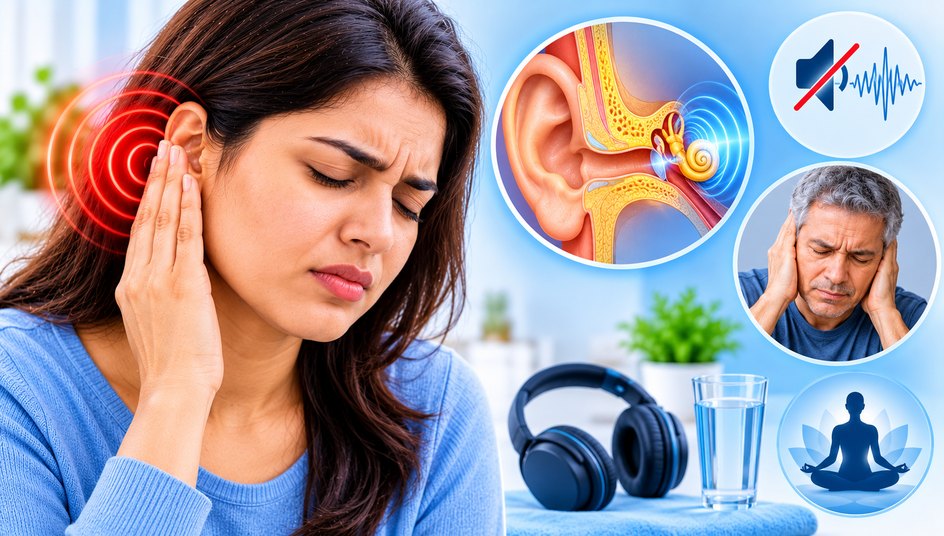
Table of contents
- 1. How Tinnitus Happens
- 2. The Types of Tinnitus Sounds
- 3. Symptoms to Notice
- 4. Who Is at Higher Risk?
- 5. Everyday Noise Levels
- 6. Five Warning Signs That Need Prompt Care
- 7. How Tinnitus Is Diagnosed
- 8. Treatment Options
- 9. Sample Daily Sound Plan
- 10. Five Relief Steps
- 11. Primary, Urgent and Preventive Care in Elmhurst and Lower Manhattan
- 12. Contact Us and Find Us Online
- Conclusion
- Frequently Asked Questions
- See a Doctor in Elmhurst or Chinatown
Tinnitus is the perception of sound, such as ringing, buzzing, hissing, clicking or roaring, when no outside sound is present. It is a symptom, not a disease, and it is very common. Many people notice it for a few seconds after a loud event or in a quiet room, while others live with it daily and find it hard to concentrate or sleep.
For most people tinnitus is not dangerous, but it can signal hearing loss, earwax, medication effects, jaw or blood vessel problems, or in rare cases a condition that needs urgent care. This guide explains the sound types, common causes, everyday noise levels, tinnitus versus an ear infection, the five warning signs that need prompt care, how hearing is tested, treatment options, a sample daily sound plan and five relief steps. It is general education only. Sudden hearing loss, facial weakness or a severe headache needs urgent care. Call 911 for stroke signs.
| At a Glance | Key Point |
|---|---|
| What it is | Hearing a sound that is not coming from outside, often ringing or buzzing |
| Common causes | Noise exposure, age-related hearing loss, earwax, ear infection and some medicines |
| Who gets it | Adults of any age, most often those with hearing loss or loud noise exposure |
| Treatment | Treat the cause, use hearing aids or sound therapy, and learn coping skills such as CBT |
| Urgent signs | Sudden hearing loss, one-sided tinnitus with dizziness, a pulse-like sound or weakness |
1. How Tinnitus Happens
Sound is detected by tiny hair cells in the inner ear, which send signals along the hearing nerve to the brain. When these cells are damaged, or when hearing signals drop, the brain may create its own sound to fill the gap. This is why tinnitus often goes along with hearing loss, even when you do not notice trouble hearing. For trusted background, see the NIDCD page on tinnitus and MedlinePlus on tinnitus.
2. The Types of Tinnitus Sounds
| Type | What You Hear | What It May Mean |
|---|---|---|
| Ringing or high-pitched tone | Steady whistle or ring in one or both ears | Often noise damage or age-related hearing loss |
| Buzzing or hissing | Static, steam-like or electrical hum | Earwax, hearing loss or sound sensitivity |
| Clicking | Short repeated clicks | Muscle spasms in the middle ear or jaw joint problems |
| Pulsatile | A whooshing sound that beats with your pulse | Blood flow or blood vessel causes; needs medical evaluation |
| Roaring | Low, rumbling ocean-like sound | Fluid in the ear, pressure changes or Meniere disease |
3. Symptoms to Notice
Common signs include:
- Ringing, buzzing or hissing in one ear or both ears.
- Sounds that are more noticeable at night or in a quiet room.
- Trouble hearing, a feeling of fullness or muffled hearing.
- Difficulty sleeping, concentrating or relaxing because of the noise.
- Stress, irritability or low mood that goes along with constant sound.
Tinnitus can come and go or be constant. Short episodes that fade within minutes are common and are usually harmless.
4. Who Is at Higher Risk?
| Risk Factor | Why It Matters |
|---|---|
| Loud noise | Concerts, headphones at high volume, construction and subway noise can damage hair cells |
| Age | Hearing declines gradually after midlife |
| Earwax or ear infection | Blockage or fluid can create sound and muffle hearing |
| Certain medicines | High doses of aspirin, some antibiotics, diuretics and cancer medicines can affect the ear |
| High blood pressure or heart disease | Blood flow changes can cause a pulse-like sound |
| Stress, poor sleep and caffeine | May make tinnitus feel louder |
5. Everyday Noise Levels
Protecting your hearing is the most effective way to prevent noise-related tinnitus. Sounds at or above about 85 decibels can damage hearing with enough time. The table shows typical levels and how long listening is generally considered safe. Phone apps can estimate sound levels, though they are not exact.
| Sound | Approximate Level | Example Safe Time |
|---|---|---|
| Normal conversation | 60 dB | All day |
| Busy street traffic | About 80 to 85 dB | Several hours; use caution |
| Subway train or loud blender | About 90 to 100 dB | Under 30 minutes to 2 hours; consider ear protection |
| Headphones at full volume | Often 100 dB or more | Minutes only |
| Concert or siren | 110 to 120 dB | Seconds to minutes; use earplugs |
Take a listening break after loud events, and use earplugs or noise-limiting headphones around loud sounds.
6. Five Warning Signs That Need Prompt Care
Get prompt care, or call 911 for severe symptoms, if you notice:
- Sudden hearing loss in one or both ears, with or without ringing. Seek care within a day or two, since early treatment gives the best chance of recovery.
- Tinnitus in only one ear, especially if it is new, together with hearing loss or dizziness.
- A whooshing sound that beats with your heartbeat.
- Facial weakness, slurred speech, numbness, a severe headache or vision change. Call 911, because these can be stroke signs.
- Tinnitus after a head or neck injury, or with ear pain, drainage, fever or a spinning sensation.
If you are unsure where to go, read when a problem calls for the emergency room instead of urgent care in Queens and how to recognize a stroke in time.
7. How Tinnitus Is Diagnosed
Your clinician will examine your ears for wax, fluid or infection, check your blood pressure and review your medicines, noise exposure and sleep. A hearing test, called an audiogram, is usually the key step because even mild hearing loss can cause tinnitus. If the sound is one-sided, pulsatile or paired with sudden hearing loss, you may be referred to an ear, nose and throat specialist for imaging or further tests. See when your primary care doctor sends you to a specialist. Dizziness with tinnitus is covered in why you feel dizzy or like the room is spinning.
8. Treatment Options
| Option | How It Helps | Notes |
|---|---|---|
| Earwax removal | Clears a blockage that can cause ringing | Done safely by a clinician; avoid cotton swabs and ear candles |
| Treating the cause | Ear infection, blood pressure or medicine changes may reduce the sound | Do not stop prescribed medicines without asking your clinician |
| Hearing aids | Bring back outside sound and make tinnitus less noticeable | Often the most helpful step when hearing loss is present |
| Sound therapy | White noise, nature sounds or masking reduce contrast with silence | Use a sound machine, fan or app at low volume |
| Cognitive behavioral therapy | Helps you react less to the sound, easing stress and sleep trouble | Evidence-based approach for bothersome tinnitus |
| Supplements and miracle cures | Not proven to cure tinnitus | Ask your clinician before using supplements |
9. Sample Daily Sound Plan
This teaching example shows a daily routine that eases bothersome tinnitus. Your clinician's advice comes first. The squares show example minutes of the activity, with each square equal to about 10 minutes.
| Time of Day | Action | Example Minutes |
|---|---|---|
| Morning | Start the day with soft background sound, such as music or a fan | ■■■ |
| Midday | Take quiet breaks away from loud noise; wear earplugs on loud commutes | ■■ |
| Afternoon | Walk outdoors and practice slow breathing or relaxation | ■■■ |
| Evening | Wind down with low-volume nature sounds; limit caffeine and alcohol | ■■■ |
| Bedtime | Use a sound machine set at low volume to cover silence | ■■■■■■ |
If the sound is getting louder, or sleep and mood are suffering, book an evaluation.
10. Five Relief Steps
These habits ease tinnitus and protect your hearing:
- Avoid total silence; use gentle background sound, especially at night.
- Protect your ears with earplugs, and keep headphone volume at about 60 percent or lower.
- Limit caffeine, alcohol and nicotine if they make the sound worse, and manage blood pressure.
- Reduce stress with breathing exercises, regular exercise and steady sleep; see could your snoring be sleep apnea if sleep is poor.
- Get a hearing test and follow up on any hearing loss instead of waiting.
11. Primary, Urgent and Preventive Care in Elmhurst and Lower Manhattan
Ear ringing, muffled hearing or a blocked ear can be unsettling, and many Queens residents search for urgent care Elmhurst NY, a walk in clinic Elmhurst NY or a same day doctor appointment Elmhurst. City Prime Care helps patients who need urgent care 11373, a primary care doctor Elmhurst NY, a family doctor Elmhurst Queens or a primary care doctor near me to check the ears, review medicines and arrange hearing tests. A physical exam clinic Elmhurst NY visit, preventive care Elmhurst NY and chronic disease management Elmhurst NY also address blood pressure, diabetes and other conditions that affect hearing.
Downtown, people looking for primary care Lower Manhattan, a primary care doctor NYC or primary care Chinatown NYC can see our team near 75 Catherine St. Whether you search for a doctor near Catherine Street NYC, primary care 75 Catherine St, a walk-in clinic Chinatown NYC or a family doctor Manhattan NYC, we can examine your ears, check for infection or wax and guide referrals. Add an annual physical exam NYC, same day primary care NYC or preventive care Lower Manhattan to review hearing, blood pressure and overall health. See what happens at your first urgent care visit in Elmhurst and which conditions urgent care in Elmhurst can treat.
12. Contact Us and Find Us Online
If you have ringing in your ears, muffled hearing or an ear that feels blocked, our team can examine you and guide the next steps, including hearing tests and referrals. For non-emergency questions, Contact Us, book a visit, or find City Prime Care on Google: City Prime Care on Google. For sudden hearing loss with weakness, a severe headache, slurred speech or facial drooping, call 911 or go to the emergency room.
Conclusion
Tinnitus is common and usually not dangerous, yet it deserves a hearing check, especially when it is new, one-sided, pulsing or paired with hearing loss. Treating the cause, protecting your ears and using sound and coping strategies help most people feel far less bothered. This article is for general education and does not replace medical advice.
Frequently Asked Questions
See a Doctor in Elmhurst or Chinatown
Have a question about your own health? Book a visit at our Elmhurst, Queens clinic or our Chinatown, Manhattan clinic, or explore our primary care services.
Related articles
Healthcare
Why Do Your Ears Feel Blocked, Muffled or Full of Pressure Without Any Pain, and Is It Earwax Buildup? Reading the Wax Types, the Five Safe Home-Care Steps and the Sample Two-Week Clearing Plan
Muffled hearing and a plugged-up feeling in one or both ears are often caused by earwax buildup. Learn the wax types, what not to put in your ears, five safe home-care steps, a two-week clearing plan and when to see a doctor.
Healthcare
Why Are Your Ankles and Feet Swollen by Evening, and When Is Leg Swelling Serious? Reading the Swelling Patterns, the Five Relief Steps and the Sample Two-Week Swelling Diary
Swollen ankles after a long day can be harmless, but swelling in one leg, sudden weight gain or breathlessness can signal a clot, heart, kidney or liver problem. Learn the patterns, five relief steps and a two-week diary.
Healthcare
Why Is a Red, Itchy Ring-Shaped Patch Spreading on Your Skin, and Is It Ringworm? Reading the Patch Types, the Five Treatment Steps and the Sample Four-Week Clearing Plan
A red, scaly, ring-shaped itchy patch is often ringworm, a common fungal skin infection that is not caused by a worm. Learn the patch types, look-alike rashes, five treatment steps and a four-week clearing plan.