
HealthcareBy City Prime Care Team
Why Does Your Face Flush Red and Stay Bumpy Across Your Cheeks and Nose, and Is It Rosacea? Reading the Four Subtypes, the Five Trigger-Control Steps and the Sample Twelve-Week Skin Plan
Persistent redness, flushing and bumps across the cheeks and nose may be rosacea, a chronic skin condition that is manageable but easy to mistake for acne. Learn the four subtypes, five trigger-control steps and a sample twelve-week skin plan.
Medically reviewed by Dr. Helen Vasquez11 min read
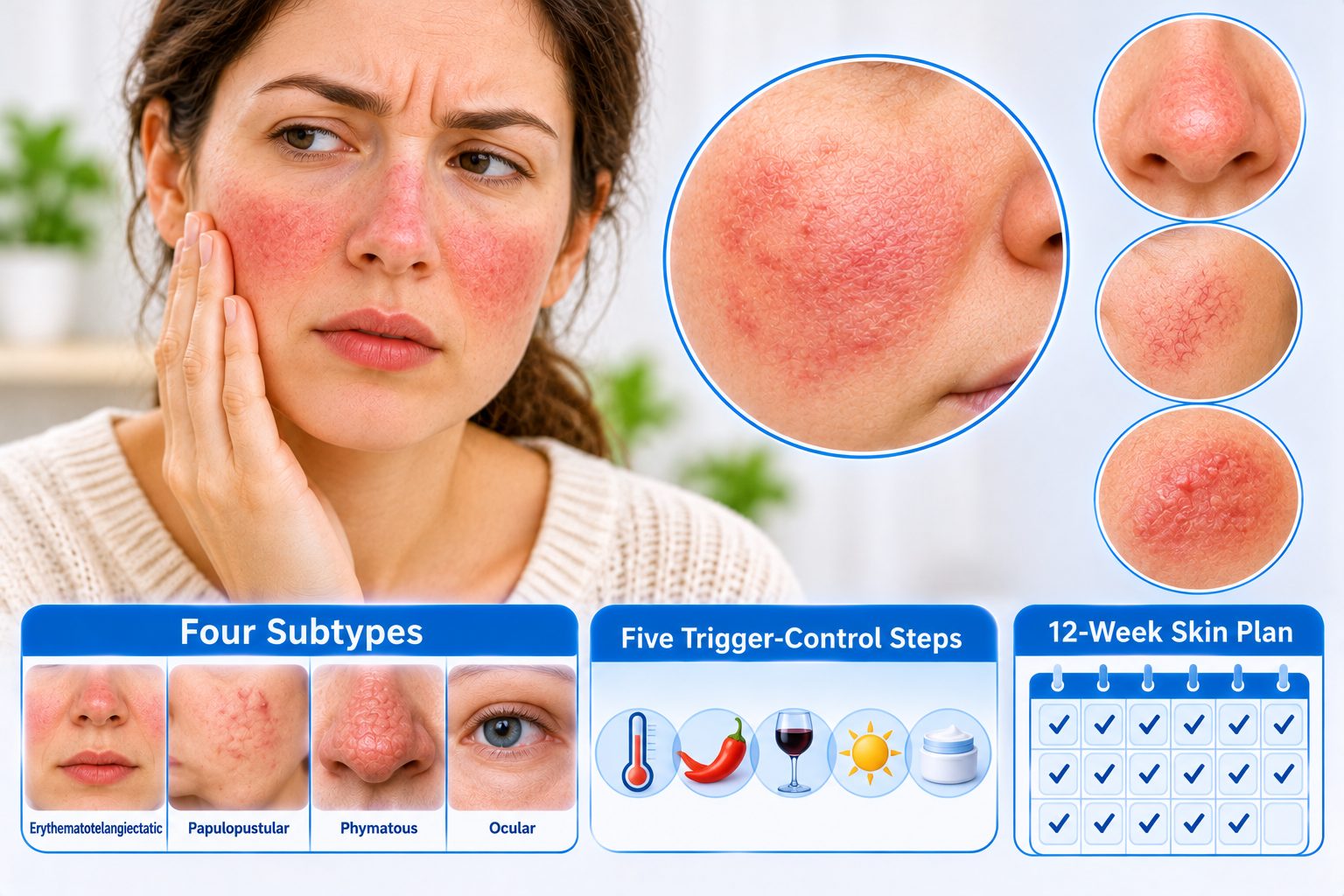
Table of contents
- 1. What Is Rosacea?
- 2. Reading the Four Subtypes
- 3. Rosacea vs Look-Alike Skin Problems
- 4. Common Triggers and Who Is at Higher Risk
- 5. How a Clinician Diagnoses Rosacea
- 6. The Five Trigger-Control Steps
- 7. Treatment Options at a Glance
- 8. Graph: Illustrative Redness Control With Treatment
- 9. Sample Twelve-Week Skin Plan
- 10. Red Flags: When to Get Care Promptly
- 11. Where to Get Care: Elmhurst, Chinatown and Lower Manhattan
- 12. Related Reading From City Prime Care
- 13. Contact Us
- Conclusion
- Frequently Asked Questions
- See a Doctor in Elmhurst or Chinatown
Your cheeks flush after a hot drink, a glass of wine or a day in the sun, and the redness takes a long time to fade. Over months, the color settles in across the cheeks, nose and chin. Tiny blood vessels may show, small bumps appear that look like acne, and your skin stings with products that used to feel fine. This pattern is common in rosacea, a long-term inflammatory skin condition that affects millions of adults, often those with fair skin but people of every skin tone can have it. It cannot be cured, but with the right plan most people can keep it calm.
This guide explains the four rosacea subtypes, common triggers, five trigger-control steps, a sample twelve-week skin plan and the red flags that need prompt care. City Prime Care serves patients in Elmhurst, Queens, Chinatown and Lower Manhattan. This article is general education and not a substitute for personal medical advice. The National Institute of Arthritis and Musculoskeletal and Skin Diseases also explains the condition in its rosacea health topic.
Quick takeaways:
- Rosacea causes flushing, persistent facial redness, visible small vessels and sometimes acne-like bumps, usually without blackheads.
- It is chronic and flares with triggers such as sun, heat, alcohol, spicy food, stress and harsh skin products.
- Prescription creams, gels or low-dose antibiotics can calm bumps and redness, and sun protection and gentle skin care are essential.
- Eye redness, gritty or burning eyes, nose thickening or a rash that does not fit the pattern should be checked by a clinician.
1. What Is Rosacea?
Rosacea is a chronic inflammatory skin condition, usually beginning after age 30, that mainly affects the central face. The exact cause is not fully understood. Factors that appear to play a role include an overactive response of the skin's blood vessels and immune system, sun-damaged skin, skin mites that live on everyone but are more numerous in some people with rosacea, and family history.
Rosacea is not caused by poor hygiene or by eating the wrong food, and it is not contagious. It comes and goes in cycles of flares and calmer periods, so keeping a record of what sets it off is one of the most useful tools you have.
2. Reading the Four Subtypes
| Subtype | What you may see | Common symptoms | Typical care |
|---|---|---|---|
| Erythematotelangiectatic | Persistent redness, flushing, visible tiny vessels | Burning, stinging, sensitive skin | Trigger control, sunscreen, redness-reducing gels, laser or light treatment for vessels |
| Papulopustular | Red bumps and pustules like acne, but no blackheads | Burning, tenderness, flares | Topical metronidazole, azelaic acid or ivermectin; low-dose oral antibiotic if needed |
| Phymatous | Thickened, bumpy skin, mostly on the nose (rhinophyma) | Enlarged pores, skin thickening | Early medical treatment; procedures for thickening |
| Ocular | Red, dry, gritty eyes and swollen eyelids | Burning, watering, recurrent styes | Eyelid hygiene and eye specialist care; see stye and chalazion |
A person can have more than one subtype at once, and symptoms can shift over time.
3. Rosacea vs Look-Alike Skin Problems
| Condition | Typical clue | How it differs from rosacea |
|---|---|---|
| Acne vulgaris | Blackheads, whiteheads and breakouts at many ages, often on the jaw and trunk | Rosacea has no blackheads and centers on cheeks, nose and chin; see adult acne |
| Seborrheic dermatitis | Greasy flakes around the brows, nose creases and scalp | Scaly and flaky rather than flushing and bumpy; see itchy flaky scalp |
| Contact dermatitis | Rash after a new cream, cosmetic or plant | Improves when the product is stopped |
| Lupus rash | Rash across the cheeks with fatigue and joint pain | Needs blood tests; not triggered by flushing the same way |
| Steroid-induced rosacea-like rash | Redness and bumps after long use of steroid cream on the face | Triggered by steroid creams; do not use them on the face without advice |
4. Common Triggers and Who Is at Higher Risk
Frequently reported triggers include:
- Sun exposure and wind, which are among the most common triggers.
- Heat, hot baths, saunas, hot weather and sudden temperature changes.
- Alcohol, especially red wine, and very hot drinks.
- Spicy foods and, for some people, foods rich in cinnamaldehyde such as tomatoes or chocolate.
- Emotional stress, embarrassment and strenuous exercise in hot conditions.
- Harsh skin care, alcohol-based toners, scrubs, fragrances and some cosmetics.
Risk is higher with age 30 to 60, fair skin, a family history and a history of frequent flushing or blushing. Triggers differ from person to person, so not everything on this list will bother you.
5. How a Clinician Diagnoses Rosacea
A visit usually includes:
- A history of flushing, redness, burning, eye symptoms, triggers and products used.
- A skin exam of the cheeks, nose, chin and forehead, checking for vessels, bumps and thickening.
- A review of medicines, including steroid creams and other products that can mimic rosacea.
- An eye check for irritation, dryness or eyelid swelling.
- Blood tests or a referral if the picture suggests another condition; see when your primary care doctor sends you to a specialist.
There is no single test for rosacea. A diagnosis is made from the appearance, the pattern and the person's history.
6. The Five Trigger-Control Steps
To keep rosacea calmer:
- Protect from the sun daily: use a broad-spectrum mineral sunscreen with SPF 30 or higher, a hat and shade, because sun is a leading trigger.
- Find and track your triggers: keep a simple diary of foods, drinks, weather, stress and products for several weeks and note what lines up with flares.
- Use gentle skin care: wash with a mild, fragrance-free cleanser, pat dry, moisturize and avoid scrubs, alcohol toners and very hot water.
- Use the prescribed treatment consistently: topical creams or gels often take four to eight weeks to show their full effect, so stopping early is a common reason for relapse.
- Plan for flares and follow up: cool the skin, avoid new products and see your clinician if flares become frequent or eyes are involved.
Avoid steroid creams on the face unless a clinician specifically advises them, because they can make rosacea worse over time.
7. Treatment Options at a Glance
| Option | Best for | Notes |
|---|---|---|
| Metronidazole or azelaic acid (cream, gel) | Bumps and pustules, mild redness | Daily use; may sting at first |
| Ivermectin cream | Bumps and pustules | Applied once daily; targets skin inflammation and mites |
| Brimonidine or oxymetazoline | Persistent background redness | Temporary effect; some people notice rebound redness |
| Low-dose oral doxycycline or other antibiotics | Moderate to severe bumps, ocular rosacea | Used for anti-inflammatory benefit, as prescribed |
| Laser or intense pulsed light | Visible vessels and stubborn redness | Done by a trained clinician; several sessions may be needed |
| Isotretinoin or procedures | Severe or phymatous disease | Specialist care |
| Gentle skin care and sun protection | Everyone with rosacea | The foundation of every plan |
8. Graph: Illustrative Redness Control With Treatment
This is a teaching graph, not patient data. It shows how redness and bumps often improve gradually over weeks with consistent treatment and trigger control, with occasional flares along the way. Real results vary with the subtype and the person.
| Time | Redness and bumps (illustrative) |
|---|---|
| Week 0 (start) | ██████████ |
| Week 2 | █████████ |
| Week 4 | ███████ |
| Week 8 | █████ |
| Week 12 | ███ |
9. Sample Twelve-Week Skin Plan
| When | Goal | Sample actions | Check |
|---|---|---|---|
| Week 0 | Confirm diagnosis and start | Visit, exam, prescription, gentle routine, daily sunscreen | Is a trigger diary started? |
| Weeks 1-2 | Calm the skin | Mild cleanser, moisturizer, apply treatment as directed | Any stinging that needs adjusting? |
| Weeks 4-6 | Review response | Compare bumps, redness and flares; adjust the plan | Are bumps fewer and flares shorter? |
| Weeks 8-12 | Consolidate gains | Continue treatment, consider laser for stubborn vessels | Is skin stable with fewer flares? |
| After week 12 | Maintain | Daily sunscreen, trigger avoidance, periodic follow-up | Any new eye symptoms or thickening? |
10. Red Flags: When to Get Care Promptly
See a clinician promptly for:
- Eye pain, redness, light sensitivity or blurred vision, which can signal an eye complication.
- A rash across the cheeks with fatigue, joint pain, fever or mouth sores, which could suggest another condition.
- Thickening of the skin on the nose or deepening, painful bumps.
- Flares that do not improve after several weeks of treatment, or severe burning and stinging.
- A rash after starting a new medicine or after using steroid creams on the face.
- Skin changes that bleed, crust or do not heal, which should be checked for other skin conditions.
11. Where to Get Care: Elmhurst, Chinatown and Lower Manhattan
Persistent facial redness, stinging and sudden flares are a common reason people search for urgent care Elmhurst NY, a walk in clinic Elmhurst NY, urgent care 11373, a same day doctor appointment Elmhurst or Same-Day Acute Care in Elmhurst Queens. For ongoing skin management, a primary care doctor Elmhurst NY, a family doctor Elmhurst Queens, Primary Care Doctors in Elmhurst NY or chronic disease management Elmhurst NY can build a long-term plan and refer when needed.
People comparing options often search for Best Primary Care Clinic in Elmhurst Queens, Best Primary Care Doctor in Elmhurst Queens, Primary Care Near Me Elmhurst Queens, Best Primary Care Clinics in Queens NY, Primary Care Clinics and Doctors in Queens NY and Top Primary Care Clinics in Queens NY. City Prime Care offers Men's and Women's Healthcare in Elmhurst NY, a physical exam clinic Elmhurst NY and preventive care Elmhurst NY, including skin evaluation and follow-up.
Downtown, people look for primary care Lower Manhattan, primary care Chinatown NYC, a doctor near Catherine Street NYC, primary care 75 Catherine St, a walk-in clinic Chinatown NYC, a Primary Care Clinic in Chinatown Manhattan or a Healthcare Center in Chinatown Manhattan NY. Citywide searches include primary care doctor NYC, family doctor Manhattan NYC, annual physical exam NYC, same day primary care NYC, preventive care Lower Manhattan and primary care doctor near me. Residents searching for Primary Care Doctors Serving Todt Hill Staten Island are welcome to contact the clinic to ask about care options and travel.
| Area | Common searches | How care can help |
|---|---|---|
| Elmhurst (ZIP 11373) | Urgent care 11373, same day doctor appointment Elmhurst | Prompt skin evaluation during a flare |
| Elmhurst, Queens | Family doctor Elmhurst Queens, primary care doctor Elmhurst NY | Long-term skin plan and follow-up |
| Queens | Best Primary Care Clinics in Queens NY, Top Primary Care Clinics in Queens NY | Easy-to-reach primary care for the family |
| Lower Manhattan | Primary care Lower Manhattan, preventive care Lower Manhattan | Convenient visits near work |
| Chinatown / Catherine Street | Primary care Chinatown NYC, doctor near Catherine Street NYC, primary care 75 Catherine St | Convenient downtown care |
| Citywide | Primary care doctor NYC, family doctor Manhattan NYC, same day primary care NYC | Same-day or scheduled evaluation |
You can also find the clinic on Google or learn more on the City Prime Care website.
12. Related Reading From City Prime Care
These guides on our site cover connected topics:
13. Contact Us
Is your face red, flushed or bumpy and getting worse? Visit our Contact Us page or see our Google listing. If you have eye pain, vision changes or a rash with fever, seek urgent care.
Conclusion
Rosacea is a lasting condition, but it is highly manageable. Daily sun protection, gentle skin care, knowing your triggers and using treatment consistently help most people reduce flares and keep their skin comfortable. See a clinician if the diagnosis is uncertain, if eyes are involved or if the usual plan stops working.
Frequently Asked Questions
See a Doctor in Elmhurst or Chinatown
Have a question about your own health? Book a visit at our Elmhurst, Queens clinic or our Chinatown, Manhattan clinic, or explore our primary care services.
Related articles
Healthcare
Chickenpox in Adults and Children in Elmhurst, NY: How the Rash Develops and What to Expect
Itchy red spots that turn into blisters and then crusts are the classic sign of chickenpox. Learn how the rash develops, how long you are contagious, five care steps, a ten-day timeline and when to see a doctor.
Healthcare
Shin Splints in Elmhurst, NY: How Lower Leg Pain Builds and What to Expect From Recovery
Aching pain along the inner edge of the shin during running or walking is often shin splints. Learn how they develop, how they differ from a stress fracture, five recovery steps and a sample six-week return plan.
Healthcare
Tonsillitis in Queens, NY: How Swollen Tonsils Are Evaluated and What to Expect From Treatment
Red, swollen tonsils with a painful throat and fever are the hallmarks of tonsillitis. Learn how viral and bacterial cases differ, how strep is tested, five care steps and when tonsil surgery is considered.