
HealthcareBy City Prime Care Team
Dog and Animal Bites in Queens, NY: How Bite Wounds Are Treated and What to Expect From a Same-Day Visit
Dog, cat and other animal bites can look small but carry a real infection risk. Learn the first-aid steps, when to be seen the same day, tetanus and rabies questions, and what a clinic visit in Elmhurst involves.
Medically reviewed by Dr. Helen Vasquez9 min read
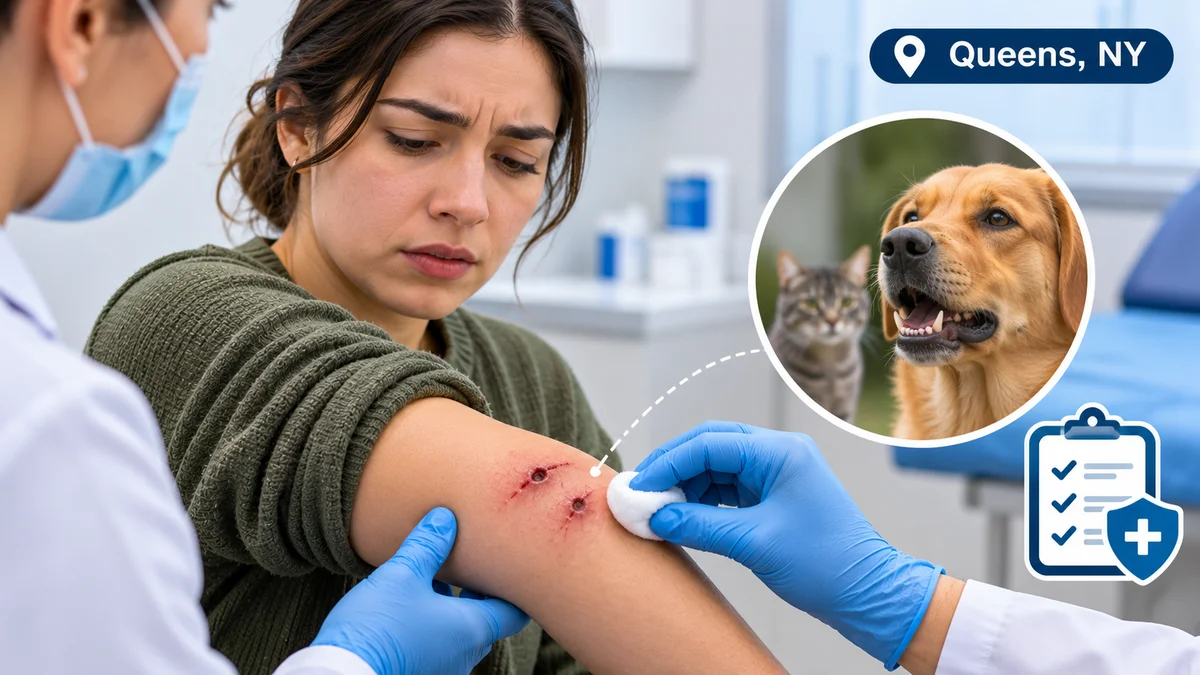
Table of contents
- 1. Why Bite Wounds Are Different From Regular Cuts
- 2. Five First-Aid Steps Right After a Bite
- 3. When Bite Care Is Urgent
- 4. Infection Warning Signs and an Illustrative Timeline
- 5. Tetanus and Rabies: Two Questions Every Bite Raises
- 6. What Happens at a Same-Day Visit
- 7. Reducing the Chance of Bites
- 8. Finding Same-Day Care in Elmhurst, Queens
- Conclusion
- Frequently Asked Questions
- See a Doctor in Elmhurst or Chinatown
A quick nip from a neighbor's dog, a scratch-and-bite from a frightened cat, or a bite from a pet you love can happen in seconds. In a busy borough like Queens, where many families share small spaces with pets and where street animals and wildlife are also part of city life, animal bites are more common than most people expect.
Bite wounds deserve more attention than ordinary cuts. Mouths carry many bacteria, and a small puncture can push those germs deep under the skin where they are hard to clean. Questions about tetanus, infection and rabies also need to be answered promptly. Knowing what to do in the first minutes, and when to be seen, can make a real difference.
This guide covers first-aid steps, the risks that matter, signs that need urgent evaluation, what a same-day visit involves, and how New York City handles animal-bite reporting. It is general education and does not replace care from a clinician.
1. Why Bite Wounds Are Different From Regular Cuts
Bites can crush tissue, tear skin and drive bacteria into joints, tendons and deeper layers. A tiny puncture from a cat tooth may look harmless yet still lead to infection. Hands, wrists, feet, the face and areas over joints carry the highest concern because infection can spread quickly there.
| Type of bite | Typical wound | Main concern |
|---|---|---|
| Dog bite | Crush injury, tears, scrapes | Tissue damage, bleeding, infection |
| Cat bite | Small deep punctures | High infection risk that can appear within 24 hours |
| Human bite (including clenched-fist injuries) | Cuts over knuckles or skin | Serious infection risk; needs prompt evaluation |
| Wild animal bite (bat, raccoon, fox and others) | Any bite or scratch | Rabies assessment |
| Rodent bite | Small punctures | Infection; rabies is rare but ask a clinician |
2. Five First-Aid Steps Right After a Bite
If you or a family member is bitten, take these steps while arranging care:
- Move to safety: step away from the animal and avoid trying to catch it yourself.
- Control bleeding: press a clean cloth firmly on the wound. Raise the area above heart level if possible.
- Wash well: rinse with running water and mild soap for several minutes. Do not scrub hard or pour in alcohol or peroxide.
- Cover and protect: place a clean, dry dressing over the wound. Do not close a puncture with tape or glue at home.
- Get checked the same day: call a clinic or visit a walk-in clinic. Note the animal type, whether it was a pet, its owner and vaccination status, and the circumstances of the bite.
3. When Bite Care Is Urgent
Call 911 or go to an emergency room for any of the following:
- Heavy bleeding that does not slow with firm pressure
- A bite to the face, head, neck or genitals, or a large or deep wound
- Loss of movement, numbness or a possible broken bone
- A bite from a bat, or an unprovoked bite from a wild or stray animal
- Fever, confusion, spreading redness or red streaks, with severe pain
For most smaller bites, same-day evaluation at a walk-in clinic or urgent care is appropriate. Do not wait for symptoms to appear, because infections can take hold within a day.
4. Infection Warning Signs and an Illustrative Timeline
The table below shows how infection concerns often change with time. The bars are an illustrative teaching sample of relative attention needed, not exact data.
| Time after bite | What to watch for | Attention level |
|---|---|---|
| 0 to 8 hours | Bleeding, wound cleaning, assessment | ████████░░ |
| 8 to 24 hours | Redness, warmth, swelling, throbbing pain | ██████████ |
| 24 to 72 hours | Pus, spreading redness, fever, red streaks | ████████░░ |
| 3 to 10 days | Healing, follow-up checks, completing antibiotics if prescribed | ████░░░░░░ |
5. Tetanus and Rabies: Two Questions Every Bite Raises
Tetanus: a clinician will review your vaccine history. In general, people who have not had a tetanus booster within about five years may be offered one for a dirty or bite wound, and within about ten years for a clean minor wound. Your own record decides the plan.
Rabies: risk depends on the animal. A vaccinated, healthy pet that can be observed is very different from a stray, a bat or a wild animal. If rabies exposure is possible, clinicians arrange urgent assessment and, when needed, post-exposure treatment. In New York City, animal bites are reportable to the health department, and you can call 311 for guidance on reporting and animal observation.
6. What Happens at a Same-Day Visit
A typical bite visit includes these steps:
- Questions: when the bite happened, which animal, vaccination status, your allergies, medicines and tetanus history.
- Wound exam: the clinician checks depth, damage to tendons, nerves and joints, and signs of infection.
- Cleaning: thorough irrigation and removal of debris. Deep punctures are generally left open, while some clean wounds may be closed.
- Medicines and shots: antibiotics are often given for higher-risk bites, with a tetanus booster if due.
- Follow-up: you receive wound-care instructions, warning signs to watch for, and a recheck plan within one to two days for higher-risk bites.
7. Reducing the Chance of Bites
- Never approach, feed or pet unfamiliar animals, and always ask owners first
- Teach children to leave dogs alone while they eat, sleep or care for puppies
- Keep pets vaccinated and socialized, and supervise young children around any animal
- Avoid touching wild or stray animals, especially bats, and call 311 if you see a sick or aggressive animal
- Do not break up animal fights with your hands
8. Finding Same-Day Care in Elmhurst, Queens
When a bite happens, speed matters. An urgent care Elmhurst NY visit, a walk in clinic Elmhurst NY, or a same day doctor appointment Elmhurst can help you get wound cleaning and a tetanus check quickly. Many families also search for a primary care doctor Elmhurst NY or a family doctor Elmhurst Queens for follow-up. City Prime Care addresses urgent care 11373 concerns, offers a physical exam clinic Elmhurst NY experience, and supports preventive care Elmhurst NY and chronic disease management Elmhurst NY, such as keeping vaccines current. If you are comparing the best primary care clinic in Elmhurst Queens, primary care doctors in Elmhurst NY, or primary care near me Elmhurst Queens, look for same-day access. We also provide men's and women's healthcare in Elmhurst NY and same-day acute care in Elmhurst Queens. Learn more at cityprimecare.com.
For wider access across the city, many people look for a primary care doctor NYC, a primary care doctor near me, or primary care clinics and doctors in Queens NY, including the best and top primary care clinics in Queens NY. In Manhattan, searches include primary care Lower Manhattan, primary care Chinatown NYC, a primary care clinic in Chinatown Manhattan, a doctor near Catherine Street NYC, primary care 75 Catherine St, a walk-in clinic Chinatown NYC, a healthcare center in Chinatown Manhattan NY, and a family doctor Manhattan NYC. For an annual physical exam NYC, same day primary care NYC or preventive care Lower Manhattan, review your tetanus date at your next visit. Even primary care doctors serving Todt Hill Staten Island may fit your needs if you are traveling. See more on our health blog.
Conclusion
Wash the wound, cover it, and get checked the same day. Quick care lowers the chance of infection and settles tetanus and rabies questions early.
Need help now? Reach City Prime Care through our Contact Us page, find us on Google, or visit cityprimecare.com. This article is general information, not medical advice. Call 911 for severe bleeding, a face or neck bite, or any emergency.
Frequently Asked Questions
See a Doctor in Elmhurst or Chinatown
Have a question about your own health? Book a visit at our Elmhurst, Queens clinic or our Chinatown, Manhattan clinic, or explore our primary care services.
Related articles
Healthcare
Why Do Your Legs Crawl or Ache When You Lie Down at Night, and Could It Be Restless Legs Syndrome? Reading the Symptom Clues, the Five Sleep Steps and the Sample Two-Week Sleep Plan
Crawling, aching legs at bedtime can signal restless legs syndrome. Learn the symptom clues, five sleep steps, a two-week plan and when to see a doctor in Elmhurst or Lower Manhattan.
Healthcare
Why Does the Front of Your Chest Hurt When You Press on It or Take a Deep Breath, and Could It Be Costochondritis? Reading the Pain Clues, the Five Safe Relief Steps and the Sample Recovery Timeline
Chest wall pain that changes with pressure or breathing may be costochondritis, but chest pain should never be guessed at. Learn the clues, relief steps and red flags.
Healthcare
Herniated Disc in Elmhurst, NY: How Back and Leg Pain From a Slipped Disc Develops and What to Expect From Care
A herniated disc can cause back pain, leg pain, numbness and weakness. Learn how slipped discs develop, a numbered self-care plan, red flags and what to expect from primary care in Elmhurst, Queens.