
HealthcareBy City Prime Care Team
What Are the Signs of a Blood Clot in the Leg, and When Is It an Emergency? Reading the DVT Symptoms, the Five Risk Factors and the Sample Long-Trip Prevention Plan
A deep vein thrombosis can be silent or painful, and a clot that travels to the lungs is an emergency. Learn the symptoms, five risk factors, tests and a sample prevention plan for long trips.
Medically reviewed by City Prime Care Administrator9 min read
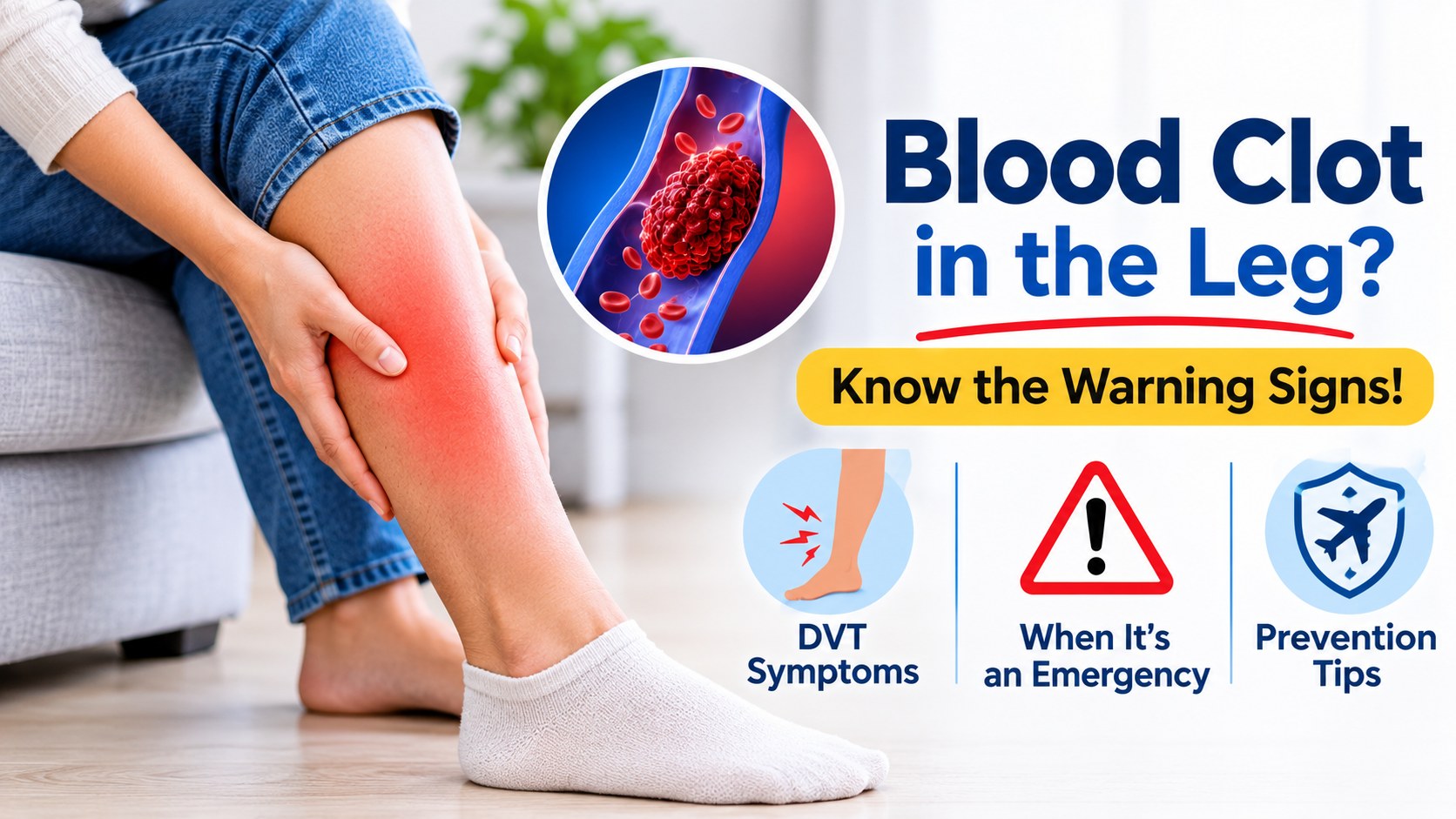
Table of contents
- 1. DVT Symptoms: What to Look For
- 2. Pulmonary Embolism: The Emergency Version
- 3. Five Risk Factors That Raise Your Chance of a Clot
- 4. Sample Risk Chart: How Risk Factors Stack Up
- 5. How Clinicians Diagnose a Clot
- 6. Treatment in Plain Language
- 7. Sample Long-Trip Prevention Plan
- 8. Contact Us and Find Us Online
- Conclusion
- Frequently Asked Questions
- See a Doctor in Elmhurst or Chinatown
A swollen, aching calf after a long flight or a hospital stay is easy to blame on a pulled muscle. Sometimes that is all it is. But sometimes it is a deep vein thrombosis (DVT), a blood clot in a deep vein, usually in the leg. The danger is that part of the clot can break off, travel to the lungs and cause a pulmonary embolism (PE), a life-threatening emergency.
This guide explains the symptoms, who is most at risk, how clinicians test for clots, and a sample plan to lower your risk on long trips. It is general education only. If you have sudden shortness of breath or chest pain, call 911 now.
| At a Glance | Key Point |
|---|---|
| What is DVT? | A blood clot in a deep vein, most often in the leg or pelvis |
| Classic leg signs | Swelling, pain or tenderness, warmth and redness, usually in one leg |
| Emergency (possible PE) | Sudden shortness of breath, chest pain, coughing, racing heart, fainting |
| Common tests | Ultrasound of the leg, D-dimer blood test, risk scoring |
| Standard treatment | Blood thinners (anticoagulants), usually for at least 3 months |
1. DVT Symptoms: What to Look For
Up to half of people with DVT have few or no symptoms, which is why risk awareness matters. When symptoms appear, they usually affect one leg.
| Symptom | What It Looks or Feels Like |
|---|---|
| Swelling | One calf or thigh is visibly larger than the other |
| Pain or tenderness | Cramping or soreness, often starting in the calf, that is not relieved by rest |
| Warmth | The area feels warmer than the other leg |
| Skin color change | Red, purplish or darker skin over the area |
| Prominent veins | Surface veins look more visible or swollen |
The CDC describes these symptoms and prevention on its page about blood clots, and the National Heart, Lung, and Blood Institute explains venous thromboembolism in detail.
2. Pulmonary Embolism: The Emergency Version
Call 911 or go to the nearest emergency room if you have a possible clot and any of these:
- Sudden shortness of breath that you cannot explain.
- Sharp chest pain that gets worse when you breathe in or cough.
- A rapid or irregular heartbeat.
- Coughing, sometimes with blood.
- Lightheadedness, fainting or a feeling of impending doom.
Chest pain and shortness of breath have many causes, including heart problems. See our guide on chest pain versus heartburn and the guide on heart palpitations. When in doubt, treat it as an emergency.
3. Five Risk Factors That Raise Your Chance of a Clot
Clots tend to form when blood flow slows, the vein wall is injured, or blood clots more easily than normal. Five common risk groups are:
- Immobility: long hospital stays, bed rest after surgery, or sitting for many hours on a flight, drive or train.
- Recent surgery or injury: especially hip, knee or abdominal surgery, or a broken leg.
- Hormones and pregnancy: pregnancy, the weeks after delivery, estrogen-containing birth control or hormone therapy.
- Medical conditions: cancer and cancer treatment, heart failure, inflammatory conditions, and inherited clotting disorders.
- Lifestyle and history: smoking, obesity, older age, a previous clot, or a close relative who has had one.
Weight and smoking are two risks you can change. See our guides on losing weight safely with your doctor's support and quitting smoking or vaping.
4. Sample Risk Chart: How Risk Factors Stack Up
This illustrative chart shows how combining risk factors can raise concern. It is a teaching example, not a calculator.
| Example Situation | Number of Risk Factors | Concern Level (Example Graph) |
|---|---|---|
| Healthy adult, short drive | 0 | ■ |
| Healthy adult, 10-hour flight | 1 | ■■ |
| Smoker on birth control, long flight | 3 | ■■■■■■ |
| Week after knee surgery, limited walking | 3 | ■■■■■■■ |
| Previous DVT, cancer treatment, hospital stay | 4 or more | ■■■■■■■■■■ |
5. How Clinicians Diagnose a Clot
A typical evaluation follows these steps:
- History and exam: your symptoms, recent travel or surgery, medicines and family history, plus a leg exam.
- Risk scoring: a tool such as the Wells score estimates the chance of a clot.
- D-dimer blood test: helpful to help rule out a clot when risk is low. A normal result in a low-risk person makes DVT unlikely.
- Compression ultrasound: a painless scan that checks whether the vein compresses normally and shows blood flow.
- Further imaging: if a lung clot is suspected, a CT scan of the chest may be done in a hospital.
Because clot concerns often need same-day imaging, your clinic may send you to a hospital or imaging center. Our guide on when your primary care doctor sends you to a specialist explains how referrals work.
6. Treatment in Plain Language
If a clot is found, treatment aims to stop it from growing and prevent a lung clot:
- Anticoagulants (blood thinners) are the standard treatment, taken by mouth or injection, typically for at least three months. Your clinician sets the exact plan.
- They do not dissolve the clot directly; your body gradually breaks it down.
- Compression stockings may be used to relieve swelling in some cases.
- Follow-up visits and sometimes blood tests help monitor safety.
- Tell every clinician and pharmacist you take a blood thinner, and report unusual bleeding, black stools or a bad fall right away.
7. Sample Long-Trip Prevention Plan
For most healthy travelers the risk is low, but these habits are sensible for trips longer than about four hours. If you have risk factors, ask your clinician before you travel.
| When | What to Do |
|---|---|
| The day before | Plan an aisle seat if possible; wear loose clothing; ask your clinician whether compression stockings or other steps suit you |
| Every 1 to 2 hours | Stand, walk the aisle or stretch your legs when safe to do so |
| Seated | Flex and point your feet, rotate your ankles, avoid crossing your legs for long periods |
| Throughout | Drink water; limit alcohol, which can contribute to dehydration |
| After you arrive | Watch for one-sided leg swelling, pain or breathing changes over the next few weeks |
8. Contact Us and Find Us Online
If you have a swollen, painful leg or want to talk through your clot risk before surgery or travel, our team can evaluate you and arrange the next step. Remember: sudden breathing trouble or chest pain needs 911, not an appointment. For non-emergency questions, Contact Us or find City Prime Care on Google: City Prime Care on Google.
Conclusion
A leg clot can be quiet or painful, and the real danger is a clot that reaches the lungs. Know the one-leg warning signs, treat sudden breathing trouble as an emergency, and lower your risk with movement, fluids and healthy habits. This article is for general education and does not replace medical advice.
Frequently Asked Questions
See a Doctor in Elmhurst or Chinatown
Have a question about your own health? Book a visit at our Elmhurst, Queens clinic or our Chinatown, Manhattan clinic, or explore our primary care services.
Related articles
Healthcare
What Heart Warning Signs Should Men in Queens Never Ignore? Reading the Symptom Clues, the Risk Factors and the Sample Heart-Risk Checklist
Heart disease often builds quietly for years. Learn the warning signs of a heart attack, silent risk factors, how risk is estimated, and a sample heart-risk checklist for men in Queens.
Healthcare
Chest Discomfort Decoded: Heartburn, Muscle Strain, Anxiety or Something Serious?
Chest pain can come from the heart, the stomach, the muscles or even stress. Learn the usual patterns, the warning signs of a heart attack, and why unexplained chest pain should never be ignored.
Healthcare
Is That Painful Blistering Rash on One Side of Your Body Shingles? Reading the Rash Stages, the Five Treatment Steps and the Sample Vaccine Timeline
A burning, blistering rash on one side of the body is the classic sign of shingles. Learn the rash stages, five treatment steps, who should get the vaccine and a sample timeline.





