HealthcareBy City Prime Care Team
Why Does Your Knee Click, Catch or Give Way After a Twist, and Could It Be a Meniscus Tear? Reading the Knee Clues, the Five Protection Steps and the Sample Recovery Plan
A twisting injury or years of wear can tear the meniscus, the cushion inside the knee, causing pain, swelling, catching and giving way. Learn the knee clues, causes, red flags, treatments, five protection steps and a sample recovery plan with a simple graph.
Medically reviewed by Dr. Helen Vasquez10 min read
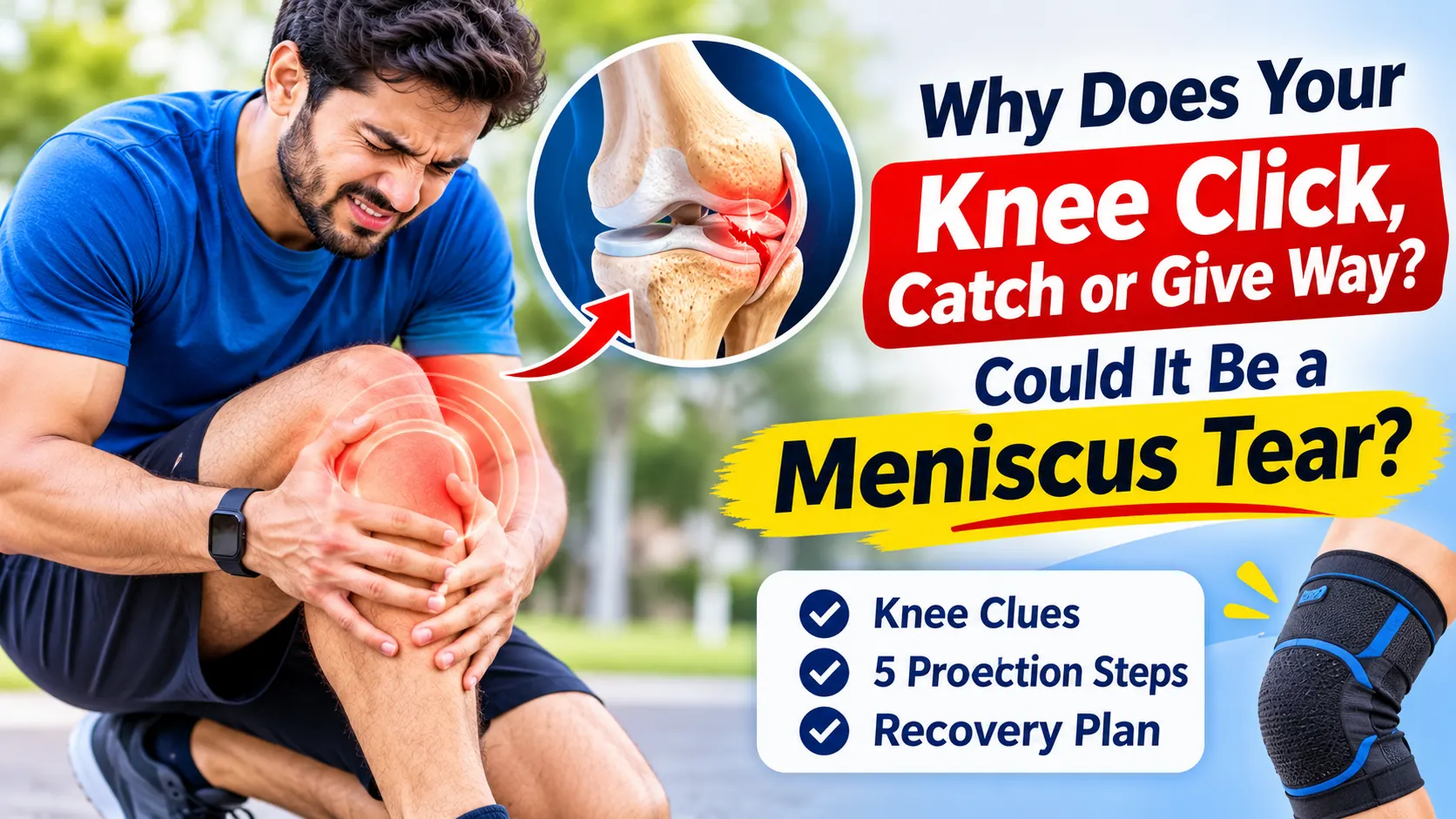
Table of contents
- 1. Reading the Knee Clues
- 2. Meniscus Tear or Something Else?
- 3. Common Causes and Triggers
- 4. Who Is at Higher Risk?
- 5. Five Red Flags That Need a Clinician
- 6. How a Knee Injury Is Evaluated
- 7. Treatment Options
- 8. Sample Recovery Plan
- 9. Keeping Your Knees Healthy
- 10. Five Protection Steps
- 11. Primary, Urgent and Preventive Care in Elmhurst and Lower Manhattan
- 12. Contact Us and Find Us Online
- Conclusion
- Frequently Asked Questions
- See a Doctor in Elmhurst or Chinatown
Each knee has two C-shaped pads of tough cartilage, the medial and lateral menisci, that act as shock absorbers between the thigh bone and the shin bone. A sudden twist while the foot is planted, a deep squat, or simply years of wear can tear one of these pads. A torn meniscus often causes pain along the joint line, swelling that builds over a day or two, stiffness, clicking or catching, and sometimes a feeling that the knee will give way or lock.
Many meniscus tears improve with rest, activity changes and physical therapy, while some need a procedure. Not every sore knee is a meniscus tear, though. Ligament sprains, arthritis, kneecap pain and gout can feel similar. This guide explains the knee clues, how a meniscus tear differs from look-alikes, causes, who is at higher risk, five red flags that need a clinician, how knees are evaluated, treatment options, a sample recovery plan with a simple graph, five protection steps and FAQs. It is general education only. A knee that is deformed, cannot bear weight after an injury, or comes with a cold, pale or numb foot needs emergency care. Call 911 for severe symptoms.
| At a Glance | Key Point |
|---|---|
| What it is | A tear in the cartilage cushion inside the knee |
| Common clues | Joint-line pain, swelling, clicking or catching, and a knee that gives way or locks |
| Common causes | Twisting injuries in younger people; wear and tear in people over 40 |
| First-line care | Rest, ice, support, activity changes and physical therapy |
| See a clinician | A locked knee, repeated giving way, pain over 1 to 2 weeks or trouble bearing weight |
1. Reading the Knee Clues
The way pain starts and what you feel inside the knee give useful clues. For trusted background, see MedlinePlus on knee injuries and disorders, the American Academy of Orthopaedic Surgeons on meniscus tears and the NIAMS overview of knee problems.
| Knee Clue | What It May Suggest |
|---|---|
| Pain on the inner or outer joint line after a twist | Meniscus tear |
| Swelling that develops over 24 to 48 hours | Meniscus tear (swelling from a ligament tear is often faster) |
| Clicking, catching or a sensation of something in the joint | Loose or torn cartilage |
| Knee gets stuck and cannot fully straighten | Locked knee from a displaced tear; needs prompt evaluation |
| Knee suddenly gives way | Meniscus or ligament injury, or muscle weakness |
| Pain with deep squatting or twisting | Meniscus irritation or tear |
2. Meniscus Tear or Something Else?
| Condition | Typical Pattern | Clues |
|---|---|---|
| Meniscus tear | Joint-line pain, catching, delayed swelling | Twisting injury or age-related wear |
| Ligament sprain or tear (ACL, MCL) | Often immediate swelling and a feeling of instability | A pop at the time of injury and a knee that buckles |
| Knee osteoarthritis | Gradual stiffness and pain, worse after rest | Morning stiffness and pain on stairs; see normal wear and tear or arthritis |
| Kneecap pain (patellofemoral syndrome) | Pain at the front of the knee | Worse with stairs, sitting for long periods and squatting |
| Gout or infection | Hot, red, very swollen joint | Rapid onset, often with fever; needs prompt care; see what causes a sudden gout attack |
| Fracture | After a fall or impact | Severe pain, deformity and inability to bear weight |
If you are unsure whether an injury is a sprain or a break, see sprain vs fracture and when you need an X-ray. Leg pain that travels from the back is covered in whether your leg pain is sciatica or something else.
3. Common Causes and Triggers
Meniscus tears are often linked to:
- A sudden twist or pivot while the foot stays planted, common in soccer, basketball, tennis and skiing.
- Deep squatting, kneeling or lifting heavy loads with a bent knee.
- Age-related wear, when the cartilage weakens and tears with minor movements such as standing from a chair.
- Direct blows or a fall onto the knee.
- Existing knee arthritis, which makes the meniscus more fragile.
- Excess weight and weak thigh muscles, which increase load on the joint.
4. Who Is at Higher Risk?
| Risk Factor | Why It Matters |
|---|---|
| Athletes in cutting and pivoting sports | Frequent twisting forces on the knee |
| Adults over 40 | Cartilage becomes thinner and tears more easily |
| Jobs requiring kneeling or squatting | Repeated deep knee bending increases wear |
| Knee arthritis | Worn joints are more likely to have degenerative tears |
| Excess body weight | Higher load on the knee; see how to lose weight safely with your doctor's support |
| Previous knee injury | An injured knee is more vulnerable to another tear |
5. Five Red Flags That Need a Clinician
Get medical care promptly, or call 911 for severe symptoms, if you notice:
- A knee that is locked and cannot fully straighten or bend, or catches repeatedly with pain.
- A knee that is deformed, or an injury after which you cannot bear weight or take more than a few steps.
- A foot that is cold, pale, blue or numb, or a swollen, painful calf, which can signal a circulation problem or blood clot.
- A hot, red, very swollen knee with fever or chills, which can signal infection or gout.
- Pain or swelling that has not improved after 1 to 2 weeks, or a knee that keeps giving way.
If you are unsure where to go, read when a problem calls for the emergency room instead of urgent care in Queens. Leg swelling and aching veins are discussed in bulging, aching leg veins.
6. How a Knee Injury Is Evaluated
A clinician will ask how the knee was hurt, when swelling began, whether it clicks, catches or locks, and about previous injuries and arthritis. They will look for swelling, press along the joint line, check range of motion and ligament stability, and use movement tests that can reveal a meniscus problem. An X-ray cannot show the meniscus but can rule out a fracture or arthritis. An MRI is used when a tear is suspected and the result would change treatment, such as a locked knee or symptoms that do not improve. See when your primary care doctor sends you to a specialist for referral to an orthopedic or sports medicine specialist.
7. Treatment Options
| Option | How It Helps | Notes |
|---|---|---|
| Rest and activity changes | Calms irritated tissue | Avoid deep squats, twisting and pivoting until symptoms settle |
| Ice and elevation | Eases pain and swelling | Up to 15 to 20 minutes at a time, with a cloth barrier |
| Over-the-counter pain relievers | Short-term pain control | Use as directed; check first if you have kidney, stomach, heart or blood-thinner concerns |
| Compression sleeve or brace | Provides comfort and support | May help confidence; does not heal the tear |
| Physical therapy | Strengthens thigh and hip muscles and improves movement | Often the first approach for degenerative tears |
| Injection | Short-term relief in selected cases | Discuss benefits and limits with a clinician |
| Arthroscopic surgery | Repairs or trims the torn meniscus | Considered for locked knees, large tears or symptoms that do not improve after rehab |
8. Sample Recovery Plan
This teaching example shows how recovery from a mild meniscus injury might look with non-surgical care. Timing varies, and a locked knee or worsening pain should be checked promptly. The squares show relative knee activity, where more squares mean more load.
| When | What You Do | Activity Load |
|---|---|---|
| Days 1 to 3 | Relative rest, ice, elevation and gentle walking as tolerated | ■■ |
| Days 4 to 14 | Pain-free range of motion exercises and light quad activation | ■■■ |
| Weeks 3 to 5 | Progressive strengthening of thigh and hip muscles | ■■■■■ |
| Weeks 6 to 8 | Balance work, low-impact cardio and controlled squats | ■■■■■■■ |
| Weeks 9 to 12 | Gradual return to sport or heavy work with knee control | ■■■■■■■■■ |
| Locking, giving way or no progress | Return for review and possible imaging or referral | Call a clinician |
9. Keeping Your Knees Healthy
| Do | Avoid |
|---|---|
| Strengthen thigh, hip and core muscles with a regular routine | Long periods of inactivity followed by sudden hard exercise |
| Warm up before sport and use proper pivoting and landing technique | Twisting or pivoting on a planted foot |
| Choose supportive, well-fitting shoes | Worn-out shoes and uneven surfaces when the knee is sore |
| Maintain a healthy body weight | Pushing through sharp pain or locking |
| Use low-impact activity such as cycling or swimming while healing | Deep squats and kneeling until cleared |
10. Five Protection Steps
After a knee injury without red-flag signs, these steps can protect the joint:
- Rest the knee from twisting, pivoting and deep squats, and use ice and elevation for swelling.
- Walk as comfortably as tolerated, using a cane or crutch if weight causes sharp pain.
- Start gentle range-of-motion and thigh-strengthening exercises once pain allows.
- Add balance and low-impact activity gradually, and avoid sudden twisting.
- See a clinician if the knee locks, gives way, swells repeatedly or has not improved within 1 to 2 weeks.
11. Primary, Urgent and Preventive Care in Elmhurst and Lower Manhattan
After a knee injury, many Queens residents search for urgent care Elmhurst NY, a walk in clinic Elmhurst NY or a same day doctor appointment Elmhurst. City Prime Care helps patients who need urgent care 11373, a primary care doctor Elmhurst NY, a family doctor Elmhurst Queens or a primary care doctor near me to examine the knee, order an X-ray when needed and plan rehab or referral. A physical exam clinic Elmhurst NY visit, preventive care Elmhurst NY and chronic disease management Elmhurst NY help review weight, arthritis, bone health and other conditions that affect the knees.
Downtown, people looking for primary care Lower Manhattan, a primary care doctor NYC or primary care Chinatown NYC can see our team near 75 Catherine St. Whether you search for a doctor near Catherine Street NYC, primary care 75 Catherine St, a walk-in clinic Chinatown NYC or a family doctor Manhattan NYC, we can examine you and arrange imaging or an orthopedic referral. Add an annual physical exam NYC, same day primary care NYC or preventive care Lower Manhattan to review your overall health. See which conditions urgent care in Elmhurst can treat and what happens at your first urgent care visit in Elmhurst.
12. Contact Us and Find Us Online
If your knee is painful, swollen or giving way, our team can examine it and guide next steps. For non-emergency questions, Contact Us, book a visit, or find City Prime Care on Google: City Prime Care on Google. For a deformed knee, inability to bear weight, a cold, pale or numb foot, or a hot red knee with fever, call 911 or go to the emergency room.
Conclusion
Many meniscus injuries settle with rest, support and well-planned physical therapy, while locked or repeatedly unstable knees may need a procedure. Early, accurate evaluation helps you choose the right path and protects the joint for the long term. This article is for general education and does not replace medical advice.
Frequently Asked Questions
See a Doctor in Elmhurst or Chinatown
Have a question about your own health? Book a visit at our Elmhurst, Queens clinic or our Chinatown, Manhattan clinic, or explore our primary care services.
Related articles
Healthcare
Why Does Your Shoulder Ache When You Lift Your Arm, and Could It Be a Rotator Cuff Injury? Reading the Pain Pattern, the Five Rehab Steps and the Sample Strengthening Plan
Shoulder pain that worsens when you reach overhead or lie on your side may be a rotator cuff problem. Learn the causes, diagnosis, five rehab steps, treatment options and a sample strengthening plan with a simple graph.
Healthcare
Why Does Pain Shoot From Your Neck Down Your Arm With Tingling in Your Fingers, and Is It a Pinched Nerve? Reading the Nerve Pattern, the Five Relief Steps and the Sample Eight-Week Recovery Plan
Neck pain that travels into the arm with finger tingling often means a pinched nerve (cervical radiculopathy). Learn the nerve pattern, relief steps, red flags and a recovery plan.
Healthcare
Why Is Your Shoulder So Stiff That You Cannot Reach Behind Your Back, and Could It Be Frozen Shoulder? Reading the Three Stages, the Five Mobility Steps and the Sample Twelve-Week Stretching Plan
A shoulder that slowly locks up, hurts at night and resists every movement may be frozen shoulder (adhesive capsulitis). Learn the three stages, five mobility steps, red flags and a 12-week plan.