HealthcareBy City Prime Care Team
Is Your Stomach Trouble Irritable Bowel Syndrome? Reading the Rome Criteria Symptoms, the Five Red Flags and the Sample Food-and-Symptom Log
Recurring belly pain with bloating, diarrhea or constipation may be IBS, but some symptoms need testing first. Learn the criteria, five red flags, treatment options and a sample food-and-symptom log.
Medically reviewed by Dr. Helen Vasquez9 min read
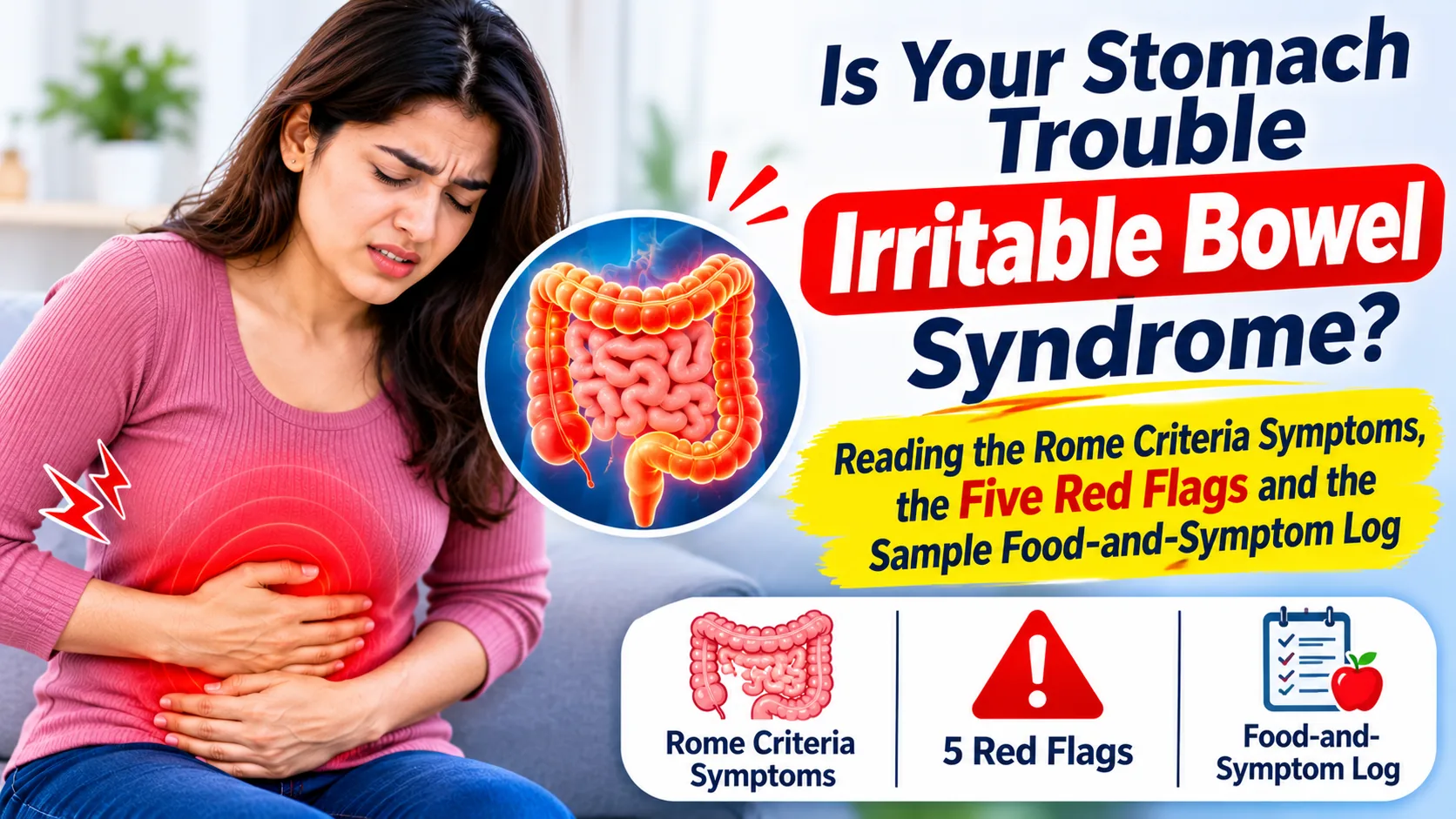
Table of contents
- 1. What IBS Feels Like
- 2. The Four Types of IBS
- 3. Five Red Flags That Need Testing First
- 4. How Doctors Diagnose IBS
- 5. Sample Food-and-Symptom Log
- 6. Treatment Options That Help
- 7. When to Get Care Urgently
- 8. Contact Us and Find Us Online
- Conclusion
- Frequently Asked Questions
- See a Doctor in Elmhurst or Chinatown
Cramping, bloating, urgent trips to the bathroom or weeks of constipation: digestive trouble can wear you down and make planning your day difficult. For many adults the explanation is irritable bowel syndrome (IBS), a common disorder of how the gut and brain communicate. It is not dangerous in the sense of causing cancer or bowel damage, but it can seriously affect quality of life.
Still, not every belly problem is IBS, and a few symptoms should be checked before anyone settles on that label. This guide explains the typical pattern, the four IBS types, five red flags that call for testing, practical treatment steps and a sample food-and-symptom log. It is general education and does not replace a medical evaluation.
| At a Glance | Key Point |
|---|---|
| What is IBS? | A common gut-brain disorder causing abdominal pain with changes in bowel habits |
| How common? | Estimates suggest roughly one in ten adults, and it is diagnosed more often in women |
| Diagnosis | Based on symptom pattern, exam and limited tests to rule out other conditions |
| Key red flags | Blood in stool, unintended weight loss, anemia, nighttime symptoms, new onset after age 50 |
| Treatment | Diet changes, fiber, stress management, targeted medicines |
1. What IBS Feels Like
Clinicians often use the Rome IV criteria. In simple terms, IBS is considered when a person has had recurring abdominal pain, on average at least one day a week for the past three months, along with at least two of the following: the pain is related to bowel movements, there is a change in how often you go, or there is a change in what your stool looks like. Symptoms should have started at least six months before diagnosis.
Other common symptoms include:
- Bloating and a feeling of fullness.
- Excess gas.
- Mucus in the stool.
- A feeling that you have not fully emptied your bowels.
- Symptoms that flare with stress, certain foods or hormonal changes.
The National Institute of Diabetes and Digestive and Kidney Diseases has a thorough overview of irritable bowel syndrome, and MedlinePlus offers a patient-friendly summary of IBS.
2. The Four Types of IBS
| Type | Main Pattern | Typical Stool | Example Frequency Graph (Illustrative) |
|---|---|---|---|
| IBS-C | Constipation predominant | Hard or lumpy | Bowel movements: ■ ■ |
| IBS-D | Diarrhea predominant | Loose or watery | Bowel movements: ■■■■■■ |
| IBS-M | Mixed: both constipation and diarrhea | Alternates | Bowel movements: ■ to ■■■■■■ |
| IBS-U | Unclassified | Does not fit above patterns | Variable |
Your type matters because treatment is matched to it. For example, extra fiber may help IBS-C but can worsen bloating in some people with IBS-D.
3. Five Red Flags That Need Testing First
Do not assume digestive symptoms are IBS if you have any of these. See a clinician promptly:
- Blood in your stool, or black, tarry stools.
- Unintended weight loss.
- Anemia or unexplained fatigue and paleness. See why you feel tired all the time for related signs.
- Symptoms that wake you from sleep, persistent vomiting or trouble swallowing.
- New symptoms starting after age 50, or a family history of colon cancer, inflammatory bowel disease or celiac disease.
Colon cancer screening is also important regardless of IBS. Read our guide on stool test or colonoscopy: which screening is right for you.
4. How Doctors Diagnose IBS
A typical work-up includes:
- A detailed history of your symptoms, diet, stress, medicines and family history.
- A physical exam, including the abdomen.
- Basic blood tests, such as a blood count, and sometimes a celiac disease test. See common blood tests explained.
- Stool tests when diarrhea is present, to check for infection or inflammation.
- Further evaluation, such as a colonoscopy, if you have red flags or are due for screening.
Many conditions can mimic IBS, including celiac disease, inflammatory bowel disease, lactose intolerance and thyroid problems. If heartburn is also part of your picture, see what causes acid reflux.
5. Sample Food-and-Symptom Log
A one to two week log helps you and your clinician spot patterns. This is example data, not a real patient.
| Day | Meal or Event | Symptoms | Severity (0-10) | Stress Level (0-10) |
|---|---|---|---|---|
| Mon | Coffee on empty stomach, rushed lunch | Cramping, urgent stool | 6 | 7 |
| Tue | Oatmeal, grilled chicken, rice | Mild bloating | 2 | 3 |
| Wed | Large pizza dinner, late night | Bloating, gas, loose stool | 7 | 5 |
| Thu | Walked 30 minutes, regular meals | None | 0 | 2 |
| Fri | Work deadline, skipped breakfast | Cramping, nausea | 5 | 8 |
In this sample, symptoms rise with large fatty meals and high stress, and fall with regular meals and exercise. That is the kind of pattern a log can reveal.
6. Treatment Options That Help
Most people improve with a combination of steps:
- Regular meals and mindful eating: eat at consistent times and avoid large, very fatty meals.
- Trigger awareness: common triggers include caffeine, alcohol, artificial sweeteners and certain high-FODMAP foods. Ask your clinician or a registered dietitian before starting a low-FODMAP diet, because it is meant to be temporary and structured.
- Fiber: soluble fiber such as psyllium can help, especially in constipation, when increased slowly with plenty of water.
- Physical activity and sleep: both are linked to better gut function.
- Stress management: gut-directed approaches such as cognitive behavioral therapy and relaxation can help. Read about when stress, low mood or anxiety need a doctor's help.
- Medicines: depending on your type, a clinician may suggest antispasmodics, laxatives, anti-diarrheal medicines or other prescription options.
Weight and diet play a role in digestive health; see our guide on losing weight safely with your doctor's support and the article on fatty liver disease for liver-friendly eating.
7. When to Get Care Urgently
Seek emergency care for severe or constant abdominal pain, a rigid or swollen belly, fever with severe pain, heavy rectal bleeding, vomiting that will not stop, or signs of dehydration. Our guide on upset stomach, vomiting and diarrhea covers short-term stomach illness that can look similar, and dehydration warning signs explains when fluid loss becomes a problem.
8. Contact Us and Find Us Online
If digestive symptoms are disrupting your life, our clinicians can review your history, order appropriate tests and build a plan. Contact Us to ask a question or plan your visit, or find City Prime Care on Google: City Prime Care on Google. A yearly checkup is also a good time to raise digestive concerns; see our annual physical checkup guide.
Conclusion
IBS is common, real and manageable. The key is to confirm the diagnosis, rule out red flags, and then match diet, stress management and medicines to your symptom type. A simple food-and-symptom log is one of the most useful tools you can bring to your visit. This article is for general education and does not replace professional medical advice.
Frequently Asked Questions
See a Doctor in Elmhurst or Chinatown
Have a question about your own health? Book a visit at our Elmhurst, Queens clinic or our Chinatown, Manhattan clinic, or explore our primary care services.
Related articles
Healthcare
Is Your Leg Pain Sciatica or Something Else? Reading the Nerve Pain Pattern, the Five Red Flags and the Sample Six-Week Recovery Plan
Sciatica sends pain from the lower back or buttock down one leg. Learn the symptom pattern, five red flags that need urgent care, treatment options and a sample six-week recovery plan.
Healthcare
Is That Spreading, Warm Red Patch on Your Skin Cellulitis? Reading the Infection Signs, the Five Treatment Steps and the Sample Recovery Tracker
Cellulitis is a common bacterial skin infection that can spread fast if ignored. Learn the signs, look-alikes, five treatment steps, red flags and a sample recovery tracker with a simple graph.
Healthcare
Is This Just a Headache? How to Tell Tension Headaches, Migraines and Warning-Sign Headaches Apart
Not every headache is the same. Compare tension headaches, migraines and cluster headaches, learn common triggers, home-care steps, and the warning signs that mean a headache needs urgent attention.