HealthcareBy City Prime Care Team
Is That Spreading, Warm Red Patch on Your Skin Cellulitis? Reading the Infection Signs, the Five Treatment Steps and the Sample Recovery Tracker
Cellulitis is a common bacterial skin infection that can spread fast if ignored. Learn the signs, look-alikes, five treatment steps, red flags and a sample recovery tracker with a simple graph.
Medically reviewed by Dr. Karl E. Latortue10 min read
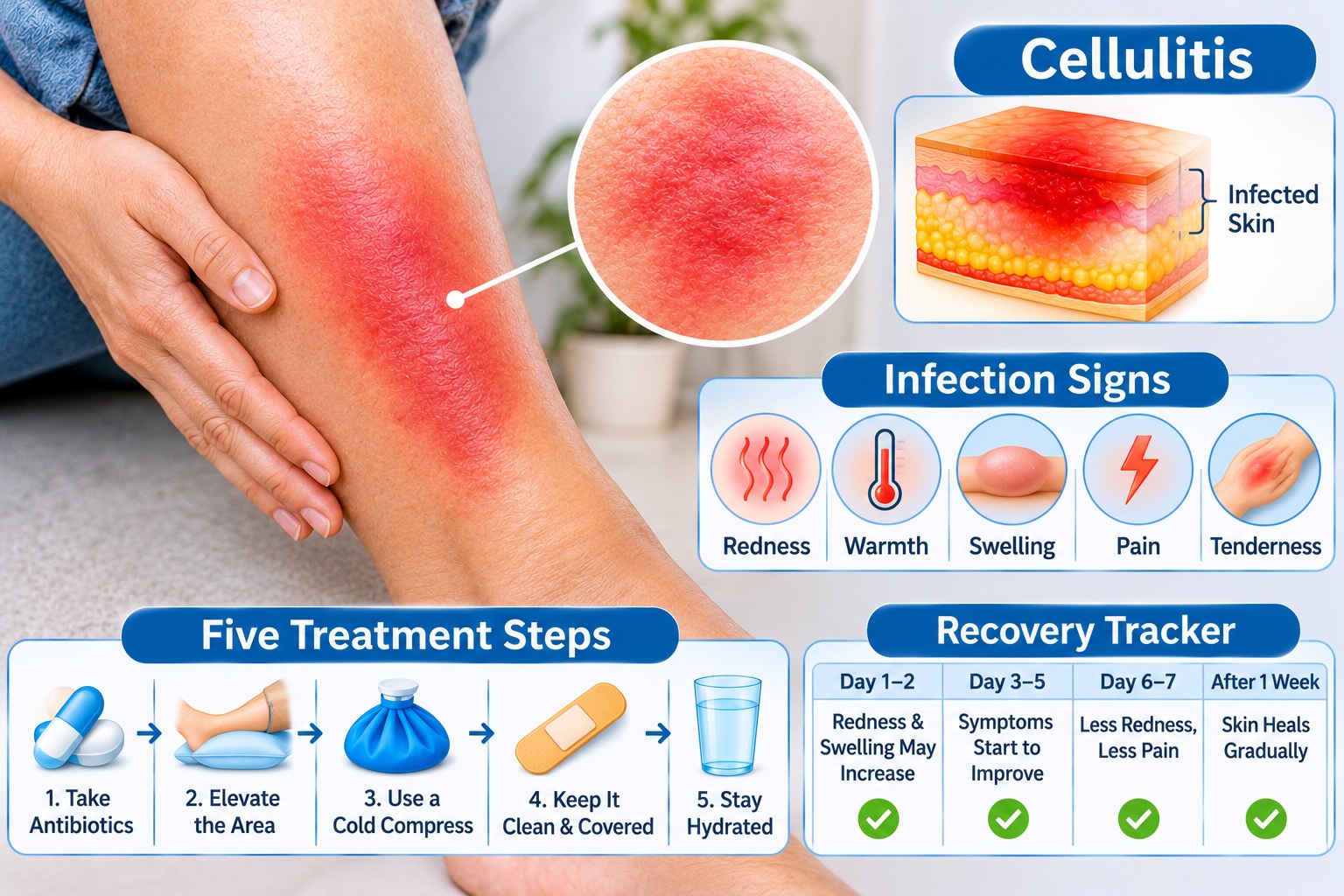
Table of contents
- 1. What Causes Cellulitis?
- 2. Typical Signs and Symptoms
- 3. Cellulitis vs Look-Alike Conditions
- 4. Five Treatment Steps
- 5. Red Flags: Do Not Wait
- 6. Who Is at Higher Risk?
- 7. Home Care: Do and Do Not
- 8. Sample Recovery Tracker
- 9. Preventing Another Episode
- 10. Contact Us and Find Us Online
- Conclusion
- Frequently Asked Questions
- See a Doctor in Elmhurst or Chinatown
Cellulitis is a bacterial infection of the deeper layers of skin and the fat beneath it. It usually begins when bacteria, most often streptococci or staphylococci, enter through a break in the skin such as a cut, insect bite, cracked heel, athlete's foot, eczema flare or surgical wound. It most often affects the lower legs, but it can appear on the arms, face or anywhere the skin is broken. Without treatment, it can spread into the bloodstream or lymph system, so early care matters.
This guide explains the typical signs, how cellulitis differs from look-alike conditions, the five treatment steps, emergency red flags, who is at risk, prevention habits and a sample recovery tracker. It is general education only. Fever with a fast-spreading red area, red streaks, severe pain, or redness near the eye needs urgent evaluation the same day.
| At a Glance | Key Point |
|---|---|
| What it is | A bacterial infection of the deeper skin layers |
| Typical signs | Red, warm, swollen, tender skin that slowly spreads |
| Usual treatment | Prescription antibiotics, elevation and monitoring |
| Urgent signs | Fever, chills, red streaks, rapid spread, severe pain or redness near the eyes |
| Prevention | Clean and cover wounds, treat athlete's foot, moisturize dry skin and manage swelling |
1. What Causes Cellulitis?
Healthy skin is a strong barrier. Any crack, scrape, blister, bite or sore gives bacteria a way in. Swelling from poor circulation or lymph drainage problems makes infection more likely, and the infection can return in the same area. For trusted background, see MedlinePlus on cellulitis and its cellulitis encyclopedia article.
2. Typical Signs and Symptoms
Common signs include:
- A red area that grows over hours to days, often with poorly defined edges.
- Warmth, swelling and tenderness over the area.
- Skin that looks tight, glossy or dimpled like an orange peel.
- Fever, chills, tiredness or swollen glands nearby.
- Small blisters or oozing in some cases.
Redness can look paler or harder to see on darker skin, so rely on warmth, swelling and pain as well as color.
3. Cellulitis vs Look-Alike Conditions
| Condition | How It Differs |
|---|---|
| Cellulitis | One area, warm, tender, slowly spreading; may come with fever |
| Contact dermatitis | Intensely itchy, sharp borders, often after a new soap, plant or metal; usually no fever |
| Stasis dermatitis | Both lower legs, chronic swelling, scaling and brownish skin; slow change |
| Blood clot in the leg | Calf pain and swelling, sometimes warmth; see our guide to signs of a blood clot in the leg |
| Gout flare | Hot, red, very painful joint, often the big toe; see what causes a sudden gout attack |
| Infected eczema or rash | Weeping, crusting, honey-colored scabs on a known rash |
Because these conditions can look alike, an in-person exam is the safest way to tell them apart, especially for a leg that is red and swollen on one side.
4. Five Treatment Steps
A typical plan looks like this:
- Be examined the same day. A clinician confirms the diagnosis and checks for fever, abscess and signs of deeper infection.
- Take the prescribed antibiotic exactly as directed and finish the course, which often lasts about 5 to 14 days depending on severity.
- Elevate the affected limb above heart level when resting to reduce swelling.
- Mark the edge of the redness with a pen and note the date and time, then watch whether it grows or shrinks.
- Return for review if there is no clear improvement in 48 to 72 hours, or sooner if symptoms worsen.
Treat the cause too: athlete's foot, dry cracked skin and chronic leg swelling can all let the infection return. For small wound care between visits, read our guide on first aid at home for cuts and burns.
5. Red Flags: Do Not Wait
Seek urgent or emergency care for:
- Fever above about 100.4°F (38°C), shaking chills or feeling very ill.
- Red streaks moving up the limb or rapidly spreading redness.
- Severe pain that seems out of proportion to how the skin looks.
- Blisters that turn dark, skin that looks purple or black, or numbness.
- Redness around the eye or on the face, or in a baby.
- Diabetes, a weakened immune system or a new infection after surgery.
If you are unsure where to go, see when a problem calls for the emergency room instead of urgent care in Queens and which conditions urgent care in Elmhurst can treat.
6. Who Is at Higher Risk?
| Risk Factor | Why It Matters |
|---|---|
| Diabetes | High sugar and reduced feeling in the feet slow healing; see our guide on type 2 diabetes |
| Leg swelling or poor circulation | Slow drainage lets bacteria settle |
| Obesity | Skin folds and swelling raise infection risk |
| Athlete's foot, eczema or dry cracked skin | Breaks in the skin let bacteria in |
| Previous cellulitis | The same area can become infected again |
| Weakened immunity or certain medicines | The body fights infection less effectively |
7. Home Care: Do and Do Not
| Do | Do Not |
|---|---|
| Take antibiotics as prescribed | Stop early because it looks better |
| Keep the skin clean, dry and covered if open | Squeeze, pop or scratch the area |
| Elevate the limb when resting | Apply heat packs or tight wraps without advice |
| Use pain relief only as the label or your clinician advises | Ignore fever or spreading redness |
| Treat athlete's foot and moisturize dry skin | Walk barefoot on rough or unclean surfaces |
8. Sample Recovery Tracker
This teaching example shows a typical course of uncomplicated cellulitis on antibiotics. Everyone heals differently. The squares show example redness, swelling and tenderness.
| Day | What You Might See | Example Redness and Pain |
|---|---|---|
| Day 0 | Red, warm, swollen area; visit and first antibiotic dose | ■■■■■■■ |
| Day 1 | Border marked; redness may still look the same | ■■■■■■■ |
| Day 2 to 3 | Redness stops spreading; fever, if present, settles | ■■■■■ |
| Day 5 to 7 | Swelling and tenderness clearly improving | ■■■ |
| Day 10 to 14 | Skin near normal; mild leftover color or dryness | ■ |
If the red area is still growing after 48 to 72 hours, or you develop fever or severe pain, call us or go to urgent care the same day.
9. Preventing Another Episode
Five habits that lower the risk of recurrence:
- Wash cuts and scrapes with soap and water, apply a clean covering and watch for redness over the next days.
- Treat athlete's foot and nail fungus, and moisturize dry or cracked skin, especially heels.
- Manage leg swelling with elevation, movement and compression only as a clinician advises.
- Wear protective footwear, check feet daily if you have diabetes and manage blood sugar with your care team.
- Ask about preventive antibiotics if you have repeated infections in the same area.
Regular checkups help catch the conditions that make cellulitis more likely. See our guide on why regular checkups matter if you have diabetes.
10. Contact Us and Find Us Online
If you have a red, warm area of skin that is spreading, or you have had cellulitis before and want a prevention plan, our team can examine you, decide on treatment and arrange follow-up. For non-emergency questions, Contact Us, book a visit, or find City Prime Care on Google: City Prime Care on Google. For fever with rapid spread, call 911 or go to the emergency room.
Conclusion
Cellulitis responds well to prompt treatment, and the best results come from being seen early. Watch for warmth, spreading redness and fever, take antibiotics as directed, mark the border and return quickly if it grows. This article is for general education and does not replace medical advice.
Frequently Asked Questions
See a Doctor in Elmhurst or Chinatown
Have a question about your own health? Book a visit at our Elmhurst, Queens clinic or our Chinatown, Manhattan clinic, or explore our primary care services.
Related articles
Healthcare
Why Is a Red, Itchy Ring-Shaped Patch Spreading on Your Skin, and Is It Ringworm? Reading the Patch Types, the Five Treatment Steps and the Sample Four-Week Clearing Plan
A red, scaly, ring-shaped itchy patch is often ringworm, a common fungal skin infection that is not caused by a worm. Learn the patch types, look-alike rashes, five treatment steps and a four-week clearing plan.
Healthcare
Is Your Leg Pain Sciatica or Something Else? Reading the Nerve Pain Pattern, the Five Red Flags and the Sample Six-Week Recovery Plan
Sciatica sends pain from the lower back or buttock down one leg. Learn the symptom pattern, five red flags that need urgent care, treatment options and a sample six-week recovery plan.
Healthcare
Why Is a Rough Bump Growing on Your Hand or the Bottom of Your Foot, and Is It a Wart? Reading the Wart Types, the Five Treatment Steps and the Sample Twelve-Week Clearing Plan
Rough bumps on the hands or soles of the feet are often warts caused by HPV. Learn the wart types, five treatment steps, red flags and a sample twelve-week clearing plan.