
HealthcareBy City Prime Care Team
Is It a Food Allergy or Just Food Intolerance? Reading the Reaction Types, the Five Emergency Signs and the Sample Symptom Diary
Hives after peanuts and bloating after milk are not the same problem. Learn how food allergy differs from intolerance, the five emergency signs of anaphylaxis and how a symptom diary helps.
Medically reviewed by City Prime Care Administrator9 min read
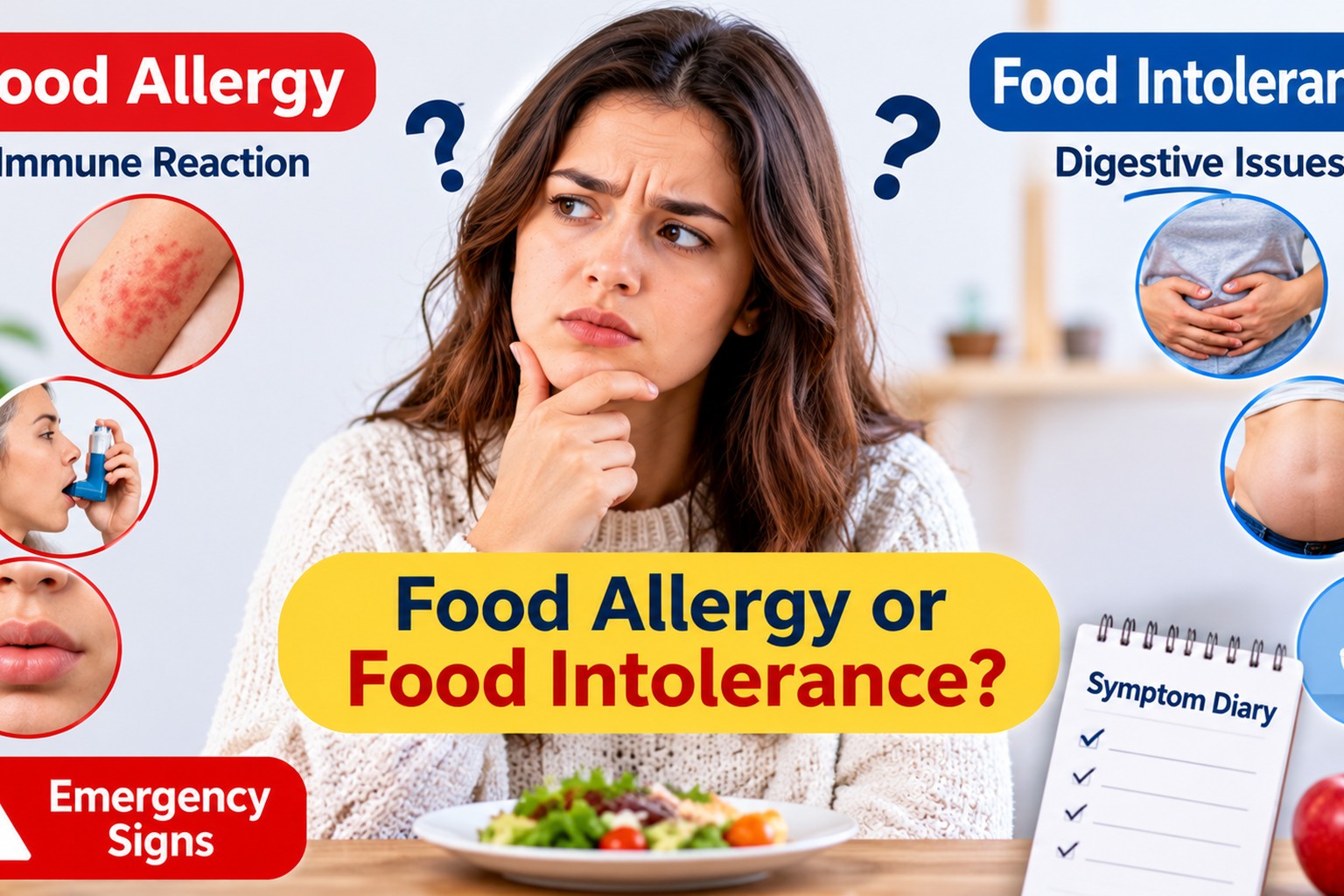
Table of contents
- 1. Food Allergy vs Food Intolerance Explained
- 2. The Most Common Food Allergens
- 3. Common Food Intolerances and Look-Alikes
- 4. Five Emergency Signs of Anaphylaxis
- 5. When to See a Clinician
- 6. How Food Allergies Are Diagnosed
- 7. Sample Symptom Diary
- 8. Living Safely With a Food Allergy
- 9. Contact Us and Find Us Online
- Conclusion
- Frequently Asked Questions
- See a Doctor in Elmhurst or Chinatown
Almost everyone has felt unwell after a meal at some point, and it is natural to wonder whether the cause is a food allergy. The answer matters, because the two most common explanations behave very differently. A food allergy involves the immune system and can cause a sudden, life-threatening reaction. A food intolerance usually involves digestion, causes uncomfortable symptoms and is not life-threatening.
This guide explains how allergy and intolerance differ, the common triggers, the five emergency signs of anaphylaxis, how testing works and how a symptom diary can help you and your clinician find patterns. It is general education only. Anyone who has had trouble breathing, swelling or fainting after eating needs medical evaluation.
| At a Glance | Food Allergy | Food Intolerance |
|---|---|---|
| Body system involved | Immune system | Digestive system |
| Timing | Usually within minutes to two hours | Often 30 minutes to several hours, sometimes later |
| Typical symptoms | Hives, swelling, wheezing, vomiting, faintness | Gas, bloating, cramps, diarrhea |
| Amount of food needed | Often a tiny amount | Often depends on the amount eaten |
| Risk | Can be life-threatening | Uncomfortable but not life-threatening |
1. Food Allergy vs Food Intolerance Explained
In a food allergy, the immune system mistakes a food protein for a threat and releases chemicals such as histamine. This can affect the skin, airways, gut and circulation within minutes. In a food intolerance, the body has trouble digesting or reacting to a food, for example because it lacks an enzyme.
The National Institute of Allergy and Infectious Diseases provides an overview of food allergy, and MedlinePlus has a plain-language page on food allergy.
2. The Most Common Food Allergens
In the United States, nine foods are responsible for most serious allergic reactions and must be declared on packaged food labels.
| Allergen | Common Sources | Good to Know |
|---|---|---|
| Milk | Dairy products, many baked goods | Different from lactose intolerance |
| Egg | Baked goods, sauces, some vaccines to discuss with a clinician | Many children outgrow egg allergy |
| Peanut | Snacks, sauces, baked goods | Often lifelong; allergic reactions can be severe |
| Tree nuts | Almonds, walnuts, cashews, pistachios | Cross-contact in kitchens is common |
| Fish | Fish dishes, some dressings and sauces | Usually lifelong |
| Shellfish | Shrimp, crab, lobster | Common in adults; can start later in life |
| Wheat | Bread, pasta, cereals | Different from celiac disease and gluten sensitivity |
| Soy | Soy milk, tofu, processed foods | Many children outgrow it |
| Sesame | Tahini, buns, oils, many packaged foods | Now required on U.S. food labels |
3. Common Food Intolerances and Look-Alikes
| Problem | What Happens | Typical Clue |
|---|---|---|
| Lactose intolerance | Not enough lactase enzyme to digest milk sugar | Gas, bloating and diarrhea after dairy |
| Celiac disease | Immune reaction to gluten that damages the small intestine | Long-term diarrhea, weight loss, anemia; needs testing before dropping gluten |
| Non-celiac gluten sensitivity | Symptoms after gluten without celiac disease or wheat allergy | Bloating and fatigue; diagnosed after other conditions are ruled out |
| Food additive sensitivity | Reaction to certain sulfites or colorings | Wheezing in some people with asthma, headaches |
| Histamine or caffeine sensitivity | Body reacts to a chemical in food or drink | Flushing, palpitations, headache |
| Irritable bowel syndrome | Gut sensitivity to certain foods | Cramping and changing bowel habits |
If your symptoms are mostly digestive and long-lasting, read our guide on irritable bowel syndrome and talk with a clinician before cutting out whole food groups.
4. Five Emergency Signs of Anaphylaxis
Anaphylaxis is a severe, whole-body allergic reaction that can progress quickly. Call 911 if you see these signs after eating, being stung or taking a medicine:
- Trouble breathing: wheezing, noisy breathing, a tight throat or a hoarse voice.
- Swelling of the lips, tongue, face or throat.
- Widespread hives, itching or flushing along with other symptoms.
- Repeated vomiting, severe stomach cramps or diarrhea after a suspected allergen.
- Dizziness, a weak or fast pulse, pale or clammy skin, or fainting.
If a person has been prescribed epinephrine, it is the first-line treatment and should be used as directed without waiting, followed by an immediate call to 911. Even if symptoms improve, emergency evaluation is needed because reactions can return.
5. When to See a Clinician
Make an appointment, or visit sooner if symptoms are severe, when:
- You have had hives, swelling, vomiting or wheezing soon after eating a particular food.
- A child has a reaction to a new food, especially egg, milk or peanut.
- You regularly get bloating, diarrhea or stomach pain after meals and do not know why.
- You have been avoiding foods on your own and are worried about nutrition.
- You carry or have been prescribed an epinephrine auto-injector and need a plan.
For children, see our guide on telling a common childhood illness from one that needs a doctor. If you already have asthma, allergies can make it harder to control, so read how to keep asthma under control.
6. How Food Allergies Are Diagnosed
| Step or Test | What It Involves | What It Tells You |
|---|---|---|
| History and exam | Detailed review of what you ate, timing and symptoms | Often the most important clue |
| Skin prick test | Tiny amounts of allergen placed on the skin | Shows sensitization; does not alone prove allergy |
| Blood test for specific IgE | Measures antibodies to specific foods | Helps support a diagnosis alongside history |
| Supervised oral food challenge | Eating small, increasing amounts under medical supervision | Often the most definitive test; only done in a medical setting |
| Elimination diet for intolerance | Removing a suspected food, then reintroducing it with guidance | Helps find intolerance triggers; not for suspected severe allergy |
Never test a suspected severe food allergy at home by eating the food again. A positive blood or skin test also does not always mean you will react, which is why results need expert interpretation. Your clinician may refer you to an allergist, as explained in our guide on when your primary care doctor sends you to a specialist.
7. Sample Symptom Diary
For possible intolerance or unclear digestive symptoms, a simple food and symptom diary can show patterns. This is a teaching example. Bring your own diary to a visit. The squares show example symptom levels.
| Day and Time | What I Ate or Drank | Symptoms and Timing | Severity (Example Graph) |
|---|---|---|---|
| Mon 8:00 am | Coffee with milk, oatmeal | Bloating after 1 hour | ■■■■ |
| Mon 1:00 pm | Rice, chicken, vegetables | None | ■ |
| Tue 8:00 am | Black coffee, toast | None | ■ |
| Tue 7:00 pm | Pasta with cream sauce | Cramps and loose stool after 2 hours | ■■■■■■ |
| Wed 12:30 pm | Yogurt and fruit | Gas and bloating after 90 minutes | ■■■■■ |
In this made-up diary, symptoms followed dairy-containing meals, a pattern a clinician could explore with lactose testing or a supervised trial. A diary is not a diagnosis. Any breathing trouble, swelling or hives is never a diary situation; it needs urgent care.
8. Living Safely With a Food Allergy
If you or your child has a confirmed food allergy:
- Read every label and learn the ingredient names for your allergen.
- Ask about ingredients and cross-contact at restaurants, and tell the staff clearly.
- Keep epinephrine auto-injectors with you, check expiry dates and learn to use them.
- Create a written emergency action plan and share it with family, school and workplace.
- Wear medical identification if your clinician advises it and review the plan every year.
9. Contact Us and Find Us Online
If you have reacted to a food or have ongoing stomach symptoms after eating, our team can review your history and guide testing and referrals. For non-emergency questions, Contact Us, book a visit, or find City Prime Care on Google: City Prime Care on Google.
Conclusion
A food allergy and a food intolerance can feel alike at first, but they carry very different risks. Know the emergency signs, keep a diary for unclear symptoms and get testing and advice from a clinician before removing foods. This article is for general education and does not replace medical advice.
Frequently Asked Questions
See a Doctor in Elmhurst or Chinatown
Have a question about your own health? Book a visit at our Elmhurst, Queens clinic or our Chinatown, Manhattan clinic, or explore our primary care services.
Related articles
Healthcare
Is That Painful Blistering Rash on One Side of Your Body Shingles? Reading the Rash Stages, the Five Treatment Steps and the Sample Vaccine Timeline
A burning, blistering rash on one side of the body is the classic sign of shingles. Learn the rash stages, five treatment steps, who should get the vaccine and a sample timeline.
Healthcare
What Should You Do After a Tick Bite, and How Do You Know If It Is Lyme Disease? Reading the Rash Signs, the Five Removal Steps and the Sample Symptom Timeline
Found a tick on your skin or your pet? Learn how to remove it safely, the early signs of Lyme disease, when to see a clinician and a sample timeline of what can follow a bite.
Healthcare
Is Your Cold Actually RSV, and Who Is at Risk of Severe Illness? Reading the Symptom Clues, the Five High-Risk Groups and the Sample Illness Timeline
RSV looks like a cold in most healthy adults but can be serious in babies and older adults. Learn the symptom clues, the five high-risk groups, prevention options and a sample illness timeline.





