
HealthcareBy City Prime Care Team
What Should You Do After a Tick Bite, and How Do You Know If It Is Lyme Disease? Reading the Rash Signs, the Five Removal Steps and the Sample Symptom Timeline
Found a tick on your skin or your pet? Learn how to remove it safely, the early signs of Lyme disease, when to see a clinician and a sample timeline of what can follow a bite.
Medically reviewed by City Prime Care Administrator9 min read
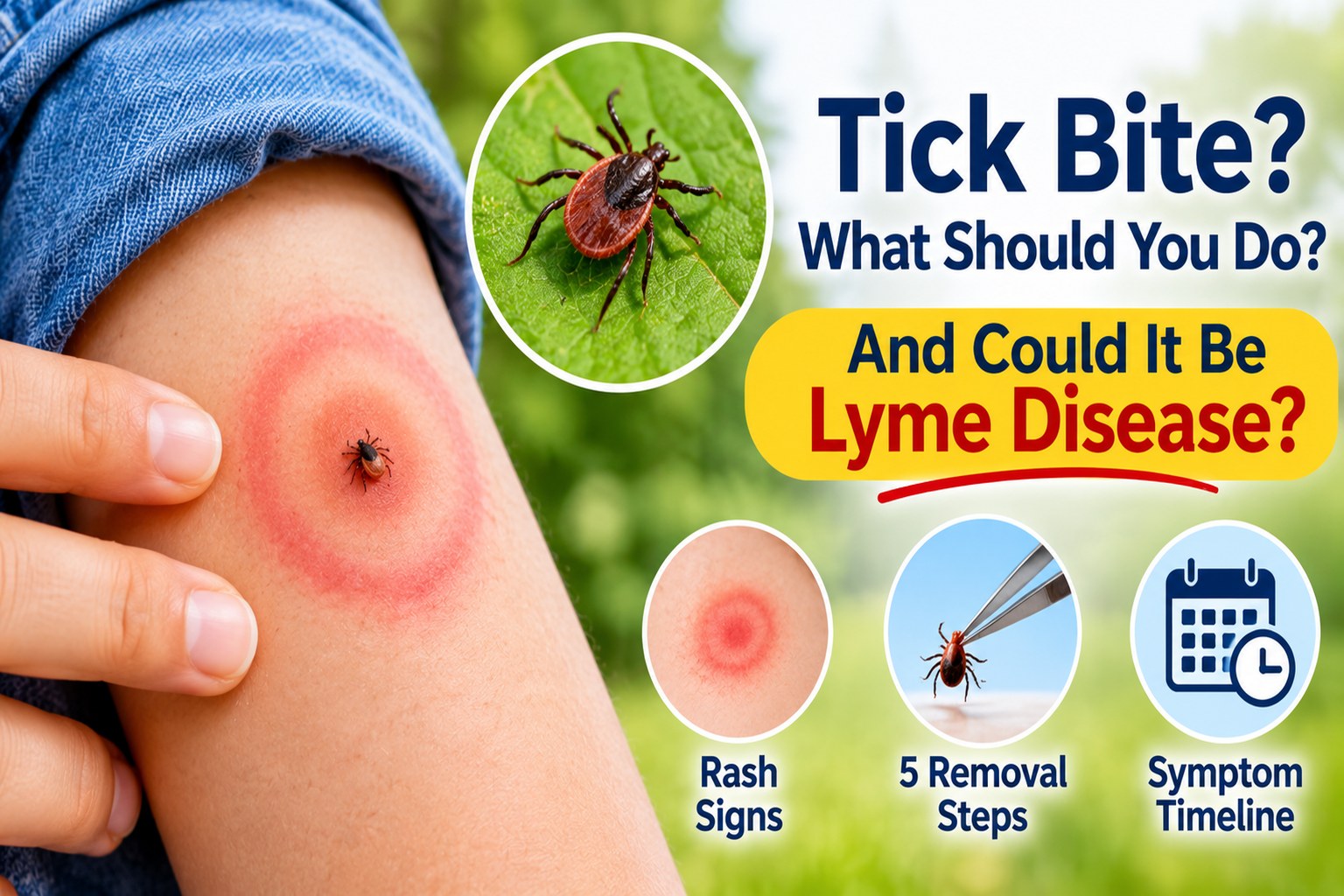
Table of contents
- 1. How Ticks Cause Illness
- 2. Five Steps to Remove a Tick Safely
- 3. Lyme Disease: Stages and Symptoms
- 4. Other Illnesses Ticks Can Spread
- 5. Who Should Seek Care After a Tick Bite?
- 6. How Lyme Disease Is Diagnosed
- 7. Prevent Tick Bites: Five Habits
- 8. Sample Symptom Timeline With a Symptom Graph
- 9. Contact Us and Find Us Online
- Conclusion
- Frequently Asked Questions
- See a Doctor in Elmhurst or Chinatown
Many New Yorkers think of ticks as a summer problem, but blacklegged ticks, the kind that can carry Lyme disease, stay active in fall and on milder winter days whenever temperatures are above freezing. A hike upstate, a walk through leaf litter or a weekend in a park can all lead to a tick on your skin. The good news is that most tick bites do not cause illness, and prompt removal lowers the risk.
This guide explains the five steps for removing a tick, how Lyme disease usually shows up, other tick-borne illnesses, when to see a clinician and a sample timeline of what can follow a bite. It is general education only. A spreading rash, fever or severe symptoms after a tick bite should be checked promptly.
| At a Glance | Key Point |
|---|---|
| Main risk | Lyme disease from the blacklegged (deer) tick |
| Removal | Use fine-tipped tweezers and pull straight up; do not twist or use heat or oils |
| Transmission window | Lyme bacteria are usually passed only after a tick has been attached for about 36 hours or more |
| Classic sign | Expanding red rash, sometimes with a bullseye look, 3 to 30 days after a bite |
| Treatment | Antibiotics are effective, especially when started early |
1. How Ticks Cause Illness
Ticks attach to the skin and feed slowly on blood. They can pass bacteria, viruses or parasites during feeding. Young ticks, called nymphs, are about the size of a poppy seed and are easy to miss, which is why many people with Lyme disease never recall a bite.
The CDC explains Lyme disease and tick safety on its Lyme disease pages, and the New York State Department of Health shares local guidance on Lyme disease and ticks.
2. Five Steps to Remove a Tick Safely
If you find a tick attached to your skin:
- Use clean, fine-tipped tweezers and grasp the tick as close to the skin as possible.
- Pull upward with steady, even pressure; do not twist, jerk or crush the tick.
- Clean the bite area and your hands with rubbing alcohol or soap and water.
- Dispose of the tick by sealing it in a bag, wrapping it in tape, flushing it or placing it in alcohol; consider saving it in a labeled bag in case a clinician asks to see it.
- Watch the bite and your health over the following weeks, and note the date and body location.
Avoid folk methods such as petroleum jelly, nail polish or a hot match, which can make the tick release more fluid into the skin. If the mouthparts stay in the skin, remove them with tweezers if you can; otherwise leave the area alone and it will heal.
3. Lyme Disease: Stages and Symptoms
| Stage | Typical Timing | Common Signs |
|---|---|---|
| Early localized | 3 to 30 days after the bite | Expanding red rash (erythema migrans), fatigue, fever, chills, headache, muscle and joint aches |
| Early disseminated | Weeks to a few months | Multiple rashes, facial droop (Bell's palsy), nerve pain, heart rhythm problems, meningitis symptoms |
| Late | Months to years if untreated | Arthritis with joint swelling, especially the knee; nerve and memory problems |
The rash is expanding, often at least 2 inches across, and may or may not clear in the center. Not everyone gets the classic bullseye look. Skin changes after a bite should be checked early, as our guide on stubborn itchy rashes shows how hard it can be to tell rash types apart.
4. Other Illnesses Ticks Can Spread
| Illness | Type of Germ | Typical Clues |
|---|---|---|
| Lyme disease | Bacteria (Borrelia burgdorferi) | Expanding rash, then joint or nerve symptoms |
| Anaplasmosis | Bacteria | Fever, headache, muscle aches, low blood counts |
| Babesiosis | Parasite | Fever, chills, fatigue, dark urine; can be severe without a spleen |
| Powassan virus | Virus | Fever, headache, confusion; rare but serious |
| Rocky Mountain spotted fever | Bacteria (other tick species) | High fever and a spotted rash; needs urgent treatment |
5. Who Should Seek Care After a Tick Bite?
See a clinician soon, or the same day if symptoms are significant, if:
- You have a rash that expands or looks like a bullseye after a bite.
- You have fever, chills, severe headache, neck stiffness or marked fatigue within weeks of a bite.
- You develop joint swelling, facial drooping, a very slow or irregular heartbeat or new numbness.
- The tick was attached for more than 36 hours, or you are not sure how long it was.
- The bite area is hot, swollen, painful or leaking pus.
Some people may be offered a single preventive dose of an antibiotic after a high-risk bite, but only a clinician can decide if it is appropriate for you, and timing matters. Treatment for developed Lyme disease is a longer course of antibiotics chosen by your clinician. For severe symptoms such as confusion, trouble breathing or a stiff neck with fever, see our guide on when a problem calls for the emergency room.
6. How Lyme Disease Is Diagnosed
| Approach | What It Involves | Good to Know |
|---|---|---|
| Exam and history | Review of recent outdoor exposure, tick bites and symptoms | A typical rash can allow diagnosis without blood tests |
| Blood tests | Two-step antibody testing | May be negative in the first weeks; results are read alongside symptoms |
| Testing the tick | Sending a tick to a lab | Not usually recommended to guide treatment |
| Other tests | Heart tracing, joint fluid or spinal fluid if indicated | Used for later or more complex cases |
7. Prevent Tick Bites: Five Habits
Simple habits lower the chance of a bite:
- Use an EPA-registered repellent on skin, and treat clothing and gear with permethrin where appropriate.
- Wear long sleeves and long pants, tuck pants into socks and choose light colors that show ticks.
- Stay on the center of trails and avoid tall grass, brush and leaf piles.
- Do a full-body tick check after being outdoors, including scalp, behind the ears, underarms, groin and behind the knees.
- Shower within two hours of coming indoors, dry clothes on high heat for 10 minutes, and check pets.
8. Sample Symptom Timeline With a Symptom Graph
This illustrative timeline shows how early Lyme disease might unfold after an unnoticed nymph bite, and how treatment can change the course. It is a teaching example, and not everyone follows this pattern. The squares show example symptom levels.
| Time | What Happens | Example Symptom Level |
|---|---|---|
| Day 0 | Walk in a wooded park; tick attached and unnoticed | ■ |
| Day 10 | Small red patch appears and slowly expands | ■■■ |
| Day 14 | Rash is 3 inches wide; tired with mild fever; clinic visit and antibiotic started | ■■■■■■ |
| Day 21 | Rash fading, energy improving | ■■■ |
| Week 5 to 6 | Antibiotic course completed; most symptoms gone | ■ |
| If untreated | Joint swelling or nerve problems may appear months later | ■■■■■■■ |
9. Contact Us and Find Us Online
If you removed a tick, are not sure how long it was attached, or have a rash or fever afterward, our team can examine you and talk through testing and treatment. For non-emergency questions, Contact Us, book a visit, or find City Prime Care on Google: City Prime Care on Google.
Conclusion
A tick bite is usually not an emergency, but it deserves attention. Remove the tick properly, note the date, watch for rash and flu-like symptoms for a month, and see a clinician early if anything develops. This article is for general education and does not replace medical advice.
Frequently Asked Questions
See a Doctor in Elmhurst or Chinatown
Have a question about your own health? Book a visit at our Elmhurst, Queens clinic or our Chinatown, Manhattan clinic, or explore our primary care services.
Related articles
Healthcare
How Can Older Adults Take Many Medicines Safely? Reading the Medication Risks, the Five Review Steps and the Sample Medication List
Taking five or more medicines is common after 65, and so are the risks. Learn why risks rise with age, the five steps of a medication review, how to keep a medication list, and the warning signs to act on.
Healthcare
Could Hormones or Your Thyroid Explain How You Feel? Reading the Symptom Overlaps, the Five Testing Steps and the Sample Symptom Timeline
Fatigue, weight changes, mood shifts and irregular periods can come from hormones, the thyroid, anemia or stress. See the symptom overlaps, five testing steps, example TSH ranges and when to call a doctor.
Healthcare
Is That Painful Blistering Rash on One Side of Your Body Shingles? Reading the Rash Stages, the Five Treatment Steps and the Sample Vaccine Timeline
A burning, blistering rash on one side of the body is the classic sign of shingles. Learn the rash stages, five treatment steps, who should get the vaccine and a sample timeline.





