
HealthcareBy City Prime Care Team
Dry, Itchy Winter Skin in Elmhurst, NY: How Skin Dryness Develops and What to Expect From Care
Tight, flaky, itchy skin that gets worse every winter is usually xerosis, or dry skin. Learn why cold air and heating dry the skin, how it differs from eczema, five skin-care steps, a sample four-week routine and when to see a doctor.
Medically reviewed by Dr. Karl E. Latortue11 min read
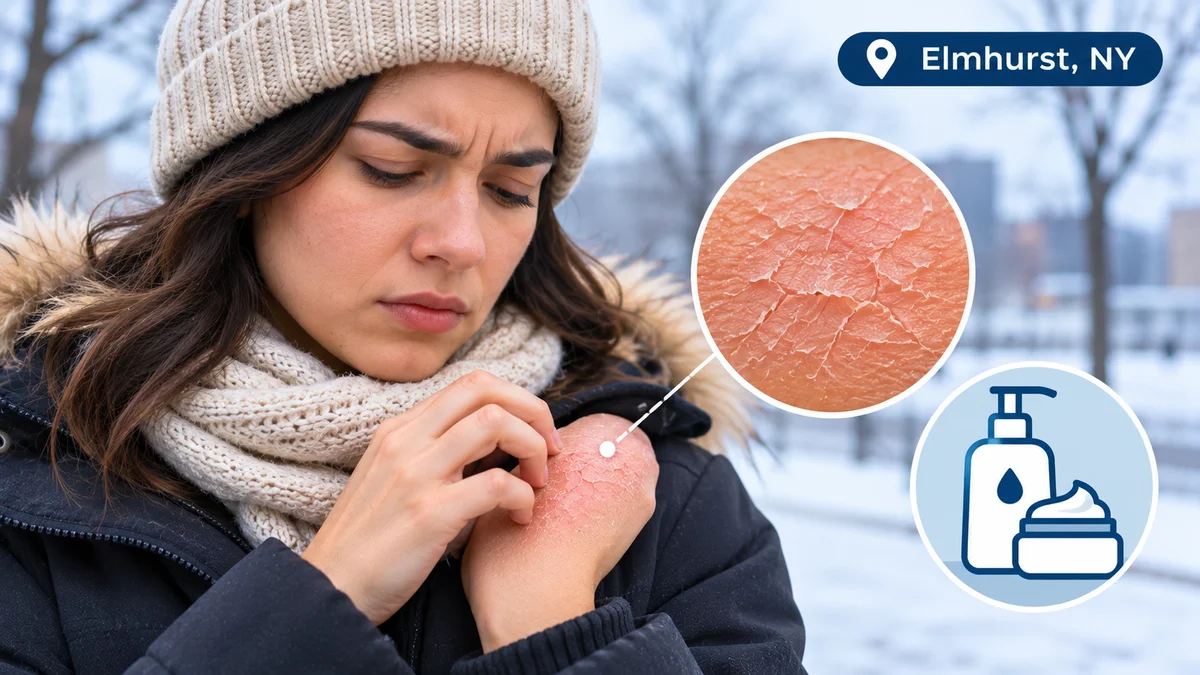
Table of contents
- 1. What Is Dry Skin (Xerosis)?
- 2. Signs and Symptoms by Severity
- 3. Dry Skin vs Look-Alike Skin Conditions
- 4. Causes and Who Is at Higher Risk
- 5. How a Clinician Evaluates Dry, Itchy Skin
- 6. The Five Skin-Care Steps
- 7. Treatment Options at a Glance
- 8. Graph: Illustrative Skin Dryness Over Four Weeks
- 9. Sample Four-Week Winter Skin Routine
- 10. Red Flags: When to See a Doctor
- 11. Where to Get Care: Elmhurst, Chinatown and Lower Manhattan
- 12. Related Reading From City Prime Care
- 13. Contact Us
- Conclusion
- Frequently Asked Questions
- See a Doctor in Elmhurst or Chinatown
Every year when the temperature drops and the heat comes on, your shins, hands and arms start to feel tight and flaky, and the itch gets worse after a hot shower. This is the classic picture of dry skin, called xerosis, and it is one of the most common skin complaints in New York winters. For most people it is a nuisance that responds well to simple changes, but severe or persistent dryness can crack, bleed, get infected or point to another condition.
This guide explains why skin dries out in winter, how it differs from eczema and other rashes, five skin-care steps, a sample four-week routine and the red flags that need medical attention. City Prime Care serves patients in Elmhurst, Queens, Chinatown and Lower Manhattan. This article is general education and not personal medical advice. The American Academy of Dermatology offers tips on its dry skin care page.
Quick takeaways:
- Winter dry skin happens because cold outdoor air and indoor heating pull moisture from the skin's outer layer.
- Hot showers, harsh soaps, frequent hand washing and age make dryness and itching worse.
- Daily moisturizer applied soon after bathing is the cornerstone of treatment.
- Open cracks, oozing, spreading redness, fever or dryness that does not improve need a medical check, since diabetes, thyroid problems and skin conditions can also cause dry skin.
1. What Is Dry Skin (Xerosis)?
The outermost layer of the skin works like a brick wall, with skin cells held together by natural oils and fats that lock in water. When humidity drops or the skin is stripped of its oils, the wall develops tiny gaps, water escapes and the skin becomes rough, tight and flaky.
Dry skin is most common on the shins, forearms, hands, lower legs and flanks. Because older skin makes less oil, older adults are especially prone to dryness and itching.
2. Signs and Symptoms by Severity
| Level | What you may notice | Typical approach |
|---|---|---|
| Mild | Rough, tight skin and fine flaking, little itch | Moisturizer and gentler bathing |
| Moderate | Visible scaling, itching, ash-gray or whitish appearance, tightness after showers | Daily thick cream or ointment; avoid triggers |
| Severe | Deep cracks (fissures), redness, bleeding, intense itching that disturbs sleep | Medical evaluation and prescription treatment |
| Infected | Oozing, honey-colored crusts, warmth, spreading redness, pus or fever | Medical care; see impetigo and cellulitis |
Scratching damages the skin further and can start an itch-scratch cycle, so treating dryness early prevents bigger problems.
3. Dry Skin vs Look-Alike Skin Conditions
| Condition | Typical clue | How it differs |
|---|---|---|
| Eczema (atopic dermatitis) | Intensely itchy red patches, often in elbow and knee creases | Often starts in childhood with allergy history; needs prescription care when severe |
| Psoriasis | Thick, silvery, well-defined plaques | See psoriasis plaque types |
| Fungal infection | Ring-shaped, expanding patch with a clear center | See ringworm |
| Scabies | Intense night itching with burrows between fingers | See scabies |
| Hives | Raised welts that appear and vanish within hours | See hives |
| Rosacea or facial dryness | Facial flushing and bumps | See rosacea |
| Seborrheic dermatitis | Greasy flakes on scalp and face | See dandruff and seborrheic dermatitis |
4. Causes and Who Is at Higher Risk
Dry, itchy skin is linked to:
- Cold, low-humidity winter air and indoor heating.
- Long, hot showers and baths that strip natural oils.
- Harsh, fragranced soaps and body washes and frequent hand washing or sanitizer use.
- Older age, when oil glands slow down.
- Diabetes, kidney disease, an underactive thyroid and some other medical conditions; see how the thyroid affects your body and low blood sugar and glucose.
- Certain medicines, such as some water pills, cholesterol drugs and acne treatments.
- Dehydration or poor nutrition; see dehydration warning signs.
- Occupations with frequent water exposure, such as healthcare, food service and cleaning.
5. How a Clinician Evaluates Dry, Itchy Skin
A visit usually includes:
- A history of when the dryness started, where it is, what makes it worse, soaps and products used, and medicines taken.
- Examining the skin for scaling, cracks, redness and signs of infection or another rash.
- Asking about itch at night, family history of eczema or allergies and other symptoms such as fatigue, weight change or thirst.
- Blood tests when a medical cause is suspected, such as blood sugar, kidney and thyroid checks; see common blood tests explained.
- A plan with moisturizers, prescription creams when needed and referral to a dermatologist for stubborn or unusual cases. See when your primary care doctor sends you to a specialist.
6. The Five Skin-Care Steps
For winter dry skin without signs of infection:
- Shorten and cool your showers: keep showers or baths to 5 to 10 minutes with lukewarm rather than hot water, and pat dry rather than rubbing.
- Use a gentle cleanser: choose a fragrance-free, soap-free cleanser and use it only where needed, such as underarms and groin.
- Moisturize right after bathing: apply a thick cream or ointment within three minutes while skin is still damp, and repeat at least once daily; products with ceramides, glycerin or petrolatum work well.
- Protect your hands: use fragrance-free hand cream after each wash, wear cotton-lined gloves for cleaning and warm gloves outdoors.
- Add moisture to the air and clothing: use a clean humidifier in the bedroom, choose soft cotton or breathable fabrics and avoid wool directly on the skin.
Avoid scratching, trim nails short and use cool compresses for itch. If itching is strong, an over-the-counter 1 percent hydrocortisone cream may help for a short time on small areas as directed, but do not use it on the face or broken skin without advice.
7. Treatment Options at a Glance
| Option | Best for | Notes |
|---|---|---|
| Fragrance-free thick cream or ointment | All dry skin | Apply once or twice daily; ointments are heaviest |
| Lukewarm short showers and gentle cleansers | All dry skin | Reduces oil loss |
| Urea or lactic acid moisturizers | Rough, scaly skin on heels or elbows | Can sting on cracked skin |
| Short course of a steroid cream | Inflamed, very itchy patches | Prescription strength under clinician guidance |
| Antihistamine at night | Itch that disturbs sleep | May cause drowsiness; clinician advice for older adults |
| Treating the underlying condition | Diabetes, thyroid or kidney causes | Improves skin along with overall health |
8. Graph: Illustrative Skin Dryness Over Four Weeks
This is a teaching graph, not patient data. It shows how dryness and itching often ease when bathing habits change and moisturizer is used every day. Real results vary, and severe dryness may need medical treatment.
| Time | Dryness and itch level (illustrative) |
|---|---|
| Week 0 (before care) | ██████████ |
| Week 1 | ███████ |
| Week 2 | █████ |
| Week 3 | ███ |
| Week 4 | ██ |
| Week 8 | █ |
9. Sample Four-Week Winter Skin Routine
| When | Goal | Sample actions | Check |
|---|---|---|---|
| Days 1-3 | Stop the stripping | Lukewarm 5-10 minute showers, switch to a gentle cleanser, moisturize within three minutes | Is skin less tight after bathing? |
| Week 1 | Build the habit | Moisturize twice daily, hand cream after washing, humidifier at night | Is flaking reducing? |
| Week 2 | Treat problem spots | Thicker ointment on shins and hands, urea cream for rough heels | Is itch lower and sleep better? |
| Week 3 | Review | Check for cracks, infection or eczema signs, adjust products | Any redness, oozing or crusting? |
| Week 4 | Follow-up | See a clinician if still itchy or cracked; ask about blood tests | Is skin soft with no new rash? |
| Ongoing | Maintain | Keep moisturizing all winter, review medicines yearly | Any new bruising, weight change or fatigue? |
10. Red Flags: When to See a Doctor
See a clinician promptly for:
- Deep cracks that bleed, or skin that is oozing, crusted, hot, swollen or increasingly red.
- Fever, spreading redness or red streaks on the skin, which can signal infection.
- Itching over the whole body with no visible rash, especially with fatigue, weight loss, yellow skin or night sweats.
- Itching that keeps you from sleeping or lasts more than two weeks despite good care.
- Blisters, painful rash or burning skin.
- Sudden swelling of the face, lips or tongue with trouble breathing, which is an emergency.
- Dry skin with excessive thirst, frequent urination or other signs that could point to diabetes.
11. Where to Get Care: Elmhurst, Chinatown and Lower Manhattan
Itchy, cracked skin is a common reason people search for urgent care Elmhurst NY, a walk in clinic Elmhurst NY, urgent care 11373, a same day doctor appointment Elmhurst or Same-Day Acute Care in Elmhurst Queens, especially when skin looks infected. For ongoing skin, thyroid and diabetes follow-up, patients choose a primary care doctor Elmhurst NY, a family doctor Elmhurst Queens, Primary Care Doctors in Elmhurst NY or chronic disease management Elmhurst NY.
People comparing options often search for Best Primary Care Clinic in Elmhurst Queens, Best Primary Care Doctor in Elmhurst Queens, Primary Care Near Me Elmhurst Queens, Best Primary Care Clinics in Queens NY, Primary Care Clinics and Doctors in Queens NY and Top Primary Care Clinics in Queens NY. City Prime Care provides Men's and Women's Healthcare in Elmhurst NY, a physical exam clinic Elmhurst NY and preventive care Elmhurst NY, including evaluation of common skin problems.
Downtown, people look for primary care Lower Manhattan, primary care Chinatown NYC, a doctor near Catherine Street NYC, primary care 75 Catherine St, a walk-in clinic Chinatown NYC, a Primary Care Clinic in Chinatown Manhattan or a Healthcare Center in Chinatown Manhattan NY. Citywide searches include primary care doctor NYC, primary care doctor near me, family doctor Manhattan NYC, annual physical exam NYC, same day primary care NYC and preventive care Lower Manhattan. Residents searching for Primary Care Doctors Serving Todt Hill Staten Island are welcome to contact the clinic to ask about care options and travel.
| Area | Common searches | How care can help |
|---|---|---|
| Elmhurst (ZIP 11373) | Urgent care 11373, same day doctor appointment Elmhurst | Prompt rash and infection check |
| Elmhurst, Queens | Family doctor Elmhurst Queens, primary care doctor Elmhurst NY | Skin, thyroid and diabetes follow-up |
| Queens | Best Primary Care Clinics in Queens NY, Top Primary Care Clinics in Queens NY | Easy-to-reach primary care for the family |
| Lower Manhattan | Primary care Lower Manhattan, preventive care Lower Manhattan | Convenient visits near work |
| Chinatown / Catherine Street | Primary care Chinatown NYC, doctor near Catherine Street NYC, primary care 75 Catherine St | Convenient downtown care |
| Citywide | Primary care doctor NYC, family doctor Manhattan NYC, same day primary care NYC | Same-day or scheduled evaluation |
You can also find the clinic on Google or learn more on the City Prime Care website.
12. Related Reading From City Prime Care
These guides on our site cover connected topics:
13. Contact Us
Is dry, itchy skin cracking, not improving or keeping you up at night? Visit our Contact Us page or see our Google listing. If you have facial swelling with trouble breathing, or a fast-spreading red, painful rash with fever, call 911 or go to the nearest emergency room.
Conclusion
Winter dry skin is common and usually improves with shorter lukewarm showers, gentle cleansers, daily thick moisturizer and a humidifier. Stubborn itching, cracks or signs of infection deserve a medical check, since eczema, diabetes, thyroid disease and other conditions can also dry the skin.
Frequently Asked Questions
See a Doctor in Elmhurst or Chinatown
Have a question about your own health? Book a visit at our Elmhurst, Queens clinic or our Chinatown, Manhattan clinic, or explore our primary care services.
Related articles
Healthcare
Contact Dermatitis in Queens, NY: How Skin Reacts to Irritants and Allergens and What to Expect From Treatment
Red, itchy, blistering skin after touching soap, metal or plants may be contact dermatitis. Learn the two types, a numbered trigger-control plan, red flags and what to expect from care in Queens.
Healthcare
Skin Boils and Abscesses in Elmhurst, NY: How Painful Lumps Form and What to Expect From Same-Day Care
A red, painful, pus-filled lump under the skin may be a boil or abscess. Learn how they form, why you should not squeeze them, a numbered care plan, red flags and what to expect in Elmhurst, Queens.
Healthcare
Vaginal Yeast Infections in Elmhurst, NY: How Candida Overgrowth Develops and What to Expect From Care
Itching, burning and thick white discharge may signal a vaginal yeast infection. Learn why it develops, a numbered care plan, red flags and what to expect from women's healthcare in Elmhurst, Queens.