
HealthcareBy City Prime Care Team
Whiplash and Neck Strain in Queens, NY: How Neck Pain Develops After a Sudden Jolt and What to Expect From Recovery
Neck pain and stiffness after a car accident, fall or sudden jolt can be whiplash or a neck strain. Learn how symptoms develop, how it is evaluated, five recovery steps, a sample six-week plan and red flags that need urgent care.
Medically reviewed by Dr. Helen Vasquez11 min read
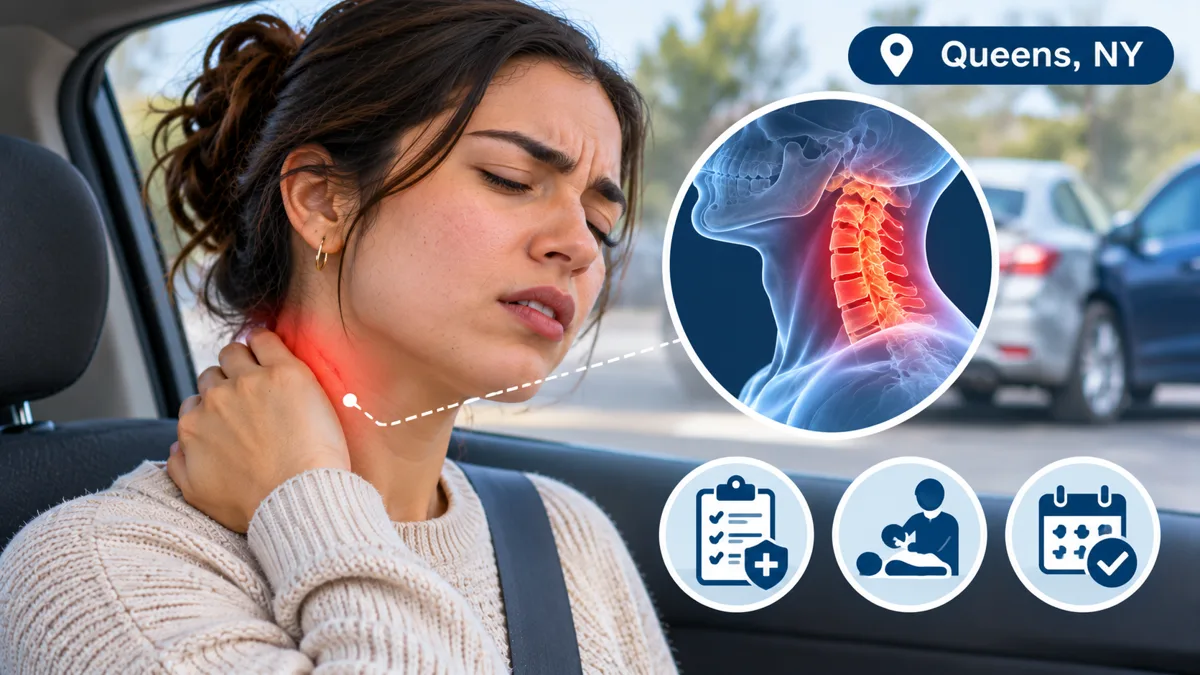
Table of contents
- 1. What Are Whiplash and Neck Strain?
- 2. Common Symptoms and When They Appear
- 3. Whiplash vs Look-Alike Problems
- 4. Causes and Who Is at Higher Risk
- 5. How Neck Injuries Are Evaluated
- 6. The Five Recovery Steps
- 7. Treatment Options at a Glance
- 8. Graph: Illustrative Neck Pain Over Six Weeks
- 9. Sample Six-Week Recovery Plan
- 10. Red Flags: When to Get Urgent Care
- 11. Where to Get Care: Elmhurst, Chinatown and Lower Manhattan
- 12. Related Reading From City Prime Care
- 13. Contact Us
- Conclusion
- Frequently Asked Questions
- See a Doctor in Elmhurst or Chinatown
A fender bender on the Long Island Expressway, a slip on an icy sidewalk or a hard stop on the subway can snap your head forward and back in an instant. You may feel fine at first, then wake the next morning with a stiff, aching neck, a headache and trouble turning your head. This is the typical picture of whiplash, a neck strain or sprain caused by rapid back-and-forth motion. Most people recover within weeks, but some injuries are more serious and need careful evaluation.
This guide explains how whiplash develops, how clinicians check for serious injury, five recovery steps, a sample six-week plan and the red flags that need emergency care. City Prime Care serves patients in Elmhurst, Queens, Chinatown and Lower Manhattan. This article is general education and not personal medical advice. The Mayo Clinic describes the condition on its whiplash overview page.
Quick takeaways:
- Whiplash is a soft-tissue injury of the neck muscles and ligaments, and symptoms may appear hours to a day or two after the event.
- Common symptoms are neck pain and stiffness, headache at the back of the head, shoulder pain, dizziness and tiredness.
- Early gentle movement usually helps recovery more than long rest or a rigid collar.
- Weakness, numbness, severe pain, confusion, vomiting or loss of consciousness after an injury need emergency care.
1. What Are Whiplash and Neck Strain?
Whiplash happens when the neck is forced beyond its usual range of motion, stretching or tearing muscles, tendons and ligaments. It is best known from rear-end car collisions, but also follows sports injuries, falls and being struck from behind. A neck strain is a similar overstretch of the muscles that can also come from awkward sleeping, heavy lifting or long hours hunched over a phone or laptop.
The neck holds up a head that weighs about 10 to 12 pounds, so a sudden jerk puts a lot of load on small structures. Pain is often worse the day after the injury as muscles tighten and swelling develops.
2. Common Symptoms and When They Appear
| Symptom | What it feels like | When it usually appears |
|---|---|---|
| Neck pain and stiffness | Aching, sharp pain when turning, tight muscles | Within 24 hours; may peak at day two or three |
| Headache | Dull pain at the base of the skull | Often within the first days |
| Shoulder and upper-back pain | Pain between the shoulder blades | Within days |
| Dizziness or blurred vision | Lightheaded, trouble focusing | Early; needs checking if severe |
| Fatigue and trouble sleeping | Poor sleep due to pain | First week or two |
| Tingling in the arm or hand | Pins and needles from an irritated nerve | Needs evaluation; see below |
| Trouble concentrating or mood change | Foggy thinking, irritability | Possible with concussion or poor sleep |
Symptoms that come on late do not mean the injury is minor or major. They are common because swelling and muscle spasm take time to build.
3. Whiplash vs Look-Alike Problems
| Condition | Typical clue | How it differs |
|---|---|---|
| Neck muscle strain | Pain after lifting or poor posture | No major trauma; usually improves in days |
| Pinched nerve | Pain shooting down the arm with numbness | Nerve symptoms dominate; see pinched nerve in the neck |
| Fracture or dislocation | Severe pain, tenderness over the spine, weakness | Emergency; needs imaging |
| Concussion | Confusion, nausea, memory trouble after a head blow | May occur with whiplash; head injury needs checking |
| Shoulder problem | Pain when lifting the arm, not turning the neck | See rotator cuff injury |
| Tension headache | Band-like headache without injury | Triggered by stress and posture rather than trauma |
4. Causes and Who Is at Higher Risk
Neck sprains and strains are linked to:
- Rear-end or side-impact motor vehicle collisions, even at low speeds.
- Falls on ice, stairs or wet floors, common in New York winters.
- Contact sports, cycling and e-bike accidents.
- Being struck suddenly from behind or a sudden stop on a train or bus.
- Sitting for long periods with the head forward at a computer or phone, which makes the neck more vulnerable.
- Previous neck injuries, weak neck muscles or arthritis.
- Older age, when the spine is less flexible; see normal wear and tear or arthritis.
5. How Neck Injuries Are Evaluated
A visit usually includes:
- A history of how the injury happened, speed and direction of force, whether you hit your head and when symptoms began.
- Checking for tenderness over the spine, range of motion, muscle strength, reflexes and sensation in the arms and hands.
- Screening rules to decide if imaging is needed. X-rays may be ordered after high-force injuries, severe pain, neurological symptoms or other risk factors; see when an injury or cough calls for an X-ray.
- CT or MRI at a hospital if a fracture, disc injury or nerve damage is suspected.
- A recovery plan with pain control, activity advice and follow-up, and referral to physical therapy or a specialist if needed; see when your primary care doctor sends you to a specialist.
If you have severe pain, weakness, numbness or were in a high-speed crash, go to the emergency room and avoid moving your neck more than necessary.
6. The Five Recovery Steps
For mild whiplash or neck strain, once a clinician has ruled out serious injury:
- Keep moving gently: slow, pain-limited turning and tilting several times a day helps prevent stiffness; avoid long periods of complete rest.
- Use heat and cold: ice for 15 to 20 minutes during the first two days to ease swelling, then warm packs or a warm shower to relax muscles, always with a cloth barrier.
- Take pain relief as advised: acetaminophen or ibuprofen can help if safe for you, following the label and your clinician's advice, especially with stomach, kidney or blood-thinner concerns.
- Fix your sleep and posture: use one supportive pillow, avoid sleeping on your stomach, raise your screen to eye level and take short movement breaks.
- Add strengthening gradually: after the first one to two weeks, guided neck and shoulder exercises or physical therapy rebuild support and lower the chance of lingering pain.
Soft collars are generally not recommended beyond the first few days, since prolonged use can weaken muscles.
7. Treatment Options at a Glance
| Option | Best for | Notes |
|---|---|---|
| Gentle activity and posture changes | Mild strain or whiplash | First-line care |
| Heat, ice and over-the-counter pain relief | Pain and stiffness | Short-term; follow label directions |
| Prescription muscle relaxant or stronger pain medicine | Severe spasm | Short course; causes drowsiness and needs a clinician's judgment |
| Physical therapy | Pain beyond one to two weeks | Stretching, strengthening and posture training |
| Imaging (X-ray, CT, MRI) | Suspected fracture or nerve injury | Ordered by clinical findings |
| Specialist referral | Persistent nerve symptoms or pain over several months | Spine, pain or neurology specialists |
8. Graph: Illustrative Neck Pain Over Six Weeks
This is a teaching graph, not patient data. It shows how pain often peaks within the first few days and then fades with movement and rehab. Real recovery varies and some people take longer.
| Time since injury | Neck pain level (illustrative) |
|---|---|
| Day 1 | ████ |
| Day 2-3 (peak) | ██████████ |
| Week 1 | ███████ |
| Week 2 | █████ |
| Week 4 | ███ |
| Week 6 | █ |
9. Sample Six-Week Recovery Plan
| When | Goal | Sample actions | Check |
|---|---|---|---|
| Days 1-3 | Protect and calm | Medical check, ice then heat, gentle turning, pain relief as advised | Any arm weakness, numbness or severe headache? |
| Week 1 | Keep moving | Short walks, gentle neck range-of-motion, supportive sleep | Is turning the head easier each day? |
| Weeks 2-3 | Build strength | Physical therapy or home exercises as taught, posture breaks every 30 minutes | Is pain falling with activity? |
| Weeks 4-5 | Return to normal | Gradual return to work, driving and exercise | Can you drive and look over your shoulder comfortably? |
| Week 6 | Recheck | Follow-up visit if still painful | Is pain under control? Is a referral needed? |
| Ongoing | Prevent repeats | Workstation setup, strength routine, safe driving habits | Any new symptoms? |
10. Red Flags: When to Get Urgent Care
Call 911 or go to the emergency room for:
- Severe neck pain after a high-speed crash, fall from height or diving accident.
- Weakness, numbness or tingling in the arms or legs, or loss of bladder or bowel control.
- Loss of consciousness, confusion, repeated vomiting, seizure or severe headache.
- Trouble breathing, swallowing or speaking.
- Neck pain with fever, stiff neck and sensitivity to light.
- Pain that is rapidly worsening or does not ease with rest.
See a clinician soon if pain lasts beyond a week, keeps you from sleeping, or arm symptoms linger. Persistent headaches, dizziness or memory problems after an injury also deserve a check.
11. Where to Get Care: Elmhurst, Chinatown and Lower Manhattan
Neck pain after an accident is a common reason people search for urgent care Elmhurst NY, a walk in clinic Elmhurst NY, urgent care 11373, a same day doctor appointment Elmhurst or Same-Day Acute Care in Elmhurst Queens. For follow-up, medicines, physical therapy referrals and ongoing care, patients choose a primary care doctor Elmhurst NY, a family doctor Elmhurst Queens, Primary Care Doctors in Elmhurst NY or chronic disease management Elmhurst NY if long-term pain or arthritis is involved.
People comparing options often search for Best Primary Care Clinic in Elmhurst Queens, Best Primary Care Doctor in Elmhurst Queens, Primary Care Near Me Elmhurst Queens, Best Primary Care Clinics in Queens NY, Primary Care Clinics and Doctors in Queens NY and Top Primary Care Clinics in Queens NY. City Prime Care provides Men's and Women's Healthcare in Elmhurst NY, a physical exam clinic Elmhurst NY and preventive care Elmhurst NY, including evaluation of minor injuries and referrals.
Downtown, people look for primary care Lower Manhattan, primary care Chinatown NYC, a doctor near Catherine Street NYC, primary care 75 Catherine St, a walk-in clinic Chinatown NYC, a Primary Care Clinic in Chinatown Manhattan or a Healthcare Center in Chinatown Manhattan NY. Citywide searches include primary care doctor NYC, primary care doctor near me, family doctor Manhattan NYC, annual physical exam NYC, same day primary care NYC and preventive care Lower Manhattan. Residents searching for Primary Care Doctors Serving Todt Hill Staten Island are welcome to contact the clinic to ask about care options and travel.
| Area | Common searches | How care can help |
|---|---|---|
| Elmhurst (ZIP 11373) | Urgent care 11373, same day doctor appointment Elmhurst | Prompt injury check and imaging decisions |
| Elmhurst, Queens | Family doctor Elmhurst Queens, primary care doctor Elmhurst NY | Follow-up, medicines and therapy referral |
| Queens | Best Primary Care Clinics in Queens NY, Top Primary Care Clinics in Queens NY | Easy-to-reach primary care for the family |
| Lower Manhattan | Primary care Lower Manhattan, preventive care Lower Manhattan | Convenient visits near work |
| Chinatown / Catherine Street | Primary care Chinatown NYC, doctor near Catherine Street NYC, primary care 75 Catherine St | Convenient downtown care |
| Citywide | Primary care doctor NYC, family doctor Manhattan NYC, same day primary care NYC | Same-day or scheduled evaluation |
You can also find the clinic on Google or learn more on the City Prime Care website.
12. Related Reading From City Prime Care
13. Contact Us
Neck pain after a fall, crash or sudden jolt? Visit our Contact Us page or see our Google listing. If you have weakness, numbness, confusion, severe headache or trouble breathing after an injury, call 911 or go to the nearest emergency room.
Conclusion
Whiplash and neck strains are painful but usually heal within weeks with early gentle movement, sensible pain relief and good posture. The key is making sure a more serious injury is not missed. Get checked after any significant impact and return promptly if symptoms worsen or nerve symptoms appear.
Frequently Asked Questions
See a Doctor in Elmhurst or Chinatown
Have a question about your own health? Book a visit at our Elmhurst, Queens clinic or our Chinatown, Manhattan clinic, or explore our primary care services.
Related articles
Healthcare
Herniated Disc in Elmhurst, NY: How Back and Leg Pain From a Slipped Disc Develops and What to Expect From Care
A herniated disc can cause back pain, leg pain, numbness and weakness. Learn how slipped discs develop, a numbered self-care plan, red flags and what to expect from primary care in Elmhurst, Queens.
Healthcare
Shin Splints in Elmhurst, NY: How Lower Leg Pain Builds and What to Expect From Recovery
Aching pain along the inner edge of the shin during running or walking is often shin splints. Learn how they develop, how they differ from a stress fracture, five recovery steps and a sample six-week return plan.
Healthcare
Why Does Your Shoulder Ache When You Lift Your Arm, and Could It Be a Rotator Cuff Injury? Reading the Pain Pattern, the Five Rehab Steps and the Sample Strengthening Plan
Shoulder pain that worsens when you reach overhead or lie on your side may be a rotator cuff problem. Learn the causes, diagnosis, five rehab steps, treatment options and a sample strengthening plan with a simple graph.