
Urgent Care / HealthcareBy City Prime Care Team
Sprain vs Fracture: How to Tell the Difference and When You Need an X-Ray
A swollen ankle or wrist can be a sprain or a broken bone. Learn the signs that separate them, basic first aid, and when an X-ray at urgent care is the right call.
Medically reviewed by City Prime Care Administrator9 min read
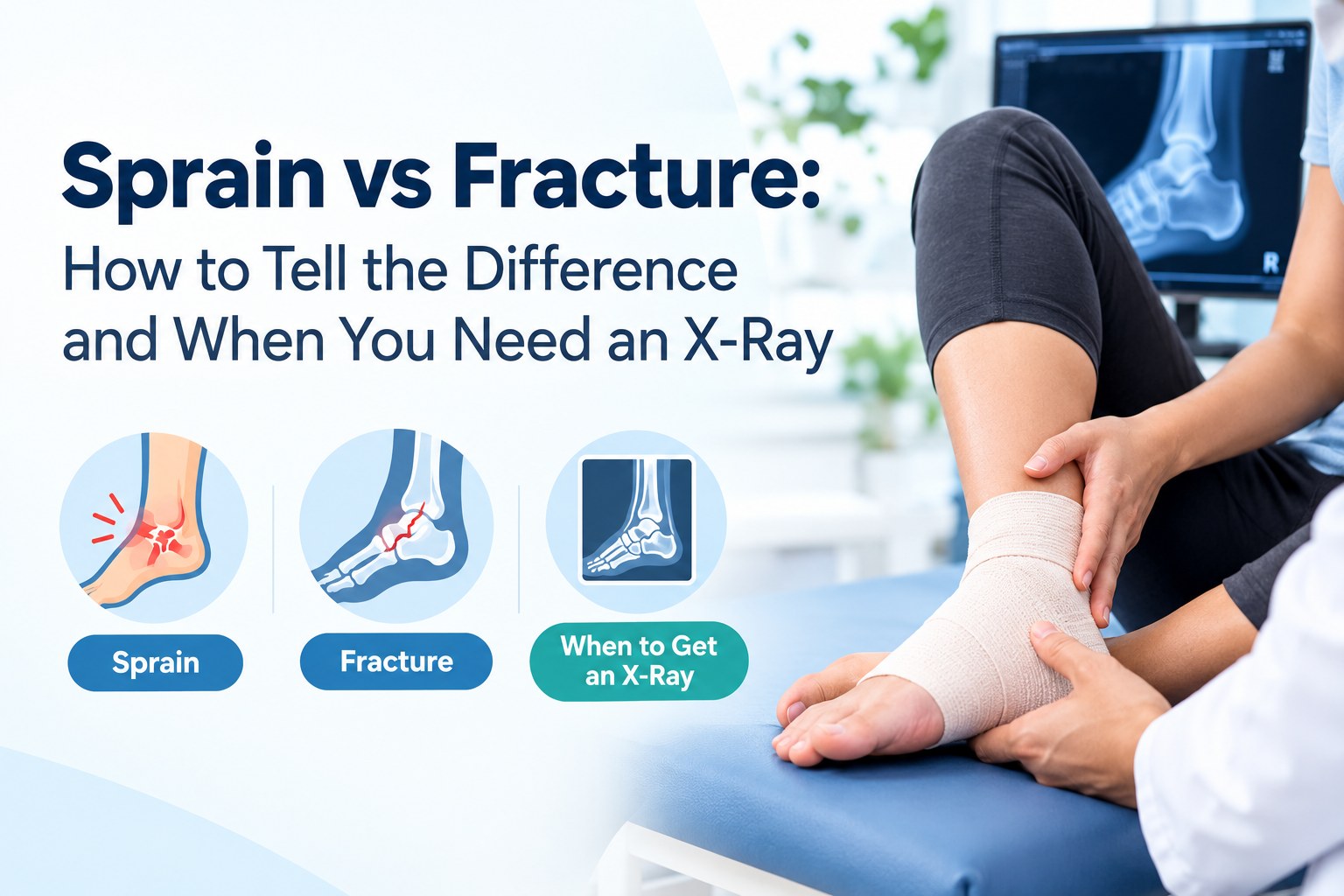
Table of contents
- 1. Sprain, Strain and Fracture: What Is the Difference?
- 2. Sprain vs Fracture: Comparison Table
- 3. How Long Does Recovery Usually Take? (Simple Graph)
- 4. Step-by-Step First Aid for the First 48 Hours
- 5. When to Get an X-Ray or See a Clinician Today
- 6. Go to the Emergency Room If
- 7. Tips to Prevent Sprains and Fractures
- Conclusion
- Frequently Asked Questions
- See a Doctor in Elmhurst or Chinatown
You twist your ankle on a curb, fall on an outstretched hand, or land awkwardly during a basketball game. Within minutes the area swells and hurts. The big question follows: is it just a sprain, or is something broken?
It is not always possible to tell by looking, and even clinicians often need an exam and sometimes an X-ray. This guide explains the typical differences, simple first aid, and clear signs that mean you should be seen the same day. It is general information and does not replace an in-person evaluation.
1. Sprain, Strain and Fracture: What Is the Difference?
Quick definitions:
- Sprain: a stretched or torn ligament, the tissue that connects bone to bone.
- Strain: a stretched or torn muscle or tendon.
- Fracture: a crack or break in a bone, which can be tiny or complete.
For general background, see the MedlinePlus page on sprains and strains.
2. Sprain vs Fracture: Comparison Table
No single sign proves one or the other, but this table shows common patterns.
| Sign | More typical of a sprain | More typical of a fracture |
|---|---|---|
| Pain | Aches, worse with movement | Sharp, severe, often right over the bone |
| Swelling | Gradual, around the joint | Rapid and may be large |
| Bruising | Common after a day or so | Can appear quickly and spread |
| Using the limb | Often possible but painful | Often very difficult or impossible |
| Shape | Usually normal | May look bent, shortened or out of place |
| Sounds at injury | Sometimes a pop | Sometimes a snap or crack |
| Numbness or tingling | Less common | More likely if nerves are affected |
3. How Long Does Recovery Usually Take? (Simple Graph)
Recovery varies a lot. This text graph shows approximate ranges for ankle sprains by severity. Each block represents about 2 weeks.
| Injury | Approximate recovery | Graph |
|---|---|---|
| Grade 1 sprain (mild stretch) | 1 to 3 weeks | █ |
| Grade 2 sprain (partial tear) | 3 to 6 weeks | ██ |
| Grade 3 sprain (complete tear) | 6 to 12 weeks or more | █████ |
| Simple fracture | Often 6 to 8 weeks or more, depending on the bone | ████ |
4. Step-by-Step First Aid for the First 48 Hours
If the injury is not severe, these steps are commonly recommended:
- Protect the area: stop the activity and avoid putting weight on it.
- Rest: avoid movements that cause sharp pain.
- Ice: apply a wrapped ice pack for about 15 to 20 minutes at a time, several times a day.
- Compress: use an elastic bandage that is snug but not tight.
- Elevate: keep the limb raised above heart level when you can.
- Pain relief: over-the-counter pain medicine may help if it is safe for you; check the label or ask a pharmacist.
Do not try to force a deformed limb back into place, and avoid heavy massage or heat in the first day or two.
5. When to Get an X-Ray or See a Clinician Today
Get evaluated the same day if you notice:
- You cannot put weight on the foot or take about four steps.
- The area looks bent, crooked or very swollen.
- Pain is severe or located directly over a bone.
- There is numbness, tingling, a cold or pale hand or foot.
- The injury is near a joint and not improving after 2 to 3 days.
- You have an open wound or bone visible.
Clinicians use guidelines such as the Ottawa rules to decide whether an X-ray is needed after ankle and foot injuries. For many minor injuries, a walk-in clinic or urgent care can examine you and arrange imaging without a long wait. Our guide to walk-in clinic vs urgent care explains which to choose.
6. Go to the Emergency Room If
Seek emergency care right away if:
- Bone is protruding through the skin.
- The limb is severely deformed or you suspect a hip, spine, neck or head injury.
- You have uncontrolled bleeding.
- There is loss of feeling or color in the limb.
- You feel faint, confused or short of breath after the injury.
Not sure which option is right? Read our guide on when to visit urgent care instead of waiting for your doctor.
7. Tips to Prevent Sprains and Fractures
Everyday prevention habits:
- Wear supportive shoes that fit well.
- Warm up before exercise and build intensity gradually.
- Strengthen leg and core muscles to improve balance.
- Keep floors and stairs clear and well lit at home.
- For older adults, discuss bone health at your annual physical.
Conclusion
When in doubt, get checked. A missed fracture can heal poorly, while a quick exam and X-ray can give you a clear plan and peace of mind.
Contact Us
Hurt yourself and not sure how serious it is? Our Queens, NY team can examine minor injuries and guide your next steps. Contact City Prime Care here. For severe injuries, call 911 or go to the nearest emergency room. This article is general information, not medical advice.
Frequently Asked Questions
See a Doctor in Elmhurst or Chinatown
Have a question about your own health? Book a visit at our Elmhurst, Queens clinic or our Chinatown, Manhattan clinic, or explore our primary care services.
Related articles
Urgent Care / Healthcare
First Aid at Home: What to Do for Cuts and Burns Before You Reach the Clinic
Know exactly what to do for a cut or burn at home, how to tell burn degrees apart, when a wound needs stitches or a tetanus shot, and which signs mean urgent or emergency care.
Urgent Care / Healthcare
When Should You Visit Urgent Care Instead of Waiting for Your Doctor?
Not sure whether to wait for your doctor or go to urgent care today? Use a simple three-window rule to decide, and learn how to find urgent care near you.
Urgent Care / Healthcare
Does Urgent Care in Elmhurst Really Handle Fever, Cold, and Sore Throat? What the Seasonal Data Reveals, the Care Test It Turns On, and What Each Symptom Counts
Fever, cold, and sore throat are common reasons patients seek urgent care, with respiratory visits often increasing during peak flu season. This guide explains what patients can expect, including possible testing, busier clinic periods, and warning signs that may require more urgent medical evaluation.





