
HealthcareBy City Prime Care Team
Painful Periods in Queens, NY: Why Menstrual Cramps Happen and What to Expect From a Doctor Visit
Period pain is common, but severe cramps are not something you have to just live with. Learn the causes, warning signs and treatment options, and how a visit in Elmhurst, Queens works.
Medically reviewed by Dr. Helen Vasquez9 min read
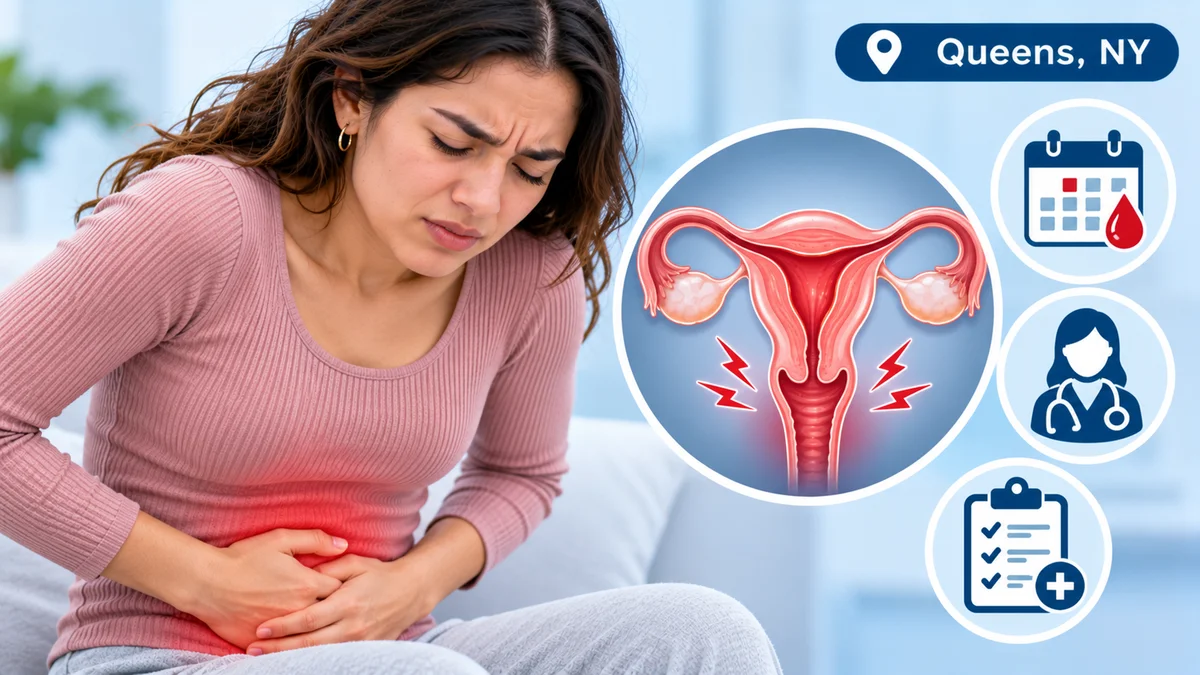
Table of contents
- Two Types of Painful Periods
- Possible Causes of Severe Cramps
- Symptom and Pain-Level Chart
- Graph: How Often Period Pain Disrupts Life
- Home Relief Steps That Often Help
- Red Flags: When Not to Wait
- What Happens at the Doctor's Visit
- Treatment Options
- Care in Elmhurst, Queens and Lower Manhattan
- Contact Us
- Conclusion
- Frequently Asked Questions
- See a Doctor in Elmhurst or Chinatown
Cramping before or during your period is very common, but pain that keeps you home from work or school, or that does not respond to simple measures, deserves attention. Doctors call painful periods dysmenorrhea, and it is one of the most frequent reasons women seek gynecologic and primary care.
If you live or work near Elmhurst, a trusted primary care doctor in Elmhurst, NY can evaluate period pain, rule out underlying causes and build a plan with you. This guide covers causes, a pain-level chart, treatment options, red flags and how to prepare for your visit.
You can also read about our approach on City Prime Care on Google or reach us via Contact Us.
Two Types of Painful Periods
| Type | What it is | Typical pattern |
|---|---|---|
| Primary dysmenorrhea | Cramps caused by uterine contractions from natural chemicals called prostaglandins | Starts within a year or two of first period; pain just before or during bleeding; eases after 2 to 3 days |
| Secondary dysmenorrhea | Pain caused by a condition such as endometriosis, fibroids or adenomyosis | Often begins later in life; may worsen over time; can last longer or occur outside the period |
Telling these two apart is the main reason a clinical evaluation matters.
Possible Causes of Severe Cramps
- High prostaglandin levels causing strong uterine contractions
- Endometriosis, where tissue similar to the uterine lining grows outside the uterus
- Uterine fibroids, which are non-cancerous growths in the uterine wall
- Adenomyosis, where lining tissue grows into the uterine muscle
- Pelvic inflammatory disease, often linked to infection
- Use of an intrauterine device in some women
Hormone balance matters too. Our article on hormones and your thyroid explains how related symptoms are tested.
Symptom and Pain-Level Chart
| Level | Description | Suggested next step |
|---|---|---|
| Mild (1 to 3 of 10) | Dull ache; daily life normal | Home care; track your cycle |
| Moderate (4 to 6 of 10) | Needs medicine; some activity limited | Book a routine visit if it recurs monthly |
| Severe (7 to 10 of 10) | Misses work or school; nausea or fainting | Book soon for evaluation |
| Sudden, extreme pain, fever or heavy bleeding | Possible urgent cause | Same-day or emergency care |
Graph: How Often Period Pain Disrupts Life
The figures below are an illustrative teaching chart showing how pain tends to be distributed among people who menstruate. They are not City Prime Care patient data.
| Impact on daily life | Illustrative share | Bar |
|---|---|---|
| Little or no limitation | About 35% | ███████ |
| Mild limitation, relieved by medicine | About 40% | ████████ |
| Moderate limitation | About 15% | ███ |
| Severe, misses school or work | About 10% | ██ |
Home Relief Steps That Often Help
Try these steps at the first sign of cramps:
- Apply a heating pad to the lower abdomen for 15 to 20 minutes
- Take an over-the-counter pain reliever as directed on the label, if it is safe for you
- Drink water and warm fluids, and avoid very salty meals
- Try gentle walking, stretching or yoga
- Rest and sleep well in the days before your period
Check with a clinician before using any medicine if you have stomach, kidney or bleeding conditions, or if you might be pregnant.
Red Flags: When Not to Wait
- Pain that suddenly becomes severe or one-sided
- Fever, chills or foul-smelling discharge
- Soaking a pad or tampon every hour for several hours
- Fainting, dizziness or shortness of breath
- Possible pregnancy with pain or bleeding
- Pain that has been getting steadily worse over months
If any of these appear, use urgent care in Elmhurst or go to an emergency room.
What Happens at the Doctor's Visit
A typical visit looks like this:
- You describe your cycle, pain pattern and any other symptoms
- The clinician reviews your history and current medicines
- A pelvic or abdominal exam may be done when appropriate
- Tests such as urine, blood or ultrasound may be ordered
- You discuss treatment and follow-up, or referral to a gynecologist
Treatment Options
| Option | How it helps | Notes |
|---|---|---|
| Anti-inflammatory pain relievers | Reduce prostaglandins and pain | Often most effective if started early |
| Hormonal methods | Lighten bleeding and cramps | Prescribed after medical review |
| Heat and exercise | Relax muscles and improve blood flow | Safe add-on for most people |
| Treating the cause | For endometriosis, fibroids or infection | Often involves a specialist |
Care in Elmhurst, Queens and Lower Manhattan
City Prime Care provides men's and women's healthcare in Elmhurst, NY, preventive care in Elmhurst, NY and primary care in Lower Manhattan. Patients searching for primary care near me in Elmhurst, Queens or the best primary care doctor in Elmhurst, Queens can start with a conversation about symptoms and a plan that fits their schedule. Ask about a same day doctor appointment in Elmhurst if your symptoms feel urgent.
Stress and mood can intensify period symptoms, so see also our guide on stress, low mood and anxiety. More profiles: Find us on Google and See more on Google. For national guidance, see Office on Women's Health.
Contact Us
Ready to talk about your symptoms? Contact Us to schedule a visit.
Conclusion
Some cramping is normal, but pain that disrupts your life is worth a medical conversation. Tracking your cycle, using safe home measures and getting an evaluation can identify treatable causes and bring real relief.
Frequently Asked Questions
See a Doctor in Elmhurst or Chinatown
Have a question about your own health? Book a visit at our Elmhurst, Queens clinic or our Chinatown, Manhattan clinic, or explore our primary care services.
Related articles
Healthcare
Eye Floaters and Flashes in Elmhurst, NY: When Spots in Your Vision Are Harmless and When to Get Checked
Floaters are often harmless, but sudden new floaters or flashes can signal a retinal problem. Learn the warning signs and what to expect from an evaluation in Elmhurst, Queens.
Healthcare
Shaky Hands in Queens, NY: Why Tremors Develop and What to Expect From an Evaluation
Hand tremors have many causes, from caffeine and anxiety to thyroid problems and essential tremor. Learn how doctors sort them out and what to expect from a visit in Elmhurst, Queens.
Healthcare
Excessive Sweating in Elmhurst, NY: Why You Sweat More Than Normal and What to Expect From Care
Sweating that soaks clothes or wakes you at night can be hyperhidrosis or a sign of another condition. Learn the causes, tests and treatment options, and how to start in Elmhurst, Queens.