
HealthcareBy City Prime Care Team
Eye Floaters and Flashes in Elmhurst, NY: When Spots in Your Vision Are Harmless and When to Get Checked
Floaters are often harmless, but sudden new floaters or flashes can signal a retinal problem. Learn the warning signs and what to expect from an evaluation in Elmhurst, Queens.
Medically reviewed by Dr. Helen Vasquez8 min read
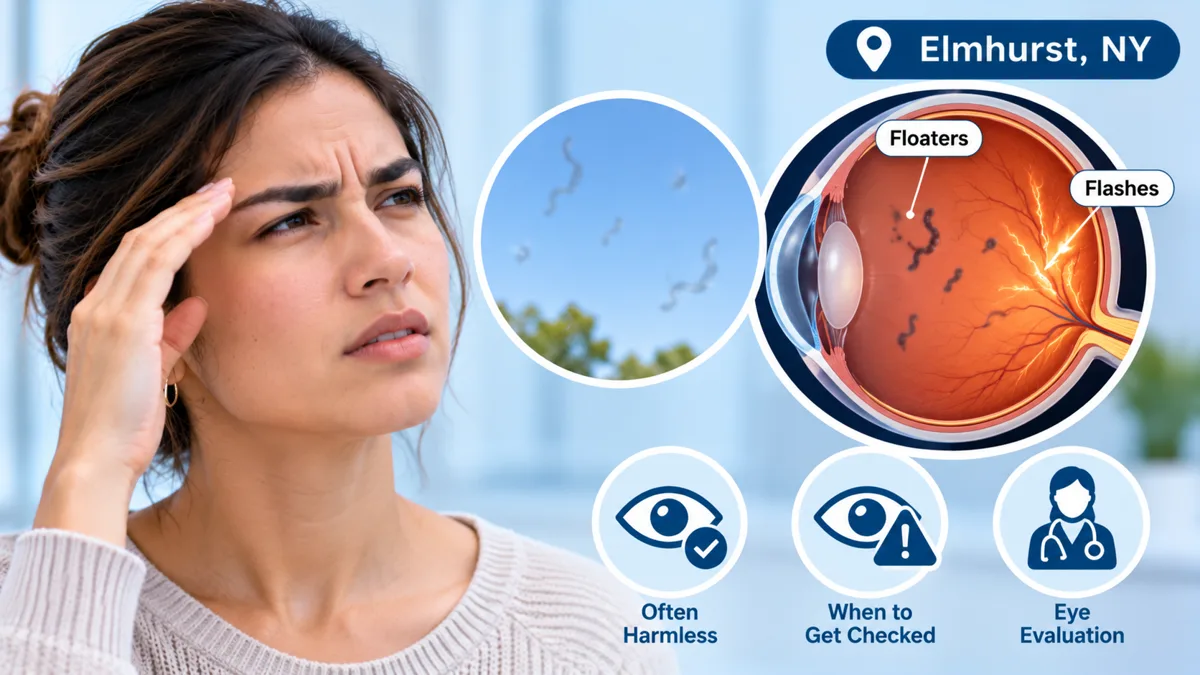
Table of contents
- What Are Floaters and Flashes?
- Common Causes
- Harmless or Urgent? A Quick Comparison
- Graph: Illustrative Reasons for Floater Evaluations
- Warning Signs: Get Evaluated Quickly
- What an Evaluation Involves
- Management and Treatment
- Everyday Eye Health Habits
- Where to Start in Elmhurst, Queens and Chinatown
- Contact Us
- Conclusion
- Frequently Asked Questions
- See a Doctor in Elmhurst or Chinatown
Many people notice tiny specks, threads or cobweb shapes drifting across their vision, especially when looking at a bright wall or the sky. These are floaters, and most are a normal result of aging in the gel-like substance inside the eye. But a sudden shower of new floaters, flashes of light or a dark curtain across your vision can point to a retinal tear or detachment, which needs urgent attention.
This guide explains what floaters and flashes are, how to tell routine from urgent, and how to get evaluated if you are looking for a primary care doctor in Elmhurst, NY or urgent care in Elmhurst, NY to point you in the right direction.
For clinic information, see City Prime Care on Google or our Contact Us page.
What Are Floaters and Flashes?
| Term | What you see | Usual cause |
|---|---|---|
| Floaters | Dots, squiggles, threads or cobwebs that drift when your eyes move | Clumps in the vitreous gel as it ages and shrinks |
| Flashes | Brief streaks or sparks of light, often at the edge of vision | Vitreous gel tugging on the retina |
| Curtain or shadow | Dark area spreading across vision | Possible retinal detachment; urgent |
Floaters are shadows cast on the retina, which is why they seem to dart away when you try to look straight at them.
Common Causes
- Age-related changes in the vitreous gel, common after age 50
- Posterior vitreous detachment, when the gel separates from the retina
- Nearsightedness, which raises the risk of early floaters
- Recent eye surgery such as cataract removal
- Eye inflammation or bleeding inside the eye
- Diabetes-related eye changes
People with diabetes should keep regular eye exams. See our guide on prediabetes and blood sugar ranges to understand risk.
Harmless or Urgent? A Quick Comparison
| Sign | More likely routine | Seek care promptly |
|---|---|---|
| Onset | Gradual, long-standing | Sudden or rapidly increasing |
| Number | A few stable floaters | A new shower of many floaters |
| Flashes | None | New flashes of light |
| Vision loss | None | Shadow, curtain or blurred area |
| Pain or redness | None | Present with vision change |
Graph: Illustrative Reasons for Floater Evaluations
This teaching chart shows an illustrative breakdown of what eye exams find in people who report new floaters. It is not City Prime Care patient data.
| Finding after exam | Illustrative share | Bar |
|---|---|---|
| Normal age-related changes | About 70% | ██████████████ |
| Vitreous detachment without tear | About 15% | ███ |
| Retinal tear or detachment | About 10 to 15% | ██ |
| Other eye conditions | About 5% | █ |
Warning Signs: Get Evaluated Quickly
If you notice any of the following, arrange an urgent eye exam the same day:
- A sudden increase in the number of floaters
- Flashes of light in one or both eyes
- A gray or dark curtain moving across your vision
- Loss of side vision or blurry patches
- Floaters after an eye injury or surgery
If you cannot reach an eye specialist right away, use same day primary care in NYC or an emergency room for guidance.
What an Evaluation Involves
A thorough evaluation typically includes:
- A review of your symptoms, timing and medical history
- A vision check and look at the front of the eye
- A dilated eye exam by an eye specialist to see the retina
- Imaging such as ultrasound if the view is blocked
- Treatment planning if a tear or detachment is found
Our doctor referral services help connect patients with an ophthalmologist when a dilated exam is needed.
Management and Treatment
| Situation | Typical approach |
|---|---|
| Harmless age-related floaters | Observation; most become less noticeable over time |
| Bothersome floaters | Specialist may discuss options; most do not need procedures |
| Retinal tear | Laser or freezing treatment to seal the tear |
| Retinal detachment | Urgent surgery to reattach the retina |
Everyday Eye Health Habits
These habits support long-term eye health:
- Get a dilated eye exam as recommended, especially with diabetes or high blood pressure
- Wear protective eyewear during sports and home repairs
- Take regular screen breaks
- Protect your eyes from UV with sunglasses
- Keep chronic conditions well controlled with regular checkups
Where to Start in Elmhurst, Queens and Chinatown
City Prime Care offers walk in clinic care in Elmhurst, NY, primary care clinics and doctors in Queens, NY and a healthcare center in Chinatown, Manhattan, NY, near Catherine Street for people who search for a doctor near Catherine Street, NYC. We also support annual physical exam in NYC visits, where vision changes and chronic conditions are reviewed.
Other resources: Find us on Google, See more on Google and the National Eye Institute. If dizziness comes with vision changes, read our guide on dizziness and spinning.
Contact Us
Not sure whether your symptoms are urgent? Contact Us and our team can help you decide on the next step.
Conclusion
Most floaters are harmless, but sudden new floaters, flashes or a shadow in your vision should never be ignored. Fast evaluation can protect your sight, so when in doubt, get checked the same day.
Frequently Asked Questions
See a Doctor in Elmhurst or Chinatown
Have a question about your own health? Book a visit at our Elmhurst, Queens clinic or our Chinatown, Manhattan clinic, or explore our primary care services.
Related articles
Healthcare
Excessive Sweating in Elmhurst, NY: Why You Sweat More Than Normal and What to Expect From Care
Sweating that soaks clothes or wakes you at night can be hyperhidrosis or a sign of another condition. Learn the causes, tests and treatment options, and how to start in Elmhurst, Queens.
Healthcare
Ganglion Cyst in Elmhurst, NY: How Wrist and Hand Lumps Form and What to Expect From Care
A soft lump on the wrist or hand is often a harmless ganglion cyst. Learn why they form, which signs need a check, and how a primary care visit in Elmhurst, Queens or Chinatown works.
Healthcare
Contact Dermatitis in Queens, NY: How Skin Reacts to Irritants and Allergens and What to Expect From Treatment
Red, itchy, blistering skin after touching soap, metal or plants may be contact dermatitis. Learn the two types, a numbered trigger-control plan, red flags and what to expect from care in Queens.