HealthcareBy City Prime Care Team
How Do You Spot Frostbite and Hypothermia in Winter, and What Should You Do First? Reading the Cold-Injury Stages, the Five Warming Steps and the Sample Body-Temperature Chart
Cold exposure can freeze skin or drop core body temperature before you notice. Learn the stages of frostbite and hypothermia, five warming steps, what not to do and a sample temperature chart.
Medically reviewed by Dr. Karl E. Latortue10 min read
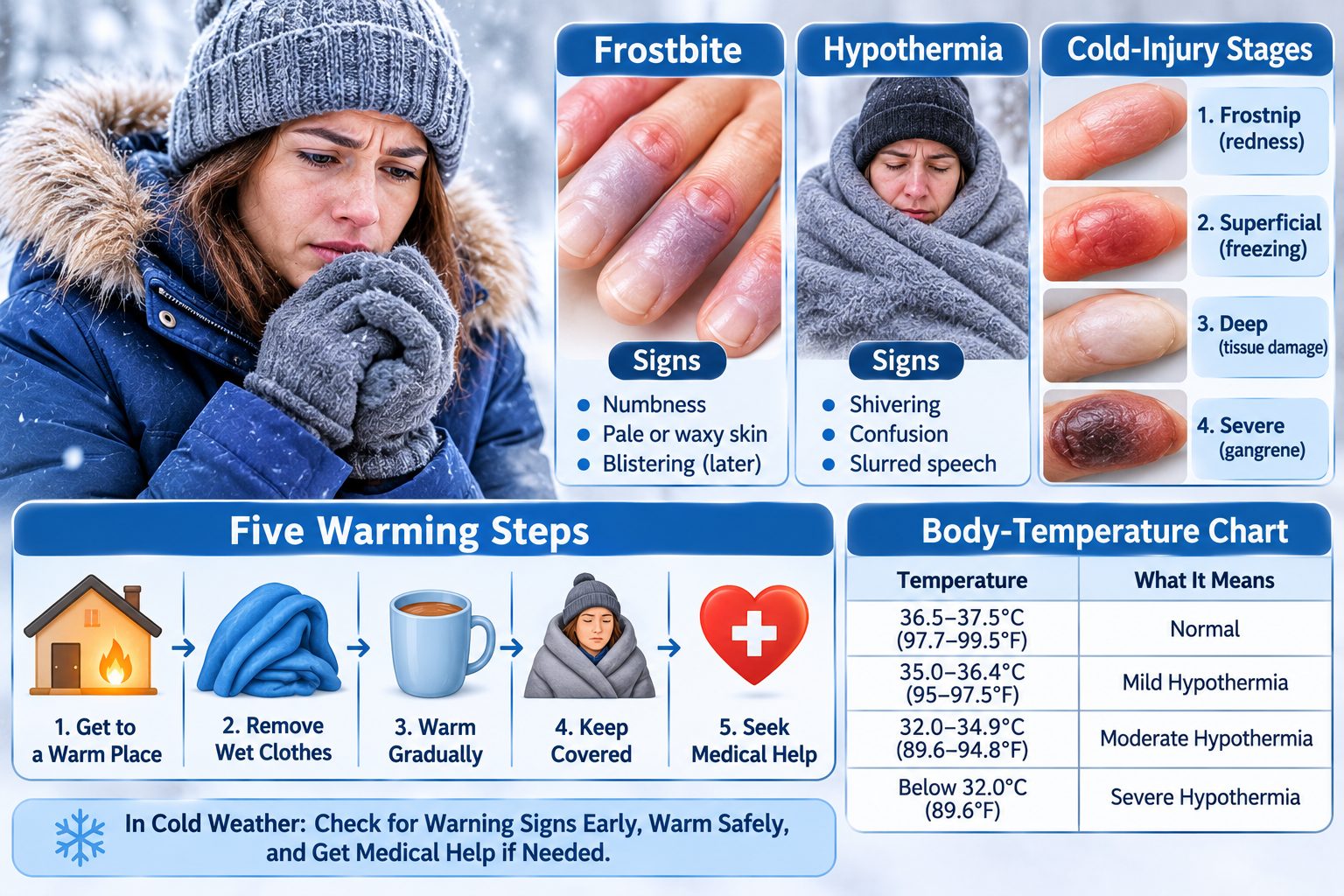
Table of contents
- 1. Frostbite vs Hypothermia: What Is the Difference?
- 2. The Stages of Frostbite
- 3. Warning Signs of Hypothermia
- 4. Five Warming Steps
- 5. Common Mistakes to Avoid
- 6. Who Is at Higher Risk?
- 7. Prevention: Dress and Plan Ahead
- 8. Sample Body-Temperature Chart
- 9. When to Get Care
- 10. Contact Us and Find Us Online
- Conclusion
- Frequently Asked Questions
- See a Doctor in Elmhurst or Chinatown
When Queens temperatures drop and the wind picks up, your body can lose heat faster than it makes it. Two problems can follow: frostbite, where skin and the tissue under it freeze, and hypothermia, where the core body temperature falls below about 95°F (35°C). Both can begin quietly, and both are more common than most people expect, even in a big city, for commuters, outdoor workers, older adults and anyone living in a cold home.
This guide explains how frostbite and hypothermia differ, the stages of cold injury, the five warming steps, common mistakes, who is at the highest risk, how to prevent injury and a sample body-temperature chart. It is general education only. Confusion, slurred speech, a person who has stopped shivering, or skin that is hard, white and numb needs emergency care. Call 911.
| At a Glance | Key Point |
|---|---|
| What it is | Frostbite freezes skin and tissue; hypothermia lowers the whole body's core temperature |
| Early signs | Cold, pale or tingling skin; shivering, clumsy hands, slowed thinking |
| Danger point | Core temperature under about 95°F (35°C), or numb, hard, waxy skin |
| First step | Get out of the cold, remove wet clothing and warm the body gradually |
| Prevention | Dry layers, covered hands, feet and ears, limited time outside and buddy checks |
1. Frostbite vs Hypothermia: What Is the Difference?
Frostbite is a local injury, most often to the fingers, toes, nose, ears and cheeks. Hypothermia is a whole-body problem that affects the brain, heart and muscles. A person can have both at once, and hypothermia is the more urgent of the two because it affects thinking and judgment.
| Feature | Frostbite | Hypothermia |
|---|---|---|
| Where it happens | Exposed skin and extremities | Whole body (core temperature) |
| Skin | Pale, waxy, hard or blotchy; may turn blue-gray or black | May be cold and pale, but skin alone does not show it |
| Sensation | Numbness, tingling, then loss of feeling | Shivering at first, then shivering may stop |
| Thinking | Usually normal | Confusion, slurred speech, poor coordination, drowsiness |
| Main danger | Tissue damage and possible amputation | Heart rhythm problems and loss of consciousness |
For trusted background, see MedlinePlus on frostbite and hypothermia, and the National Weather Service page on cold weather safety and wind chill.
2. The Stages of Frostbite
| Stage | What You See and Feel | What It Means |
|---|---|---|
| Frostnip | Cold, pale skin with tingling or stinging; skin turns red on warming | Mild, no lasting damage; a warning to warm up now |
| Superficial frostbite | Skin looks pale or waxy, feels numb, may swell; blisters can appear after rewarming | The top layers of skin are injured and need medical review |
| Deep frostbite | Skin is hard, white or blue-gray, and feels like wood; deeper blisters turn dark | Muscle, tendon and bone can be damaged; this is an emergency |
Numb skin cannot warn you, so frostbite often goes unnoticed. If a finger, toe or ear suddenly stops hurting in the cold, treat that as a warning, not a relief.
3. Warning Signs of Hypothermia
Signs usually build over minutes to hours and may include:
- Shivering that is strong at first and then fades as the body runs out of energy.
- Clumsiness, fumbling hands and stumbling.
- Slurred or mumbled speech and slowed thinking.
- Unusual drowsiness, apathy or irritability.
- Slow, shallow breathing and a weak pulse in severe cases.
Babies may look healthy but feel cold, have bright red cold skin and be very quiet or low in energy. Older adults can become hypothermic indoors in a poorly heated home, sometimes without shivering.
4. Five Warming Steps
While you wait for help, or for a mild case:
- Get out of the cold into shelter and handle the person gently. Rough handling can trigger heart rhythm problems in severe hypothermia.
- Remove wet clothing and replace it with dry layers, then wrap the person in blankets, including head and neck.
- Warm the center of the body first: chest, neck, head and groin. Use dry blankets or skin-to-skin contact; give warm sweet drinks only if the person is fully alert and can swallow, and never alcohol.
- For frostbite, rewarm the area in comfortably warm, not hot, water of about 99 to 102°F (37 to 39°C) for 15 to 30 minutes, but only if there is no chance it will freeze again.
- Get medical care: call 911 for confusion, no shivering, hard white skin, dark blisters or any sign of severe hypothermia. Milder injuries still deserve same-day evaluation.
If you are unsure where to go, read our guides on where to go when illness strikes suddenly and when a problem needs the emergency room instead of urgent care. For minor wound and burn care, see first aid at home for cuts and burns.
5. Common Mistakes to Avoid
| Mistake | Why It Causes Harm |
|---|---|
| Rubbing or massaging frostbitten skin | Ice crystals can cut tissue and make the injury worse |
| Using hot water, heating pads or a fire | Numb skin burns easily without the person feeling it |
| Giving alcohol or caffeine | Alcohol widens blood vessels and increases heat loss |
| Walking on frostbitten feet when you can avoid it | Thawed tissue is fragile and can be damaged further |
| Popping blisters | It raises the risk of infection and slows healing |
| Thawing and then refreezing | Refreezing causes far more damage than staying frozen until safe care is available |
6. Who Is at Higher Risk?
Anyone can be affected, but risk is higher for:
- Older adults and infants, who regulate body heat less well.
- People with diabetes or poor circulation, who may not feel cold injury. Our guide on type 2 diabetes explains why foot checks matter.
- Smokers, because nicotine narrows blood vessels. See our guide to quitting smoking or vaping with a doctor's help.
- People who drink alcohol or use sedating medicines, which can blunt the sense of cold. Older adults can review taking many medicines safely.
- Outdoor workers, people who are unsheltered and anyone in a cold or unheated home.
7. Prevention: Dress and Plan Ahead
| Layer or Habit | What to Do | Helpful Tip |
|---|---|---|
| Base layer | Wear moisture-wicking fabric against skin | Avoid cotton when you will sweat |
| Middle layer | Add fleece or wool for insulation | Trap warm air with several thin layers |
| Outer layer | Choose a windproof, water-resistant shell | Wind chill makes the same temperature feel much colder |
| Hands, feet, head, ears | Use mittens, wool socks, a hat and ear coverage | Mittens are usually warmer than gloves |
| Time outside | Take warm-up breaks and stay dry | Check wind chill before you leave |
| Buddy checks | Watch friends and family for pale, waxy skin or slurred speech | People often do not notice their own early signs |
8. Sample Body-Temperature Chart
This teaching chart shows approximate stages. Real readings vary, and a home thermometer is not reliable in cold conditions, so judge by symptoms and call for help early. The squares show example urgency.
| Core Temperature (approx.) | Stage | Typical Signs | Example Urgency |
|---|---|---|---|
| 97 to 98.6°F (36 to 37°C) | Normal | No symptoms | ■ |
| 95 to 97°F (35 to 36°C) | Cold stress | Shivering, cold hands, goose bumps | ■■ |
| 90 to 95°F (32 to 35°C) | Mild hypothermia | Strong shivering, clumsiness, mumbling | ■■■■ |
| 82 to 90°F (28 to 32°C) | Moderate hypothermia | Confusion, shivering stops, drowsiness | ■■■■■■ |
| Below 82°F (28°C) | Severe hypothermia | Unresponsive, very slow pulse and breathing | ■■■■■■■■ |
A sample frostbite healing timeline looks like this in many cases. It is a teaching example only.
| When | What Often Happens | Example Discomfort |
|---|---|---|
| Day 0 | Rewarming; skin may be red, swollen and painful | ■■■■■■ |
| Days 1 to 3 | Swelling and clear or blood-filled blisters may form | ■■■■■ |
| Weeks 1 to 2 | Blisters dry and swelling eases | ■■■ |
| Weeks 3 to 6 | Damaged skin hardens and separates from healthy tissue | ■■ |
| Months | Cold sensitivity, tingling or numbness may linger | ■ |
9. When to Get Care
| Situation | Best Next Step |
|---|---|
| Frostnip that turns red and feels normal after warming | Home care; watch for blisters or lasting numbness |
| Blisters, persistent numbness or skin that stays pale | Same-day medical evaluation |
| Confusion, slurred speech, no shivering, unresponsive | Call 911 immediately |
| Hard, white or blue-gray skin that feels like wood | Call 911 or go to the emergency room |
| Diabetes, poor circulation or any doubt | Get checked early; do not wait for symptoms to worsen |
10. Contact Us and Find Us Online
If cold has left you with numb skin, blisters or slow healing, or you want advice on staying safe this winter, our team can examine you and guide your care. For non-emergency questions, Contact Us, book a visit, or find City Prime Care on Google: City Prime Care on Google. For confusion or severe symptoms, call 911.
Conclusion
Frostbite and hypothermia are easy to miss because cold dulls both skin and judgment. Dress in dry layers, cover every exposed area, warm up gently and treat numbness, confusion and stopped shivering as emergencies. This article is for general education and does not replace medical advice.
Frequently Asked Questions
See a Doctor in Elmhurst or Chinatown
Have a question about your own health? Book a visit at our Elmhurst, Queens clinic or our Chinatown, Manhattan clinic, or explore our primary care services.
Related articles
Healthcare
Is Your Cold Actually RSV, and Who Is at Risk of Severe Illness? Reading the Symptom Clues, the Five High-Risk Groups and the Sample Illness Timeline
RSV looks like a cold in most healthy adults but can be serious in babies and older adults. Learn the symptom clues, the five high-risk groups, prevention options and a sample illness timeline.
Healthcare
How Can Older Adults Take Many Medicines Safely? Reading the Medication Risks, the Five Review Steps and the Sample Medication List
Taking five or more medicines is common after 65, and so are the risks. Learn why risks rise with age, the five steps of a medication review, how to keep a medication list, and the warning signs to act on.
Healthcare
What Should Seniors and Families Know Before Choosing Elder Care? Reading the Selection Signals, the Five Questions and the Sample Family Checklist
Finding a doctor for an aging parent is stressful. Learn the difference between senior primary care and a geriatrician, the signals of good elder care, five questions to ask, and a sample family checklist.