
HealthcareBy City Prime Care Team
Jaw Pain and Clicking (TMJ Disorder) in Elmhurst, NY: How Jaw Joint Problems Develop and What to Expect From Care
Jaw pain, clicking or a jaw that locks may point to a temporomandibular joint (TMJ) disorder. Learn the causes, symptoms, home-care steps, red flags and what a visit in Elmhurst, Queens looks like.
Medically reviewed by Dr. Helen Vasquez9 min read
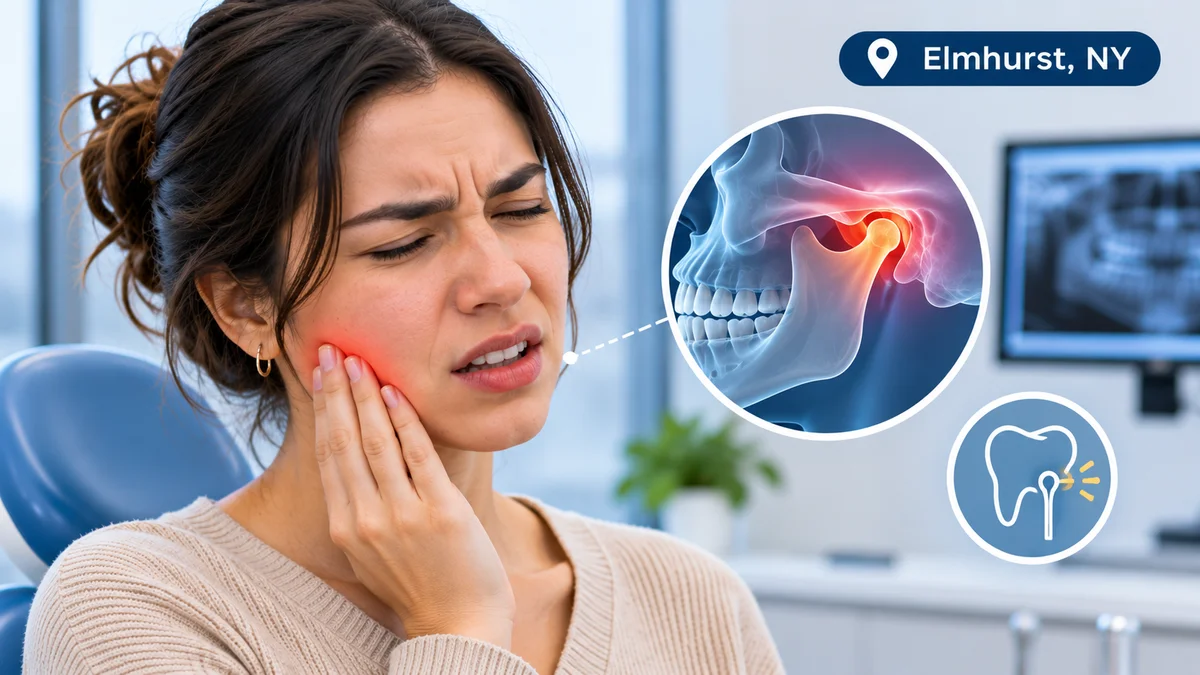
Table of contents
- 1. What Is a TMJ Disorder?
- 2. Common Causes and Risk Factors
- 3. Symptoms by Pattern: A Simple Reading Guide
- 4. Five Safe Home-Care Steps
- 5. Red Flags: When Jaw Pain Needs Same-Day Attention
- 6. What to Expect at a Primary Care or Walk-In Visit
- 7. Sample Eight-Week Improvement Outlook
- 8. Finding Trusted Primary Care Near You in Elmhurst, Queens
- 9. Quick Comparison: Home Care, Primary Care and Emergency Care
- Conclusion
- Frequently Asked Questions
- See a Doctor in Elmhurst or Chinatown
If your jaw clicks when you chew, aches near your ear, or feels stuck when you yawn, you are not alone. These symptoms are often grouped under the name temporomandibular joint disorder, or TMJ disorder (also written TMD). The temporomandibular joints sit just in front of each ear and connect your lower jaw to your skull. You use them every time you talk, eat, swallow or yawn, which means a problem there is hard to ignore.
Many people in Elmhurst and across Queens put up with jaw discomfort for months because it comes and goes. Stress, long work hours, clenching at night and old injuries are common contributors. The good news is that most cases improve with simple care, and a primary care visit can help sort out whether the pain truly comes from the jaw joint or from something nearby, such as an ear infection, a dental problem, sinus pressure or, rarely, the heart.
This guide explains how jaw joint problems develop, what symptoms to watch for, a numbered home-care plan, the red flags that need same-day attention, and what to expect when you visit a clinic. It is general education, not a diagnosis, and it does not replace advice from your own clinician.
1. What Is a TMJ Disorder?
A TMJ disorder is a group of conditions that affect the jaw joint, the small disc of cartilage inside it, and the chewing muscles around it. Pain can come from the muscles (the most common source), from the joint surface, or from the disc slipping out of its normal position. Many people have more than one source at the same time.
Typical features of a jaw joint problem include:
- Pain or tenderness in the jaw, cheek, temple or in front of the ear
- Clicking, popping or grating sounds when opening or closing the mouth
- Limited opening or a jaw that catches or locks
- Headaches or ear fullness without an ear infection
- Facial tiredness after chewing tough foods
2. Common Causes and Risk Factors
Doctors rarely find a single cause. More often, several small stressors add up until the muscles and joint can no longer keep up. The table below shows common contributors and how they usually show up.
| Contributor | How it affects the jaw | Common clue |
|---|---|---|
| Teeth clenching or grinding (bruxism) | Overworks chewing muscles and loads the joint | Morning jaw ache, worn teeth |
| Stress and tension | Raises muscle tightness in jaw, neck and shoulders | Pain worse on busy or anxious days |
| Arthritis in the joint | Wears the joint surface over time | Stiffness, grating sound, older age |
| Injury or trauma | Strains the joint or displaces the disc | Pain began after a blow or accident |
| Gum chewing, nail biting, hard foods | Repeated overuse of the same muscles | Pain after habits, eased by rest |
| Posture and screen time | Forward head posture strains neck and jaw | Neck pain together with jaw pain |
3. Symptoms by Pattern: A Simple Reading Guide
Where the pain sits and when it appears can offer helpful clues. The illustrative chart below shows how often each symptom is commonly reported in clinic settings. The bars are a teaching sample to show relative frequency and are not exact statistics.
| Symptom | Illustrative frequency | Bar |
|---|---|---|
| Jaw or facial muscle ache | Very common | ██████████ |
| Clicking or popping | Common | ████████░░ |
| Headache or temple pain | Common | ███████░░░ |
| Ear fullness or ear pain | Moderate | █████░░░░░ |
| Limited mouth opening | Less common | ███░░░░░░░ |
| Jaw locking | Less common | ██░░░░░░░░ |
4. Five Safe Home-Care Steps
For mild jaw pain without red flags, many clinicians suggest starting with these steps:
- Rest the joint: choose soft foods such as soup, eggs, yogurt, rice and cooked vegetables for one to two weeks, and avoid gum, hard candy and tough meats.
- Apply gentle heat: a warm, moist towel on the jaw for 10 to 15 minutes, a few times daily, can relax tight muscles.
- Break the clench habit: keep lips closed and teeth slightly apart, with the tongue resting on the roof of the mouth. Set a phone reminder to check your jaw.
- Do slow, gentle jaw movements: open and close within a pain-free range. Do not force the jaw wide or stretch through sharp pain.
- Manage stress and sleep: relaxation breathing, shoulder stretches and a consistent bedtime help many people. If you take over-the-counter pain relievers, follow the label and ask a clinician first if you have stomach, kidney, heart or blood-pressure concerns.
5. Red Flags: When Jaw Pain Needs Same-Day Attention
Not all jaw pain comes from the jaw. Seek same-day care or call 911 if you notice any of the following:
- Jaw, neck or arm pain together with chest pressure, shortness of breath, sweating or nausea, which can signal a heart problem
- A jaw that is locked and will not open or close
- Facial swelling, fever or a bad taste, which can point to infection
- Numbness or weakness of the face, trouble speaking or sudden severe headache
- Jaw pain after a significant injury, especially with a misaligned bite or a possible fracture
6. What to Expect at a Primary Care or Walk-In Visit
A visit for jaw pain is usually straightforward:
- History: the clinician asks when the pain began, what makes it better or worse, and whether you clench, grind or have had an injury.
- Physical exam: they press on the jaw and chewing muscles, listen or feel for clicks, check how far you can open, and look at your ears, mouth, neck and bite.
- Rule out other causes: an ear exam, a look at your teeth and gums, and, if symptoms suggest it, a heart-related check.
- Imaging if needed: most cases do not need scans. X-rays or other imaging are used when injury, arthritis or a structural problem is suspected.
- Plan and referral: you receive a home-care plan and, when needed, a referral to a dentist, oral surgeon, ENT or physical therapist for a night guard or targeted therapy.
7. Sample Eight-Week Improvement Outlook
Recovery varies by person. This illustrative outlook shows how symptoms often ease when the home-care plan is followed. It is a teaching example, not a guarantee.
| Week | What many people notice | Illustrative pain level |
|---|---|---|
| Week 1 | Soft diet begins, muscles feel tender | ██████░░░░ |
| Weeks 2 to 3 | Less morning ache with heat and clench awareness | █████░░░░░ |
| Weeks 4 to 5 | Clicking may persist but is less painful | ███░░░░░░░ |
| Weeks 6 to 8 | Comfortable chewing for most daily foods | ██░░░░░░░░ |
8. Finding Trusted Primary Care Near You in Elmhurst, Queens
If jaw pain keeps returning, a visit to an urgent care Elmhurst NY option or a primary care doctor Elmhurst NY is a practical first step. Many neighbors search for a walk in clinic Elmhurst NY, a family doctor Elmhurst Queens, or a same day doctor appointment Elmhurst when pain starts suddenly. City Prime Care supports urgent care 11373 needs, offers a physical exam clinic Elmhurst NY experience, and focuses on preventive care Elmhurst NY and chronic disease management Elmhurst NY. If you are looking for the best primary care clinic in Elmhurst Queens, primary care doctors in Elmhurst NY or primary care near me Elmhurst Queens, compare how easily you can get same-day visits and follow-up. We also care for men's and women's healthcare in Elmhurst NY and same-day acute care in Elmhurst Queens, and you can learn more on the City Prime Care website.
Patients across the city also look for a primary care doctor NYC, a primary care doctor near me, and primary care clinics and doctors in Queens NY, including the best and top primary care clinics in Queens NY. In Manhattan, people search for primary care Lower Manhattan, primary care Chinatown NYC, a primary care clinic in Chinatown Manhattan, a doctor near Catherine Street NYC, primary care 75 Catherine St, a walk-in clinic Chinatown NYC, a healthcare center in Chinatown Manhattan NY, and a family doctor Manhattan NYC. For an annual physical exam NYC, same day primary care NYC, or preventive care Lower Manhattan, plan ahead and bring your medication list. Even primary care doctors serving Todt Hill Staten Island can be a good match if you want a clinic with convenient transit connections. Read more health guides on the City Prime Care blog.
9. Quick Comparison: Home Care, Primary Care and Emergency Care
| Situation | Best next step | Why |
|---|---|---|
| Mild ache, clicking, no red flags | Home care, then primary care if it lasts over 2 weeks | Most cases improve with simple measures |
| Pain with ear, tooth or sinus symptoms | Same-day primary care or walk-in visit | Needs exam to find the true source |
| Locked jaw or facial swelling with fever | Same-day urgent care | May need prompt treatment |
| Jaw pain with chest pressure or breathlessness | Call 911 | Could be a heart emergency |
Conclusion
Jaw pain is common, usually manageable, and often improves with rest, heat, stress control and habit changes. A clinician can confirm that the jaw is the real source, rule out serious causes, and connect you with a dentist or therapist when needed.
Ready to be seen? Visit our Contact Us page to reach City Prime Care, find us on Google, or explore more at cityprimecare.com. This article is for general information only and is not medical advice; call 911 in an emergency.
Frequently Asked Questions
See a Doctor in Elmhurst or Chinatown
Have a question about your own health? Book a visit at our Elmhurst, Queens clinic or our Chinatown, Manhattan clinic, or explore our primary care services.
Related articles
Healthcare
Contact Dermatitis in Queens, NY: How Skin Reacts to Irritants and Allergens and What to Expect From Treatment
Red, itchy, blistering skin after touching soap, metal or plants may be contact dermatitis. Learn the two types, a numbered trigger-control plan, red flags and what to expect from care in Queens.
Healthcare
Skin Boils and Abscesses in Elmhurst, NY: How Painful Lumps Form and What to Expect From Same-Day Care
A red, painful, pus-filled lump under the skin may be a boil or abscess. Learn how they form, why you should not squeeze them, a numbered care plan, red flags and what to expect in Elmhurst, Queens.
Healthcare
Vaginal Yeast Infections in Elmhurst, NY: How Candida Overgrowth Develops and What to Expect From Care
Itching, burning and thick white discharge may signal a vaginal yeast infection. Learn why it develops, a numbered care plan, red flags and what to expect from women's healthcare in Elmhurst, Queens.