
HealthcareBy City Prime Care Urgent Care
Does Urgent Care Really Make More Sense Than Waiting for Your Doctor? What Your Symptoms Reveal, the Urgency Test It Turns On, and What Each Care Option Counts
A Practical Look at New or Worsening Symptoms, Same-Day Care, and When Waiting for a Primary Care Appointment May Be Reasonable
Medically reviewed by City Prime Care Medical Team5 min read
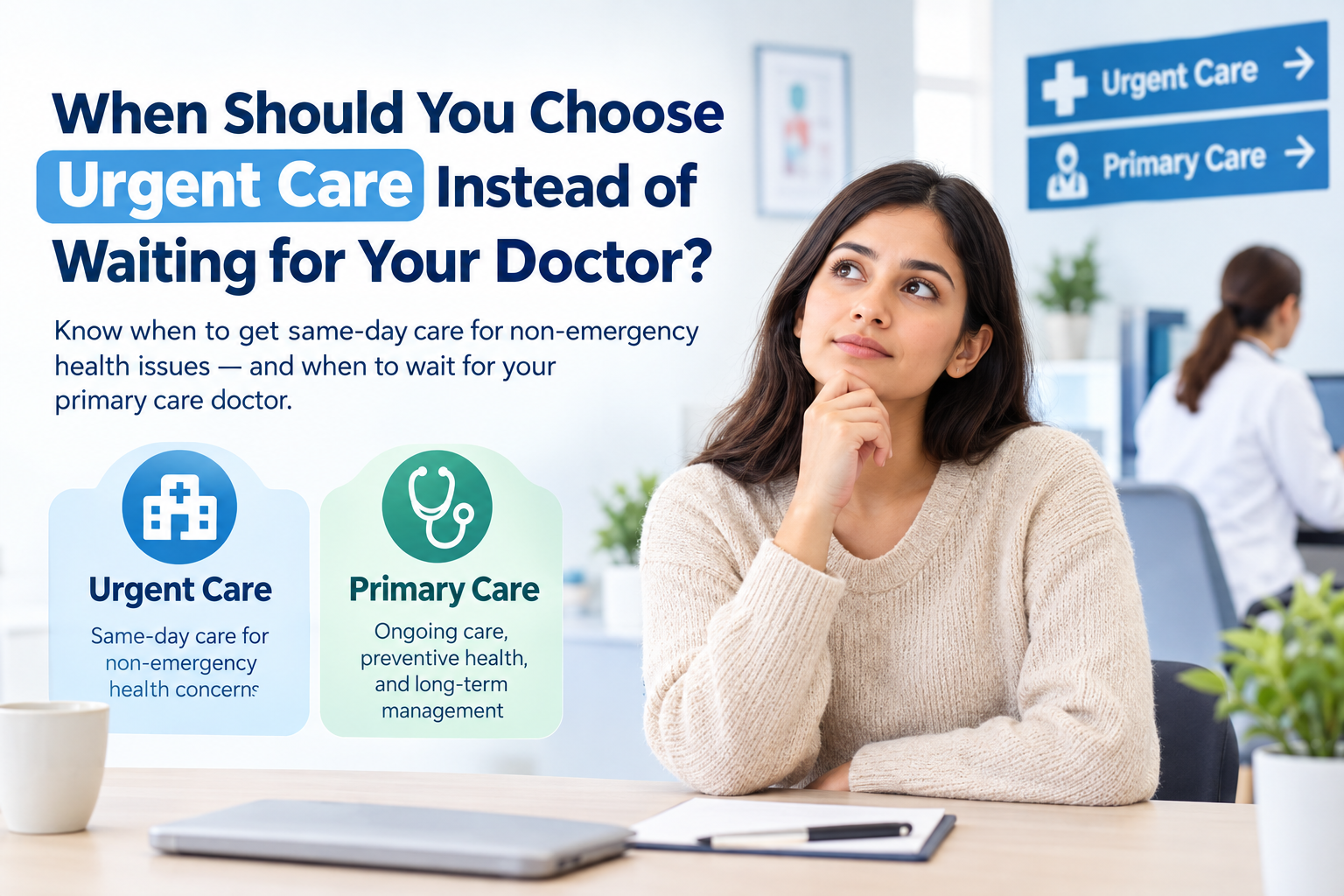
Table of contents
- Key Findings
- When Should You Choose Urgent Care Instead of Waiting for Your Doctor?
- What Symptoms May Need Same-Day Urgent Care?
- When Is It Better to Wait for Your Primary Care Doctor?
- What If Your Doctor Cannot See You Soon?
- Should You Call Before Visiting Urgent Care?
- Why Does the Difference Between Urgent Care and Primary Care Matter?
- What Should You Do After an Urgent Care Visit?
- How Can You Decide Which Care Option Fits?
- Frequently Asked Questions
- See a Doctor in Elmhurst or Chinatown
Key Findings
- New Symptoms: New or rapidly worsening symptoms may need prompt evaluation rather than waiting several days for a routine appointment.
- Stable Concerns: Long-standing, stable symptoms are generally appropriate for a scheduled primary care visit.
- Same-Day Access: Urgent care can provide timely evaluation when a primary care appointment is not available soon enough.
- When Unsure: Calling urgent care or your primary care office and describing your symptoms can help clarify the appropriate care setting.
- Continuity of Care: Follow-up with your regular doctor after an urgent care visit can help maintain ongoing care.
When Should You Choose Urgent Care Instead of Waiting for Your Doctor?
How do you decide whether a new health concern needs urgent care or whether it can safely wait for your regular doctor's next available appointment? The decision often depends on whether the problem is new, getting worse, or interfering significantly with your normal activities.
Urgent care can provide timely evaluation for many non-emergency concerns when a primary care appointment is not available soon enough. However, it is important to distinguish urgent concerns from medical emergencies, which require emergency care.
If you are searching for urgent care near me, understanding the difference between these situations can make the decision easier.
What Symptoms May Need Same-Day Urgent Care?
New symptoms or symptoms that are getting noticeably worse may be reasons to seek prompt medical evaluation. This can include certain infections, minor injuries, respiratory concerns, stomach problems, and other non-emergency conditions.
The exact services available vary between urgent care centers, so patients should confirm that the clinic can evaluate their specific concern.
If a symptom is severe, potentially life-threatening, or requires emergency treatment, do not wait for an urgent care appointment. Call 911 or seek emergency medical attention.
When Is It Better to Wait for Your Primary Care Doctor?
A scheduled primary care appointment may be appropriate when a concern is stable and has not changed significantly. Routine follow-ups, preventive care, medication management, and long-standing health concerns are often better handled through an ongoing primary care relationship.
Primary care also provides continuity. Your regular doctor has a broader understanding of your medical history and can monitor conditions over time.
If your symptoms are stable and you can reasonably wait for your scheduled appointment, primary care may be the more appropriate setting.
What If Your Doctor Cannot See You Soon?
Sometimes a primary care office may not have an appointment available for several days. If you develop a new or worsening non-emergency concern that needs attention sooner, urgent care may offer another option.
Same-day access is one of the practical differences between urgent care and many primary care offices. This can be especially useful when an unexpected illness or minor injury occurs outside your doctor's normal appointment schedule.
Before visiting, you can contact the urgent care center to confirm that your concern is appropriate for evaluation.
Should You Call Before Visiting Urgent Care?
If you are uncertain, calling ahead can be helpful. Briefly explaining your symptoms allows clinic staff to determine whether they can evaluate your concern or whether another type of care may be more appropriate.
You can also confirm current hours, walk-in availability, and whether particular services are offered. This can be useful when searching for urgent care near me, particularly outside regular business hours.
A short phone conversation can help you avoid unnecessary travel and choose an appropriate care setting.
Why Does the Difference Between Urgent Care and Primary Care Matter?
Urgent care and primary care serve different roles. Urgent care is designed for timely evaluation of many non-emergency concerns, while primary care focuses on ongoing health management, prevention, and continuity.
Using each type of care for the situation it is designed to address can help patients receive appropriate evaluation without unnecessarily delaying care.
At the same time, urgent care should not be treated as a substitute for emergency medical services when symptoms indicate a potentially serious emergency.
What Should You Do After an Urgent Care Visit?
An urgent care visit may address the immediate concern, but follow-up with your regular doctor can still be important. Depending on the diagnosis and treatment, your doctor may need to monitor symptoms, adjust medication, order additional testing, or continue treatment.
Keeping your primary care provider informed also helps maintain continuity and gives your regular healthcare team a clearer picture of recent medical care.
How Can You Decide Which Care Option Fits?
Consider these questions when deciding whether to wait for your doctor or seek urgent care:
- Is the problem new?
- Is it getting worse?
- Is it interfering significantly with normal activities?
- Can your primary care doctor see you soon enough?
- Does the concern appear non-emergency but still require timely evaluation?
If the concern is new or worsening and cannot reasonably wait for a routine appointment, contacting urgent care may be appropriate.
If the concern is stable and can safely wait, a scheduled primary care appointment may be suitable.
If symptoms appear severe or life-threatening, seek emergency medical attention rather than waiting for urgent care.
Frequently Asked Questions
How do I know if I should visit urgent care?
New, worsening, or significantly disruptive non-emergency symptoms may warrant prompt evaluation. If you are unsure, contact an urgent care clinic or your primary care office and describe what you are experiencing.
Is urgent care appropriate for stable health problems?
Stable, long-standing concerns are generally better suited to a scheduled primary care appointment, where ongoing monitoring and continuity can be provided.
What if my primary care doctor has no appointments available?
If you have a new or worsening non-emergency concern that needs attention before your next available appointment, urgent care may provide a same-day evaluation option.
Can I call urgent care before visiting?
Yes. Calling ahead can help confirm whether the clinic can evaluate your concern, whether walk-ins are accepted, and what the current hours are.
Should I see my primary care doctor after an urgent care visit?
Follow-up may be appropriate depending on your condition and the recommendations provided during the urgent care visit. It can help maintain continuity of care.
Is urgent care appropriate for an emergency?
No. Severe or potentially life-threatening symptoms require emergency medical attention. Call 911 or go to the nearest emergency department when appropriate.
What should I do if I am still unsure?
If you cannot determine which option is appropriate, contact your primary care office or an urgent care clinic and explain your symptoms. For severe or potentially life-threatening symptoms, seek emergency care immediately.
Need same-day care in Elmhurst?
Contact City Prime Care Urgent Care in Elmhurst, Queens at (718) 555-0175 or visit 41-02 75th St, Elmhurst, NY 11373 to confirm current availability and whether your concern is appropriate for urgent care.
See a Doctor in Elmhurst or Chinatown
Have a question about your own health? Book a visit at our Elmhurst, Queens clinic or our Chinatown, Manhattan clinic, or explore our primary care services.
Related articles
Urgent Care / Healthcare
Should You Visit Urgent Care Instead of Waiting for Your Doctor? What Your Symptoms Reveal, the Urgency Test It Turns On, and What Each Care Option Counts
This guide explains when a new, worsening, or disruptive health concern may be better suited to urgent care than waiting for a routine primary care appointment. It also covers when stable concerns can wait, how same-day access can help, when to call ahead, and why emergency symptoms require a higher level of care.
Urgent Care / Healthcare
Does Urgent Care Stay Open on Weekends and Evenings in Elmhurst? What the Scheduling Data Reveals, the Availability Test It Turns On, and What Each Hour Counts
National scheduling data shows that urgent care availability is generally stronger on weekday evenings but more variable on weekends, with some centers closing or reducing their hours on Saturdays and Sundays. For patients searching for urgent care open now in Elmhurst, checking current hours before visiting and keeping a backup option in mind can help avoid unexpected closures.
Urgent Care / Healthcare
Does Urgent Care Still Cover Common Conditions in Elmhurst? What the Data Designates, the Test It Turns On, and What Each Visit Counts
National urgent care data shows that clinics handle a broad range of common, non-emergency conditions throughout the year, from respiratory illnesses and infections to minor injuries. For patients in Elmhurst, understanding these visit patterns can help clarify when urgent care may be an appropriate option and when calling ahead is useful.





