
HealthcareBy City Prime Care Team
Gum Disease in Elmhurst, NY: How Gingivitis Develops and What to Expect From Treatment
Bleeding, red or swollen gums are the first signs of gum disease. Learn how gingivitis becomes periodontitis, five daily care steps, a sample twelve-week plan, links to overall health and when to get care in Elmhurst, Queens.
Medically reviewed by Dr. Helen Vasquez11 min read
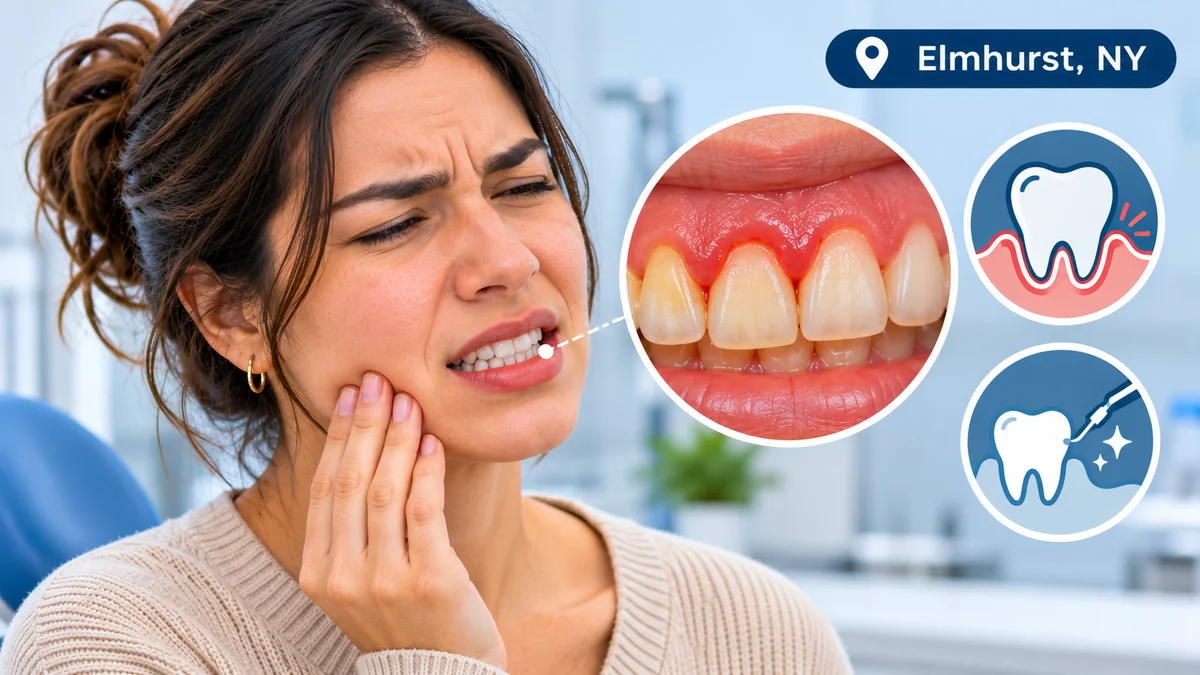
Table of contents
- 1. What Is Gum Disease?
- 2. Gingivitis vs Periodontitis
- 3. Gum Problems vs Look-Alike Conditions
- 4. Causes and Who Is at Higher Risk
- 5. How Gum Disease Is Diagnosed
- 6. The Five Daily Care Steps
- 7. Treatment Options at a Glance
- 8. Graph: Illustrative Gum Bleeding Over Twelve Weeks
- 9. Sample Twelve-Week Gum Care Plan
- 10. Red Flags: When to Get Prompt Care
- 11. Where to Get Care: Elmhurst, Chinatown and Lower Manhattan
- 12. Related Reading From City Prime Care
- 13. Contact Us
- Conclusion
- Frequently Asked Questions
- See a Doctor in Elmhurst or Chinatown
You spit pink into the sink after brushing, and your gums look puffy and darker red than they used to. It is easy to ignore, but bleeding gums are one of the most common early signs of gum disease, a condition that affects a large share of adults. Caught early, the first stage, called gingivitis, is fully reversible. Left alone, it can progress to periodontitis, which damages the bone that holds teeth in place.
This guide explains how gum disease develops, how gingivitis differs from periodontitis, five daily care steps, a sample twelve-week plan and the warning signs that need prompt attention. City Prime Care serves patients in Elmhurst, Queens, Chinatown and Lower Manhattan. Gum treatment itself is usually provided by a dentist or periodontist, and our primary care team can review related health conditions and refer you. This article is general education and not personal medical advice. The American Dental Association also explains gum disease on its MouthHealthy gum disease page.
Quick takeaways:
- Gingivitis causes red, swollen gums that bleed easily, and it is reversible with good daily cleaning and a professional dental cleaning.
- Periodontitis is the advanced stage, with gum pockets, bone loss, loose teeth and sometimes pus.
- Smoking, diabetes, dry mouth, some medicines and hormone changes raise the risk.
- Gum disease and conditions like diabetes and heart disease can influence each other, so a primary care visit is worthwhile.
1. What Is Gum Disease?
Gum disease is an infection and inflammation of the tissue around the teeth. It starts with plaque, a sticky film of bacteria that forms on teeth every day. If plaque is not removed, it hardens into tartar (calculus) that only a dental professional can scrape away. The bacteria irritate the gums, which become red, swollen and prone to bleeding.
In gingivitis the inflammation stays in the gums. In periodontitis the infection spreads below the gumline, forming pockets that trap more bacteria and slowly destroy the bone and fibers that anchor teeth.
2. Gingivitis vs Periodontitis
| Feature | Gingivitis | Periodontitis |
|---|---|---|
| Gum color and shape | Red, puffy, shiny | Red to purplish, receding, pulling away from teeth |
| Bleeding | Easy bleeding when brushing or flossing | Bleeding, sometimes spontaneous |
| Bone loss | None | Present and permanent |
| Breath | Mild bad breath | Persistent bad breath or bad taste |
| Teeth | Firm | May feel loose or shift; bite can change |
| Reversible? | Yes | Can be controlled but damage is not fully reversible |
| Typical care | Improved home care and a dental cleaning | Deep cleaning, possible medicines or surgery, lifelong maintenance |
Gum disease is often painless, which is why regular dental checkups matter even when nothing hurts.
3. Gum Problems vs Look-Alike Conditions
| Condition | Typical clue | How it differs |
|---|---|---|
| Brushing too hard | Gums recede and feel sore at the neck of the tooth | No bad odor; gums may be pale rather than red and swollen |
| Dental abscess | Throbbing tooth pain, swelling, fever | Needs urgent care; see dental abscess warning signs |
| Canker sores | Painful round ulcers inside the mouth | Isolated sores, not generalized gum swelling; see painful mouth sores |
| Vitamin deficiency | Fatigue, easy bruising, swollen bleeding gums | Often with other body symptoms; see easy bruising |
| Medicine side effect | Overgrown, swollen gums | Linked to certain drugs; a clinician can review medicines |
| Pregnancy gingivitis | Swollen, bleeding gums during pregnancy | Hormonal changes; usually improves after delivery |
4. Causes and Who Is at Higher Risk
Gum disease is linked to:
- Poor plaque removal: brushing too briefly or skipping flossing and cleaning between teeth.
- Smoking and vaping, which weaken the gums' defense and hide early warning bleeding.
- Diabetes, especially when blood sugar runs high; see low blood sugar and glucose levels for related background.
- Dry mouth from medicines, dehydration or conditions that reduce saliva.
- Hormonal changes during puberty, pregnancy or menopause.
- Family history, crooked teeth that trap plaque and poorly fitting dental work.
- Low vitamin C or vitamin D and generally poor nutrition; see why vitamin D is low in New York.
- Older age and weakened immunity.
Bone health also matters for the jaw, so review how to protect your bones as you age.
5. How Gum Disease Is Diagnosed
A dental visit usually includes:
- A review of symptoms, medicines, smoking, diabetes and other health conditions.
- A look at the gums for color, swelling, bleeding and recession.
- Measuring pocket depth around each tooth with a small probe; healthy pockets are shallow while deeper pockets suggest periodontitis.
- Dental X-rays to check bone levels under the gums.
- A treatment plan, which may include referral to a periodontist, a gum specialist.
A primary care visit can check blood sugar, review medicines that dry the mouth and coordinate with your dentist. See when your primary care doctor sends you to a specialist.
6. The Five Daily Care Steps
For gingivitis, these habits are the foundation of treatment:
- Brush twice daily for two minutes: use a soft brush and fluoride toothpaste, angle the bristles toward the gumline and use gentle circles rather than hard scrubbing.
- Clean between teeth every day: floss, interdental brushes or a water flosser reach the plaque a brush cannot, and gums may bleed for the first week or two as they heal.
- Replace the brush often: change the brush or brush head every three months or when bristles splay.
- Cut back on sugar and quit tobacco: frequent sugary snacks feed plaque bacteria, and quitting smoking improves healing; ask a clinician about cessation help.
- Keep regular dental cleanings: a professional cleaning removes tartar, typically every six months or as your dentist advises.
If gums bleed heavily, hurt, or do not improve within two weeks of better cleaning, see a dentist rather than waiting.
7. Treatment Options at a Glance
| Option | Best for | Notes |
|---|---|---|
| Improved home care | Early gingivitis | Often reverses gingivitis within two to three weeks |
| Professional cleaning (scaling) | Gingivitis and early periodontitis | Removes plaque and tartar above and below the gumline |
| Scaling and root planing (deep cleaning) | Periodontitis | Smooths root surfaces; sometimes done in more than one visit |
| Antibacterial rinse, gel or antibiotics | Selected periodontitis cases | Prescribed by a dentist or doctor; not a replacement for cleaning |
| Gum surgery or bone grafts | Advanced periodontitis | Specialist care to reduce pockets or restore tissue |
| Managing diabetes and quitting smoking | All stages | Improves healing and lowers recurrence |
8. Graph: Illustrative Gum Bleeding Over Twelve Weeks
This is a teaching graph, not patient data. It shows how gum bleeding often falls as daily cleaning improves and a dental cleaning is done. Real results vary from person to person.
| Week | Gum bleeding when brushing (illustrative) |
|---|---|
| Week 0 (before care) | ██████████ |
| Week 1 (cleaning improves) | █████████ |
| Week 2 (dental cleaning) | ██████ |
| Week 4 | ████ |
| Week 8 | ██ |
| Week 12 | █ |
9. Sample Twelve-Week Gum Care Plan
| When | Goal | Sample actions | Check |
|---|---|---|---|
| Week 1 | Start good habits | Soft brush twice daily, floss once daily, stop smoking if possible | Do gums bleed less each day? |
| Week 2 | Professional care | Dental exam and cleaning, X-rays if advised | Did the dentist measure pocket depths? |
| Weeks 3-4 | Build routine | Add interdental brushes or a water flosser, rinse with water after sugary snacks | Is breath fresher and gum color closer to pink? |
| Weeks 5-8 | Reduce risk factors | Review diabetes control, dry mouth and medicines with a clinician | Are blood sugars and dry mouth managed? |
| Weeks 9-12 | Recheck | Follow-up with the dentist | Are pockets shallow and bleeding gone? |
| Ongoing | Maintain | Cleanings every three to six months as advised | Any new bleeding or loose teeth? |
10. Red Flags: When to Get Prompt Care
See a dentist or doctor promptly for:
- Swelling of the face or jaw, especially with fever, trouble swallowing or trouble breathing; go to the emergency room.
- Pus around a tooth, a throbbing tooth or a foul taste that persists.
- Loose or shifting teeth, or a change in how your teeth fit together.
- Gums that bleed heavily or bleed without brushing, or bleeding with easy bruising or other bleeding elsewhere.
- A white or red patch or sore in the mouth that does not heal in two weeks.
- Gum problems alongside uncontrolled diabetes, a weak immune system or heart conditions.
11. Where to Get Care: Elmhurst, Chinatown and Lower Manhattan
Swollen gums, a bad taste or sudden mouth pain are common reasons people search for urgent care Elmhurst NY, a walk in clinic Elmhurst NY, urgent care 11373, a same day doctor appointment Elmhurst or Same-Day Acute Care in Elmhurst Queens. For ongoing health reviews that support gum health, such as diabetes and medicine checks, residents choose a primary care doctor Elmhurst NY, a family doctor Elmhurst Queens, Primary Care Doctors in Elmhurst NY or chronic disease management Elmhurst NY.
People comparing options often search for Best Primary Care Clinic in Elmhurst Queens, Best Primary Care Doctor in Elmhurst Queens, Primary Care Near Me Elmhurst Queens, Best Primary Care Clinics in Queens NY, Primary Care Clinics and Doctors in Queens NY and Top Primary Care Clinics in Queens NY. City Prime Care provides Men's and Women's Healthcare in Elmhurst NY, a physical exam clinic Elmhurst NY and preventive care Elmhurst NY, and can refer you to dental care when needed.
Downtown, people look for primary care Lower Manhattan, primary care Chinatown NYC, a doctor near Catherine Street NYC, primary care 75 Catherine St, a walk-in clinic Chinatown NYC, a Primary Care Clinic in Chinatown Manhattan or a Healthcare Center in Chinatown Manhattan NY. Citywide searches include primary care doctor NYC, primary care doctor near me, family doctor Manhattan NYC, annual physical exam NYC, same day primary care NYC and preventive care Lower Manhattan. Residents searching for Primary Care Doctors Serving Todt Hill Staten Island are welcome to contact the clinic to ask about care options and travel.
| Area | Common searches | How care can help |
|---|---|---|
| Elmhurst (ZIP 11373) | Urgent care 11373, same day doctor appointment Elmhurst | Prompt check of mouth pain, fever or swelling and referral |
| Elmhurst, Queens | Family doctor Elmhurst Queens, primary care doctor Elmhurst NY | Diabetes, medicine and preventive health review |
| Queens | Best Primary Care Clinics in Queens NY, Top Primary Care Clinics in Queens NY | Easy-to-reach primary care for the family |
| Lower Manhattan | Primary care Lower Manhattan, preventive care Lower Manhattan | Convenient visits near work |
| Chinatown / Catherine Street | Primary care Chinatown NYC, doctor near Catherine Street NYC, primary care 75 Catherine St | Convenient downtown care |
| Citywide | Primary care doctor NYC, family doctor Manhattan NYC, same day primary care NYC | Same-day or scheduled evaluation |
You can also find the clinic on Google or learn more on the City Prime Care website.
12. Related Reading From City Prime Care
13. Contact Us
Bleeding gums, a long-lasting bad taste or concerns about diabetes and your mouth? Visit our Contact Us page or see our Google listing. If you have facial swelling with trouble breathing or swallowing, call 911 or go to the nearest emergency room.
Conclusion
Gingivitis is common, often painless and very treatable. Gentle thorough brushing, daily cleaning between the teeth, no tobacco and regular dental cleanings can reverse it. Do not ignore loose teeth, pus, swelling or gums that keep bleeding, and tell your care team about conditions like diabetes that affect gum health.
Frequently Asked Questions
See a Doctor in Elmhurst or Chinatown
Have a question about your own health? Book a visit at our Elmhurst, Queens clinic or our Chinatown, Manhattan clinic, or explore our primary care services.
Related articles
Healthcare
Contact Dermatitis in Queens, NY: How Skin Reacts to Irritants and Allergens and What to Expect From Treatment
Red, itchy, blistering skin after touching soap, metal or plants may be contact dermatitis. Learn the two types, a numbered trigger-control plan, red flags and what to expect from care in Queens.
Healthcare
Skin Boils and Abscesses in Elmhurst, NY: How Painful Lumps Form and What to Expect From Same-Day Care
A red, painful, pus-filled lump under the skin may be a boil or abscess. Learn how they form, why you should not squeeze them, a numbered care plan, red flags and what to expect in Elmhurst, Queens.
Healthcare
Vaginal Yeast Infections in Elmhurst, NY: How Candida Overgrowth Develops and What to Expect From Care
Itching, burning and thick white discharge may signal a vaginal yeast infection. Learn why it develops, a numbered care plan, red flags and what to expect from women's healthcare in Elmhurst, Queens.