
Walk-In ClinicBy City Prime Care Team
Best Times to Visit a Walk-In Clinic to Avoid Long Waits
Want to spend less time in the waiting room? Learn what affects walk-in clinic wait times, the usual busy and quiet periods, and simple tips to get seen sooner.
Medically reviewed by City Prime Care Administrator4 min read
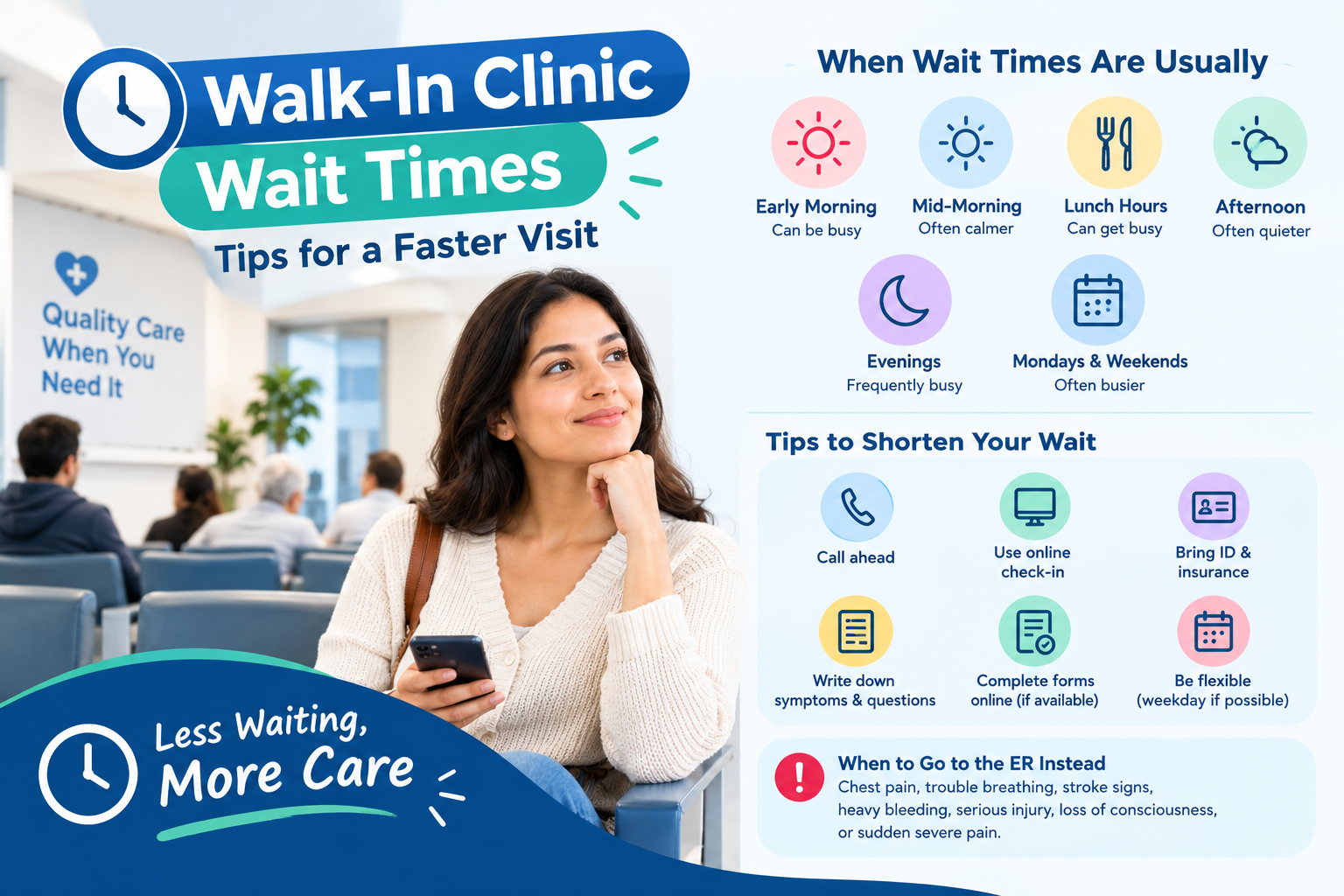
Table of contents
Nobody likes sitting in a waiting room when they are not feeling well. While walk-in clinics are designed for convenience, wait times can vary a lot depending on when you arrive.
There is no perfect time that works for every clinic, but a few patterns and habits can help you spend less time waiting and more time getting care.
What Affects Wait Times
Wait times depend on several things:
- The time of day and day of the week
- Seasonal illness, such as flu and cold season
- How many patients arrived just before you
- The type of care each patient needs, since injuries and procedures take longer than quick exams
- Staffing levels at the clinic
Typically Busier and Quieter Times
Every clinic has its own rhythm, but these general patterns are common. Treat them as guidelines, not guarantees.
| Time | Typical pattern |
|---|---|
| Early morning, right at opening | Can be busy with people who woke up sick or want care before work |
| Mid-morning | Often calmer once the opening rush has passed |
| Lunch hours | Can get busy with people on a work break |
| Mid-afternoon | Often one of the quieter windows on weekdays |
| Evenings after work | Frequently busy as people finish their day |
| Mondays and weekends | Often busier, especially during cold and flu season |
Tips to Shorten Your Wait
Small steps can make a big difference:
- Call ahead and ask how busy the clinic is right now.
- Check whether the clinic offers online check-in or pre-registration.
- Arrive with your ID, insurance card, and medication list ready.
- Write down your symptoms and questions so the visit stays focused.
- Complete any forms online in advance if they are available.
- Be flexible: if you can, choose a weekday over a weekend.
Why You May Still Wait Sometimes
Walk-in clinics generally see patients based on arrival and the urgency of their condition, so someone with a more serious concern may be seen before you even if they arrived later. If you have a significant change in your symptoms while waiting, tell the front desk right away.
When You Should Not Wait for a Better Time
Do not wait for a quiet time if you have an emergency. Call 911 or go to the nearest emergency room for chest pain, severe trouble breathing, signs of a stroke, heavy bleeding, serious head injury, loss of consciousness, or sudden severe pain.
Contact Us
Want to know about current hours or plan the best time for your visit? Get in touch through our Contact Us page and our team will be glad to help.
Conclusion
You cannot always control when you get sick, but you can often choose a smarter time to walk in. Aim for off-peak hours when you can, prepare before you arrive, and know when to seek emergency care instead. This article is for general information only and is not a substitute for professional medical advice.
Frequently Asked Questions
See a Doctor in Elmhurst or Chinatown
Have a question about your own health? Book a visit at our Elmhurst, Queens clinic or our Chinatown, Manhattan clinic, or explore our primary care services.
Related articles
Walk-In Clinic
When Should You Visit a Walk-In Clinic? Best Times to Avoid Long Waits and What to Expect
Learn the best times to visit a walk-in clinic to avoid long waits, understand how weekdays, weekends, and flu season affect patient volume, and discover practical tips to plan a faster, more convenient visit.
Walk-In Clinic
Walk-In Clinic Near Me Open Now: Queens Late-Hours Guide
Need care after work or on a weekend? Learn how to find a walk-in clinic open now in Queens, what to bring, and when to call 911 instead.
Walk-In Clinic
Walk-In Clinic in Elmhurst, NY: What to Expect and How to Prepare
Need to see a provider in Elmhurst without an appointment? Learn what a walk-in clinic treats, how to prepare, and when to go to the ER instead.





